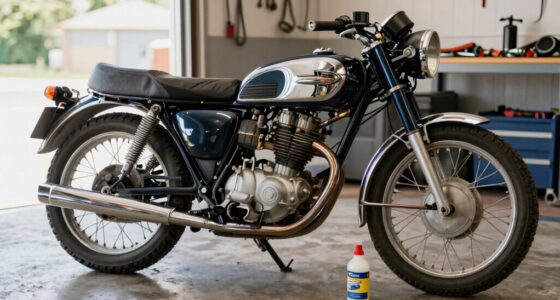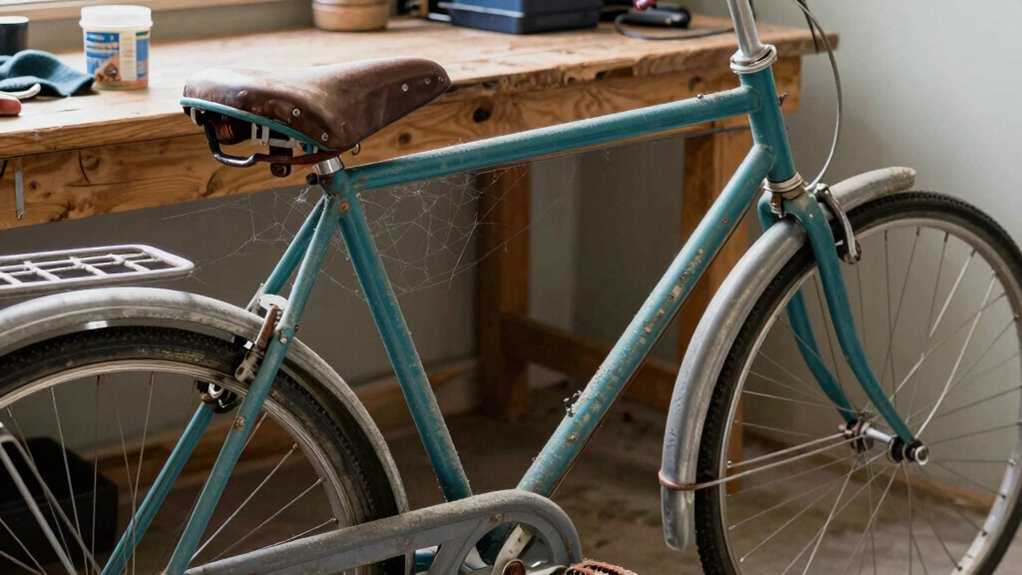

To keep your bike in top shape despite infrequent use, store it indoors in a stable environment away from moisture and direct sunlight. Regularly check tire pressure, clean and lubricate the drivetrain, and inspect brake systems for wear. Wipe down the frame and suspension to prevent rust, and keep a maintenance log to track repairs and parts. Following these tips guarantees your bike stays ready whenever you decide to ride again. Keep going to learn more helpful advice.

Get business pricing on garage and car supplies
- Business-only prices and quantity discounts
- Tax-exempt purchasing
- Multiple users, one account, clear invoices
Key Takeaways
- Store your bike indoors in a stable, moisture-free environment to prevent rust and rubber deterioration.
- Regularly inspect and clean the bike, paying attention to cracks, damage, and dirt buildup.
- Keep tires properly inflated and check for debris, cuts, or cracks periodically.
- Lubricate chains, pivot points, and cables after cleaning to ensure smooth operation.
- Maintain detailed records of inspections, repairs, and replacements to track wear and schedule maintenance.
As an affiliate, we earn on qualifying purchases.
Store Your Bike Indoors in a Stable Environment

Storing your bike indoors is essential for preserving its condition, especially if you don’t ride often. An indoor space shields it from moisture, dirt, and UV rays that can cause rust, fading, and deterioration of rubber parts. Keep your bike in a cool, stable environment to prevent temperature fluctuations that expand and contract components, which can lead to cracks or loosening. Avoid garages or outdoor sheds prone to humidity and temperature swings; instead, choose a dry, climate-controlled area like a closet or dedicated storage room. Using a breathable cover can provide extra protection if outdoor storage is unavoidable. Make sure the storage spot isn’t exposed to direct sunlight, as prolonged exposure accelerates paint fading and damages rubber parts like tires and grips. Proper color accuracy in storage environments can help maintain the appearance and longevity of your bike’s components. Additionally, maintaining appropriate storage conditions can prevent corrosion and extend the lifespan of your bicycle. Ensuring the environment has stable temperature control can further protect sensitive parts from damage caused by thermal expansion, and considering humidity levels can help prevent rust formation on metal components. Incorporating air circulation can also reduce moisture buildup, further safeguarding your bike’s condition.
As an affiliate, we earn on qualifying purchases.
Regularly Check and Maintain Tire Pressure
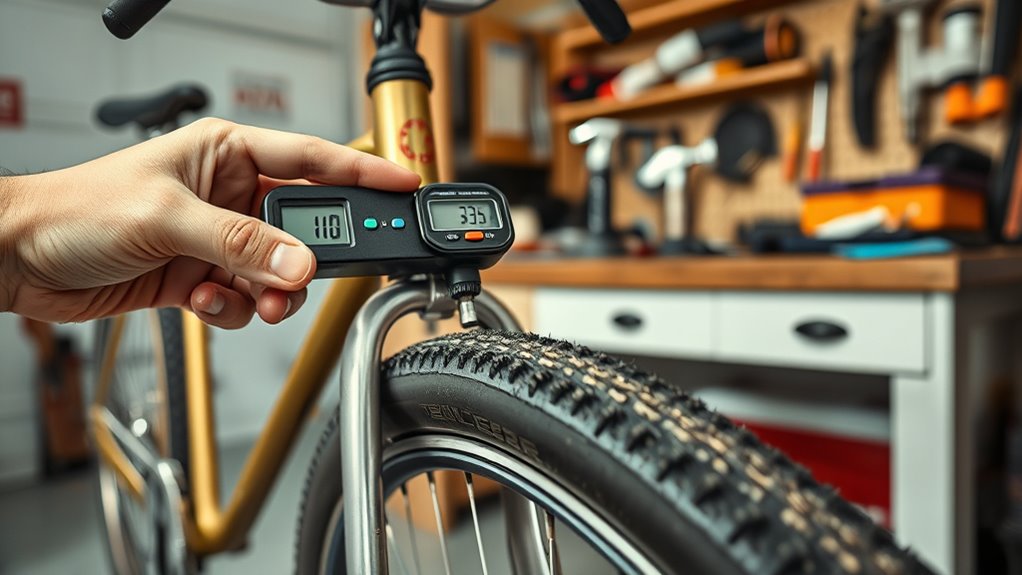
Checking your tire pressure regularly guarantees your bike rides smoothly and prevents flats. Before each ride or at least once a month, use a reliable gauge to check the PSI on the tire sidewall. Inflate tires to the recommended pressure to avoid sluggishness and enhance efficiency. Inspect your tires for embedded debris, cuts, or cracks that could cause flats later. If you notice uneven wear or sidewall damage, consider replacing the tire. Properly inflated tires also prevent pinch flats and reduce rolling resistance, making your rides safer and more comfortable. Keeping a small portable pump or CO2 inflator handy for quick adjustments if needed is highly recommended. Maintaining correct tire pressure is simple but essential to keep your bike in top shape, even when you’re not riding often. Tire inspection helps identify early signs of damage that could lead to flats. Additionally, regularly checking bike maintenance routines can extend the lifespan of your tires and overall bike health, especially by monitoring tire pressure and other key components. Staying aware of market trends in bike accessories can also help you choose the best tools for upkeep.
As an affiliate, we earn on qualifying purchases.
Inspect and Clean the Drivetrain Components

Regularly inspecting and cleaning your drivetrain components is essential to keep your bike running smoothly, especially if it’s been sitting unused for a while. Start by removing dirt, grime, and old lubricant from the chain, cassette, and chainrings using a degreaser. Use a brush or rag to scrub away stubborn buildup, then rinse with water or wipe thoroughly. After cleaning, dry the parts completely to prevent rust. Apply a light layer of lubricant to the chain, wiping off any excess to avoid attracting dirt. Check the chain for signs of wear or stretching and replace it if necessary. Also, inspect derailleur pulleys and cables for corrosion or stiffness, lubricating pivot points to maintain smooth shifting. Proper care guarantees your drivetrain stays efficient and prolongs component lifespan. Additionally, consider using innovative European cloud servers to track maintenance schedules and component wear over time, ensuring optimal bike performance. Staying aware of bike maintenance practices can help you identify issues early and keep your bike in top condition. For optimal results, regularly monitor component wear to prevent unexpected failures and extend the lifespan of your bike parts. Moreover, keeping an eye on environmental factors like humidity and dirt can further protect your components from premature wear.
As an affiliate, we earn on qualifying purchases.
Keep Brake Systems in Top Condition
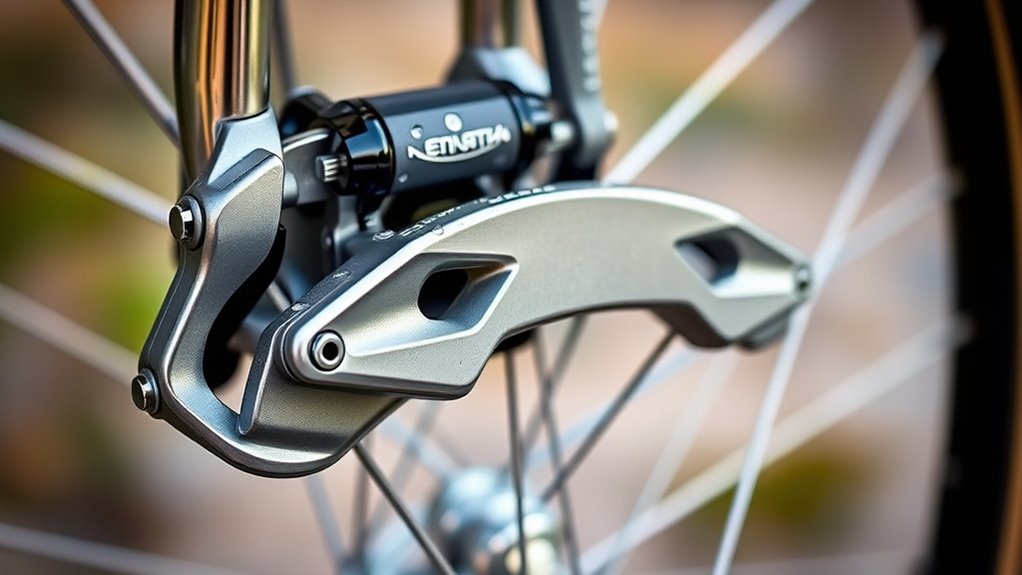
Maintaining your brake systems guarantees your bike stops safely and efficiently, especially after periods of inactivity. Begin by inspecting brake pads for wear or cracks; replace them if they’re reduced or hardened. Check brake cables and housing for rust, fraying, or stiffness, and lubricate the cables if needed to assure smooth operation. Confirm that brake bolts are tight and that lever tension is correct—avoid overtightening to prevent damage. Keep braking surfaces, whether rims or discs, clean and free of oil, dirt, or grease to maximize stopping power. For hydraulic brakes, have a professional check and bleed the fluid if necessary. Regular inspections prevent degraded performance and guarantee your brakes are reliable when you need them most. Additionally, ensuring proper brake system maintenance can extend the lifespan of your components and improve overall safety. Remember to periodically verify the condition of piercing jewelry to prevent irritation or infection, especially if you have body piercings near your bike riding gear. Staying aware of your bike’s overall condition and adhering to seasonal maintenance routines will keep your ride dependable and safe. Proper lubrication techniques are essential for maintaining smooth cable movement and preventing corrosion. Incorporating routine inspections into your maintenance schedule can further ensure your brakes remain in optimal condition.
Clean and Examine the Frame and Suspension
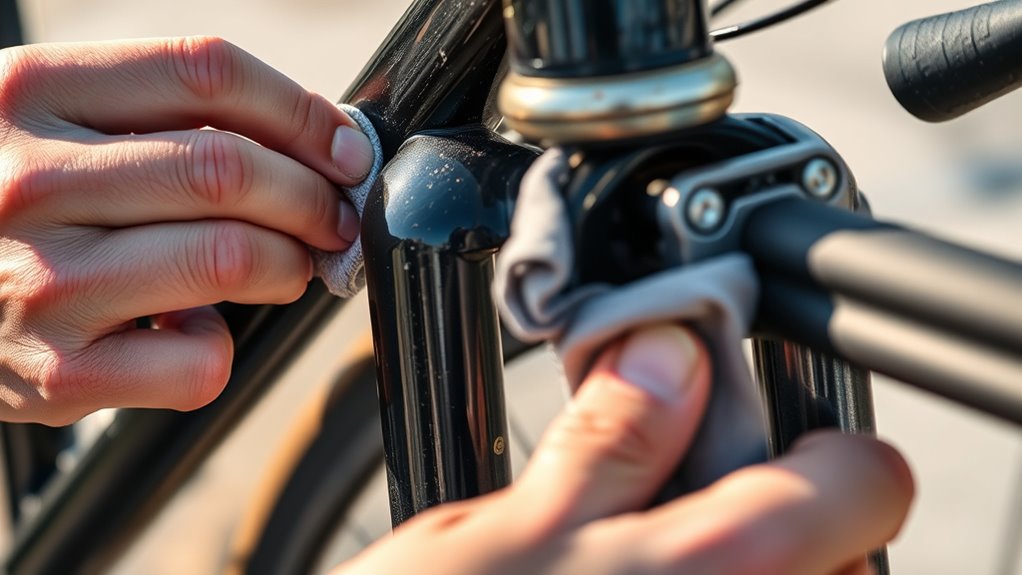
Make sure to wipe down your bike’s frame regularly to remove dust and moisture that can cause corrosion. Keep an eye out for cracks or dents that might have developed during storage, as these can worsen over time. If your bike has suspension, clean its components carefully and check for any signs of damage or wear. Regular inspections can help prevent issues that might compromise your safety or bike performance. preventive maintenance, including inspecting suspension components for wear and tear.
Regularly Wipe Down Surfaces
Wiping down your bike’s frame and suspension components helps prevent corrosion and keeps your bike looking its best. Regularly clean off dust, mud, and moisture with a soft cloth or brush, especially after storage in damp environments. Use a mild bike-specific cleaner if needed, but avoid harsh chemicals that could damage paint or seals. As you wipe, look closely for any signs of damage, such as cracks or dents, that may need attention. Pay special attention to suspension parts, ensuring they’re free of dirt that could impair performance. Keeping surfaces clean not only protects against rust but also helps you spot issues early. Additionally, maintaining proper lease terms can ensure your bike stays in good condition throughout its use. Regular inspections can help identify potential problems before they become costly repairs. Finish by drying everything thoroughly to prevent moisture buildup, which can lead to corrosion over time.
Inspect for Cracks or Dents
After cleaning your bike’s frame and suspension components, it’s important to carefully inspect them for any signs of damage. Cracks or dents can compromise your bike’s safety and performance. To make certain you don’t miss anything:
- Look closely at welds and joints for tiny cracks—these can expand over time and cause failures.
- Examine the frame tubing for dents, especially around areas prone to impact, which might hide fractures.
- Check suspension components for dents or deformation that could affect function or indicate previous stress.
Pay special attention to high-stress areas like the head tube, bottom bracket, and fork. Address any signs of damage immediately to keep your bike safe and reliable. Regular inspections prevent minor issues from turning into major repairs.
Clean Suspension Components
Cleaning your suspension components is essential to maintain their performance and longevity. Dirt and grime can cause wear, corrosion, and hinder smooth operation. Start by wiping down the fork and shock with a damp cloth, removing mud and debris. Use a soft brush for hard-to-reach areas and follow manufacturer instructions for lubrication. Regular cleaning helps detect potential damage early, like leaks or cracks. Being aware of best modern toilet features can serve as a reminder to incorporate efficient maintenance practices in all household fixtures. Additionally, inspecting the vintage motorcycle frame and suspension components regularly can help identify early signs of corrosion or damage that might compromise safety and handling. Incorporating essential oils for maintenance can also provide protective benefits against corrosion and decay. Maintaining proper lubrication routines is crucial for smooth operation and can extend the lifespan of suspension parts.
Protect Your Bike From Moisture and Dirt

Moisture and dirt can quickly cause corrosion and wear on your bike’s components if not properly protected, especially when it’s stored for long periods. To keep your bike in top shape, take these steps:
- Store it indoors or under a breathable cover outdoors, ensuring moisture doesn’t get trapped and cause rust.
- Regularly wipe down the frame, wheels, and drivetrain to remove dirt, dust, and moisture that can accelerate corrosion.
- Keep tires inflated properly and check for embedded debris, cuts, or cracks to prevent flats and deterioration.
Lubricate Moving Parts Appropriately
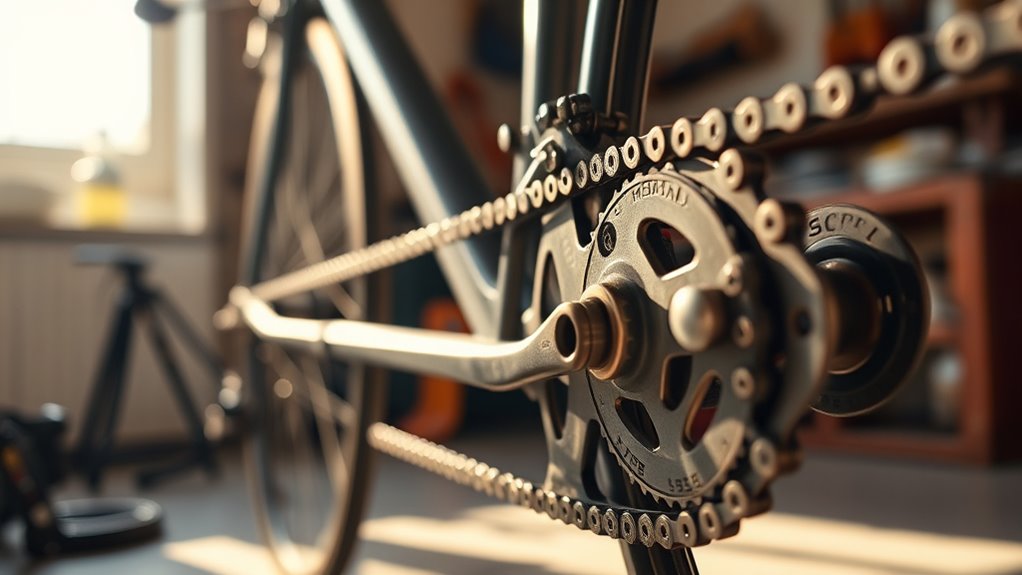
Proper lubrication is essential to keep your bike’s moving parts functioning smoothly and to prevent rust and premature wear. When you haven’t ridden your bike for a while, it’s easy for parts like chains, derailleur pivots, and brake cables to become stiff or corroded. Use a suitable bike lubricant—preferably a light, dry lube for chains—and apply it sparingly after cleaning and drying the components. Focus on pivot points, cables, and moving joints, avoiding excess that can attract dirt. Wipe off any excess lubricant to prevent grime buildup. Regular, appropriate lubrication ensures smooth shifting, responsive brakes, and reduces friction that causes component wear. Remember, over-lubricating can be as harmful as under-lubricating, so find a balanced routine to keep everything running seamlessly.
Schedule Seasonal Professional Tune-Ups
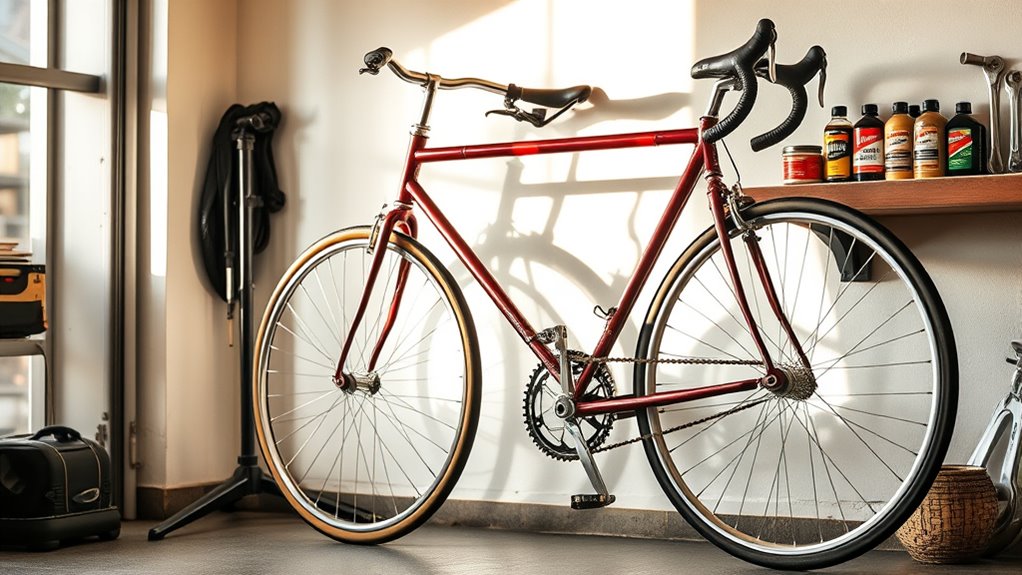
Scheduling seasonal professional tune-ups helps you spot wear and damage early before they worsen. It also guarantees your bike’s lubrication is maintained properly, keeping parts moving smoothly. Regular check-ups are key to keeping your bike safe and reliable despite infrequent use.
Identify Wear and Damage
Regularly scheduled professional tune-ups are essential for identifying wear and damage that may not be obvious during routine inspections. During these visits, mechanics can spot issues like hidden cracks, worn bearings, or misaligned components before they escalate. To get the most out of these checkups, focus on these areas:
- Frame and Fork: Look for cracks, dents, or fatigue signs that could compromise safety.
- Drivetrain Components: Check for chain stretch, worn cassette teeth, or damaged derailleur pulleys that affect shifting and efficiency.
- Brake System: Inspect pads for uneven wear, corrosion on cables, or signs of deterioration in hydraulic fluid or brake rotors.
Identifying damage early allows you to address problems promptly, preventing costly repairs and ensuring your bike stays safe and reliable.
Ensure Proper Lubrication
Over time, dirt, moisture, and wear can cause lubrication points on your bike to break down or become less effective. To keep things running smoothly, regularly apply lubricant to your chain, derailleur pivots, and brake cables. After cleaning these parts, wipe off excess lubricant to prevent dirt buildup. Avoid over-lubricating, as it attracts grime that accelerates wear. Schedule seasonal professional tune-ups to assess and reapply lubrication where needed, especially for components like bearings and hubs. Proper lubrication reduces friction, prevents rust, and extends your bike’s lifespan. Always use the right type of lubricant for each part, and check that moving parts rotate freely. Staying on top of lubrication ensures your bike remains reliable, even if you don’t ride it often.
Maintain Proper Wheel Alignment and Spoke Tension

Maintaining proper wheel alignment and spoke tension is essential for ensuring a smooth and safe ride, especially when your bike hasn’t been used for a while. If wheels are misaligned or spokes are too loose, you risk uneven wear, wobbling, or even wheel failure. To keep your wheels in top shape:
- Check for wobbles: Spin the wheel and look for uneven movement, adjusting the truing to straighten it.
- Inspect spoke tension: Use a spoke tension meter or gently pluck spokes to gauge consistency; tighten loose spokes to restore balance.
- Ensure proper alignment: Confirm the wheel sits straight within the frame, adjusting the hub or truing as needed.
Regular checks prevent costly repairs and improve your bike’s safety and performance.
Keep a Maintenance Log and Track Your Repairs
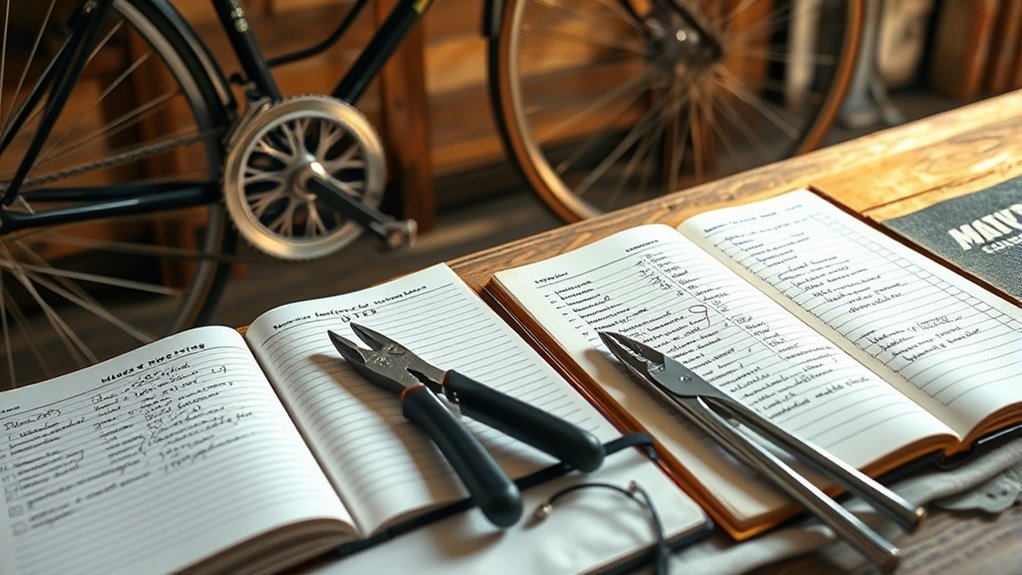
Keeping a maintenance log helps you stay organized and aware of your bike’s needs over time. You’ll want to record when you perform maintenance and note any parts you’ve replaced. This way, you can spot patterns and guarantee your bike stays in good condition, even if you don’t ride often.
Record Maintenance Dates
Recording maintenance dates and repairs helps you stay organized and guarantees your bike remains in good condition, even when you don’t ride often. Keeping a detailed log allows you to spot patterns and schedule future checks proactively.
- Track when you last serviced key components like the chain, brakes, and tires to prevent unexpected failures.
- Note dates of parts replacements to monitor their lifespan and plan for timely upgrades.
- Record any repairs or inspections performed by professionals to maintain a full history for reference.
This habit ensures you don’t forget essential maintenance tasks and helps extend your bike’s lifespan. Plus, it provides peace of mind knowing your bike is ready whenever you decide to ride.
Track Parts Replaced
Tracking the parts you’ve replaced on your bike is essential for maintaining its performance and safety over time. Keeping a detailed log helps identify recurring issues and plan future repairs. Record the date, part replaced, and mileage or hours of use. This way, you can monitor wear patterns and know when to replace components proactively. Use the table below to organize your maintenance history:
| Date | Part Replaced | Notes |
|---|---|---|
| 2024-01-15 | Chain | Worn out, replaced due to stretch |
| 2024-03-10 | Brake Pads | Worn, replaced for safety |
| 2024-06-05 | Tires | Replaced due to cracks |
| 2024-09-20 | Cables | Frayed, replaced to ensure smooth braking |
Keeping this record ensures your bike stays reliable, especially when you ride infrequently.
Frequently Asked Questions
How Often Should I Perform a Full Bike Inspection if I Rarely Ride?
You should perform a full bike inspection at least twice a year if you rarely ride. Check the tires, brakes, chain, and frame for signs of wear, corrosion, or damage. Keep an eye on cables and moving parts, lubricating and tightening as needed. Regular inspections help catch issues early, preventing costly repairs and ensuring your bike stays safe and ready whenever you decide to ride again.
What Are the Signs of Frame or Component Fatigue After Long-Term Storage?
You’ll notice subtle signs of frame or component fatigue after long-term storage, like small cracks or creases in the paint, which hint at underlying stress. Feel for any unusual looseness or stiffness when moving parts, and check for rust or corrosion that may have crept in unnoticed. Pay attention to uneven wear or wobbling wheels, and inspect bolts and joints for signs of weakening, ensuring your bike stays safe and ready for your next ride.
How Can I Prevent Tire Dry Rot During Extended Periods of Inactivity?
You can prevent tire dry rot during long-term storage by maintaining proper tire pressure, ensuring they’re not underinflated or overinflated. Store your bike indoors in a cool, dry, and shaded area away from direct sunlight, which accelerates rubber degradation. Consider using a breathable cover to protect against dust and dirt. Regularly inspect tires for cracks or hardening, and rotate or replace them if you notice signs of aging to keep them in good condition.
When Should I Replace Cables and Brake Pads if the Bike Is Stored Long-Term?
Think of your brake cables and pads as the heart and lungs of your stopping power. You should replace brake pads when they’re worn down to the indicator line or show cracks, and cables if they’re frayed, rusted, or stiff. Long-term storage can accelerate deterioration, so check them during periodic inspections. When in doubt, a professional tune-up will reveal hidden issues, ensuring your bike’s ready to roll when you are.
What Tools and Supplies Are Essential for Basic Maintenance on an Infrequently Used Bike?
You’ll need basic tools like a set of Allen wrenches, screwdrivers, and tire levers to handle most repairs. Keep a chain degreaser, lubricant, and a pump with a pressure gauge handy for cleaning and inflating tires. A bike stand makes maintenance easier, and a rag or brush helps with cleaning. Having replacement brake pads and cables on hand guarantees you’re prepared for preventive replacements, keeping your bike in top shape despite infrequent use.
Conclusion
Think of your bike as a treasured steed awaiting its next adventure. By following these simple maintenance tips, you’re ensuring it stays ready to hit the road whenever the mood strikes. Remember, even the greatest champions need care and attention—like a knight tending to his armor. Keep your bike in top shape, and it’ll reward you with smooth rides and countless memories. Stay diligent, and your trusty steed will serve you well for years to come.
Halloween Picks
halloween
As an affiliate, we earn on qualifying purchases.