When choosing between OEM and aftermarket parts for your vintage bike, consider that OEM parts offer precise fit, durability, and longer availability, though they tend to cost more. Aftermarket parts are usually budget-friendly and can provide performance upgrades, but their quality and fit may vary. Used and NOS parts can save money but might have limitations in availability. To make the best choice for your bike, explore the detailed pros and cons that follow.

Get business pricing on garage and car supplies
- Business-only prices and quantity discounts
- Tax-exempt purchasing
- Multiple users, one account, clear invoices
Key Takeaways
- OEM parts ensure perfect fit and authenticity, ideal for maintaining original performance of vintage bikes.
- Aftermarket parts are more affordable and offer customization options, but may require modifications for proper fit.
- OEM parts generally provide better durability and longer availability, especially for discontinued models.
- Aftermarket components can vary in quality; choosing reputable brands ensures safety and performance.
- Used and NOS parts can be cost-effective alternatives but depend on condition and availability for vintage bike restoration.
Cost Implications of OEM and Aftermarket Parts
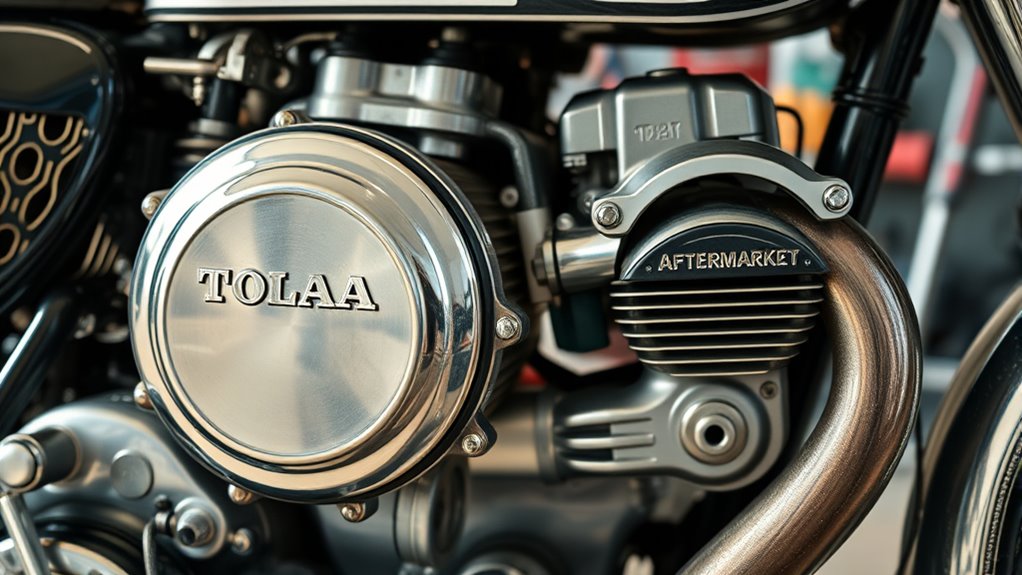
When choosing between OEM and aftermarket parts for your vintage bike, cost is a key factor that can influence your decision. OEM parts usually cost more because they’re made to meet exact factory standards and guarantee fitment. This often means higher prices but better long-term durability and warranty coverage. On the other hand, aftermarket parts tend to be more affordable, making them a budget-friendly choice for restoration or maintenance. However, lower costs can sometimes mean compromises in material quality or fit, which might lead to extra installation effort or early replacement. If you’re working within a tight budget, aftermarket parts can save you money upfront. Still, for those prioritizing authenticity and longevity, investing in OEM parts might be the smarter choice. Additionally, understanding projector technology can help you appreciate how different components impact overall performance and value.
Assessing Quality and Authenticity Standards
Evaluating the quality and authenticity of vintage bike parts requires careful assessment of their manufacturing standards and historical accuracy. To do this effectively, consider these key factors:
- Confirm if OEM parts match original factory specifications for fit and durability.
- Check if NOS components are truly unused and preserved as they were when first made.
- Assess aftermarket parts for consistent quality, ensuring they meet performance and material standards.
- Examine used parts for signs of wear, proper storage, and compatibility with your model.
- Investigate European cloud innovation initiatives that set industry standards for manufacturing and authenticity verification to ensure part reliability. Incorporating industry standards can further enhance confidence in parts’ legitimacy and performance. Additionally, staying informed about certification processes can help verify the authenticity of vintage parts and prevent counterfeit purchases. Recognizing brand reputation is also crucial, as trusted manufacturers often adhere to higher quality controls, reducing the risk of counterfeit or substandard components. Moreover, understanding vintage parts certification can provide additional assurance of a part’s provenance and authenticity.
Availability and Long-term Support
Availability and long-term support play a significant role in choosing between OEM, aftermarket, and used parts for your vintage bike. OEM parts are generally accessible longer because manufacturers continue supporting discontinued models, making them reliable for ongoing restorations. In contrast, aftermarket parts might be discontinued as demand wanes, limiting future options. Used parts can fill gaps for rare or out-of-production components, but availability depends on the condition and rarity of the item. NOS parts are often limited in stock, and once they’re gone, replacing them becomes difficult. Long-term support from OEM manufacturers tends to be more consistent, especially with established brands. This support ensures you can source needed components years down the line, reducing the risk of being left without options during your restoration or maintenance process. Availability of parts can be affected by supply chain issues and market demand, making it important to plan ahead. Additionally, market demand influences the availability of both OEM and aftermarket components, emphasizing the importance of early procurement for rare items. Recognizing how manufacturer support impacts your ability to maintain vintage bikes over time can help inform your sourcing decisions, especially when considering part longevity and compatibility.
Impact on Performance and Customization
Aftermarket parts often provide greater opportunities for enhancing your vintage bike’s performance and customizing its appearance. You can choose from options that boost power, improve handling, or give your bike a unique look. Here are some ways aftermarket parts impact performance and customization: 1. They allow you to upgrade engine components for more horsepower or better responsiveness. 2. You can select custom exhaust systems to improve airflow and add a distinct sound. 3. Performance accessories like lightweight wheels or suspension parts enhance handling and ride quality. 4. Visual modifications, such as custom paint or unique body panels, let you personalize your bike’s style. 5. When selecting aftermarket parts, it’s important to consider Luggage & Bags for proper fit and compatibility, ensuring your modifications don’t interfere with storage or accessories. Additionally, being aware of device compatibility can help prevent issues with installation and operation of your upgrades. Understanding the importance of quality control in aftermarket manufacturing can also help you choose reliable parts that last. Moreover, paying attention to material quality can significantly affect the durability and performance of your upgrades. Selecting reputable brands and verifying manufacturing standards can further ensure that your aftermarket upgrades meet safety and performance expectations. These options give you more control over how your vintage bike performs and looks, making it a true reflection of your riding preferences.
Installation and Fitment Considerations
When installing parts on a vintage bike, ensuring proper fitment is key to achieving reliable performance and a polished appearance. OEM parts are designed for exact compatibility, making installation straightforward and reducing the risk of issues. In contrast, aftermarket parts might need modifications like machining or spacers for proper fit, which can increase installation time and costs. Used parts may fit seamlessly if verified for your model, but sometimes require adjustments. To visualize, consider this:
| Part Type | Fitment Considerations |
|---|---|
| OEM | Precise, straightforward installation |
| Aftermarket | Possible need for modifications |
| Used | Verify fit, may need adjustments |
| Custom/Performance | May require specialized fitting techniques |
Additionally, understanding the compatibility requirements of each part can help prevent mismatched components and ensure a smoother upgrade process. Properly researching and verifying parts against manufacturer guidelines can further reduce the risk of incompatibility issues. Being aware of original equipment specifications can further assist in selecting the right components for your vintage bike, especially when considering restoration standards that maintain authenticity. Performing thorough fitment checks before final installation can save time and avoid potential damage or rework.
Frequently Asked Questions
How Can I Verify the Authenticity of NOS Parts Before Purchase?
To verify NOS parts before purchasing, start by checking the part number against factory records or original catalogs. Examine the packaging for authenticity marks or holograms, and look for consistent branding. Inspect the part closely for signs of aging, corrosion, or tampering. If possible, ask for provenance documentation or receipts. Trust reputable sellers with good reviews, and compare the item to known authentic examples to confirm it’s genuine.
Are There Reliable Sources for Used Vintage Motorcycle Parts?
Did you know that nearly 60% of vintage bike restorers find used parts from specialized dealers? You can seek out reputable sources like vintage motorcycle clubs, online marketplaces, and salvage yards. Always verify seller reputation, request detailed photos, and ask for history or provenance. Join online forums or local clubs for trusted recommendations. These steps help make sure you get reliable, authentic used parts that match your vintage bike’s needs and save you money.
What Are the Warranty Options for Aftermarket Motorcycle Components?
You should check if the aftermarket parts come with a warranty from the manufacturer or seller. Many reputable brands offer limited warranties that cover defects or early failure, giving you peace of mind. However, warranty options vary widely among brands, so always review the terms carefully before purchasing. Some aftermarket parts may not have warranties at all, especially if sold by third-party vendors or used sources.
How Do I Determine if an Aftermarket Part Fits My Bike Model?
You’ll want to check the part number and compare it directly to your bike’s specifications, as coincidence often helps identify compatibility. Measure key mounting points and verify dimensions, especially if it’s a used or aftermarket piece. Consult your bike’s manual or manufacturer’s website for compatibility charts. Sometimes, reaching out to the seller or manufacturer can clarify fitment, saving you time and avoiding mismatched parts.
Can Aftermarket Parts Be Upgraded for Better Performance or Durability?
Yes, aftermarket parts can often be upgraded for better performance or durability. You can choose high-quality brands known for their reliability, or opt for performance-enhancing components like exhausts, carburetors, or suspension parts. Just make sure to research compatibility and reviews before upgrading. You may need to adjust installation or tuning, but these upgrades can boost your bike’s power, handling, and longevity, giving you a more enjoyable riding experience.
Conclusion
Choosing between OEM and aftermarket parts isn’t just about price or brand; it’s about what’s at stake for your vintage bike’s future. Will you prioritize authenticity or customization? The decision could change how your bike performs and lasts. Ready to make the right call? The answer lies in understanding your priorities—because what you choose now could impact every ride ahead. Are you prepared to make that vital decision?
Halloween Picks
halloween
As an affiliate, we earn on qualifying purchases.