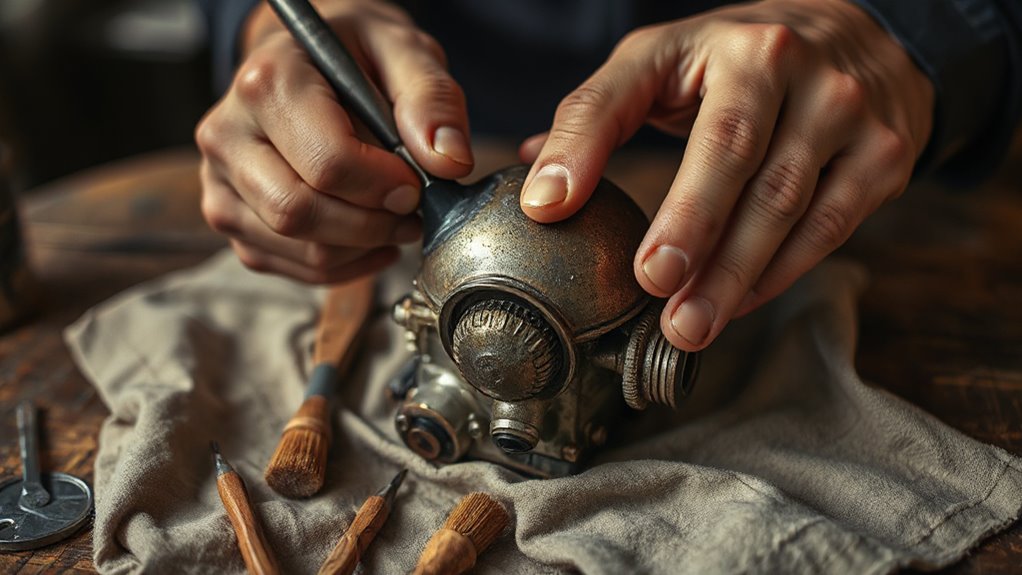

To extend the lifespan of original components, regularly inspect and clean parts gently with non-abrasive techniques, avoiding harsh chemicals that could cause damage. Store parts in climate-controlled environments to prevent corrosion and deterioration. Handle fragile pieces with care to prevent physical harm. Using proper materials that are compatible with the original ones helps protect their integrity. Implementing consistent maintenance routines and proper storage practices ensures these rare parts remain preserved for future generations; discover more about effective preservation strategies as you continue.

Get business pricing on garage and car supplies
- Business-only prices and quantity discounts
- Tax-exempt purchasing
- Multiple users, one account, clear invoices
Key Takeaways
- Conduct regular inspections to detect early signs of deterioration and address issues promptly.
- Store components in climate-controlled environments to prevent environmental damage and corrosion.
- Use gentle, non-abrasive cleaning methods suitable for delicate or aged materials.
- Handle parts with care to avoid physical damage during maintenance and transportation.
- Apply appropriate protective coatings or treatments to prevent corrosion and material degradation over time.
Have you ever wondered why preserving rare parts is essential for maintaining our technological and cultural heritage? These components often represent a specific moment in history or a breakthrough in design, and their preservation ensures future generations can appreciate and learn from them. When dealing with rare parts, the key is to extend their lifespan through proper maintenance and careful handling. One of the most effective ways to do this is by applying targeted restoration techniques. Restoration techniques involve delicate cleaning, repair, and sometimes reinforcement of the original materials, all done with precision to retain the part’s authenticity. Using appropriate methods helps prevent further deterioration and keeps the component as close to its original state as possible. It’s crucial to understand the materials involved and choose techniques that are compatible, avoiding any damage caused by incompatible chemicals or processes. Additionally, employing sizing and load‑planning tools can help prevent overloading and stress that might accelerate deterioration of fragile components.
Alongside restoration techniques, sourcing alternatives becomes a vital part of preservation. When original parts are damaged beyond repair or missing altogether, sourcing alternatives provides a way to keep the overall system functional without compromising historical integrity. This doesn’t mean simply replacing parts; rather, it involves finding or creating substitutes that match the original’s specifications and appearance. Skilled craftsmen or modern manufacturing methods can produce these alternatives, ensuring they blend seamlessly with the original components. This approach allows you to maintain the integrity of the piece while reducing stress on the original parts, which might be fragile or irreplaceable.
Maintaining rare parts also requires ongoing care—regular inspections, proper storage, and controlled environments help prevent corrosion, wear, and environmental damage. For example, storing parts in climate-controlled environments slows down deterioration and preserves delicate materials like metal alloys or early plastics. When cleaning or handling these components, always use gentle, non-abrasive techniques, and avoid harsh chemicals that could cause irreversible damage.
climate-controlled storage for rare parts
As an affiliate, we earn on qualifying purchases.
As an affiliate, we earn on qualifying purchases.
Frequently Asked Questions
How Can I Identify if a Part Is Truly Rare?
You can identify if a part is truly rare by conducting authenticity verification through trusted sources or expert evaluations. Rarity assessment involves checking production numbers, historical significance, and availability in the market. Look for unique identifiers like serial numbers or original packaging. If a part has limited distribution or is difficult to find, it’s likely rare. Always verify its provenance to guarantee you’re dealing with an authentic, rare component.
What Are the Risks of Restoring Original Components?
Restoring original components carries a 30% risk of causing vintage part damage, which can compromise authenticity. Restoration risks include inadvertently damaging delicate materials or losing original markings, reducing value. You might also misjudge compatibility or over-restore, diminishing the part’s historical integrity. To avoid these issues, work with experienced specialists who understand the nuances of vintage parts, ensuring preservation without risking damage during restoration.
Are There Legal Considerations When Preserving Vintage Parts?
Yes, you need to consider legal compliance when preserving vintage parts. Make sure you’re not infringing on intellectual property rights or trademarks associated with original components. Check local laws and regulations to avoid violations, especially if you’re using or modifying copyrighted or patented parts. Staying informed helps you protect yourself legally while maintaining your vintage items, ensuring your preservation efforts are both respectful of the law and the original designs.
How Do Climate Conditions Affect Rare Part Preservation?
Climate impact can make or break your preservation efforts. Humidity causes corrosion, while extreme temperatures may crack or warp delicate parts. To combat this, you should adopt preservation techniques like climate-controlled storage and desiccants to control moisture. By understanding how climate affects your rare parts, you can implement effective strategies to extend their lifespan, ensuring they stay in pristine condition despite environmental challenges.
Can Modern Tools Effectively Maintain Antique Components?
Yes, modern tools can effectively maintain antique components. You can use advanced diagnostic tools to identify issues accurately, ensuring precise restoration techniques. These tools help you detect hidden corrosion, material fatigue, or microfractures that traditional methods might miss. By applying modern technology, you can extend the lifespan of rare parts while preserving their original integrity, making maintenance more efficient and reliable.
non-abrasive cleaning tools for delicate components
As an affiliate, we earn on qualifying purchases.
As an affiliate, we earn on qualifying purchases.
Conclusion
Just like a gardener tends to delicate blooms, you must care for your rare parts with patience and precision. Regular maintenance and gentle handling can make these components last much longer, turning potential junk into treasured relics. Remember, every small effort you invest is like watering a fragile seed—eventually, it blossoms into a lasting legacy. By preserving these parts, you guarantee your machine’s history endures, just like a timeless masterpiece.
protective coatings for metal corrosion prevention
As an affiliate, we earn on qualifying purchases.
As an affiliate, we earn on qualifying purchases.
restoration kits for vintage electronics
As an affiliate, we earn on qualifying purchases.
As an affiliate, we earn on qualifying purchases.
Fall Picks
fall essentials
As an affiliate, we earn on qualifying purchases.