To set ignition timing on older bikes for peak performance, first locate the timing marks and connect a timing light to the spark plug. Rev the engine slightly and adjust the timing until the spark fires just before TDC on the compression stroke. Fine-tuning your timing guarantees better power, efficiency, and smoother operation. If you want to get the most from your bike, there’s more expert advice to help you perfect the process.
Key Takeaways
- Locate timing marks and use a timing light to align spark firing just before TDC on compression stroke.
- Adjust the ignition advance or distributor to ensure proper timing mark alignment.
- Check and set spark plug gap to 0.028-0.032 inches for a strong, consistent spark.
- Tune the carburetor for optimal air-fuel mixture and steady idle to support precise ignition timing.
- Test ride and recheck timing with a timing light to fine-tune for maximum engine power and smoothness.
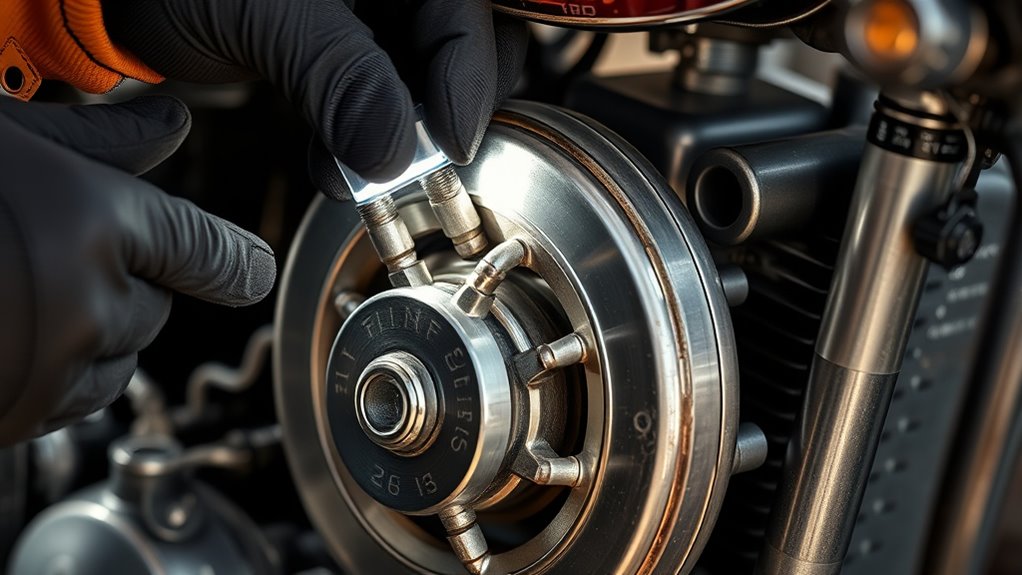
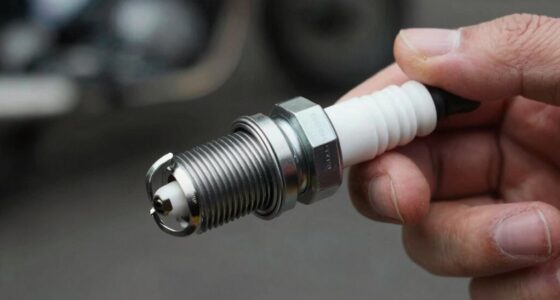
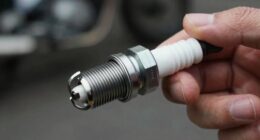
If your older motorcycle isn’t running as smoothly as it used to, one of the most effective ways to boost performance is by setting the ignition timing correctly. Proper ignition timing ensures that your engine fires at the perfect moment, improving power, fuel efficiency, and overall reliability. Before diving into timing adjustments, make sure your spark plug gap is correct. A spark plug with the right gap creates a strong, consistent spark essential for reliable ignition. If the gap is too wide or narrow, it can cause misfires or poor combustion, undermining your efforts to fine-tune the engine. Use a feeler gauge to set the spark plug gap to the manufacturer’s specifications, usually around 0.028 to 0.032 inches for many older bikes. This simple check can make a noticeable difference in how smoothly your motorcycle runs.
Once your spark plug gap is set properly, move on to the carburetor adjustment. A well-tuned carburetor ensures the engine receives the right air-fuel mixture, which directly impacts ignition timing effectiveness. If the mixture is too rich or too lean, it can cause hesitation, rough idling, or reduced power. Adjust the carburetor screws to achieve a smooth, steady idle and responsive throttle. Keep in mind that a balanced air-fuel mixture helps your ignition timing work more efficiently, preventing knocking or pinging that can occur if the mixture isn’t perfect.
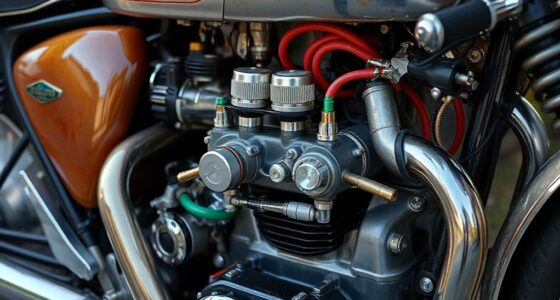
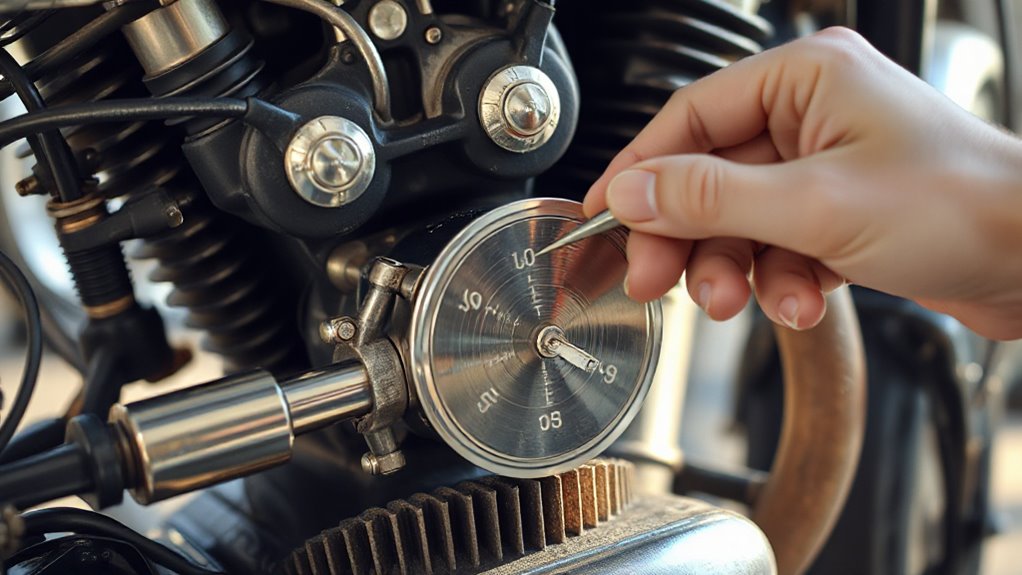
Now, with your spark plug gap correct and the carburetor dialed in, you’re ready to set the ignition timing itself. Locate the timing marks on your engine, and use a timing light to see when the spark plug fires relative to the piston position. Usually, you want the spark to occur just before the piston reaches top dead center (TDC) on the compression stroke. Turn the ignition advance or distributor until the timing light indicates the correct mark. Be cautious—small adjustments can make a big difference. It’s often best to make incremental changes and test ride the bike afterward to gauge improvements.
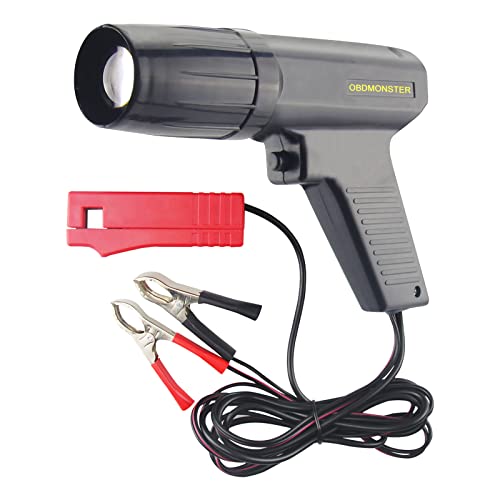
Automotive Timing Light 12V, Inductive Ignition Timing Light Gun for 2&4 Stroke Petrol Engine for Old Classical Car Motorcycle
Ignition Timing Light: Design to re-timing your car's ignition to get the best performance that you can. Suitable…
As an affiliate, we earn on qualifying purchases.
As an affiliate, we earn on qualifying purchases.
Frequently Asked Questions
How Often Should Ignition Timing Be Checked on Older Bikes?
You should check your ignition timing every 3,000 to 5,000 miles or as part of your regular maintenance schedule. This timing interval helps guarantee your bike runs smoothly and efficiently. If you notice rough idling, decreased power, or poor fuel economy, consider inspecting and adjusting the timing sooner. Regular checks keep your engine performing at its best and prevent potential damage caused by incorrect timing.
Can Incorrect Timing Cause Engine Damage?
Incorrect timing can quietly lead to engine trouble, risking your bike’s health. When your ignition spark isn’t properly aligned—thanks to a misadjusted timing belt—it strains engine components, causing wear over time. This subtle misfire can result in reduced power, increased fuel consumption, or even damage to pistons and valves. Keep your timing precise, and you’ll preserve your engine’s longevity and enjoy smoother rides.
What Tools Are Needed to Set Ignition Timing?
To set ignition timing on your bike, you’ll need a timing light and feeler gauges. The timing light helps you see the precise moment the spark occurs, while feeler gauges verify the correct gap in components like the points or spark plug. Attach the timing light to your spark plug wire, start the engine, and then adjust the timing based on the light’s flash, using feeler gauges for accuracy.
How Does Altitude Affect Ignition Timing Adjustment?
Altitude affects ignition timing because thinner air requires you to adjust for altitude compensation. As you ride higher, you might need to advance the timing slightly to maintain ideal performance. You should also check your carburetor adjustment, ensuring the mixture remains correct. Properly tuning ignition timing and carburetor settings for altitude helps your bike run smoothly, prevents knocking, and maximizes power at different elevations.
Is It Necessary to Retime After Replacing the Spark Plug?
Oh, absolutely! When you do a spark plug replacement, don’t assume the bike’s timing stays perfect. You’ll want to retime the ignition to guarantee peak performance and fuel efficiency. Skipping this step is like ignoring a leaky faucet—eventually, it’ll cause bigger problems. So, after swapping that spark plug, take a moment for timing retuning. It’s a small task that keeps your old bike running smoothly and reliably.

CTA Tools 3235 Spark Plug Gapper: Coin-Style Spark Plug Gap Tool, 0.020"–0.100" Measurement Range, Plated Steel, Quick-Check Reference Tool
Wide range of professional automotive specialy tools
As an affiliate, we earn on qualifying purchases.
As an affiliate, we earn on qualifying purchases.
Conclusion
Mastering your bike’s ignition timing is like tuning a finely crafted instrument. When you get it just right, your engine roars to life with newfound vigor, releasing its true potential. Think of it as unlocking the secret heartbeat beneath your fingertips, turning every ride into a symphony of power and joy. With a little patience and attention, you breathe new life into your old bike, transforming it into a roaring beast ready to conquer the open road.

Pilot Screw Adjusting Tool, Carburetor Adjustment Screwdriver Tool, 16.34in 110° Angled Head Motorcycle Tool, for ATV, UTV, Snowmobile
【Wide Application】Carburetor pilot screw adjusting tool is universal, suitable for ATV, UTV, snowmobile and so on.
As an affiliate, we earn on qualifying purchases.
As an affiliate, we earn on qualifying purchases.
Automotive Timing Light 12V, Inductive Ignition Timing Light Gun for 2&4 Stroke Petrol Engine for Old Classical Car Motorcycle
Ignition Timing Light: Design to re-timing your car's ignition to get the best performance that you can. Suitable…
As an affiliate, we earn on qualifying purchases.
As an affiliate, we earn on qualifying purchases.