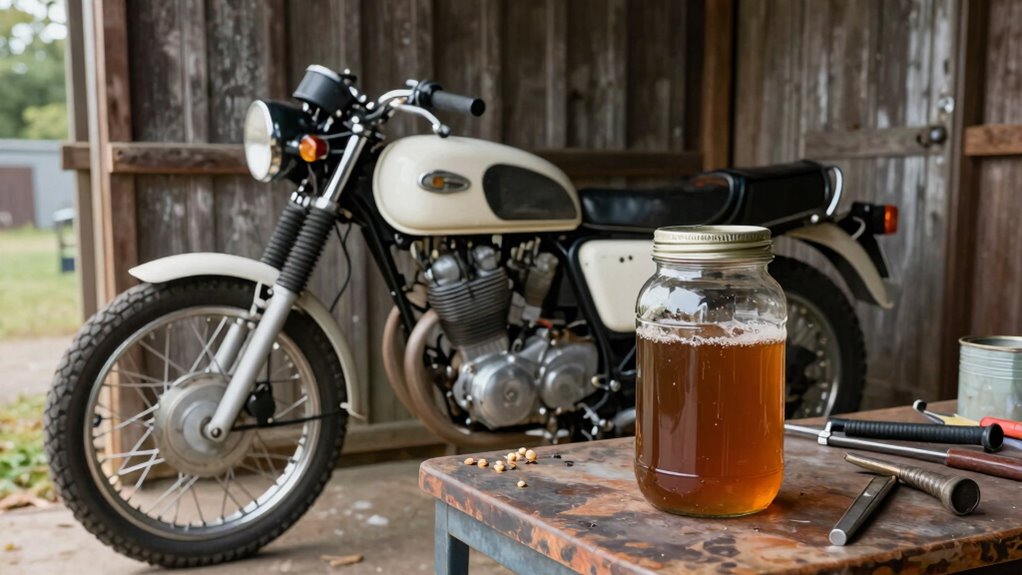

Using a fuel stabilizer on your stored bike is worth it because it helps prevent fuel from degrading over time, which can lead to clogging, varnish buildup, and engine problems. It keeps your fuel fresh, making startup easier and protecting your fuel system components from corrosion and contaminants. This simple step saves you time and money on repairs and maintains your bike’s performance. Keep exploring to discover more ways to keep your bike in top shape during storage.

Get business pricing on garage and car supplies
- Business-only prices and quantity discounts
- Tax-exempt purchasing
- Multiple users, one account, clear invoices
Key Takeaways
- Prevents fuel degradation, ensuring the bike starts easily after storage.
- Protects fuel system components from varnish, gum, and deposits.
- Reduces the risk of engine clogging and costly repairs.
- Maintains optimal engine performance during long-term storage.
- Extends the lifespan of both fuel and bike components.
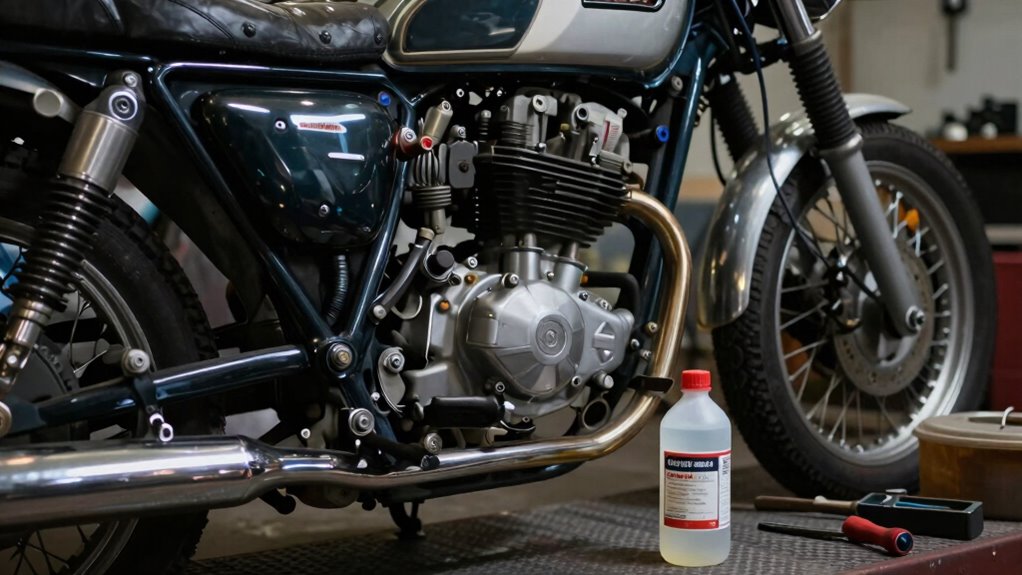
Are you planning to store your bike for an extended period? If so, you might think just parking it in the garage or shed is enough. However, taking a few extra steps can save you a lot of trouble later. One of those steps is using a fuel stabilizer. Fuel stabilizer is a simple product that can make a significant difference in maintaining your bike’s performance and longevity during storage. It helps prevent the fuel from degrading over time, which is essential for both engine maintenance and fuel system preservation.
Using a fuel stabilizer protects your bike’s engine and fuel system during long-term storage.
When fuel sits stagnant in your tank for months, it can break down and form varnish, gum, and other deposits. These contaminants can clog fuel lines, filters, and carburetors, making it harder to start your bike when you’re ready to ride again. Using a fuel stabilizer ensures that your fuel remains fresh, reducing the risk of these issues. It’s a small investment that can save you hours of troubleshooting and costly repairs later on. Plus, it keeps your engine running smoothly by maintaining the quality of the fuel it relies on.
Engine maintenance during storage isn’t just about changing oil or inspecting parts. The fuel system plays a key role in your bike’s health, and neglecting it can lead to problems that are difficult to fix. When you add a fuel stabilizer, you’re effectively protecting your engine from the harmful effects of old fuel. This means your engine will start easier and run more reliably when you’re ready to hit the road again. It also helps preserve the fuel system components, such as injectors and carburetors, by preventing corrosion and buildup caused by degraded fuel. Proper storage practices also support biodiversity by reducing the need for repairs and waste generated from engine failures.
Using a fuel stabilizer is straightforward. You simply add it to your tank before storage, fill the tank with fresh fuel, and run the engine for a few minutes. This process allows the stabilizer to circulate through the entire fuel system. Additionally, choosing the right stabilizer can help prevent fuel degradation and extend the life of your fuel. Incorporating storage best practices can further enhance the longevity of your bike and its components, making maintenance easier when you’re ready to ride again.
In short, applying a fuel stabilizer during long-term storage is a smart move. It’s an easy way to protect your investment by ensuring your engine maintenance and fuel system preservation are taken care of. When you take these precautions, you’re not just preventing problems—you’re making sure your bike will start right up and run smoothly when you’re ready to ride again.
Products Worth Considering

Milwaukee M12 FUEL 1/4-Inch Hex Impact Driver Kit

DEWALT 20V MAX 5-Tool Cordless Combo Kit with Drill, Impact Driver, Saws, Oscillating Multi-Tool, Batteries, Charger, and Bag (DCK551D1M1)

Innova 5610 OBD2 Bidirectional Scan Tool
As an affiliate, we earn on qualifying purchases.
Frequently Asked Questions
Can Fuel Stabilizer Damage My Motorcycle’s Fuel System?
Fuel stabilizer generally won’t damage your motorcycle’s fuel system if you choose the right type. It’s essential to guarantee chemical compatibility with your fuel system components, as some stabilizers may react poorly with certain materials. Always follow the manufacturer’s instructions and opt for a reputable brand. Proper use prevents corrosion and clogs, protecting your fuel system, and extending your bike’s lifespan without risking damage.
How Long Can Fuel Sit Before Stabilizer Becomes Ineffective?
Think of fuel stabilizer like a time capsule for your bike’s fuel—it’s effective for about 12 months, but after that, fuel degradation begins. If your stabilizer is compatible with your fuel type, it can slow this process considerably. However, beyond a year, the stabilizer’s effectiveness diminishes, risking engine issues. Regularly adding fresh stabilizer or draining old fuel keeps your bike ready, just like a well-preserved treasure.
Is Fuel Stabilizer Necessary for Short-Term Storage?
Yes, fuel stabilizer is necessary for short-term storage. It helps prevent fuel system issues like gum and varnish buildup, ensuring your bike’s engine runs smoothly when you’re ready to ride again. During storage preparation, adding stabilizer to your fuel tank keeps the fuel fresh, especially if your bike won’t be used for a few weeks. This simple step saves you time and money on repairs caused by degraded fuel.
Does Stabilizer Work With All Types of Fuel?
Think of fuel stabilizer as a universal partner, working effectively across most fuel types. While it’s highly compatible with unleaded gasoline, its effectiveness can vary with ethanol-blended fuels or diesel. I once stored a bike with mixed fuel, and stabilizer kept the engine running smoothly months later. To get the best results, always check the fuel compatibility and follow the manufacturer’s instructions for *ideal* stabilizer performance.
Can I Add Stabilizer to Partially Full Tanks?
Yes, you can add stabilizer to a partially full tank. Doing so helps maintain fuel quality during storage, especially if you expect to leave your bike unused for an extended period. Just make certain you add the stabilizer according to the manufacturer’s instructions, mix it well, and consider topping off the tank if possible. This way, you prevent fuel degradation and keep your bike ready to ride when you need it.
Conclusion
So, next time you’re tempted to let your bike sit and gather dust, remember that skipping fuel stabilizer is basically playing Russian roulette with your engine. Why risk turning that shiny ride into a worthless paperweight? A little investment in stabilizer now saves you from the heartbreak of costly repairs later. After all, who doesn’t want their bike to start right up and roar to life, instead of sputtering like a sad, neglected relic?