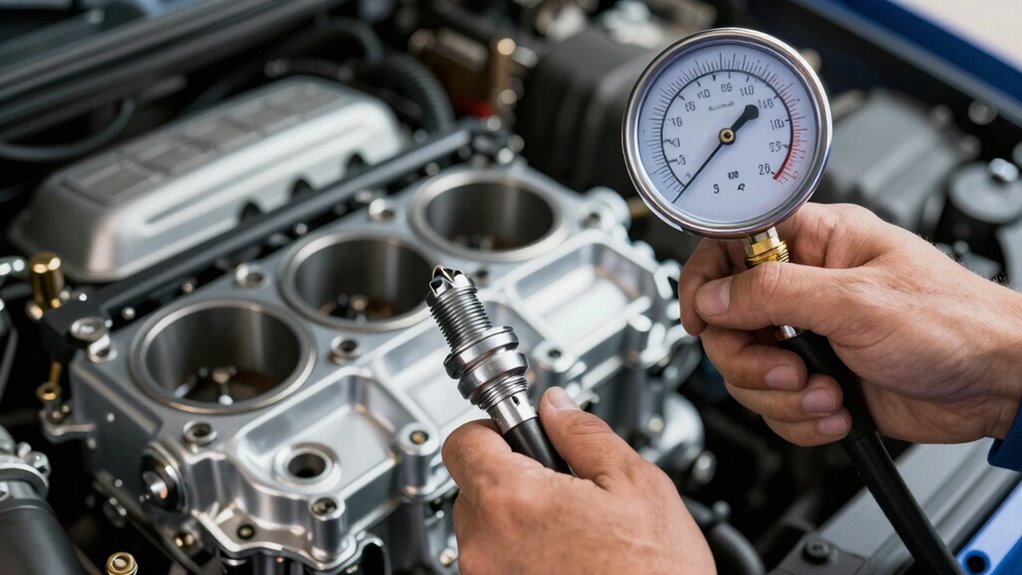

To check compression before buying a project bike, you’ll need a compression tester. First, verify the engine is warm, then remove the spark plug and attach the tester securely. Have someone crank the engine while you watch the gauge, noting the pressure. Ideally, the reading should fall within the manufacturer’s range. Consistently low or uneven results may signal costly repairs. If you want to know more about interpreting these numbers, keep going.
Open a free Amazon Business account
Business pricing, bulk buying and tax-exempt orders.
As an affiliate, we earn on qualifying purchases.
Key Takeaways
- Remove the spark plug and ensure the engine is warm before testing compression.
- Attach a compression tester securely to the spark plug hole for accurate readings.
- Crank the engine multiple times and record the steady pressure reading for each cylinder.
- Compare readings with the manufacturer’s specifications to assess engine health.
- Check for consistent or low compression across cylinders, indicating potential mechanical issues.
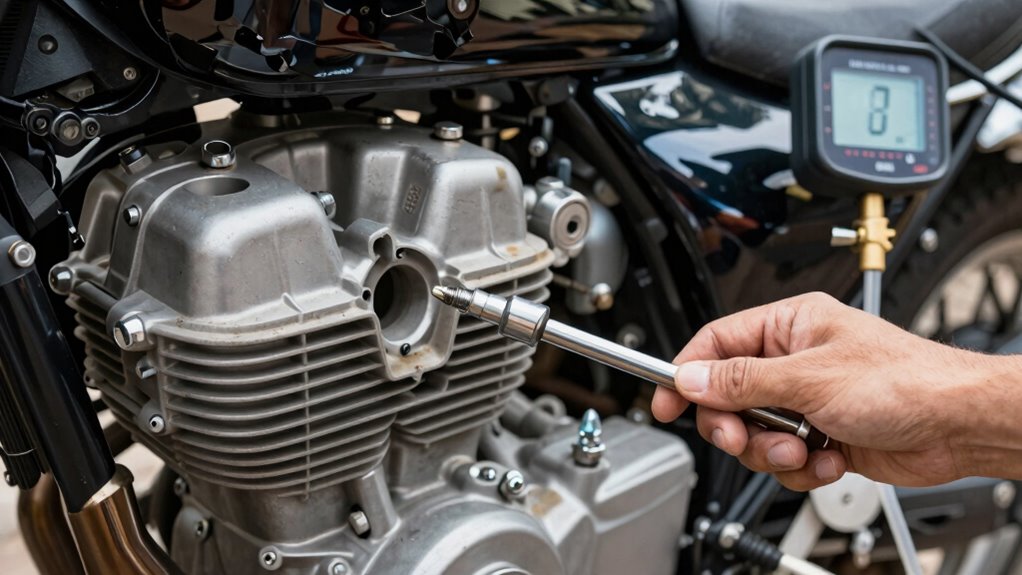
Buying a project bike can be exciting, but it’s vital to check its compression before making a purchase. This step helps you determine the engine’s health and avoid costly surprises later. To start, you’ll need a compression tester, which is a simple tool that measures the pressure inside the engine’s cylinders. Before testing, verify the engine is at operating temperature by running it for a few minutes. Then, turn off the bike and remove the spark plug. The spark plug is essential because it gives you access to the combustion chamber and is the first component to check for signs of wear or damage. Take note of the spark plug’s condition; if it’s fouled, oily, or worn out, it can indicate underlying issues that might affect compression.
Next, connect the compression tester to the spark plug hole, making sure it’s tightly secured to prevent leaks. Before you crank the engine, double-check the engine oil level. Low or dirty engine oil can influence compression readings, so topping it off or changing it before testing can give more accurate results. With everything in place, have someone crank the engine while you read the compression gauge. You should see a steady increase in pressure, and the reading should fall within the manufacturer’s specified range, usually between 100-200 psi depending on the bike model. If the pressure is markedly below this range, it suggests worn piston rings, valves, or a head gasket problem. Uneven readings across cylinders also point to mechanical issues that might require attention.
If your readings are low or inconsistent, don’t dismiss the bike immediately. Sometimes, a simple tune-up—like replacing the spark plug or adjusting the valve clearances—can improve compression. Remember, a good spark plug is vital for proper combustion, and if it’s old or damaged, it can lead to poor compression readings. After testing, replace the spark plug and recheck the compression to see if it improves. If the readings are still low, you may want to consult a mechanic or consider the cost of repairs before finalizing your purchase. Ultimately, checking compression provides you with valuable insights into the engine’s condition, and understanding engine health can help you make a more informed decision, saving you from future headaches and guaranteeing you invest in a project bike with a solid foundation. Additionally, knowing how to interpret compression results can help you identify potential mechanical issues early on, preventing unexpected breakdowns in the future. Being aware of the compression levels can also guide you in assessing whether the engine requires significant repairs or if it’s worth pursuing further. Regularly inspecting compression can also help maintain optimal engine performance over time.
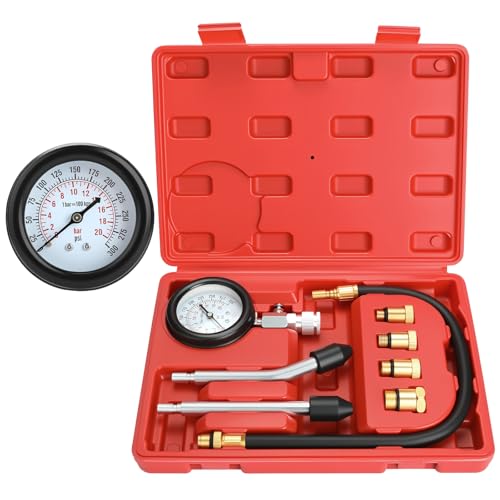
BETOOLL HW0130 8pcs Petrol Engine Cylinder Compression Tester Kit Automotive Tool Gauge
- Quick and Accurate Compression Check: Checks petrol engine compression quickly and accurately
- Easy Pressure Release: Side-mounted pressure release button for convenience
- Clear Dual-Color Gauge: 3-inch gauge with dual color scale for easy reading
As an affiliate, we earn on qualifying purchases.
As an affiliate, we earn on qualifying purchases.
Frequently Asked Questions
What Tools Are Needed to Check Compression on a Bike?
To check compression on a bike, you’ll need a compression gauge, which is simple to use with proper maintenance. Before starting, make certain safety gear essentials like gloves and goggles are in place. Attach the gauge to the spark plug hole, crank the engine, and note the pressure reading. Regular compression gauge maintenance, like cleaning and storing it properly, ensures accurate results and safe testing during your project bike inspections.
How Do Temperature Variations Affect Compression Readings?
Temperature variations can substantially impact compression readings. When the engine’s temperature isn’t stable, readings may be inconsistent, making it hard to assess the engine’s health accurately. Warmer temperatures typically increase oil viscosity, leading to higher compression readings, while colder temps decrease viscosity, lowering readings. To get reliable results, guarantee temperature stability before testing, allowing the engine to warm up thoroughly for consistent and accurate compression measurements.
What’s Considered a Good Compression Range for Most Bikes?
A good compression range for most bikes is typically between 125 to 150 psi. When checking, verify the engine oil is fresh, as it can boost compression readings if the rings are worn. Also, inspect the spark plug; a healthy plug indicates good combustion. If readings are too low or inconsistent, it may signal worn piston rings or valves, suggesting the bike needs repairs before purchase.
How Often Should I Check Compression During a Rebuild?
You should check compression regularly during a rebuild, ideally after major engine work or every few hundred miles of use. Always prioritize compression testing safety by wearing eye protection and confirming the bike is off and cooled down. Use proper testing technique by removing all spark plugs, grounding the spark plug wire, and cranking the engine with the throttle open. Frequent checks help you catch issues early and ensure your rebuild stays on track.
Can Poor Compression Indicate Other Engine Issues?
Poor compression can definitely indicate other engine issues, like engine wear or cylinder leakage. If you notice low compression, it might mean the piston rings are worn out, valves aren’t sealing properly, or there’s damage inside the cylinder. These problems often lead to decreased power, rough running, or increased fuel consumption. Addressing compression issues early helps prevent further engine damage and costly repairs down the line.
BETOOLL HW0130 8pcs Petrol Engine Cylinder Compression Tester Kit Automotive Tool Gauge
- Quick and Accurate Compression Check: Checks petrol engine compression quickly and accurately
- Easy Pressure Release: Side-mounted pressure release button for convenience
- Clear Dual-Color Gauge: 3-inch gauge with dual color scale for easy reading
As an affiliate, we earn on qualifying purchases.
As an affiliate, we earn on qualifying purchases.
Conclusion
Checking compression is a smart move before buying a project bike, but don’t worry if it’s lower than expected—some engines just need a tune-up. A compression test gives you a good idea of the engine’s health, helping you avoid costly surprises later. So, take your time, do the test, and trust your instincts. With a little patience, you’ll find the right bike and enjoy a smooth ride ahead.
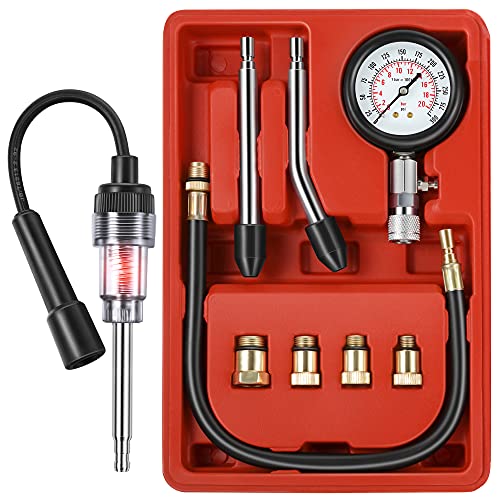
Fiada 9 Pieces Automotive Compression Tester Kit and Spark Plug Tester, Universal Car and Motorcycle Engine Testing Tools for Cylinder Pressure Gauge (Red)
- Universal Engine Compression Tester: Tests cars, trucks, motorcycles, and more
- Complete Adapter Set: Includes straight, curved, brass adapters, and extension hose
- Spark Plug Tester: Diagnoses ignition and fuel system issues
As an affiliate, we earn on qualifying purchases.
As an affiliate, we earn on qualifying purchases.

QPKING M4 Motorcycle Diagnostic Tool for Harley-Davidson 4P/6P, Read/Clear Codes & Live Data, ECU & Service Reset, Throttle Reset & ABS Bleed, with OBD2 16P, for Dyna Softail Sportster Touring
- Harley-Davidson Diagnostic Compatibility: Supports 4P/6P diagnostic ports
- Fault Code Reading and Clearing: Reads and clears engine, ABS, TPMS, IMMO codes
- Real-Time Data Monitoring: Displays RPM, temperature, O2, speed
As an affiliate, we earn on qualifying purchases.
As an affiliate, we earn on qualifying purchases.
Back to school Picks
back to school
As an affiliate, we earn on qualifying purchases.