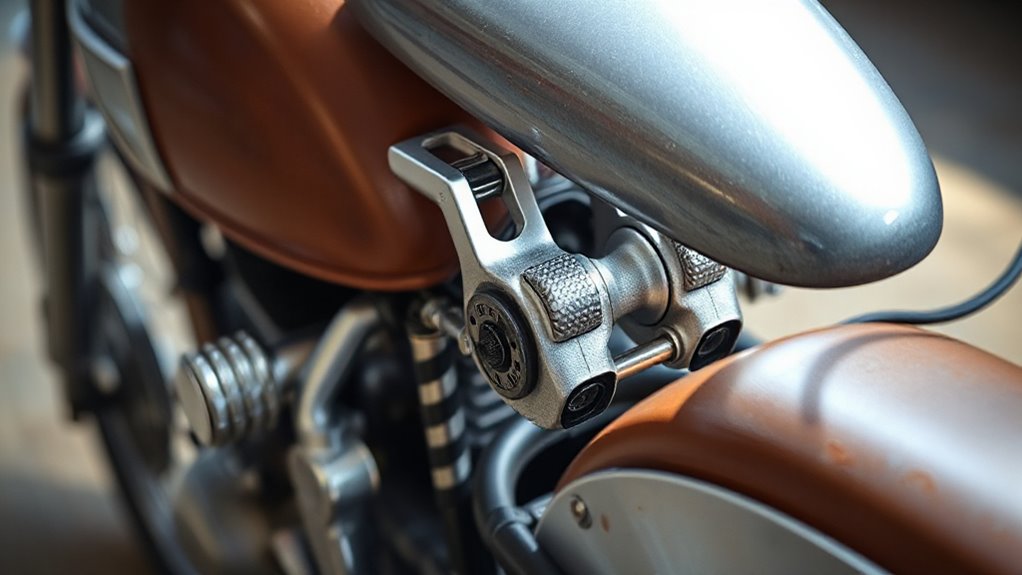
Using new 3D printing tech, you can easily customize or restore your old motorcycle with strong, precisely tailored parts. Advanced materials like high-performance thermoplastics, composites, and metal alloys make everything lightweight yet durable enough to withstand riding conditions. You can create complex parts with intricate details, experiment with unique designs, and produce replacement components on demand. Staying ahead with this technology means more control over your bike’s style and performance—continue to explore and discover even more possibilities.
Key Takeaways
- 3D printing enables precise customization and restoration of vintage motorcycle parts, maintaining classic aesthetics with modern performance.
- Advanced materials like reinforced composites and metal alloys enhance durability and strength of 3D-printed motorcycle components.
- Complex geometries and intricate details can be easily produced, allowing innovative and personalized design features.
- Rapid iteration and testing of new designs reduce costs and lead times compared to traditional manufacturing methods.
- In-house 3D printing offers greater control over production, supporting on-demand parts and reducing reliance on external suppliers.
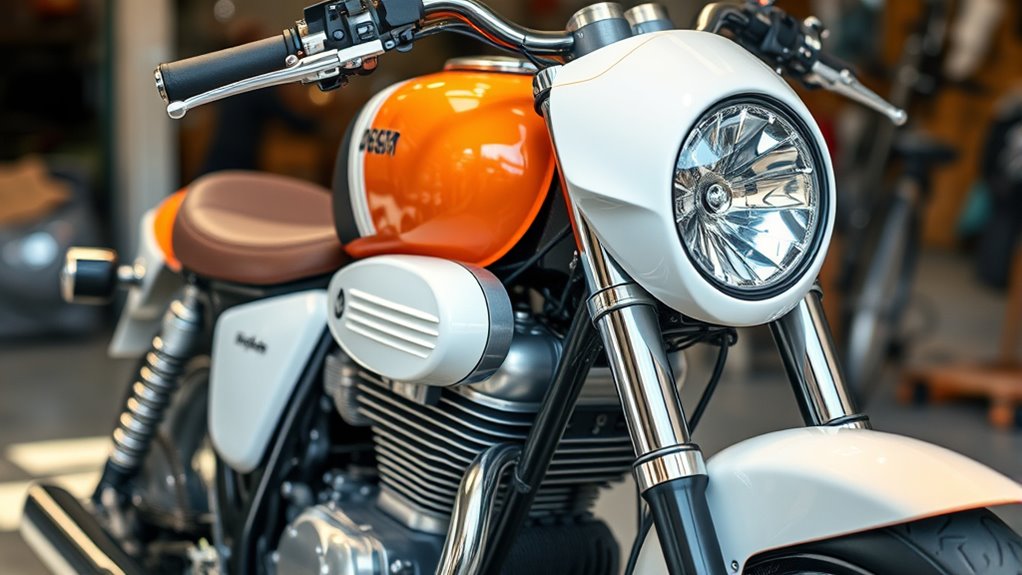
Have you ever wondered how 3D printing is revolutionizing motorcycle manufacturing? This innovative technology is transforming how you can customize and restore older bikes, making it easier and more affordable to bring your vision to life. One of the most significant advantages of 3D printing lies in its ability to enhance material durability and design flexibility. When you use 3D-printed parts, you’re not limited to traditional manufacturing constraints. Instead, you can create components that are lightweight yet strong enough to withstand the rigors of riding, thanks to advances in material science. High-performance thermoplastics, reinforced composites, and even metal alloys can be tailored precisely to the requirements of each part, ensuring they hold up over time without sacrificing performance.
Design flexibility is another key benefit that makes 3D printing ideal for motorcycle enthusiasts looking to modify or restore their bikes. Unlike conventional manufacturing, which often involves molds, casting, or machining, 3D printing allows you to produce complex geometries directly from digital models. This means you can incorporate intricate details, customized logos, or aerodynamic features that would be difficult or impossible to achieve with traditional methods. Whether you’re designing a unique exhaust cover, a custom bracket, or a personalized fairing, 3D printing empowers you to experiment freely, making each part truly one-of-a-kind. You can also rapidly iterate on your designs, testing different configurations without the need for costly tooling or lengthy lead times.
3D printing enables complex, customized motorcycle parts with rapid iteration and intricate details, transforming design possibilities.
Furthermore, 3D printing enables you to upgrade older motorcycles with modern, high-tech parts that blend seamlessly with vintage aesthetics. Need a replacement for a discontinued part? Simply scan the original, make modifications if desired, and print a new one in a matter of hours. This process not only saves you money but also preserves the character of your classic bike while enhancing its performance and reliability. Additionally, advancements in material science have led to even more durable and versatile materials suitable for motorcycle parts. The ability to produce complex, durable parts on demand means you’re less dependent on external suppliers, giving you more control over your project and timeline.
In essence, 3D printing opens up a world of possibilities for motorcycle enthusiasts who want to breathe new life into their bikes. You can tailor your ride to your exact preferences, improve the durability of critical components, and push the boundaries of design—all from the comfort of your workshop. It’s a game-changer that combines innovation with tradition, allowing you to craft a motorcycle that’s uniquely yours while leveraging the latest technological advancements.

Metal Earth Premium Series Kawasaki Ninja Motorcycle 3D Metal Model Kit Fascinations
HOBBY MODEL KIT – Unassembled model packed in an envelope with easy to follow instructions. Ideal for ages…
As an affiliate, we earn on qualifying purchases.
As an affiliate, we earn on qualifying purchases.
Frequently Asked Questions
How Durable Are 3d-Printed Motorcycle Parts Long-Term?
You’ll find that 3D-printed motorcycle parts can be quite durable, but material longevity varies based on the type of filament used. While some materials like ABS or nylon offer good strength and wear resistance, design limitations may impact long-term durability, especially under high stress or exposure to elements. Regular inspections and choosing the right material help guarantee your parts last, but they might not match the longevity of traditional metal components.
Are 3d-Printed Parts Safe for High-Speed Riding?
Yes, 3D-printed parts can be safe for high-speed riding if you choose materials that meet regulatory standards and prioritize material safety. You should verify that the printed components are made from high-strength, durable plastics or composites tested for stress and heat resistance. Always consult with manufacturers or experts to guarantee your 3D-printed parts comply with safety standards, reducing risks during high-speed rides.
What Materials Are Most Commonly Used for 3D Motorcycle Components?
You’ll find that materials like ABS, PETG, and nylon are most commonly used for 3D motorcycle components because of their durability and heat resistance. When selecting materials, consider your specific needs and the printing techniques, such as FDM or resin printing, to guarantee the parts are strong enough for riding. Proper material selection is vital for safety and longevity, especially when customizing high-performance motorcycle parts.
Can 3D Printing Replicate Complex Parts Accurately?
Can 3D printing replicate complex parts accurately? Absolutely, but you face design limitations and precision challenges. While advanced printers can craft intricate shapes, achieving perfect detail requires careful calibration and high-quality materials. Think of it as sculpting with digital tools—some details may need refinement. You can succeed by understanding these constraints, ensuring your customized motorcycle parts are both functional and visually stunning. With patience, 3D printing becomes a powerful ally in your project.
How Cost-Effective Is 3D Printing Compared to Traditional Manufacturing?
3D printing is often more cost-effective than traditional manufacturing, especially for small batches or custom parts. You save on tooling costs and reduce waste, which improves manufacturing efficiency. The cost comparison favors 3D printing when you need quick turnaround and complex designs that are expensive to produce conventionally. While initial setup might be higher for large runs, for personalized or low-volume projects, 3D printing offers significant savings.

TCMT Vivid Black Injection ABS Front Inner & Outer Headlight Fairing Fit For Harley Road Glide 1998-2013 Road Glide CVO 2009-2013 Custom FLTRX 2010-2013 Ultra FLTRU 2011-2013 EFI FLTRI 1998-2006
Aftermarket 100% Brand New; Holes are pre-drilled for easy installationl and no install instructions,Mounting hardware are not include
As an affiliate, we earn on qualifying purchases.
As an affiliate, we earn on qualifying purchases.
Conclusion
As you embrace 3D printing, you’re not just customizing your motorcycle—you’re carving your own legacy in a landscape of innovation. Each printed part is like a brushstroke on a canvas, transforming old metal into a masterpiece of modern ingenuity. This technology turns your ride into a living story, blending tradition with tomorrow. So, keep forging ahead; your creativity is the engine, and the future is waiting at your fingertips.

3D Printing GT2 Timing Belt, Zeelo 10 Meters (32.8ft) GT2 Open Timing Belt 2mm Pitch 6mm Width Rubber Fiberglass Fit for RepRap Prusa Mendel Rostock CR-10 Ender 3 3D Printers – Black
Model Number: 10M Rubber Opening Timing belt, 3d printer parts.
As an affiliate, we earn on qualifying purchases.
As an affiliate, we earn on qualifying purchases.

Alpinestars SMX-6 v3 Vented Motorcycle Boots, Advanced Ventilation, Superior Grip, Durable Design, High-Performance Comfort, 41, Black
CE-certified SMX-6 v3 boots designed for high-performance riders seeking premium safety and comfort.
As an affiliate, we earn on qualifying purchases.
As an affiliate, we earn on qualifying purchases.