To add a sidecar to your classic bike, you’ll need to carefully plan its size, shape, and compatibility with your motorcycle frame. Use sturdy yet lightweight materials like steel or aluminum, ensuring a secure mounting system with proper alignment for safe handling. Pay attention to shock absorption, lighting, and reflectors for safety, and make sure all components are securely welded or fastened. Starting with slow rides helps perfect stability—continue exploring for detailed tips on building a safe and functional sidecar.
Key Takeaways
- Plan sidecar size, shape, and compatibility with your motorcycle, using lightweight, sturdy materials like steel or aluminum.
- Design a secure mounting system with reinforced attachment points and shock absorption for stability.
- Ensure proper alignment to prevent handling issues and maintain motorcycle balance during rides.
- Incorporate safety features such as lighting, reflectors, and reliable brakes for visibility and control.
- Test gradually, checking for stability and making adjustments to suspension and mounting for optimal performance.
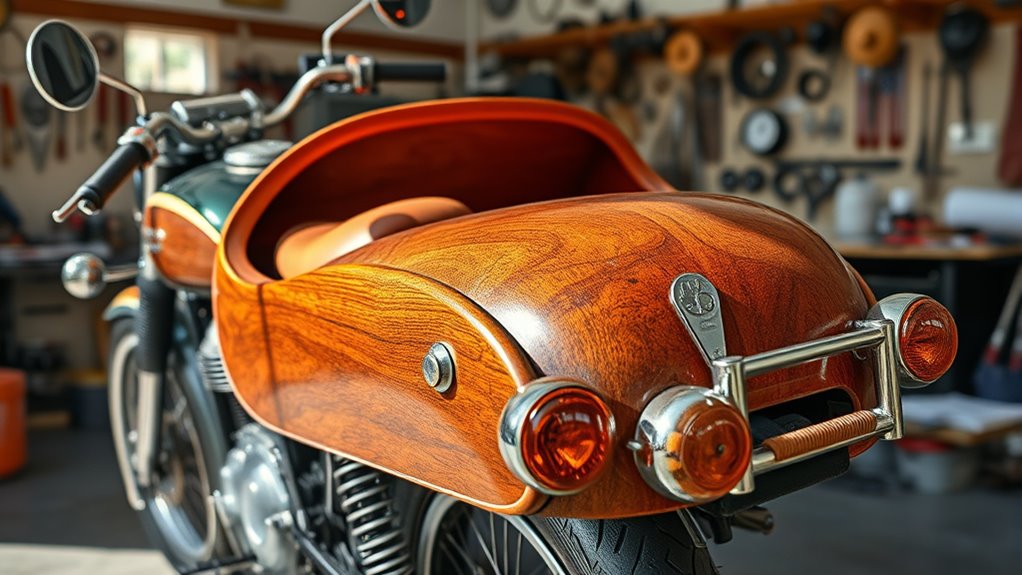
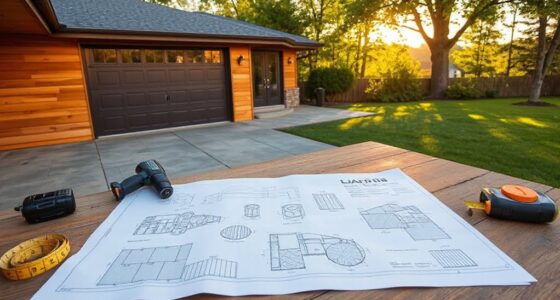
If you’re looking to expand your motorcycle’s versatility, building a DIY sidecar is a rewarding project that anyone with basic mechanical skills can tackle. The key to a successful sidecar addition lies in understanding proper sidecar design. You’ll want to plan carefully, considering the size and shape of the sidecar, ensuring it complements your bike’s frame and weight distribution. Focus on creating a sturdy frame using appropriate materials like steel or aluminum, which provide strength without excess weight. The design should allow for easy mounting and detachment if needed, and include a comfortable interior for passengers or cargo. It’s vital to align the sidecar correctly with your motorcycle to maintain stability and handling during rides. Proper alignment prevents the bike from pulling to one side and ensures a smooth, safe experience.
When working on your sidecar project, safety considerations are paramount. First, always wear protective gear and work in a well-ventilated area. As you build, double-check all welds, fasteners, and structural components; weak points can compromise safety. The mounting system must be robust, with secure attachment points to your motorcycle’s frame. You’ll need to install a reliable shock absorption system to handle bumps and uneven terrain, which also improves safety by maintaining stability. Pay attention to brake and steering integration, ensuring the sidecar doesn’t interfere with your bike’s controls. Proper lighting and reflectors on the sidecar are also critical, especially for night riding or in low-visibility conditions, so others can see you clearly. Additionally, understanding energy-efficient design principles can help you select materials and components that reduce overall weight and improve fuel efficiency, making your sidecar setup more sustainable.
Incorporate safety considerations into the overall design by planning for quick release mechanisms, so you can remove the sidecar easily in case of emergency or for maintenance. Test the setup gradually, starting with slow rides to observe how the sidecar affects handling. Adjustments may be necessary to optimize balance and maneuverability. During the build, keep in mind that a well-designed sidecar not only enhances your motorcycle’s functionality but also ensures your safety and that of any passengers. Regular maintenance checks of the mounting points, tires, and suspension will keep everything secure and working smoothly. Remember, patience and attention to detail in the design phase lay the foundation for a safe, durable, and enjoyable addition to your classic bike.
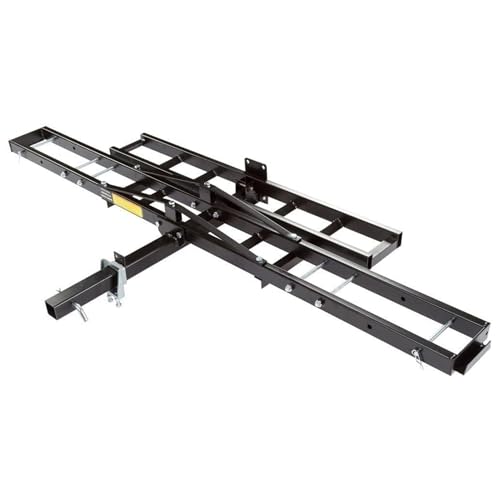
Black Widow Steel Motorcycle Carrier with Ramp for 2-Inch Receiver, 500 lb Capacity - Hitch-Mounted Dirt Bike and Scooter Hauler with Grit-Coated Track and Anti-Rattle Device for SUVs and Trucks
Versatile Bike Hauling: Transport motorcycles, dirt bikes, and scooters with ease using your Class III or IV 2-inch...
As an affiliate, we earn on qualifying purchases.
Frequently Asked Questions
What Are the Legal Requirements for Registering a Sidecar?
You need to check your local laws for registering a sidecar, which often include specific licensing requirements and insurance considerations. Typically, you’ll have to update your vehicle registration and obtain a new title or endorsement. Make sure your insurance covers the sidecar, as some policies might require adjustments. Always verify with your DMV or local authority to ensure you’re compliant and avoid fines or penalties.
How Do I Choose the Right Sidecar for My Bike Model?
Imagine your bike and a snug, perfectly fitting sidecar hugging the road together. To choose the right one, consider sidecar dimensions that match your bike’s frame and weight capacity. Compatibility considerations are key—ensure the mounting points and suspension align smoothly. Visualize a seamless, balanced ride, so measure carefully and select a sidecar designed for your specific model, making every journey safe and enjoyable.
What Safety Precautions Should I Take During Installation?
You should prioritize helmet safety and guarantee secure mounting during installation. Always wear a helmet to protect yourself, and double-check that the sidecar is firmly attached to prevent accidents. Use proper tools and follow manufacturer instructions carefully. Test the setup by slowly riding first, making sure everything feels stable. Regularly inspect the mounting points for wear or looseness, keeping safety at the forefront throughout your project.
Can I Install a Sidecar on Any Motorcycle?
Can you install a sidecar on any motorcycle? Not quite. You need to check bike compatibility because not all bikes handle sidecar attachments well. Factors like frame strength, wheel configuration, and available space matter. You should also consider necessary sidecar accessories for safety and proper fit. Would your bike support the added weight and altered handling? Always verify these details before proceeding to guarantee a safe, enjoyable ride.
How Does Adding a Sidecar Affect Bike Handling and Performance?
Adding a sidecar impacts your bike’s handling and performance considerably. You’ll need to take into account balance considerations, as the extra weight shifts your center of gravity and affects stability. Expect steering adjustments, especially at low speeds, since the sidecar changes your turning dynamics. With proper setup and practice, you can enjoy smoother rides, but always stay alert to these changes to stay safe and maintain control.
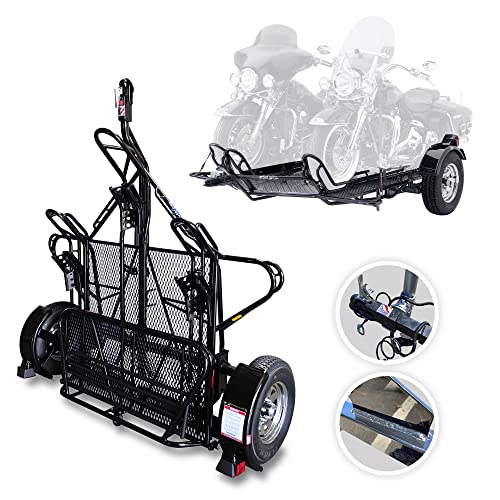
Kendon Stand Up Dirt Bike Trailer for Scooter, Sport Motorcycle, or Cargo with 1500-lb. Load Capacity and Space-Saving Vertical Storage, Push-On Loading Ramp
Multipurpose Utility and Motorcycle Trailer - A strong, versatile patented trailer from Kendon that features a fold-up, stand-up...
As an affiliate, we earn on qualifying purchases.
Conclusion
So, after all that effort, you now have a custom sidecar attached to your classic bike—proudly turning heads and sparking envy. Who would’ve thought that a simple DIY project could transform your ride into a conversation starter? Irony isn’t lost here: you spent hours tinkering, only to realize you’re now the proud owner of a rolling masterpiece that’s slightly less practical but infinitely cooler. Sometimes, the best modifications are the ones you never knew you needed.

Black Widow Motorcycle Hitch Carrier with Wheel Chock and Loading Ramp Lightweight Aluminum 400 lb. Capacity Anti-Rattle Included Fits 2" Receiver
400 LB. CAPACITY - suitable for a single youth or adult dirt bike, motorcycle, electric bike, or fat...
As an affiliate, we earn on qualifying purchases.

Black Widow Steel Motorcycle Carrier with Ramp for 2-Inch Receiver, 600 lb Capacity - Hitch-Mounted Dirt Bike and Scooter Hauler with Grit-Coated Track and Anti-Rattle Device for SUVs and Trucks
Versatile Bike Hauling: Transport motorcycles, dirt bikes, and scooters with ease using your Class III or IV 2-inch...
As an affiliate, we earn on qualifying purchases.