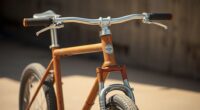
To mount modern forks and disc brakes on a vintage bike, first check if your frame has compatible disc brake mounts and the correct axle standards. Measure the head tube’s internal diameter for the right crown race and verify your headset fits. You may need adapters, spacers, or a new headset to match the new fork’s specifications. Brake compatibility and clearance are vital, so consider frame and fork geometry; keep exploring to learn more about seamless upgrades.
Key Takeaways
- Verify frame compatibility for disc brake mounts and ensure sufficient clearance for modern forks and rotors.
- Measure head tube diameter and test-fit crown races to select appropriate crown race sizes for new forks.
- Check headset compatibility and adjust or replace components to match the steerer tube diameter and geometry.
- Ensure wheel hubs and axles are compatible with new disc brake mounts and consider upgrading if standards differ.
- Confirm sufficient clearance for rotors and calipers, using adapters or spacers as needed for proper installation.

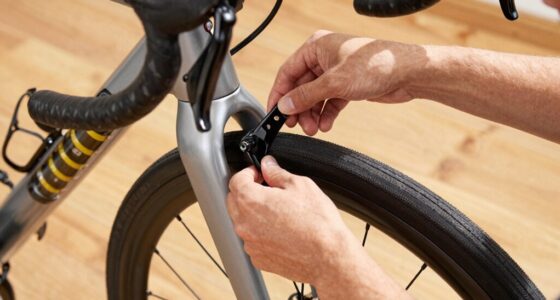
Swapping out the front-end of a vintage bike is a popular way to improve handling, update style, or customize your ride. When you’re contemplating mounting modern forks, it’s essential to think about disc brake compatibility. Many vintage frames were designed with rim brakes in mind, so fitting a disc brake system can require some adjustments. First, check if your frame has the appropriate mounts for disc calipers; if not, you may need adapters or a frame swap altogether. Modern forks designed for disc brakes come with post-mount or flat-mount tabs, so ensure your frame can accommodate these. Additionally, verify the axle standards—some older bikes use quick-release skewers, while newer forks might require thru-axles, which could mean upgrading your wheel hubs as well.
Swapping vintage bike forks requires checking disc brake compatibility and axle standards.
As you move to install a new fork, pay close attention to fork crown race fitting. The fork crown race is a small but critical component that sits between the fork’s crown and your headset bearing. Proper fitting ensures smooth steering and reduces wear on your headset components. When replacing the fork, measure the head tube’s internal diameter and match it precisely to the crown race size. Many modern forks come with a crown race that’s designed for standard sizes like 26.4mm or 30.1mm, but vintage frames often have unique dimensions. It’s worthwhile to take your frame to a bike shop for precise measurement or to test-fit different crown races before committing.
Fitting a modern fork also involves ensuring your headset can handle the new geometry. Some vintage bikes have a different head tube length or angle, which can affect handling and compatibility. You might need to replace or adjust the headset to match the new fork’s specifications. Keep in mind that if you’re installing a fork with a different steerer tube diameter or length, you may need spacers or an entirely new headset to achieve the proper fit.
Additionally, consider disc brake compatibility and potential modifications needed for your specific setup. Larger rotors provide more stopping power but may require frame and fork clearance. Modern hubs with standard disc brake mounting points will integrate seamlessly if your frame and fork are compatible. If not, you might need adapters or custom mounting solutions.
Frequently Asked Questions
Can Modern Forks Fit All Vintage Bike Frames?
Modern forks don’t fit all vintage bike frames because of frame compatibility and fork sizing issues. You need to check the steerer tube diameter, fork crown race, and axle type to guarantee proper fit. Some vintage frames may require adapters or modifications, but not all modern forks will work seamlessly. Always measure your frame’s specifications carefully before attempting a swap to avoid compatibility problems.
What Tools Are Essential for Front-End Swaps?
Did you know that a successful front-end swap can increase your bike’s performance by up to 30%? To do this, you’ll need essential tools like threading tools to properly install new components and bearing pullers to remove old bearings smoothly. These tools guarantee your swap is safe and precise, making your vintage bike feel like new. Always double-check compatibility and take your time for a professional finish.
How Do I Match Brake Calipers to New Forks?
To match brake calipers to your new forks, first check caliper compatibility with your brake mount type—whether post or flat mount. Make certain the caliper’s brake mounting aligns with your fork’s mounting points. Measure the rotor size to match the caliper’s capacity, and verify that the caliper’s mounting bolt pattern fits your fork. This ensures ideal braking performance and secure fitment.
Are There Safety Concerns With Installing Modern Components?
You might feel a thrill as you tighten those modern components onto your vintage bike, but safety considerations shouldn’t be overlooked. Compatibility concerns can lead to unexpected failures if not carefully checked, risking your ride’s integrity. Always verify that your new forks and brakes match your bike’s frame and existing parts. Proper installation and regular maintenance are vital to guarantee your upgrade enhances safety, not compromises it. Stay vigilant and ride with confidence.
Will Upgrading Affect the Bike’s Original Value?
Upgrading your vintage bike can affect its resale value, especially if the modifications alter the original bike frame integrity or look. Collectors often value originality, so modern components might lower its appeal on the secondary market. However, if you choose quality upgrades that enhance performance without damaging the frame, you can preserve value while enjoying improved riding. Just keep documentation of the upgrades for future resale considerations.
Conclusion
Now that you’ve swapped and styled your vintage bike’s front end, you’ve stepped into a world of wonderful wheel wonders. With fresh forks and brakes, you’ll experience enhanced performance and a personalized touch. Remember, the magic lies in mindful modifications, making each ride reflect your style. So, seize the season, embrace the upgrade, and enjoy the exhilarating blend of history and innovation beneath you. Your bike’s new look and leap in leverage await every adventure ahead!