TL;DR

Get business pricing on garage and car supplies
- Business-only prices and quantity discounts
- Tax-exempt purchasing
- Multiple users, one account, clear invoices
Virginia startup Tomo Trucks is showing a prototype of a stripped-down commercial work truck built around a Ford Ranger chassis. The company says it plans to deliver customer vehicles in 2027, but has not disclosed production volumes, pricing or detailed specifications.
Roanoke, Virginia-based Tomo Trucks is developing a basic commercial work truck using a Ford Ranger chassis, with first customer deliveries planned for calendar year 2027, according to the company’s online post. The vehicle shown is a prototype, and Tomo has not shared production volumes, pricing or a complete specification sheet.
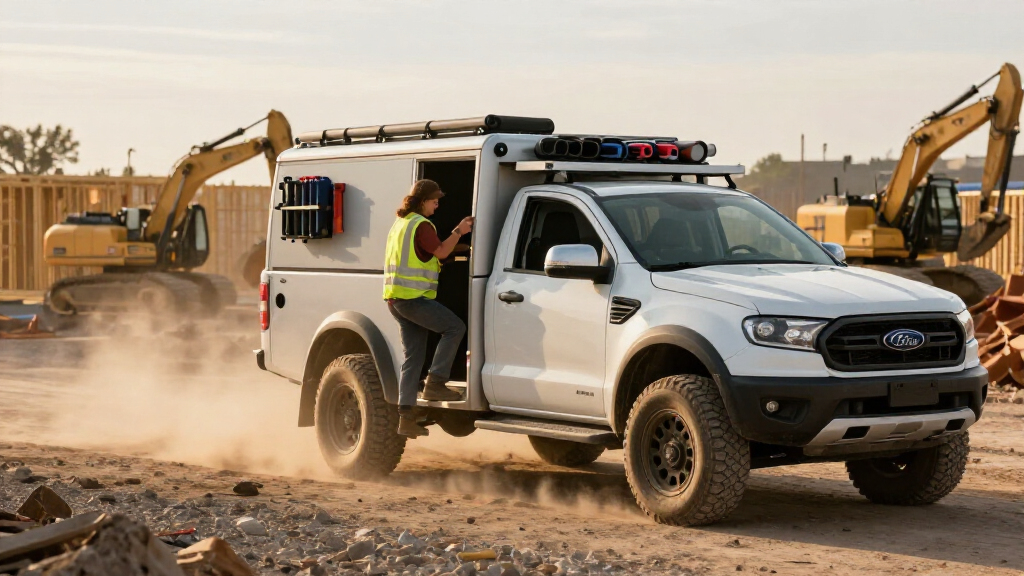
The prototype is presented as a purpose-built vehicle for job sites and commercial use, rather than a conventional pickup aimed at private buyers. It has a flat, five-foot steel bed and an open-sided cab, with little of the bodywork or cabin equipment usually found on a retail truck. Tomo says the cab uses “bio-based” composite materials.
In the design shown, the cab and bed sit on the bare Ranger chassis. The source report says Tomo’s public information is limited: its online presence includes a Facebook post about the truck, while its website directs visitors to a short form asking for a budget and preferred vehicle platform.
That form lists possible platforms beyond the Ranger, including gasoline and electric Rangers, a V8-powered Ford F-150 and a Super Duty diesel. The options may indicate that Tomo is gauging interest in other conversions, but the company has not confirmed that it will build those versions. Tomo also claims an association with Greenlander, a European recreational-vehicle conversion company that uses eco-friendly materials.
A Different Route to Work Trucks
Using an existing pickup chassis could let Tomo avoid developing an entirely new vehicle platform. For fleet operators and contractors, a familiar base vehicle may also mean access to established parts and service networks. Those advantages are possibilities, not confirmed outcomes: Tomo has not explained how it will source chassis, support vehicles or handle repairs.
The concept also targets a narrower market than consumer-oriented compact pickups. Its open cab and minimal bodywork suggest a vehicle focused on utility over comfort, which could suit some work environments but would not necessarily fit every fleet or job site. Whether the stripped-down configuration meets buyers’ needs will depend on details such as safety equipment, weather protection, payload and available powertrains—none of which are fully specified in the public material.
Products Worth Considering

Innova 5610 OBD2 Bidirectional Scan Tool

Chemical Guys Carbon Force Ceramic Paint Coating Kit, 1 fl oz, with 3 Applicators

Autel MaxiCOM MK900BT Bidirectional Diagnostic Scanner
As an affiliate, we earn on qualifying purchases.
Why Tomo Is Starting With Ranger
The Ranger is an established midsize pickup, giving Tomo a production vehicle chassis to build around rather than a clean-sheet design. The report notes that other possible American starting points include the Chevrolet Colorado and GMC Canyon, but Tomo has not explained why it chose Ford. Cost, chassis availability or other practical considerations are possible factors, but remain speculation.
The concept appears amid renewed interest in simple, compact trucks. The source report points to Slate and Ford pursuing no-frills electric pickups, though those projects involve new engineering and address retail as well as fleet customers. Tomo’s stated approach is different: use an existing platform and focus on commercial buyers. Its planned 2027 deliveries are still a company target, not evidence that production is ready.
““bio-based””
— Tomo Trucks
Production Plans Remain Unproven
Many of the details needed to judge the truck are not public. Tomo has not announced pricing, production volume, payload, powertrain specifications, safety equipment or the commercial terms for customers. The source material also does not establish whether the prototype is road-ready or how much testing has been completed.
The company’s stated 2027 delivery schedule is ambitious for a project currently represented by a prototype, but no production timeline or manufacturing arrangement has been disclosed. It is also unclear whether Tomo will build the truck in small batches, where assembly would take place, or how its claimed Greenlander association relates to development or production. The platform choices on its form are not confirmation that versions based on other Ford trucks will be made.
Evidence Needed Before 2027
The next useful milestones would be a fuller vehicle specification, confirmation of the Ranger configuration, a price or ordering plan and details about manufacturing and customer support. Tomo will also need to explain how the truck will be equipped and validated for its intended commercial use.
For now, the company’s 2027 target and prototype are the main reported developments. Until Tomo releases more information—or demonstrates a production-ready vehicle—buyers and fleet managers cannot assess availability, operating costs or whether the project will reach customer deliveries on schedule.
Key Questions
What is Tomo Trucks building?
Tomo is showing a minimalist commercial truck based on a Ford Ranger chassis, with a five-foot steel bed and an open-sided cab.
When does Tomo expect to deliver the truck?
The company says it plans to deliver its first customer trucks in calendar year 2027. That is a stated target; production readiness has not been established.
Is the truck electric?
The prototype’s powertrain is not specified in the source material. Tomo’s online form lists both gasoline and electric Ranger options, but that does not confirm either version will be produced.
How much will it cost, and how many will be made?
Tomo has not announced pricing or production volumes. Its website form asks visitors about their budget, but no price has been published.
Why is Tomo using a Ford Ranger?
The company has not explained its choice. Using an existing chassis may reduce the need for new platform development, but suggestions about cost or availability remain unconfirmed.
Source: thedrive.com