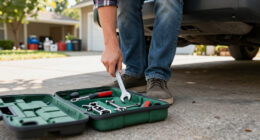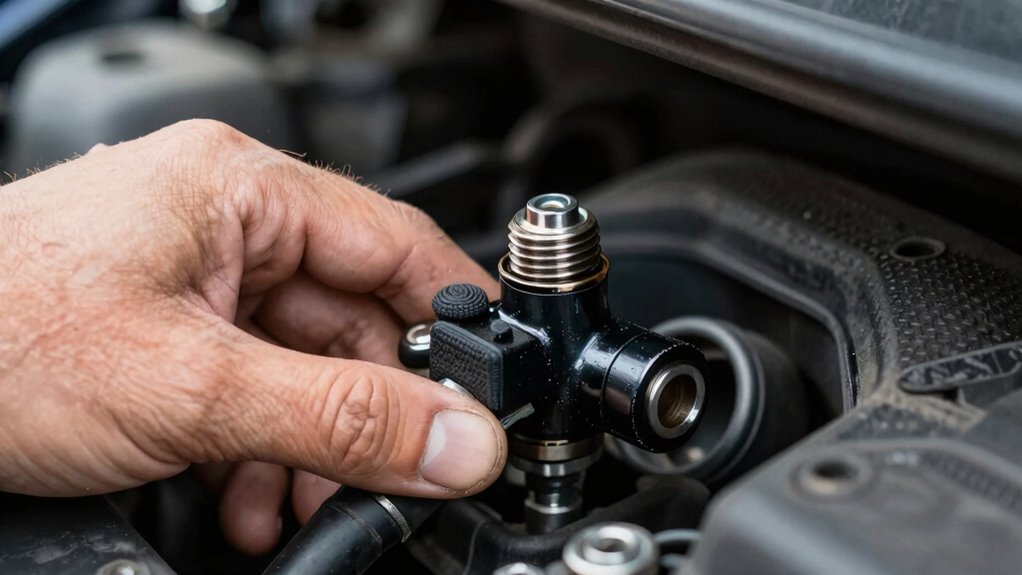

Before heading out, inspect your petcock for visible damage, leaks, or rust, and check that fuel flows properly by turning it to “On” and observing the flow to the carburetor. Test the switch to “Reserve” or “Prime” to guarantee consistent fuel flow. Clean the petcock and replace any worn seals or filters if needed. Carefully inspect connected fuel lines for cracks or leaks. Keep your petcock in top shape—stay tuned for detailed steps to avoid getting stranded.
Listen free for 30 days with Audible
Thousands of audiobooks and originals — cancel anytime.
As an affiliate, we earn on qualifying purchases.
Key Takeaways
- Visually inspect for damage, leaks, rust, or cracks before testing.
- Verify fuel flow by switching the petcock to “On” and “Reserve” positions.
- Clean the petcock and internal screen to prevent blockages.
- Ensure the shut-off function stops fuel flow when turned to “Off.”
- Check connected fuel lines for cracks, leaks, or blockages before use.
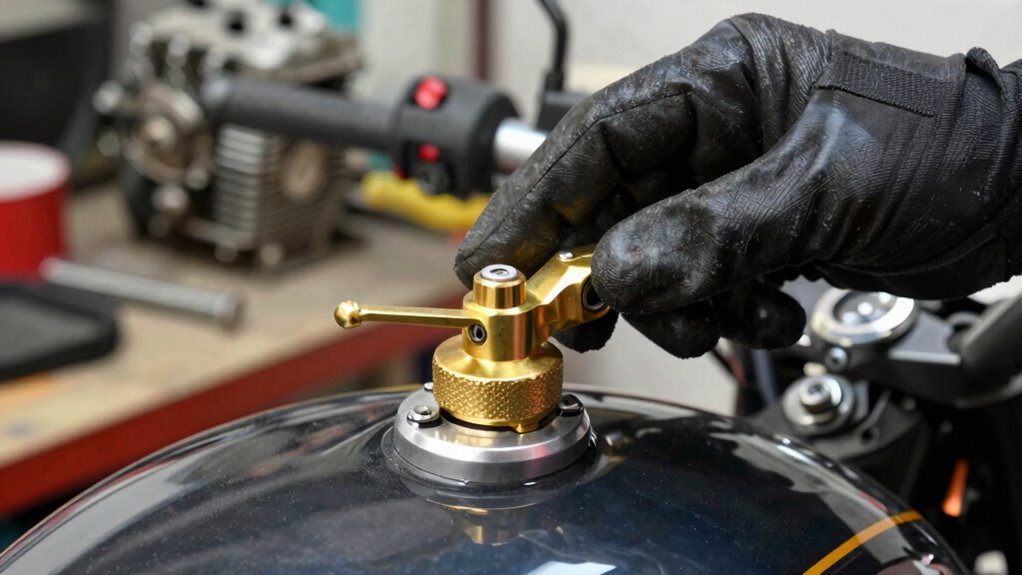
A petcock is a small valve that controls the flow of fluids, typically found on fuel tanks or cooling systems. When you’re planning to ride or operate machinery, ensuring your petcock functions properly is vital to prevent unexpected stalls or breakdowns. One of the most common issues is inconsistent fuel flow, which can lead to engine sputtering or complete failure. That’s why petcock maintenance and checking are essential steps before you hit the road or start your equipment.
Start by inspecting the petcock for any visible damage, leaks, or corrosion. If you notice fuel dripping from the valve or signs of rust, it’s a sign that the petcock needs attention. To check the fuel flow, turn the petcock to the “On” position and see if fuel begins to flow freely. You can do this by disconnecting the fuel line or simply observing whether fuel is reaching your carburetor or engine. If fuel flow seems sluggish or stops altogether, you might have a clog or debris inside the petcock or a faulty valve that’s not opening fully. Regular fuel system maintenance helps prevent these issues from arising unexpectedly. Incorporating regular inspections can also help identify potential problems early before they cause more serious damage.
Next, switch the petcock to the “Reserve” or “Prime” setting if it has one. This helps you test whether the valve can switch between different flow settings and if fuel still flows correctly from those positions. If fuel flow is inconsistent or absent, it’s time to think about cleaning or replacing the petcock. Regular petcock maintenance involves draining any old fuel, removing the valve, and cleaning out internal components with a suitable solvent. Be sure to check the screen or filter inside the petcock; debris or dirt can easily block fuel flow, which impacts engine performance. Additionally, inspecting the fuel system components ensures there are no hidden issues affecting operation. Properly functioning fuel flow control is essential for reliable performance and safety. Being aware of common petcock failures can help you troubleshoot more effectively and prevent costly repairs.
Another vital step is testing the petcock’s ability to shut off fuel completely. Turn the petcock to the “Off” position and observe whether fuel stops flowing. If fuel continues to seep through, the valve’s seal may be worn or damaged, risking fuel leaks or flooding. Address this by replacing the faulty parts or installing a new petcock if necessary. Proper sealing of the petcock is crucial for safety and reliability, especially when parking your vehicle for an extended period. Regularly checking the petcock seal can help prevent leaks and ensure the valve functions correctly over time.
Don’t forget to check the fuel lines connected to the petcock for cracks, leaks, or blockages. A compromised line can mimic petcock issues, so replacing or repairing damaged hoses is part of good petcock maintenance. After all these checks, turn the petcock back to the “On” position and start your engine or machinery. Confirm that fuel flows smoothly and consistently. By routinely inspecting and maintaining your petcock, you prevent fuel flow issues that could leave you stranded, ensuring reliable operation every time you need it.
As an affiliate, we earn on qualifying purchases.
Frequently Asked Questions
Can I Test a Petcock Without Draining the Fuel Tank?
Yes, you can test a petcock without draining the fuel tank. Turn the valve to the “On” or “Reserve” position and observe the fuel flow. If fuel flows steadily, the petcock’s likely functioning properly, indicating good valve maintenance. If nothing comes out, you might need to remove and clean it or replace it. This quick test helps guarantee your petcock’s working, preventing surprises during rides.
How Often Should I Inspect My Petcock for Wear?
You should inspect your petcock regularly, ideally every few months, especially if you notice fuel filtration issues or changes in engine performance. Frequent inspections guarantee the petcock’s valve functions properly and prevents fuel leaks during parking procedures. Look for signs of wear, corrosion, or debris that could hinder fuel flow. Regular checks help avoid unexpected breakdowns, ensuring your bike stays reliable and safe on the road.
What Tools Are Best for Checking Petcock Functionality?
You’ll want a clean, clear container to test fuel flow and a screwdriver or wrench to operate the valve. Turn the petcock to the “on” position and observe the fuel flow into the container. If fuel flows steadily, the valve operates correctly. If it’s weak or nonexistent, the petcock may need cleaning or replacement. Regularly checking these tools guarantees your petcock functions properly and prevents unexpected breakdowns.
Is It Safe to Replace a Petcock Myself?
Replacing a petcock yourself is like fixing a leaky faucet—you can do it with some basic tools and patience. It’s generally safe if you have experience with your bike’s fuel system and follow proper safety precautions. Incorporate it into your maintenance routine to prevent issues down the road. Just make sure to turn off the fuel supply, drain the system, and double-check connections to avoid leaks or hazards.
What Are Signs of a Failing Petcock Besides Leaks?
If your petcock is failing, you’ll notice issues with fuel flow and valve operation. For instance, inconsistent fuel delivery or engine stalling might occur even without leaks. You might also find difficulty turning the valve or hear irregular sounds when opening or closing it. These signs indicate that the petcock isn’t functioning properly, and you should inspect or replace it promptly to prevent breakdowns.
As an affiliate, we earn on qualifying purchases.
Conclusion
By giving your petcock a quick once-over before hitting the road, you’re fundamentally tightening the reins of your motorcycle’s safety. Think of it as a guardian angel, silently watching over your journey, ready to spring into action if needed. A simple check now can save you from a roadside standstill, turning potential chaos into a smooth ride. Keep it in check, and let your adventures flow like a well-oiled symphony, uninterrupted and full of promise.
As an affiliate, we earn on qualifying purchases.
As an affiliate, we earn on qualifying purchases.
NFL season / tailgating Picks
team gear
As an affiliate, we earn on qualifying purchases.