
To avoid common maintenance oversights, make sure you follow proper restoration techniques and use authentic parts to prevent rust and damage. Don’t neglect routine engine tuning, fluid checks, or the protection of your vehicle during storage, as overlooking these can cause costly issues later. Many owners forget environmental protection and essential upkeep tasks that keep the car’s value and performance intact. Keep an eye on these key areas, and you’ll maintain your classic’s charm for years to come.
Key Takeaways
- Neglecting proper restoration techniques can cause rust and irreversible damage to vital areas.
- Overlooking routine engine tuning decreases performance and increases risk of engine damage.
- Failing to regularly check and replace fluids leads to overheating and component wear.
- Improper storage exposes the vehicle to environmental damage like rust and paint deterioration.
- Skipping essential maintenance tasks or using non-authentic parts diminishes vehicle value and longevity.
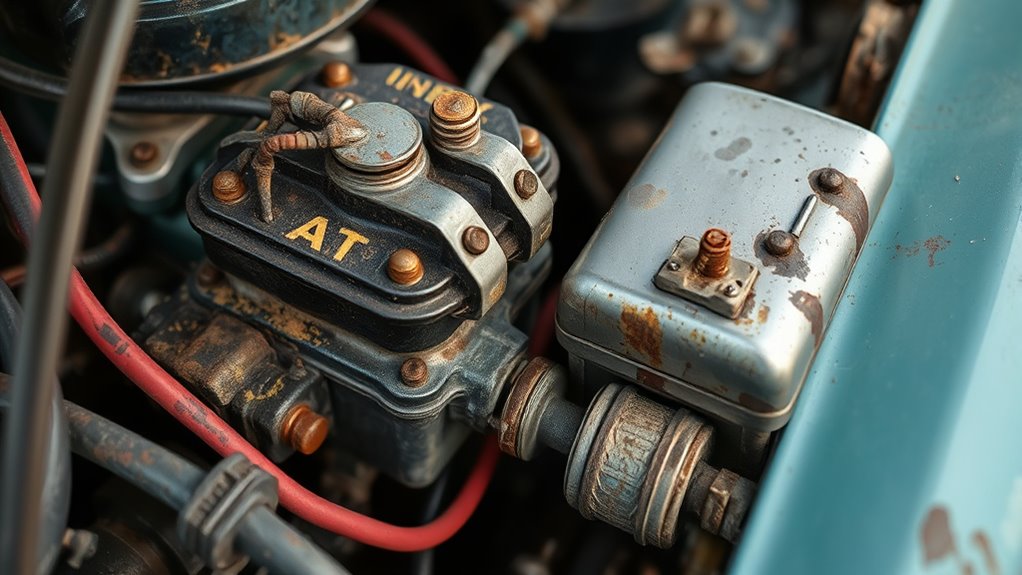
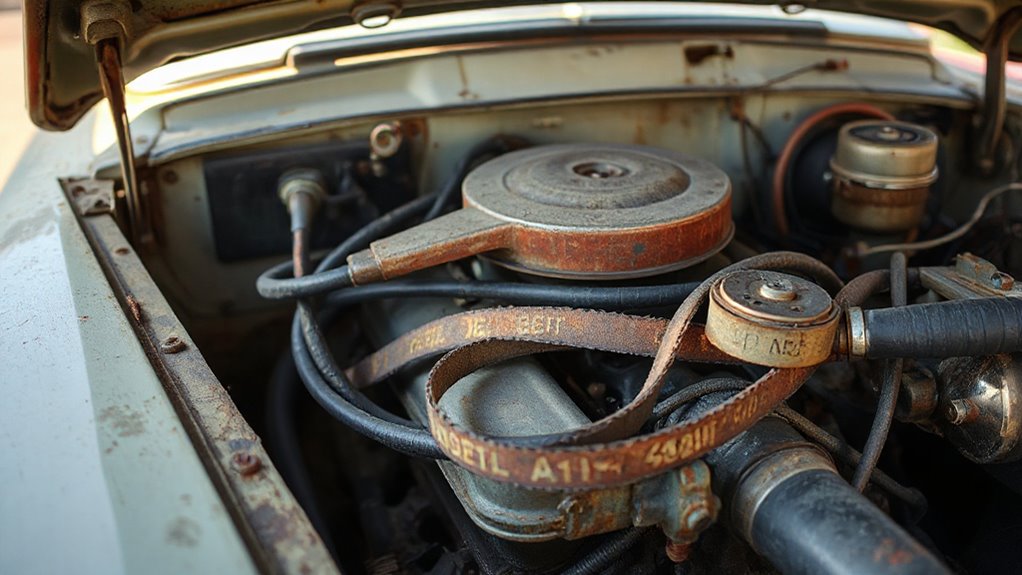
Regular maintenance is essential to keep your classic car running smoothly and preserve its value, but many owners overlook vital upkeep tasks. One common oversight is neglecting proper vintage restoration practices. Vintage restoration isn’t just about making your car look good; it’s about restoring its original charm and ensuring all components work harmoniously. Skipping this step can lead to more significant issues down the line, like rust creeping into vital areas or outdated parts causing performance drops. When approaching vintage restoration, you need to focus on authentic parts and techniques that respect the vehicle’s history. This means sourcing quality replacements and avoiding shortcuts that might compromise the integrity of the restoration. Overlooking these details can diminish your car’s value and aesthetic appeal, making it harder to enjoy or sell later. Additionally, neglecting restoration techniques can result in irreversible damage that compromises the vehicle’s structural integrity.
Prioritizing authentic restoration techniques preserves your classic car’s value and original charm.
Another critical aspect owners often overlook is engine tuning. Your engine is the heart of your classic, and regular engine tuning keeps it running efficiently. Many owners assume that once the engine runs, it’s fine, but neglecting routine tuning can lead to decreased performance, poor fuel economy, and even engine damage. Engine tuning involves adjusting components like spark plugs, carburetors, timing, and valves to optimize power and efficiency. If you don’t periodically check and fine-tune these parts, you risk misfires, increased emissions, and unnecessary wear. Proper engine tuning isn’t a one-time task; it’s an ongoing process that maintains the balance between performance and longevity. You should regularly inspect and adjust your engine, especially after long periods of inactivity or after making modifications, to ensure everything functions as it should.
Many classic owners also overlook the importance of fluid checks and replacements. Regularly inspecting oil, coolant, brake fluid, and transmission fluid can prevent costly repairs later. Old or contaminated fluids can cause overheating, corrosion, and component failure. It’s easy to forget these routine checks, especially when your car appears to run fine, but neglecting them can accelerate wear and reduce the lifespan of your vehicle’s parts.
Finally, don’t underestimate the importance of proper storage and protective measures. Keeping your classic in a climate-controlled environment and covering it when not in use helps prevent rust, paint damage, and deterioration. Many owners focus on mechanical upkeep and forget that environmental factors also play a significant role in preserving a vintage vehicle’s condition.

The 911 and 912 Porsche, A Restorer's Guide to Authenticity II (Authenticity Series)
As an affiliate, we earn on qualifying purchases.
As an affiliate, we earn on qualifying purchases.
Frequently Asked Questions
How Often Should I Schedule Professional Inspections for My Classic Car?
You should schedule professional inspections for your classic car at least once a year, especially before and after driving season. During these visits, ask for paint touch-ups if needed and interior detailing to keep your vehicle looking its best. Regular inspections help catch issues early, preventing costly repairs. Staying proactive guarantees your classic stays in top condition, preserving its value and beauty for years to come.
What Are the Signs of Hidden Rust or Corrosion?
You might think your classic car’s in perfect shape, but hidden rust or corrosion could be lurking. Look for paint bubbling, which reveals trapped moisture, or metal pitting, indicating deep decay beneath the surface. Ironically, these signs are often subtle and easily overlooked, yet they threaten your car’s integrity. Regular inspections help catch these issues early, saving you from costly repairs and preserving your vintage beauty.
Which Parts Tend to Wear Out Fastest in Classic Vehicles?
You’ll find that suspension components, brake systems, and rubber parts tend to wear out fastest in classic vehicles. Restoration challenges often include preserving paint and preventing further corrosion, which can accelerate wear. Regular inspections of these parts help you avoid unexpected breakdowns. Keep an eye on rubber bushings and brake lines, as neglect can cause costly repairs later. Staying proactive guarantees your classic stays reliable and looking its best.
How Can I Prevent Electrical System Failures?
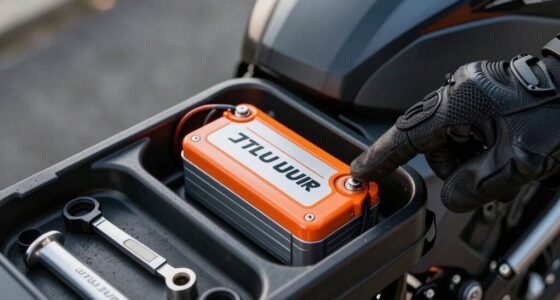
To prevent electrical system failures, you should regularly perform battery maintenance by checking and cleaning terminals, ensuring a strong connection. Additionally, inspect wiring for corrosion, fraying, or loose connections. Keep your battery charged and replace it if it shows signs of weakness. Routine wiring checks help catch issues early, preventing shorts or failures. Staying on top of these tasks keeps your classic vehicle’s electrical system reliable and running smoothly.
What Maintenance Routines Are Unique to Vintage Engine Models?
Think of your vintage engine as a delicate piece of art needing gentle care. You should regularly perform restoration techniques that focus on preserving original parts and avoiding unnecessary replacements. Pay special attention to paint preservation by keeping the engine clean and protected from harsh elements. Regularly inspecting and maintaining cooling systems, spark plugs, and lubrication guarantees your classic engine runs smoothly, safeguarding its timeless beauty and performance for years to come.

Proform 67246 Tuning Kit
Proform
As an affiliate, we earn on qualifying purchases.
As an affiliate, we earn on qualifying purchases.
Conclusion
By staying vigilant and avoiding common maintenance oversights, you can substantially extend your classic’s lifespan and value. Regular upkeep prevents costly repairs down the road and keeps your vehicle running smoothly. Did you know that neglecting routine maintenance can reduce a classic car’s value by up to 20%? So, make maintenance a priority—your classic will thank you with reliable performance and preserved worth for years to come.

Automatic Transmission Dipstick for Chrysler Jeep Dodge – Level Tool with Directions Check auto Trans Fluid Oil Level -Dealer #s : 8863B, 9336, 9336A, 42RLE, NAG1, 62TE 2.7 3.5 3.6 3.7 5.7 6.1 6.4
EASY TO READ :Clear marks on the metal tip promise easy-to-read oil levels.
As an affiliate, we earn on qualifying purchases.
As an affiliate, we earn on qualifying purchases.

EzyShade 10-Layer Waterproof Sports Car Cover. See Vehicle Size-Chart for Accurate Fit. All Weather Outdoor Covers. Thunderbird Impala Grand Fury Classic Cars. Sun Snow Rain. Size C7 (See SizeChart)
DESIGNED FOR CLASSIC / SPORTS CARS. Sports cars are not like standard cars – with bodies that are…
As an affiliate, we earn on qualifying purchases.
As an affiliate, we earn on qualifying purchases.