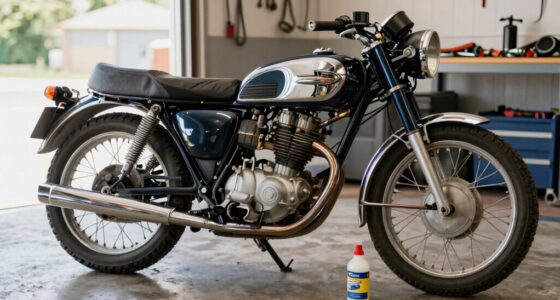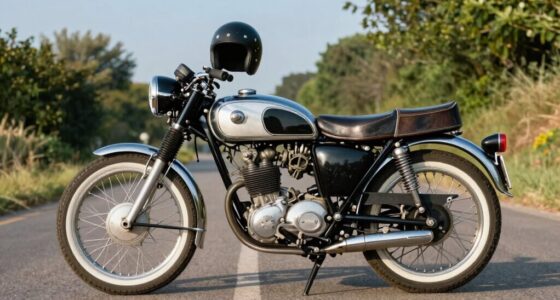
Ethanol fuel is a nightmare for vintage bikes because it causes corrosion, clogs fuel passages, and damages rubber and metal parts not designed for it. It absorbs moisture, leading to rust and phase separation, which can stall your bike or cause engine problems. Over time, ethanol’s solvent properties break down gaskets and seals, making leaks more likely. If you want to keep your bike running smoothly, it’s better to understand how ethanol impacts your fuel system and how to protect it.
Key Takeaways
- Ethanol dissolves debris and deposits, clogging fuel lines and carburetors in vintage bikes.
- It attracts moisture, causing rust, corrosion, and potential leaks in metal fuel system components.
- Ethanol’s solvent properties degrade rubber seals, gaskets, and plastic parts, leading to leaks and failures.
- Water absorption results in phase separation, causing inconsistent fueling and potential engine damage.
- Long-term storage with ethanol increases maintenance needs due to corrosion and material deterioration.
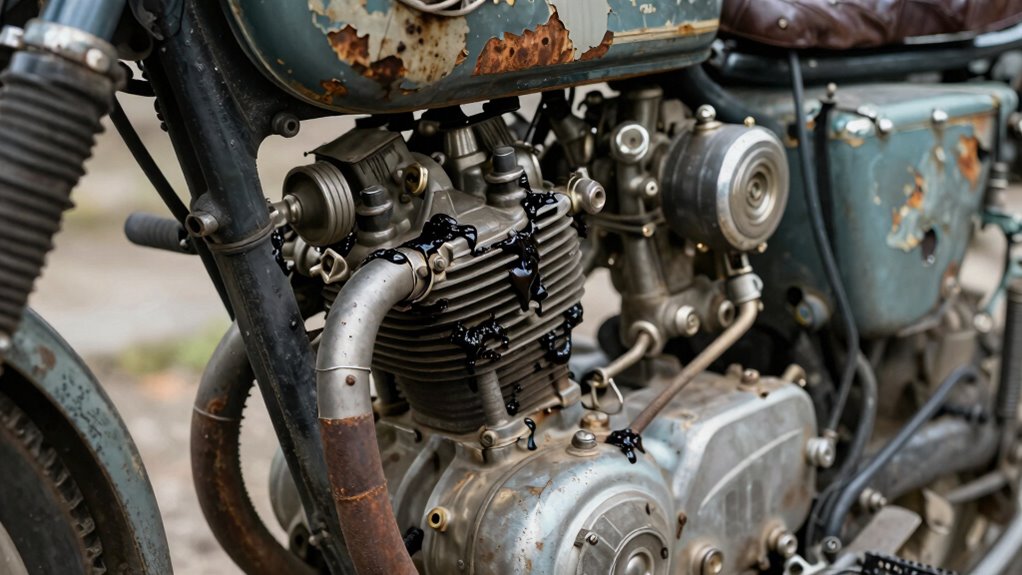
As more regions adopt ethanol-blended fuels to reduce emissions, vintage bike owners are facing new challenges and considerations. Ethanol, often blended at 10% (E10), can cause significant damage to your bike’s fuel system. Unlike modern vehicles designed to handle ethanol, vintage bikes weren’t built with this fuel in mind. When you fill up, ethanol can dissolve and loosen debris and deposits, pushing them into your fuel lines, carburetor, and other components. Over time, this can clog small passages and reduce fuel flow, making your bike run poorly or stall unexpectedly.
Ethanol blends can damage vintage bikes by clogging fuel systems and causing corrosion over time.
One of the biggest issues you’ll encounter is corrosion risks. Ethanol is hygroscopic, meaning it pulls moisture from the air. When moisture mixes with ethanol in your fuel tank, it creates an environment that promotes rust and corrosion inside metal components. Your fuel tank, carburetor, and fuel lines are especially vulnerable. As corrosion develops, metal parts weaken, leaks form, and the integrity of your fuel system deteriorates. This process accelerates if you store your vintage bike for long periods with ethanol in the tank, as standing water and moisture accumulation are more likely. Understanding the fuel compatibility of your vintage bike can help you make informed decisions about the best fuels to use.
Fuel system problems don’t stop at corrosion. Ethanol also acts as a solvent, stripping away protective coatings and rubber seals. Many of your bike’s original gaskets, diaphragms, and hoses are made from materials incompatible with ethanol, leading to cracks, leaks, or outright failure. Once these parts are compromised, fuel can leak, and the bike’s performance suffers. The more you ride with ethanol-blended fuel, the more you risk damaging these delicate components, which can be costly and time-consuming to replace. Additionally, ethanol’s solvent properties can accelerate deterioration of older rubber and plastic parts, especially when combined with extended storage periods without use.
Furthermore, ethanol’s tendency to absorb water means that even small amounts can cause big problems. If you’re not diligent about fuel storage, moisture can settle at the bottom of your tank, creating a phase separation where water and ethanol separate from the gasoline. This mixture can cause inconsistent fueling and engine knocking, or worse, engine damage. To combat this, you might consider using fuel stabilizers, ethanol-free fuel, or regularly draining and cleaning your tank and carburetor to prevent buildup. Additionally, practicing proper fuel storage and understanding your bike’s material compatibility can help you make informed choices about fuel use and maintenance.

KBS Coatings 52000 Cycle Tank Sealer Kit, Complete Kit – Seals Up To 5 Gallon Tank, Lightly Pigmented Silver
COMPLETE 3-STEP SYSTEM — EVERYTHING INCLUDED: Kit contains a quart of KBS Klean heavy-duty degreaser, a quart of…
As an affiliate, we earn on qualifying purchases.
As an affiliate, we earn on qualifying purchases.
Frequently Asked Questions
How Does Ethanol Affect Vintage Bike Paint and Decals?
Ethanol affects vintage bike paint and decals by causing ethanol corrosion, which breaks down paint and decals over time. You might notice paint deterioration, fading, or peeling, especially around areas exposed to fuel spills or leaks. Ethanol’s moisture attracts water, accelerating corrosion and damaging your decals. To protect your vintage bike, avoid ethanol-blended fuels, and regularly clean and inspect your paintwork and decals for signs of deterioration.
Can Ethanol Fuel Be Safely Stored in Vintage Bike Tanks?
You shouldn’t store ethanol fuel in vintage bike tanks long-term, as it compromises fuel stability and increases the risk of engine corrosion. Ethanol attracts moisture, which can lead to rust inside the tank and fuel system. To keep your bike safe, always use stabilizers designed for ethanol fuels or empty the tank if you’re not riding for an extended period. Regularly inspect and clean your tank to prevent damage.
Are There Specific Additives to Mitigate Ethanol Damage?
Yes, you can use fuel stabilizers or additive alternatives to guarantee ethanol damage in your vintage bike’s tank. These additives help prevent water absorption and corrosion caused by ethanol, preserving your fuel system. Always choose products specifically designed for vintage engines, and follow the manufacturer’s instructions. Regularly using stabilizers assures your bike’s engine stays protected, making riding smoother and reducing costly repairs caused by ethanol-related corrosion.
How Quickly Does Ethanol Degrade Vintage Bike Fuel Systems?
Ethanol can turn your vintage bike’s fuel system into a ticking time bomb within just a few months. It rapidly destroys fuel stability and causes corrosion, making metal parts warp and seals deteriorate. If you don’t take action, your bike’s carburetor and fuel lines could be compromised in less than a year. To avoid this disaster, use corrosion prevention additives and store fuel properly, ensuring your vintage bike stays on the road.
What Are Alternative Fuels for Vintage Motorcycles?
You can consider using alternative fuels like pure gasoline or ethanol-free options, which are better for vintage motorcycles. To protect your engine, add fuel additives that prevent corrosion and maintain fuel stability. Always check your engine’s compatibility with these fuels, as some older bikes might have specific requirements. Switching to ethanol-free fuel and using appropriate additives helps preserve your vintage bike’s performance and longevity.

Motorcycle Fuel Line Hose with 5mm ID & 8mm OD,Portable Dirt Bike Fuel Line Hose for Fuels Transportation,Small Engine Fuels Lines Motorcycle Accessories for Motorcycles,Dirt Bike
Product Specification: Our motorcycle fuel line has total length is 39.37 inch, an OD of 0.31 inch and…
As an affiliate, we earn on qualifying purchases.
As an affiliate, we earn on qualifying purchases.
Conclusion
Think of your vintage bike as a delicate, ancient tree rooted in pure, untouched soil. Introducing ethanol fuel is like pouring a corrosive rain that slowly erodes its roots, weakening its foundation. Though it might seem harmless at first, over time, this storm damages the intricate fibers that keep your classic bike thriving. To preserve your vintage treasure, steer clear of this toxic downpour and protect it from nature’s harmful elements.

HappyFuel Premium Fuel Stabilizer, Gasoline Antioxidant, Fuel Storage for Gas, Classic Cars, Boats, Lawnmowers, Snowmobiles, Motorcycles and Marine…
Vehicle Storage – HappyFuel added to your gasoline will stabilize your fuel and slow down the oxidation process….
As an affiliate, we earn on qualifying purchases.
As an affiliate, we earn on qualifying purchases.

Slime 1022-A Tube Rubber Patch Kit, for Bikes and Other Inflatables, Contains, 5 Patches, Scuffer and Glue
Repair puncture related flats on ATVs, mowers, bicycles and wheelbarrows
As an affiliate, we earn on qualifying purchases.
As an affiliate, we earn on qualifying purchases.