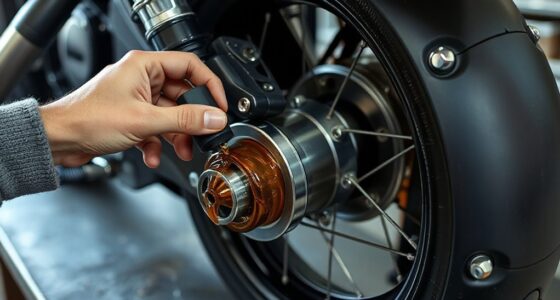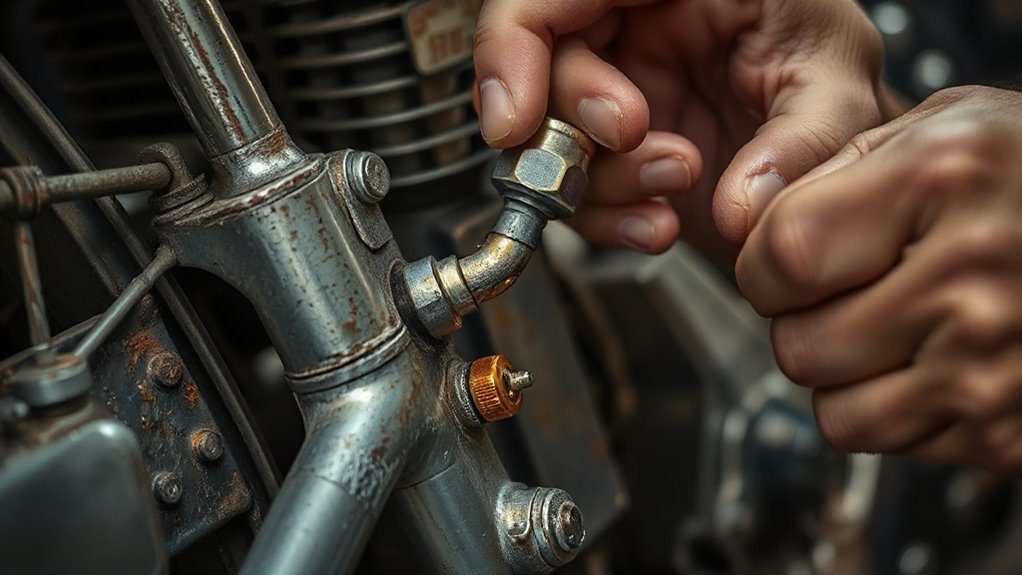

To lubricate older motorcycle chassis points with grease fittings and Zerks, start by cleaning each fitting to remove dirt and old grease. Use a grease gun to apply high-quality waterproof or lithium-based grease until fresh grease appears. Be careful not to over-grease, as it can attract dirt. Regular lubrication helps prevent wear and prolongs the motorcycle’s life. Keep in mind, choosing the right grease and schedule is key—continue for more tips on maintaining those essential chassis points.
Listen free for 30 days with Audible
Thousands of audiobooks and originals — cancel anytime.
As an affiliate, we earn on qualifying purchases.
Key Takeaways
- Identify all chassis points with grease fittings or Zerks on your older motorcycle.
- Clean fittings thoroughly before applying fresh grease to remove dirt and old residue.
- Use a compatible grease gun to fill fittings until new grease is visible.
- Lubricate every few rides or monthly, especially in dusty or wet conditions.
- Consult your motorcycle’s manual for recommended grease type and maintenance intervals.
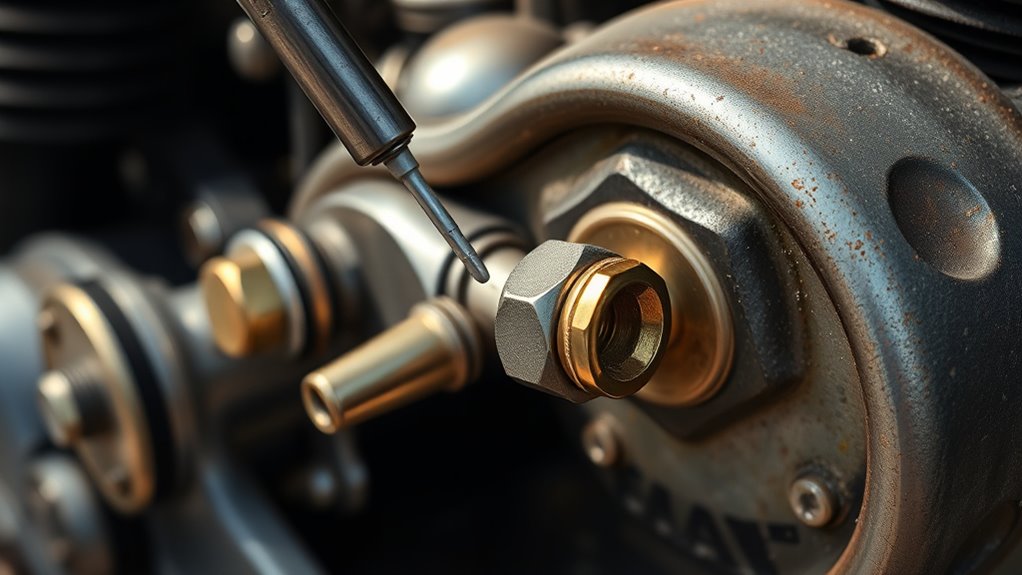
Grease fittings, commonly known as Zerks, are small yet essential components that guarantee your machinery runs smoothly. If you own an older motorcycle, understanding how often to grease these fittings and what types of grease to use can make a significant difference in maintaining your bike’s performance. Maintenance frequency depends on how often you ride and the conditions you encounter. For daily riders or bikes exposed to dirt, dust, or moisture, you might need to grease the fittings every few rides or at least once a month. Conversely, if your motorcycle sees infrequent use or rides in clean, dry environments, extending the interval to every few months is acceptable. Regularly scheduled lubrication prevents metal-on-metal wear and keeps your chassis points functioning properly. Additionally, paying attention to projector contrast ratio can influence how well you can see the details during maintenance or inspection, especially in low-light conditions. Knowing the types of grease suitable for your motorcycle is equally important. Not all greases are created equal, and using the wrong type can lead to inadequate lubrication or damage. For most older bikes, a high-quality lithium-based grease is a reliable choice because it offers good water resistance and stays pliable over a wide temperature range. If your motorcycle operates in particularly wet conditions or you frequently ride off-road, consider using a waterproof or marine-grade grease to provide extra protection against moisture and corrosion. Some riders opt for synthetic greases for their superior thermal stability and longer-lasting lubrication, especially if you prefer fewer reapplications. Always check your motorcycle’s service manual or consult with a mechanic to determine the recommended grease type, ensuring compatibility with your chassis points and extending the lifespan of your components. Proper lubrication with the correct grease and adherence to an appropriate maintenance schedule keeps your motorcycle chassis points in top condition. Over-greasing can cause excess buildup, attracting dirt and debris, which could accelerate wear. Under-greasing, on the other hand, leads to insufficient lubrication, increasing the risk of parts seizing or wearing prematurely. Always clean the fittings before applying new grease to remove dirt and old grease, preventing contamination. When applying grease, use a grease gun designed for Zerks, and make sure to fill the fitting until you see fresh grease emerge, indicating proper lubrication.
Frequently Asked Questions
How Often Should I Lubricate Chassis Points With Grease Fittings?
You should lubricate chassis points with grease fittings every 3,000 to 5,000 miles, depending on your riding conditions. Follow a regular maintenance schedule to keep your motorcycle in top shape. Use proper lubrication techniques by applying the right amount of grease without overdoing it, ensuring smooth operation. Regular lubrication prevents rust and wear, extending the lifespan of your motorcycle’s chassis components and maintaining ideal performance.
What Type of Grease Is Best for Zerks?
Choosing the right grease for zerks is like selecting the perfect fuel for your engine; it keeps everything running smoothly. You should use a high-quality, lithium-based or multipurpose grease with a smooth, buttery consistency. These types of grease resist water and dirt, ensuring longevity. Avoid thick or overly stiff greases, as they can block the zerk and hinder proper lubrication, risking damage to your motorcycle’s chassis points.
Can I Replace Old Zerks Myself?
Yes, you can replace old zerks yourself with some basic tools and a little patience. Start by cleaning the area around the zerk, then use a wrench to carefully remove the old fitting. Install the new zerk, making sure it’s secure, and apply fresh grease for DIY lubrication. This simple zerk replacement saves you money and keeps your motorcycle’s chassis properly maintained, ensuring smooth operation.
Are There Any Safety Precautions When Greasing Zerks?
You should always wear safety gear like gloves and eye protection when greasing zerks, as grease can splatter unexpectedly. Using proper tools, like a grease gun and correct-sized fittings, helps prevent accidents. Investigating safety precautions shows that keeping your work area clean and ensuring the motorcycle is stable reduces risks. Always follow manufacturer instructions and be cautious with pressure, so you avoid injury or damage to your motorcycle.
How Do I Identify Which Chassis Points Need Lubrication?
You identify which chassis points need lubrication through regular chassis inspections, looking for signs of wear, rust, or stiffness. Check your lubrication schedule to see when these points were last greased. Focus on joints, pivots, and moving parts, ensuring they’re smooth and free of debris. If you notice squeaking or resistance during movement, it’s time to apply grease to maintain proper function and prevent damage.

Qydipclin 45Pcs Car Detailing Kit, Car Detailing Brush Set, Car Wash Cleaning Kit, Car Detailing Brushes, Professional Car Care Kit for Interior Exterior Wheels, Blue
- Complete 45-Piece Car Detailing Set: Includes brushes, tools, and accessories
- Drill Brushes and Polishing Pads: 4 drill brushes and 4 polishing pads included
- Powerful Car Vacuum and Foam Gun: Long cord vacuum with multiple attachments
As an affiliate, we earn on qualifying purchases.
Conclusion
Think of grease fittings and zerks as the heartbeat of your motorcycle’s chassis, pumping life into its joints and keeping everything moving smoothly. Regular lubrication acts like a shield, protecting your bike from rust and wear, ensuring it’s always ready for the road. By tending to these small but essential points, you’re nurturing the soul of your motorcycle, allowing it to run freely and confidently—your journey’s steady pulse in a well-oiled dance of freedom.

Armor All Ultimate Premier Car Care Kit, 8 Pieces, Includes Tire and Wheel Cleaners, Exterior and Interior Car Cleaning Supplies
- Complete 8-Piece Car Care Kit: Includes cleaning, shining, and protecting products
- All-in-One Detailing Supplies: Suitable for daily drivers and enthusiasts
- Car Wash and Wax: Provides mirror-like shine with carnauba wax
As an affiliate, we earn on qualifying purchases.
College move-in / dorm season Picks
dorm essentials
As an affiliate, we earn on qualifying purchases.