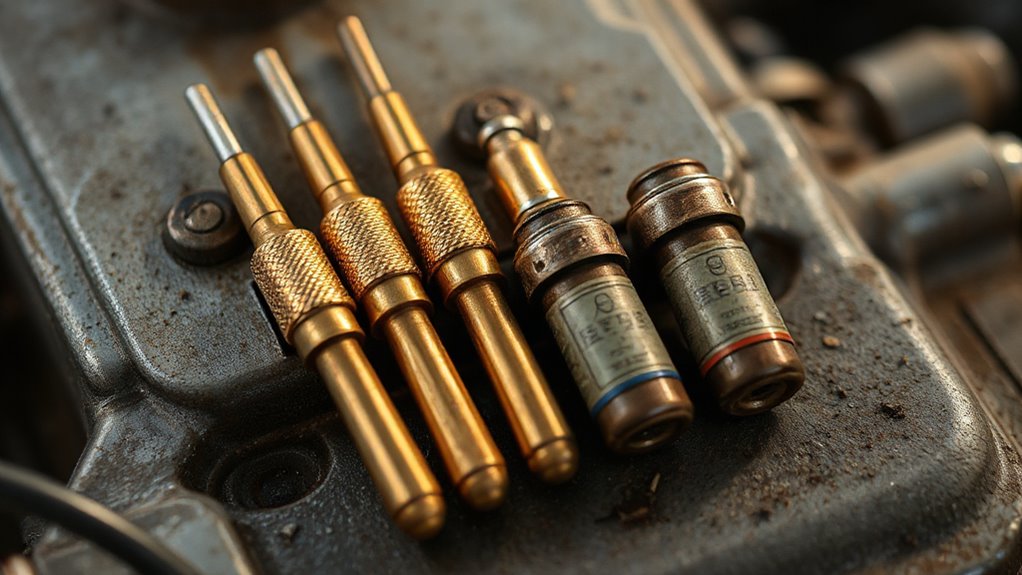

To maintain an old-school ignition system, regularly inspect and adjust your points’ gap for a steady spark and clean them to prevent buildup. Check your condenser for signs of wear or corrosion, replacing it as needed to keep sparks strong and prevent misfires. Proper maintenance guarantees reliable engine starts and smooth running. Keeping these components in good shape extends the life of your ignition system. Keep going to discover more tips for flawless vintage engine performance.
Key Takeaways
- Regularly inspect and clean points to ensure consistent spark and proper ignition timing.
- Check and adjust the points’ gap according to manufacturer specifications for optimal performance.
- Replace worn or faulty condensers to prevent misfires and protect points from excessive arcing.
- Properly install and secure the condenser to maintain steady current flow in the ignition system.
- Conduct routine maintenance to preserve ignition reliability, improve engine efficiency, and extend component lifespan.
Have you ever wondered how your car’s ignition system starts your engine? It’s a fascinating process that relies on a few key components, and understanding how they work together can help you keep your vehicle running smoothly. One essential aspect is the distributor timing, which controls when the spark jumps the gap and ignites the fuel-air mixture in your cylinders. Proper distributor timing ensures your engine runs efficiently, delivers good power, and avoids rough idling or misfires. If your engine isn’t running as it should, checking and adjusting the distributor timing might be the first step. This involves aligning the distributor’s cam and rotor so that the spark occurs at exactly the right moment in the combustion cycle. Correct distributor timing makes a significant difference in engine performance and fuel economy.
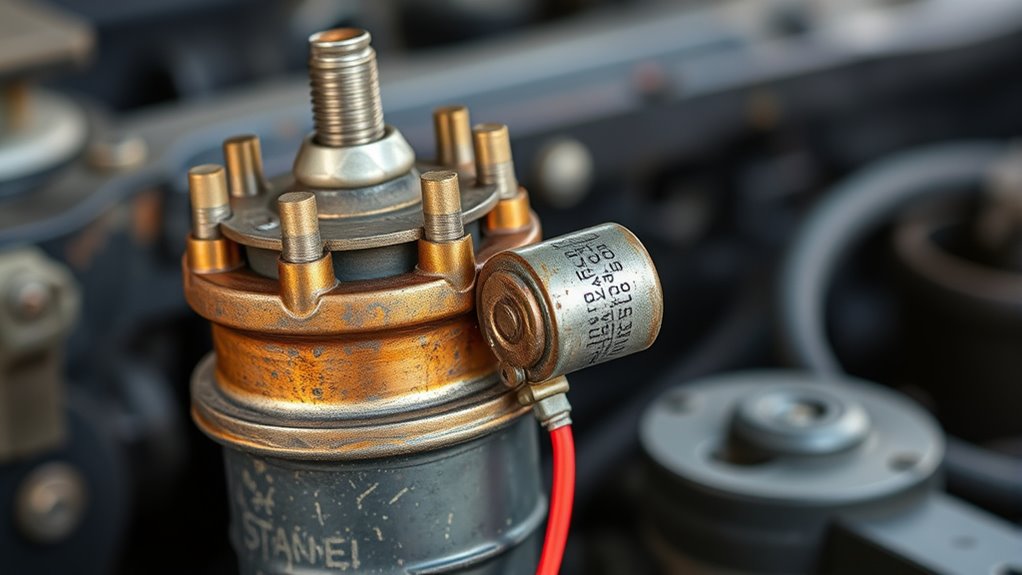
Another indispensable part of this old-school ignition system is the condenser, which works alongside the points. Over time, the condenser can wear out or become faulty. When that happens, you’ll notice symptoms like misfires, difficulty starting, or a weak spark. Replacing the condenser, or condenser replacement, can restore proper function and prevent damage to other components. It’s a straightforward task if you’re comfortable working on your vehicle: disconnect the battery, remove the distributor cap, and locate the condenser—usually a small, cylindrical component attached to the points or nearby. Detach the old condenser and install a new one, making sure it’s securely connected. This simple maintenance can prevent the points from arcing excessively and wearing out prematurely, extending the life of your ignition system.
Maintaining points and condensers isn’t just about fixing issues; it’s about preserving the timing and reliability of your ignition system. Regular inspection of the points’ gap and cleaning them can ensure a crisp, consistent spark. When you replace the condenser, you’re preventing unnecessary wear on the points and maintaining a steady flow of current to the coil. This consistency is vital because it directly impacts your engine’s performance and efficiency. Remember, old-school ignition systems rely heavily on precision; small adjustments can make a big difference. So, taking the time to check your distributor timing and perform condenser replacement when needed keeps your classic car running reliably and preserves the charm of its vintage ignition system.
Frequently Asked Questions
How Often Should I Replace the Ignition Points?
You should replace your ignition points every 10,000 to 12,000 miles or when they show signs of wear like burned or pitted surfaces. Regularly check and adjust the spark plug gap and distributor timing during replacements to guarantee the best engine performance. Keeping these components in good shape maintains a strong spark, improves fuel efficiency, and prevents misfires, so stay proactive with maintenance to keep your old-school ignition system running smoothly.
Can I Upgrade to Electronic Ignition Easily?
Think of your ignition system as a vintage musical instrument—it can be upgraded to a modern synthesizer with an electronic upgrade. Yes, an ignition conversion is straightforward and usually involves replacing points and condenser with an electronic ignition module. This upgrade improves reliability, reduces maintenance, and offers better performance. You can do it yourself or have a mechanic handle it, making your old ride run smoother and more efficiently.
What Tools Are Needed to Replace Points and Condensers?
To substitute points and condensers, you’ll need a feeler gauge for timing adjustment, a screwdriver for adjusting the points, and possibly pliers. Make sure your new points are compatible with your coil to ensure proper operation. Disconnect the battery before starting, and carefully remove the distributor cap. After installing, check the timing and make necessary adjustments. This keeps your ignition system running smoothly and reliably.
How Do I Identify a Faulty Condenser?
You can identify a faulty condenser by checking for inconsistent spark plug gaps or irregular distributor timing. If you notice engine misfires, rough running, or difficulty starting, it’s a sign the condenser might be failing. Test the condenser with a multimeter for capacitance, or replace it temporarily to see if performance improves. A bad condenser often causes weak or erratic sparks, affecting overall ignition system reliability.
Will Maintaining Points Improve Engine Performance Significantly?
Maintaining points can substantially improve engine performance by ensuring proper timing adjustments and better spark quality. When your points are clean and properly adjusted, your ignition system fires correctly, leading to smoother running and improved fuel efficiency. Neglecting maintenance causes misfires and rough idling. Regularly inspecting and adjusting your points helps keep your engine running at its best, providing reliable performance and preventing costly repairs down the line.
Conclusion
Keeping your points and condensers in good shape is key to preserving your classic ignition system. Regular maintenance guarantees reliable starts and smooth runs, proving that old-school technology still has its place. Remember, “A stitch in time saves nine,” so don’t wait until things break down. By staying proactive, you’ll enjoy your vintage ride for years to come, proving that sometimes, the tried and true methods are the best.