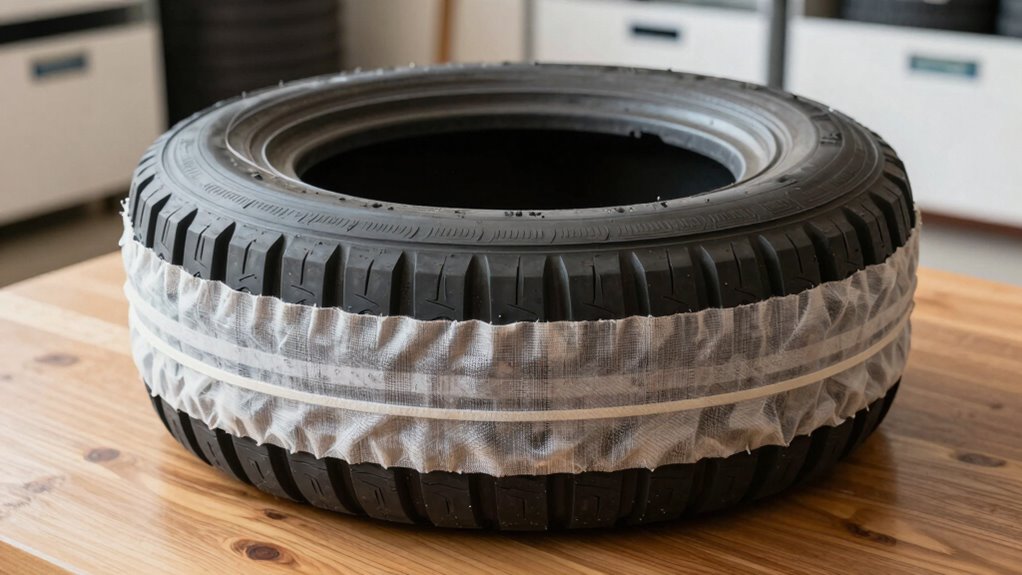

To prevent flat spots during long-term storage, check your tires’ pressure and inflate them to the recommended levels, ensuring even weight distribution. Elevate the tires off the ground if possible, or store them on a smooth surface with cushioning. Regularly inspect and move the tires to redistribute pressure and prevent deformation. Keep them in a climate-controlled environment to protect the rubber. Want more tips to keep your tires in top shape? Keep exploring for expert advice.
Listen free for 30 days with Audible
Thousands of audiobooks and originals — cancel anytime.
As an affiliate, we earn on qualifying purchases.
Key Takeaways
- Maintain proper tire pressure by inflating to recommended levels before storage.
- Elevate tires off the ground or store on flat, smooth surfaces with cushioning to prevent pressure points.
- Regularly inspect and rotate tires to redistribute rubber and detect early flat spots.
- Ensure wheels are properly aligned to promote even weight distribution during storage.
- Store tires in a climate-controlled environment to prevent rubber hardening and deterioration.
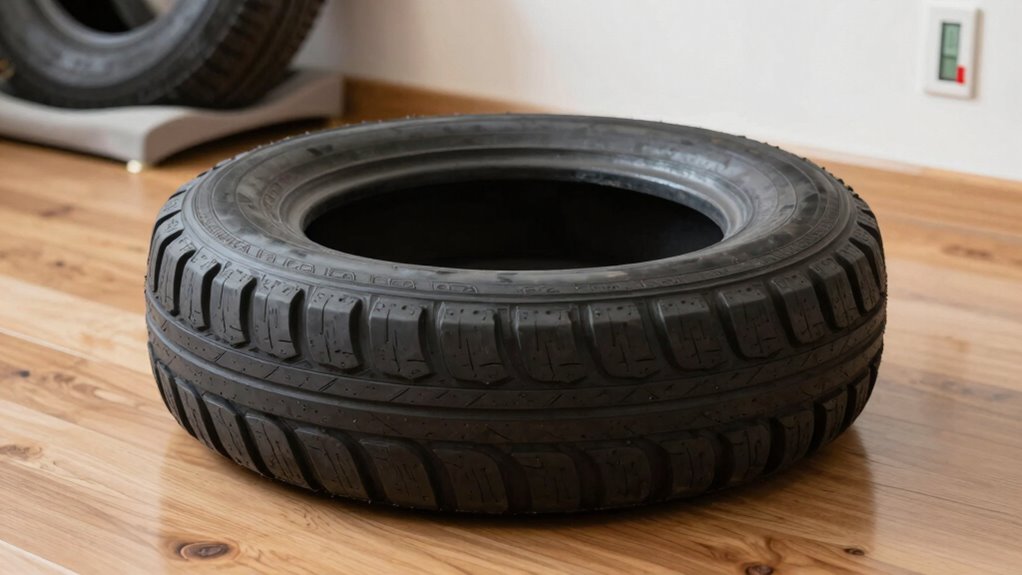
When storing tires or other round objects for an extended period, flat spots can develop, causing uneven wear and compromised performance. To prevent this, maintaining proper tire pressure is essential. Before storage, check your tires and inflate them to the recommended pressure, usually found in your vehicle’s manual or on the tire placard. Properly inflated tires distribute weight evenly across the contact patch, reducing the risk of flat spots forming during periods of inactivity. Under-inflated tires are more prone to developing flat spots because the softer rubber allows the tire to deform under the weight of the vehicle. Over-inflated tires, while less likely to develop flat spots, can cause other issues like uneven wear, so striking the right balance is crucial.
Proper tire pressure prevents flat spots and uneven wear during long-term storage.
In addition to tire pressure, paying attention to wheel alignment plays a significant role in flat spot prevention. If your vehicle’s wheels are misaligned, the uneven distribution of weight can increase the likelihood of flat spots while in storage. Before putting your vehicle into long-term storage, have a professional check and correct wheel alignment if needed. Proper alignment ensures that the weight is evenly spread across all tires, minimizing pressure points that could lead to flat spots. If you’re storing the tires separately from the vehicle, consider rotating them periodically. This means switching the position of each tire to ensure they wear evenly and don’t develop flat spots in one specific spot.
Another effective method involves elevating the tires off the ground. Using tire ramps or stands to lift the tires prevents prolonged contact with a single surface, which can flatten the rubber over time. If lifting isn’t an option, ensure the tires are stored on a flat, smooth surface that offers some cushioning, like a rubber mat or carpet, to reduce pressure points. Regularly inspecting the stored tires for signs of flat spots or hardening also helps catch issues early. If you notice any flat spots developing, you can try to mitigate them by gently moving or rotating the tires periodically, which redistributes the rubber and helps maintain their shape. Additionally, understanding the importance of proper storage techniques and climate-controlled environments can greatly influence the longevity of your tires during periods of inactivity. Ensuring the storage environment is climate-controlled can further prevent rubber hardening and deterioration over time. Furthermore, consistent storage conditions can help maintain the overall quality of the rubber and prevent premature aging. Maintaining a consistent and suitable environment also reduces the risk of rubber hardening, which contributes to overall tire longevity.
Ultimately, keeping your tires properly inflated, ensuring good wheel alignment, elevating them off the ground, and periodic movement are key steps to prevent flat spots during long-term storage. Taking these precautions preserves the tires’ integrity, enhances safety, and extends their lifespan, so your vehicle will be ready to hit the road without unnecessary worries when you return to use it.
As an affiliate, we earn on qualifying purchases.
Frequently Asked Questions
Can Flat Spots Occur on All Types of Tires?
Yes, flat spots can occur on all types of tires, regardless of tire material. When you store tires in a poor environment—like a hot, flat, or uneven surface—the risk increases. To prevent flat spots, you should keep your tires in a cool, dry, and level storage environment. Regularly moving or rotating them also helps maintain their shape, especially for long-term storage.
How Does Tire Age Affect Flat Spot Formation?
Aging tires are like fine wine—over time, their material weakens, making flat spots more likely. As tires age, the rubber becomes less elastic, especially if stored improperly. The storage environment plays an essential role; a cool, dry place helps preserve tire integrity. Over time, tire material deteriorates, increasing flat spot risk. Regularly moving or supporting your tires can help maintain their shape, no matter how old they are.
Are Flat Spots Permanent or Can They Be Repaired?
Flat spots aren’t necessarily permanent; with proper flat spot remedies, you can often restore your tire’s shape. Tire material plays a role—rubber tires may smooth out over time, especially with driving or warming up. If you notice a flat spot, try gently driving or using a tire warmer. In severe cases, professional reconditioning or replacing the tire might be necessary to guarantee safety and peak performance.
What Role Does Tire Pressure Play in Preventing Flat Spots?
Tire pressure acts as the heartbeat of your tires, keeping their shape strong and resilient. Maintaining proper inflation prevents flat spots by ensuring even rubber distribution, which slows rubber degradation. If you let tire pressure drop, it’s like leaving rubber to wilt under pressure, increasing the risk of flat spots. Regularly checking and inflating your tires keeps them healthy, preventing flat spots and extending their lifespan during long-term storage.
How Often Should Tires Be Rotated During Storage?
You should rotate your tires every 4 to 6 weeks during storage. This helps prevent flat spots caused by prolonged contact with the ground. While rotating, check tire pressure and guarantee proper tire balancing. Also, consider the storage environment; a cool, dry place with minimal temperature fluctuations reduces the risk of flat spots. Regularly inspecting your tires keeps them in good shape and ready for use.
As an affiliate, we earn on qualifying purchases.
Conclusion
By taking these simple steps, you can keep your tires from developing flat spots during long-term storage. Think of your tires as sleeping giants—if you don’t wake them up properly, they’ll wake up with aches and pains. Regularly moving or inflating them keeps their spirits (and rubber) healthy, ensuring they’re ready to hit the road again. With a little care, your tires will stay in top shape, ready to roll whenever you are.
As an affiliate, we earn on qualifying purchases.
As an affiliate, we earn on qualifying purchases.
Labor Day sales Picks
labor day deals
As an affiliate, we earn on qualifying purchases.