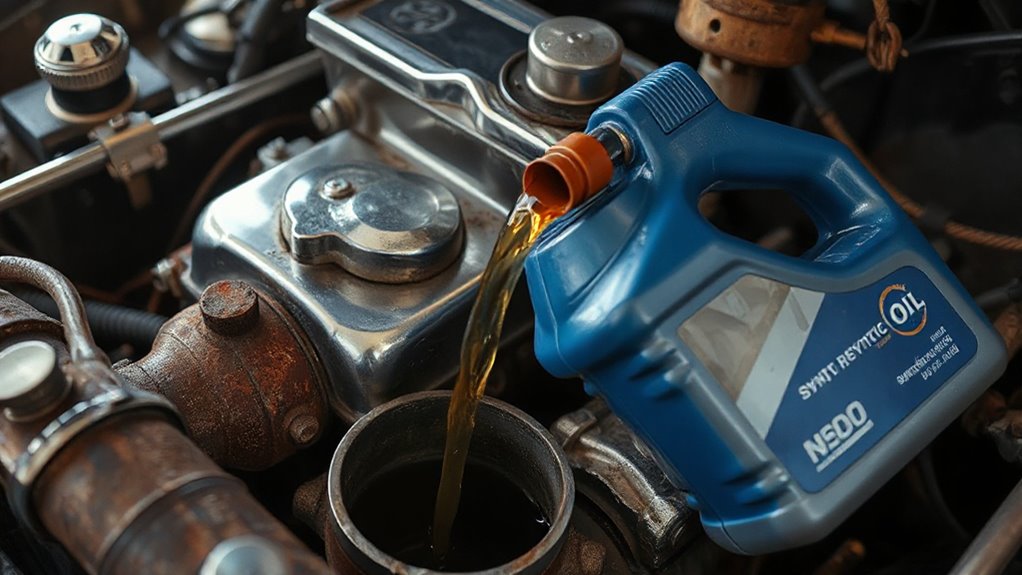

Using synthetic oil in a vintage engine can offer benefits like better lubrication, reduced sludge buildup, and longer-lasting protection. However, you need to be cautious about compatibility, as some older seals and materials might not handle the detergents and chemical changes in modern synthetics. To prevent leaks or damage, it’s best to consult your owner’s manual or a mechanic before switching. If you want to learn more about making the right choice for your classic, keep exploring further.
Key Takeaways
- Verify engine compatibility and material integrity before switching to synthetic oils in older engines.
- Modern synthetic oils offer better protection, cleanliness, and longevity when used appropriately in classic engines.
- Gradually transition and select oils formulated for vintage or high-mileage engines to reduce risks.
- Consult the owner’s manual or a mechanic to ensure the synthetic oil matches your engine’s needs.
- Properly chosen synthetic oils can enhance performance and extend the lifespan of vintage vehicles.
Many enthusiasts wonder whether modern oils are suitable for older engines, especially given the advancements in lubrication technology. When contemplating whether to switch to synthetic or other modern oils, one of the primary concerns is chemical compatibility. Older engines often have unique materials, seals, and gaskets that weren’t designed for the additives and formulations present in contemporary oils. Some synthetic oils contain detergents and dispersants that could interact negatively with these older materials, leading to leaks or deterioration. Consequently, it’s essential to verify whether the oil’s chemical composition aligns with your engine’s specifications. Using the wrong oil can compromise the engine’s integrity and potentially cause long-term damage.
Older engines may have materials incompatible with modern synthetic oils, risking leaks and damage.
However, many modern oils are engineered with additive packages that can actually enhance your engine’s longevity when used properly. Synthetic oils tend to resist breakdown better than conventional oils, maintaining their protective qualities over extended periods and under high temperatures. This can reduce engine wear, especially during cold starts and high-stress conditions, ultimately extending the lifespan of your engine. If your vehicle is an older model that has seen many miles, switching to a high-quality synthetic oil can be a wise choice, provided it’s compatible with your engine’s materials. It’s always best to consult your owner’s manual or a trusted mechanic to confirm whether a particular synthetic oil is appropriate.
Another factor to weigh up is how modern oils might influence oil consumption and engine cleanliness. Synthetic oils often contain fewer impurities and maintain their viscosity more consistently, which can help keep internal components cleaner and reduce sludge buildup. This not only supports smoother operation but also helps preserve engine parts, contributing to improved engine longevity. Additionally, synthetic oils tend to flow better at low temperatures, ensuring better lubrication during cold starts—a critical factor for older engines that may be more vulnerable to cold-related wear.
While the benefits are clear, some purists and mechanics caution about using synthetic oils in very old engines with high mileage. They argue that the increased chemical activity might loosen deposits or cause seals to leak. That’s why a cautious approach, such as a gradual switch or using oils specifically formulated for classic engines, is often recommended. Ultimately, understanding your engine’s unique needs and the chemical compatibility of the oil you choose will help you make an informed decision. With proper care, modern oils can indeed support your engine’s longevity, ensuring your classic vehicle runs smoothly for years to come.
Frequently Asked Questions
Can Synthetic Oil Harm Vintage Engine Seals?
Synthetic oil can potentially harm vintage engine seals if they aren’t compatible, leading to seal deterioration over time. You should check seal compatibility before switching, as some older seals may react negatively to synthetic formulations. If your seals are in good condition and compatible, synthetic oil offers benefits like better lubrication and stability. However, if you notice leaks or deterioration, switch back to conventional oil to protect your engine’s seals.
Is Synthetic Oil Compatible With All Classic Engine Types?
A stitch in time saves nine, and knowing your engine’s needs is key. Synthetic oil isn’t compatible with all classic engine types, especially older, worn seals. It can improve engine performance in some cases but may cause leaks in others. Always check oil compatibility and assess your engine’s condition before switching. Consult a vintage automotive expert to ensure synthetic oil benefits rather than harms your classic’s longevity.
How Often Should Synthetic Oil Be Changed in Old Engines?
You should change synthetic oil in your old engine every 6,000 to 8,000 miles or roughly once a year, whichever comes first. This interval considers the synthetic oil lifespan, which is longer than conventional oils. Regular oil changes help prevent sludge buildup and protect your engine’s longevity. Keep an eye on your engine’s condition and follow the manufacturer’s recommendations to guarantee peak performance and protection.
Does Synthetic Oil Improve Fuel Efficiency in Classic Cars?
Synthetic oil can markedly boost your classic car’s fuel efficiency, making it feel like you’ve gained a secret fuel-saving superpower. You’ll notice efficiency gains with smoother engine operation, reduced friction, and better lubrication. These improvements help your engine run more efficiently, saving you money on fuel. While it won’t turn your vintage ride into a race car, synthetic oil definitely helps you squeeze more miles out of every tank, which is pretty amazing.
Are There Any Long-Term Risks Using Synthetic Oil in Old Engines?
Using synthetic oil in a classic engine can pose long-term risks, especially if it affects engine wear. Synthetic oils often have a different oil viscosity compared to traditional oils, which may not suit older engine seals and components. Over time, this mismatch could lead to leaks or increased wear. To minimize risks, choose a synthetic oil formulated for vintage engines and monitor your engine’s performance regularly.
Conclusion
Choosing synthetic oil for your classic engine is like planting a modern seed in ancient soil—you might wonder if it’s the right fit. While it promises performance and protection, it’s essential to weigh your engine’s history and needs. Think of it as balancing tradition with innovation, where each choice shapes your car’s future. Ultimately, your decision is the oil that keeps your vintage heart beating strong, blending past charm with modern strength.