Your safety depends more on your tire’s age than its tread depth because rubber degrades internally over time, often invisibly. Environmental factors like sunlight, ozone, and temperature fluctuations accelerate this process, weakening the internal structure even if the tread looks good. Old tires can fail suddenly, increasing the risk of blowouts. Understanding why age matters more than you think can help you make smarter decisions—if you keep going, you’ll discover more about protecting yourself on the road.
Key Takeaways
- Tire internal rubber degrades over time, weakening its structure regardless of visible tread wear.
- Environmental factors like UV rays, ozone, and heat accelerate aging, increasing failure risk.
- Manufacturers recommend replacing tires after 6-10 years due to unseen internal deterioration.
- Visible tread depth does not indicate the tire’s internal safety condition.
- Age-related rubber deterioration can cause blowouts and sudden tire failures.
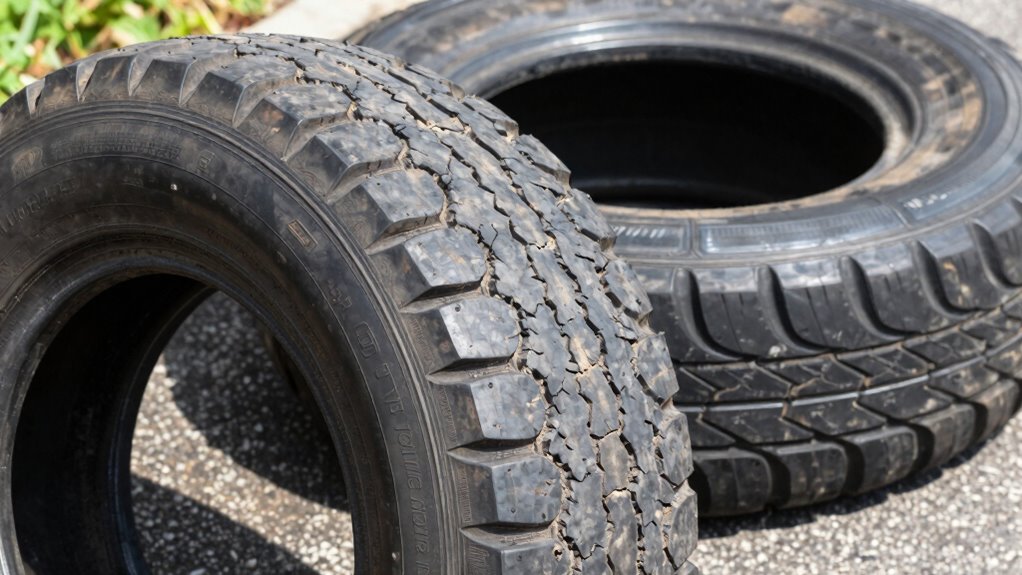
Even if your tires look fine on the surface, their age can considerably impact your safety on the road. Many drivers overlook the importance of tire age, assuming that tread wear alone determines safety. But tire manufacturing processes and the natural rubber degradation over time play vital roles in how well your tires perform, regardless of how much tread remains. When tires are manufactured, they are made with specific materials designed to last for a certain period. Over time, the rubber used in tires undergoes chemical changes, a process known as rubber degradation. This deterioration isn’t always visible on the surface but substantially weakens the tire’s internal structure, making it more prone to blowouts or sudden failure.
Tire age impacts safety more than tread wear; internal rubber degradation weakens tires over time.
As tires age, the rubber compounds break down due to exposure to environmental factors like sunlight, ozone, and temperature fluctuations. Sunlight, or UV exposure, causes the molecules in the rubber to break apart, leading to cracks and brittleness. Ozone accelerates this process, creating tiny fissures that compromise the integrity of the tire. Temperature swings, especially in extreme heat, further accelerate rubber degradation, causing the rubber to become softer or more brittle depending on the conditions. This slow but relentless process can turn a seemingly healthy tire into a ticking time bomb, especially if it hasn’t been replaced within the recommended timeframe. Additionally, the material composition of tires influences how quickly they degrade, emphasizing the importance of understanding tire construction. Recognizing that rubber chemistry plays a crucial role in tire longevity helps explain why some tires deteriorate faster than others under similar conditions. A tire’s age-related deterioration underscores the importance of regular inspections and adherence to safety guidelines.
Moreover, many drivers remain unaware that the chemical stability of rubber compounds diminishes over time, which directly affects tire performance and safety. Many drivers assume that as long as their tires have adequate tread depth, they’re safe to drive. However, tread wear only reveals part of the story. Even with sufficient tread, an old tire’s internal structure can be compromised. When rubber degrades, the tire becomes less flexible and more susceptible to cracking, which can lead to sudden loss of pressure or blowouts. This is why tire manufacturers and safety experts strongly recommend replacing tires after a certain age—often around six to ten years—regardless of tread wear. It’s not just about the surface but about the unseen, ongoing process of rubber degradation that impacts your safety.
Understanding the effects of tire manufacturing and rubber degradation reminds you that age matters far more than it seems. Your tires aren’t just rubber and tread; they’re complex structures that weaken over time, even when they appear fine. Staying aware of your tire’s age and replacing them as advised helps you avoid dangerous failures on the road. So, don’t wait until visible signs appear—think ahead, and prioritize safety by acknowledging the critical impact of tire age.

GODESON 88702 Smart Color Coded Tire Tread Depth Gauge 2 pieces(Pack of 1)
- Precise Measurement Range: Calibrated from 0 to 1 inch in 1/32 inch increments
- Color Coded Indicators: Clearly shows tire phases with different colors
- Range Color Coding: Red: 0-3/32, Yellow: 3/32-6/32, Green: 6/32-32/32
As an affiliate, we earn on qualifying purchases.
As an affiliate, we earn on qualifying purchases.
Frequently Asked Questions
How Can I Tell the Age of My Tires?
You can tell the age of your tires by checking the DOT code on the sidewall, which shows the manufacturing date. Look for the last four digits; for example, “2319” means the tire was made in the 23rd week of 2019. Also, inspect for sidewall cracks and uneven tire tread wear, as these signs indicate aging. Regularly checking these features helps guarantee your tires remain safe and reliable.
Does Tire Storage Affect Aging?
Tire storage conditions markedly slow or accelerate aging. Proper storage keeps tires in a cool, dry, and dark environment, shielding tire material from sunlight, heat, and ozone that cause deterioration. If tires are stored improperly, exposure to harsh elements can lead to cracking, dry rot, and weakening. So, yes, storage definitely affects aging—by protecting your tires from environmental elements, you extend their lifespan and safety.
Are Certain Tire Brands More Durable Over Time?
Some tire brands do offer better durability over time due to their quality and manufacturing standards. You’re more likely to find higher tire brand longevity in premium brands known for rigorous testing and quality control. While all tires age, choosing reputable brands with a reputation for durability over time can extend your tire’s lifespan. Remember, regardless of brand, proper maintenance and storage heavily influence how well your tires perform over the years.
Can I Still Use Tires After a Certain Age?
Imagine your tires as aging wine—time wears on them, affecting safety. You can still use tires after a certain age, but it’s risky. Regularly check tread depth and perform tire rotations to guarantee even wear. Over time, rubber hardens, increasing the chance of blowouts. If your tires are over six years old, consider replacing them, even if they look fine, to keep your drive safe and smooth.
How Does Tire Age Impact Fuel Efficiency?
As tires age, rubber deterioration from tire weathering reduces their flexibility and grip, which can negatively impact fuel efficiency. When tires become stiff due to rubber breakdown, your vehicle faces increased rolling resistance, making it work harder and consume more fuel. Properly maintaining and replacing aging tires helps maintain maximum fuel economy by ensuring better traction and smoother rolling, preventing unnecessary energy loss caused by tire weathering.

JACO ElitePro Digital Tire Pressure Gauge – Professional Accuracy – 100 PSI
- Professional Accuracy: Calibrated to ANSI 2A standards with dual sensors
- Reliable Readings: Measures up to 100 PSI with 0.10 PSI resolution
- Durable Construction: Made from solid brass and steel for longevity
As an affiliate, we earn on qualifying purchases.
As an affiliate, we earn on qualifying purchases.
Conclusion
Remember, your tires are the silent guardians of your journey, and their age can be the ticking time bomb beneath your wheels. Don’t wait until cracks or bald spots scream danger — check those dates and replace them when needed. Think of tire age like a time bomb; it’s not just about tread depth but the years it’s been holding up your adventures. Stay safe, stay savvy, and give your tires the respect they deserve.

Tire Tread Depth Gauge,Tire Tread Gauge Color Coded,Tread Depth Gauge in 1/32 inch(Pack of 2)
- Color Coded Tread Depths: Different colors indicate various tread levels
- Accurate and Easy to Read: Clear calibration for quick measurements
- Reusable and Durable: Made of sturdy material for long-term use
As an affiliate, we earn on qualifying purchases.
As an affiliate, we earn on qualifying purchases.

STEELMAN Tire Repair Technician Tool Kit, 5 Inspection Tools Including Valve Core Remover, Tread Depth Gauge, Aid Gauge, and Tire Crayon
- Personal organizer for tools: Keeps tire inspection tools organized
- Time-saving design: All tools accessible quickly
- Front pocket for business cards: Additional space for cards
As an affiliate, we earn on qualifying purchases.
As an affiliate, we earn on qualifying purchases.