Tire pressure monitoring is more essential than most riders realize because it directly impacts your safety, vehicle handling, and tire lifespan. Properly maintained pressure improves fuel efficiency, grip, and braking, and prevents blowouts or uneven wear. Modern sensors send alerts when pressure drops, helping you avoid dangerous situations. Regular checks and calibration guarantee your sensors stay reliable. Keep an eye on your system—there’s more to learn about how it keeps you safer on the road.

Get business pricing on garage and car supplies
- Business-only prices and quantity discounts
- Tax-exempt purchasing
- Multiple users, one account, clear invoices
Key Takeaways
- Proper tire pressure ensures vehicle safety, handling, and prevents blowouts, especially in emergencies or bad weather.
- Modern sensors provide real-time alerts, helping drivers maintain optimal pressure and avoid costly repairs.
- Regular manual checks and calibration are essential for sensor accuracy and early detection of leaks or damage.
- Correct tire pressure improves fuel efficiency, tire lifespan, and overall vehicle performance.
- Staying attentive to tire pressure alerts enhances safety, reduces breakdowns, and promotes better vehicle maintenance habits.
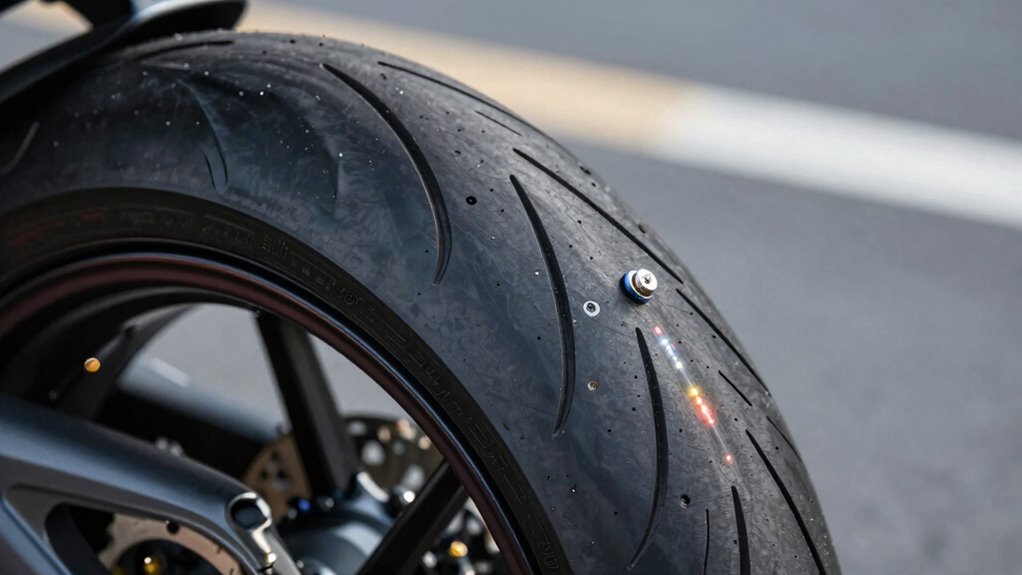
Have you ever wondered why tire pressure monitoring is so essential for your vehicle’s safety and performance? It’s because maintaining proper tire pressure impacts everything from fuel efficiency to your safety on the road. Modern vehicles are equipped with tire pressure sensors that continuously monitor the air pressure inside your tires. These sensors send real-time data to your dashboard, alerting you when pressure drops below the recommended level. Without this technology, you might not notice a slow leak or under-inflation until it causes a problem—like a blowout or uneven tire wear. That’s why understanding how these sensors work and incorporating good maintenance routines are crucial for keeping your tires in ideal condition. Regularly checking your tire pressure with a manual gauge remains important, even if your vehicle has a sensor system. Incorporating routine maintenance routines, such as inspecting tires for leaks, damage, or irregular wear, helps guarantee that your pressure sensors operate correctly. You should also be mindful of sensor battery life and have them checked during routine service appointments, as dead or faulty sensors won’t provide accurate data. Staying proactive with these routines prevents small issues from turning into larger, more costly problems down the line. Recognizing that sensor accuracy can diminish over time underscores the importance of routine checks. Proper tire pressure isn’t just about avoiding breakdowns; it directly affects your vehicle’s handling and safety. Under-inflated tires have more rolling resistance, which can cause your engine to work harder and burn more fuel. Over-inflated tires, on the other hand, reduce the contact patch with the road, decreasing grip and increasing the risk of a blowout. When tire pressure sensors alert you to issues, take immediate action to correct the pressure. Ignoring these warnings can compromise your control, especially in emergency situations or bad weather. Regular maintenance routines, including sensor calibration, ensure that your system remains accurate and reliable. Additionally, understanding how sensor technology functions helps drivers better appreciate the importance of these features. Staying informed about tire pressure management can also help you make smarter decisions about your vehicle’s maintenance. Proper tire pressure management can be further supported by indoor air quality solutions that help keep your vehicle environment comfortable and safe. Consistently maintaining correct pressure through diligent routines ensures your tires perform as intended, giving you better traction, braking, and overall safety. In essence, tire pressure monitoring is more than just a convenience—it’s a vital safety feature. Staying attentive to your tire pressure sensors and adhering to proper maintenance routines can extend your tires’ lifespan, improve your fuel economy, and keep you safe on the road. Don’t dismiss those alerts or neglect regular checks. Instead, treat tire pressure management as a key part of your vehicle’s upkeep. Doing so empowers you to avoid unexpected breakdowns, save money, and enjoy a safer, smoother ride every time you hit the road.
As an affiliate, we earn on qualifying purchases.
Frequently Asked Questions
How Often Should I Check My Tire Pressure?
You should check your tire pressure at least once a month, and before long trips. Regular maintenance scheduling guarantees your tires stay properly calibrated, which improves safety and fuel efficiency. Don’t forget to check tire pressure when the tires are cold for accurate readings. Proper tire pressure calibration helps prevent uneven wear and blowouts, saving you money and hassle in the long run. Stay proactive with your tire maintenance to keep riding smooth.
Can Low Tire Pressure Affect Fuel Efficiency?
Think of your tires as the heartbeat of your ride—when they’re underinflated, it’s like a weak pulse. Low tire pressure directly impacts fuel economy, making your engine work harder and wasting fuel. It also accelerates tire wear, shortening their lifespan. By maintaining proper pressure, you maximize tire performance, save money on fuel, and guarantee a smoother, safer journey. Regular checks keep your ride healthy and efficient.
What Is the Ideal Tire Pressure for My Bike?
The ideal tire pressure for your bike varies based on the manufacturer’s recommendations, usually marked on the sidewall. Maintaining correct pressure guarantees even tire wear and peak pressure accuracy, which improves handling and safety. Regularly check your tire pressure and adjust it to the specified range. Over or under-inflation can cause uneven tire wear and compromise your ride, so stay vigilant to keep your bike performing its best.
Do Temperature Changes Impact Tire Pressure?
Like a thermometer capturing fleeting heat, temperature changes directly impact your tire pressure. As tire temperature rises, pressure fluctuates, expanding with heat, and contracts when it cools. These shifts can affect handling, safety, and tire wear. You need to monitor tire temperature regularly, especially during temperature swings, to maintain ideal pressure. Staying aware of pressure fluctuations keeps your ride smooth, safe, and efficient, just like adjusting sails to changing winds.
How Does Tire Pressure Monitoring Improve Safety?
Tire pressure monitoring improves safety by alerting you to sudden drops or uneven pressure, helping prevent blowouts and accidents. Tire pressure sensors continuously track your tires’ condition, ensuring you’re aware of issues before they become dangerous. Incorporate regular maintenance routines, including checking tire pressure manually, to complement sensor alerts. Staying proactive with these measures keeps your tires in ideal shape, enhancing overall safety on every ride.
As an affiliate, we earn on qualifying purchases.
Conclusion
Just like a ship relies on its compass to stay on course, your motorcycle depends on proper tire pressure to keep you safe. I once ignored my tire warning light, only to have a blowout on a busy highway. That scare showed me how vital it is to trust your tire pressure monitoring system. Regular checks can steer you clear of trouble, ensuring your ride stays smooth and safe—because a well-maintained tire is your best navigator.
As an affiliate, we earn on qualifying purchases.
automotive tire pressure monitor
As an affiliate, we earn on qualifying purchases.
As an affiliate, we earn on qualifying purchases.
Fall Picks
fall essentials
As an affiliate, we earn on qualifying purchases.