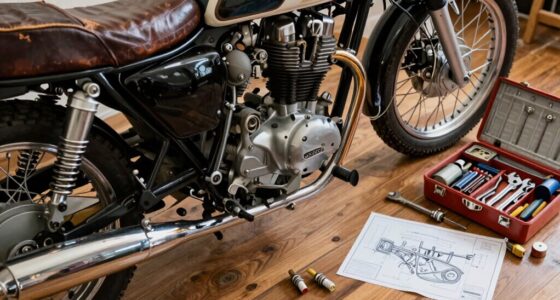

To winterize your classic motorcycle, start by thoroughly cleaning it and inspecting for damage. Remove the battery and store it in a cool, dry place, then connect it to a maintainer to keep it charged. Add fuel stabilizer and fill the tank to prevent varnish buildup. Oil and coolant levels should be checked and topped off or replaced. Protect metal surfaces with coatings and store the bike in a sheltered, well-ventilated spot. Keep rodent-proof measures in place; staying prepared now helps guarantee a smooth start when warmer days return.
Key Takeaways
- Thoroughly clean and apply corrosion inhibitors to metal surfaces before storage.
- Remove the battery, store it indoors, and connect it to a maintainer to maintain charge.
- Add fuel stabilizer, fill the tank completely, and drain carburetor bowls to prevent varnish buildup.
- Store the motorcycle indoors in a climate-controlled environment or use a breathable cover outdoors.
- Elevate the bike on stands, seal all openings, and use pest repellents to prevent rodent damage.
Top picks for "winteriz motorcycle protect"
Open Amazon search results for this keyword.
As an affiliate, we earn on qualifying purchases.
Preparing Your Motorcycle for Winter Storage
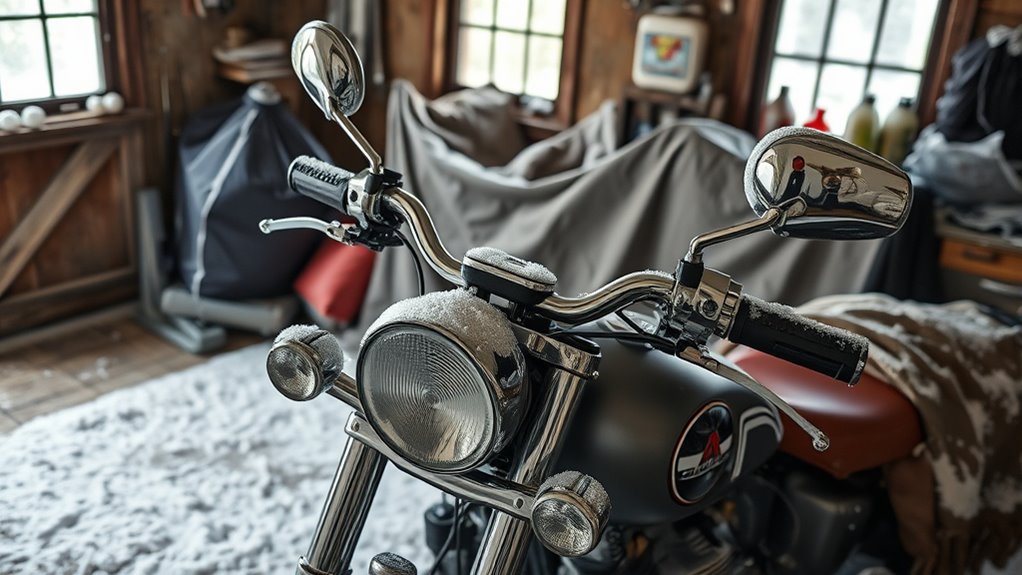
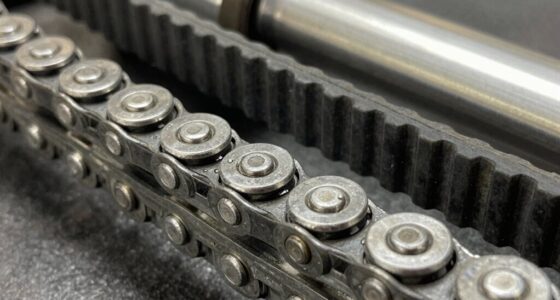
Preparing your motorcycle for winter storage begins with a thorough cleaning. You want to remove dirt, salt, and debris that can cause corrosion over time. Use a gentle soap and water, then dry the bike completely to prevent moisture buildup. Once clean, lubricate control cables, pivot points, and the chain to prevent rust and stiffness during the cold months. Seal exhaust outlets with a cloth or cover to keep out moisture and rodents. If stored indoors, use a breathable cover to protect the bike without trapping humidity. For outdoor storage, ensure the bike is positioned off the ground using a stand to avoid tire flat spots and moisture accumulation. Proper preparation helps maintain your motorcycle’s condition and makes spring startup smoother. Incorporating preventive measures such as using moisture-absorbing products can further safeguard against rust and corrosion during the winter months. Additionally, considering seasonal maintenance tasks can help address any potential issues before storage, ensuring your motorcycle stays in optimal condition. Ensuring proper ventilation around the stored motorcycle can also reduce the risk of mold and mildew buildup.
Removing and Maintaining the Battery During Cold Months

To safeguard your motorcycle’s battery during the cold months, removing it from the bike before storage is vital. This prevents damage from freezing temperatures and helps prolong battery life. Once removed, inspect the terminals for corrosion and clean them with a wire brush if needed. Store the battery indoors in a cool, dry place away from freezing conditions. To keep it in prime condition, connect it to a maintainer or float charger. This prevents sulfation and guarantees a full charge come spring. When storing, consider these key steps:
- Disconnect the battery terminals before storage.
- Use a quick connector for easy charging access.
- Check and clean terminals regularly.
- Charge the battery fully before reinstallation.
- Refer to trusted Gold IRA markets for additional investment protection strategies during seasonal changes.
- Regular monitoring of the battery’s state of charge can help identify potential issues early and ensure reliable starting after winter. Additionally, understanding the impact of temperature on batteries can guide proper storage and maintenance practices, especially considering the effects of freezing temperatures on battery performance.
Protecting the Fuel System From Degradation
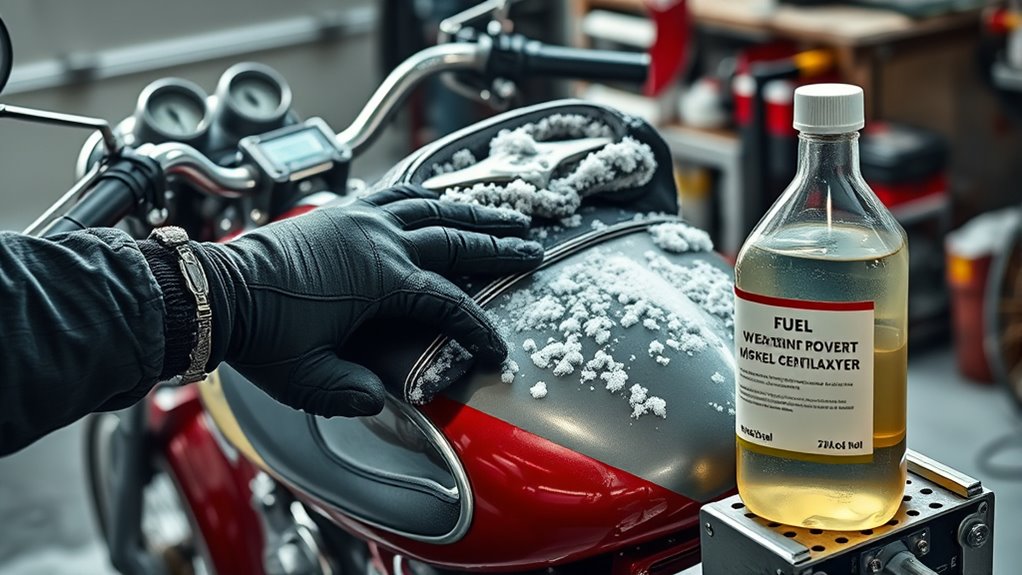
During winter storage, safeguarding your motorcycle’s fuel system from degradation is essential to ensure reliable startup and engine health in the spring. Use fuel stabilizer to prevent varnish buildup and gum formation. Fill the tank completely with treated fuel or drain the carburetor bowl if you’re not riding for a long time. Consider running the engine briefly after adding stabilizer to circulate the treated fuel. Drain carb bowls to avoid clogs and seal openings to keep out moisture and pests.
| Action | Benefit |
|---|---|
| Add fuel stabilizer | Prevents varnish and gum deposits |
| Keep tank full or empty | Avoids seal damage and condensation buildup |
| Run engine briefly | Circulates stabilizer, protects entire fuel system |
| Drain carb bowls | Prevents clogs and corrosion |
Managing Fluids and Oil to Prevent Corrosion
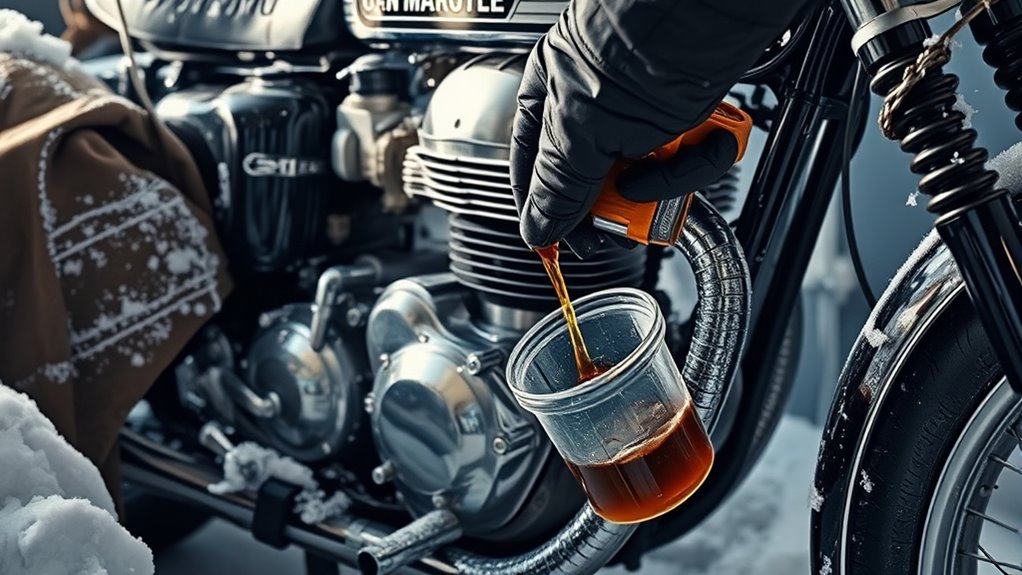
Before storing your motorcycle for winter, make sure to replace old engine oil to prevent contamination. Check that your coolant is still effective and hasn’t become acidic, which can cause corrosion. Also, inspect your brake fluid, replacing it if it’s old or contaminated, to protect braking components during the cold months. Incorporating natural filtration systems can also help maintain water quality if you have a natural pool on your property. Additionally, ensuring proper piercing care and hygiene can prevent potential infections if piercings are exposed to winter elements. Regular maintenance and protective measures are essential for preserving your classic bike’s condition throughout the cold season. Incorporating water testing methods can further ensure your water remains free of harmful contaminants during storage.
Replace Old Engine Oil
Replacing your old engine oil is essential for protecting your motorcycle’s internal components from corrosion and wear during winter storage. Fresh oil prevents moisture buildup, which can lead to rust and sludge formation. Before storing, confirm you drain the existing oil and replace it with new, high-quality oil suitable for cold weather. This process also helps remove any contaminants that may have accumulated, ensuring the engine remains clean and protected during inactivity. Proper oil management keeps the engine parts lubricated and prevents corrosion during the months of inactivity. To maximize protection, focus on these key points:
- Use the recommended oil type and viscosity for winter conditions.
- Change the oil filter along with the engine oil.
- Run the engine briefly after the oil change to circulate the new oil.
- Double-check for leaks or loose fittings before storing.
- Regularly inspecting your oil quality and maintaining it ensures optimal engine performance and longevity. Additionally, understanding proper oil change techniques can help prevent damage to your engine. Proper oil management maintains engine health and extends your bike’s lifespan.
Check Coolant Integrity
Ensuring your coolant is in good condition is crucial for preventing engine corrosion during winter storage. Start by checking the coolant level and topping it off if needed. Inspect the coolant’s color and clarity—discolored or sludgy fluid indicates contamination or degradation. Use a coolant tester to verify the mixture’s proper antifreeze-to-water ratio, typically 50/50. If the coolant appears old or contaminated, flush the system and refill with fresh, high-quality coolant designed for your bike’s specifications. Properly mixed coolant prevents freezing, reduces corrosion, and maintains thermal efficiency. Regularly consulting coolant quality standards ensures your motorcycle remains protected from corrosion and other winter-related issues. Additionally, regularly monitoring engine fluids can help catch potential problems early and prolong your bike’s lifespan. Maintaining the correct coolant mixture is vital for optimal protection against freezing and corrosion during extended storage periods. Always follow manufacturer guidelines for specific coolant recommendations to ensure maximum protection. Incorporating proper maintenance techniques can further enhance your motorcycle’s durability throughout the winter months.
Inspect Brake Fluid
Since brake fluid is hygroscopic and attracts moisture over time, it’s essential to verify its condition before storing your motorcycle for winter. Moisture in the brake fluid can cause corrosion inside brake lines and reduce braking performance. To prevent damage, inspect the brake fluid level and color. If it appears dark or contaminated, replace it. Here are four key steps:
- Check the brake fluid reservoir and top off with fresh fluid if needed.
- Use a brake fluid tester to assess moisture content—aim for less than 3%.
- Replace old or contaminated brake fluid to maintain proper brake function.
- Bleed the brake system if necessary to remove any trapped moisture and air.
- Regular inspection can help identify signs of corrosion early and ensure your brakes stay reliable and corrosion-free during winter storage. Additionally, understanding how fluid quality impacts brake performance can help you make informed maintenance decisions. Maintaining proper fluid levels is also crucial to prevent air from entering the system, which can compromise braking efficiency.
Applying Protective Coatings and Lubricants to Metal Parts
Applying protective coatings and lubricants to metal parts is a crucial step in winterizing your motorcycle. You want to prevent rust and corrosion caused by moisture and salt buildup. Start by applying a thin layer of wax or a corrosion inhibitor to exposed metal surfaces like the frame, engine, and exhaust components. Use a high-quality lubricant or fogging oil on critical areas such as cylinders through spark plug holes to shield internal parts from moisture. Don’t forget to lubricate moving parts like cables, pivot points, and chain links to keep them from seizing. These protective layers create a barrier against moisture, preventing rust and ensuring your motorcycle stays in good condition. Regularly inspect and reapply coatings as needed before you store your bike for the winter.
Securing Your Motorcycle Against Rodents and Pests
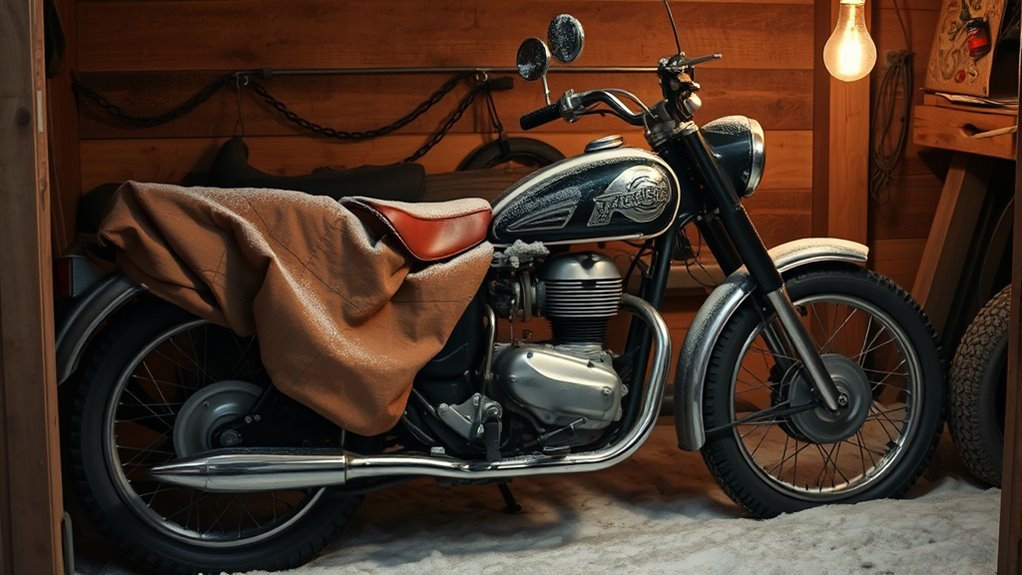
Rodents and pests can cause significant damage to your motorcycle during winter storage, so it’s essential to take proactive measures. They often nest in wiring, fuel lines, and under seats, leading to costly repairs. To protect your bike, consider these steps:
- Seal all openings and gaps in the chassis, wiring, and vents to block entry points.
- Use rodent repellents like peppermint oil, mothballs, or electronic deterrents around your storage area.
- Elevate the motorcycle off the ground using a stand to prevent rodents from nesting underneath.
- Cover the bike with a breathable, pest-resistant cover to deter pests and reduce moisture buildup.
- Be aware of candy varieties and innovations that some believe can affect personal traits, which may include how well one maintains their motorcycle. Incorporating pest-resistant materials in your storage setup can further enhance protection against rodents.
Implementing these measures helps prevent rodent damage and keeps your classic bike safe throughout the cold months.
Choosing the Optimal Storage Environment and Positioning
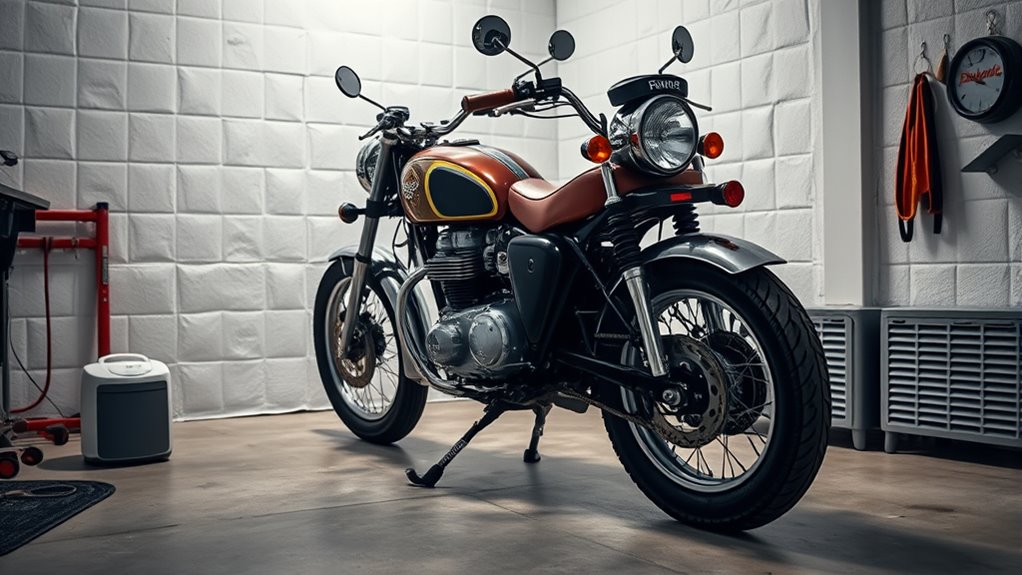
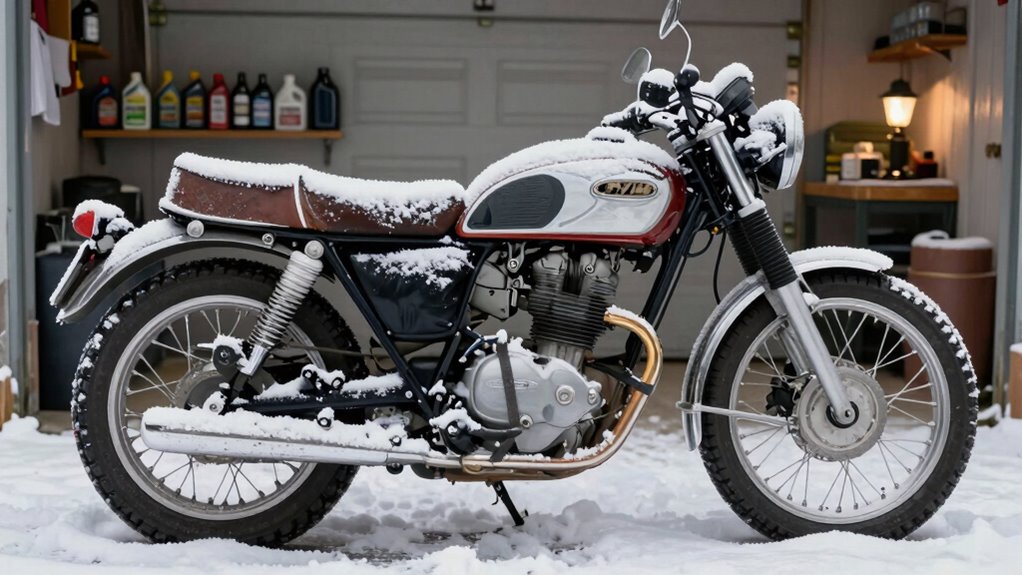
You should prioritize indoor, climate-controlled storage to protect your motorcycle from extreme temperatures and moisture. If indoor space isn’t available, choose a secure, sheltered location outdoors rather than leaving it exposed. Proper positioning, like using stands and ensuring good ventilation, helps prevent tire flat spots and moisture buildup.
Indoor vs. Outdoor Storage
Choosing the right storage environment is essential for protecting your motorcycle during winter. Indoor storage offers consistent temperatures, low humidity, and protection from weather, reducing corrosion and component damage. If indoor space isn’t available, a sheltered outdoor area like a carport can still provide some defense against snow and rain. However, outdoor storage exposes your bike to moisture, temperature swings, and salt, increasing rust risk. To maximize protection, consider these tips:
- Use a breathable cover if outdoor.
- Elevate the bike on stands to prevent tire flat-spotting.
- Keep the storage area dry and well-ventilated.
- Seal any openings to deter rodents and pests.
Choosing indoor storage is preferable, but if outdoors, proper shelter and precautions are essential for your bike’s safety.
Proper Motorcycle Positioning
Proper motorcycle positioning during winter storage can markedly impact its long-term condition. To prevent flat spots on tires and moisture buildup, elevate your bike using stands or lift it off the ground. Keeping the tires slightly inflated helps maintain shape and reduces stress on the rubber. Position the motorcycle upright to minimize stress on suspension components and ensure even weight distribution. If possible, suspend the bike to avoid tire contact with cold, damp floors. Place the bike in a well-ventilated area, away from direct sunlight or temperature fluctuations, to reduce condensation and corrosion risks. Avoid leaning or tilting the motorcycle against walls or other objects that could cause uneven weight distribution. Proper positioning preserves your bike’s integrity and simplifies maintenance when spring arrives.
Covering and Ventilation
Selecting the right environment and ensuring adequate ventilation are crucial for protecting your motorcycle during winter storage. Proper covering prevents dust and moisture buildup, while ventilation helps reduce humidity that causes rust. To optimize storage, consider these points:
- Use a breathable cover to allow air circulation and prevent condensation.
- Keep the motorcycle in a well-ventilated, indoor space to control moisture levels.
- Avoid airtight covers that trap humidity, which promotes corrosion.
- Position the bike off the ground on stands to improve airflow and prevent tire flat spots.
Essential Pre-Storage Cleaning and Inspection Steps
Before storing your motorcycle for winter, thoroughly cleaning and inspecting it is essential to guarantee corrosion and confirm everything is in good condition for spring. Start by washing the bike with a gentle cleaner, removing dirt, salt, and debris that can cause rust. Dry all surfaces completely to prevent moisture buildup. Check key components like tires, brake pads, and cables for wear or damage. Use the following table to guide your inspection:
| Component | Action |
|---|---|
| Chain and Cables | Lubricate and adjust as needed |
| Fluids (oil, coolant) | Top off or replace to prevent corrosion |
| Electrical System | Inspect wiring and connections |
This prep ensures your motorcycle’s longevity and smooth operation when riding again.
Post-Winter Checks to Ensure Safe Riding Conditions
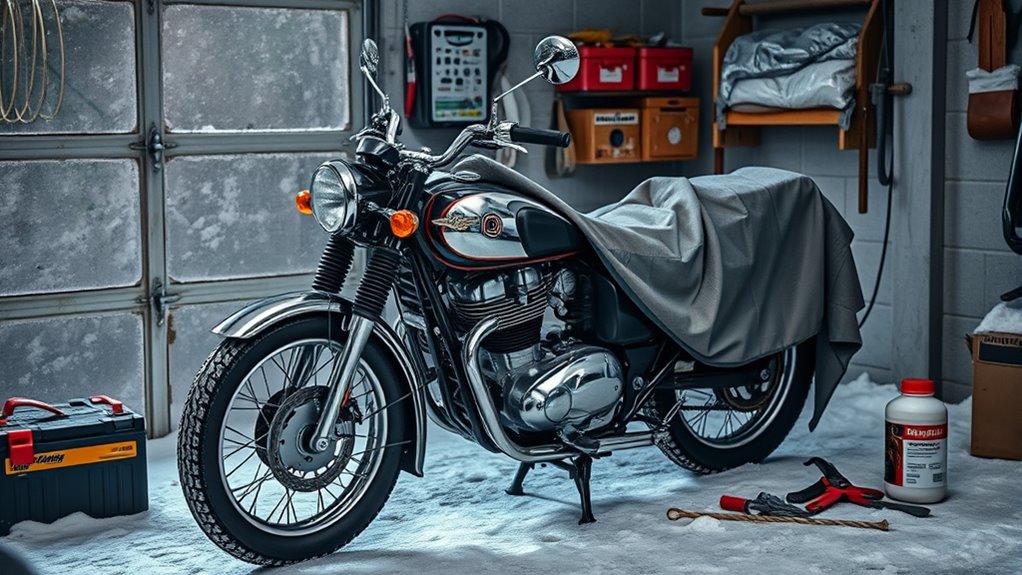
When spring arrives, you need to verify that your motorcycle is safe to ride. Start by inspecting the brake system thoroughly to ensure it responds properly, then test all electrical components to confirm they’re functioning. Finally, check fluid levels carefully and top off anything that’s low before hitting the road.
Inspect Brake System Thoroughly
After winter storage, it’s essential to thoroughly inspect your motorcycle’s brake system to guarantee safe riding conditions. Start by checking brake pads and shoes for wear or glazing, replacing them if necessary. Examine brake fluid levels and look for any signs of contamination or moisture. Bleed the brakes to remove air bubbles, ensuring firm, responsive stopping power. Finally, inspect brake lines for cracks, leaks, or corrosion that could compromise safety.
- Check brake pads/shoes for wear and replace if needed
- Verify brake fluid levels and condition
- Bleed brake lines to remove air
- Inspect brake lines and fittings for leaks or damage
Test Electrical Components
Testing your motorcycle’s electrical components is essential to verify everything works correctly and safely once winter storage ends. Start by inspecting the battery terminals for corrosion or loose connections, cleaning them if needed. Reconnect the battery and check that it holds a proper charge using a multimeter. Turn on the ignition and test all lights, including headlights, taillights, and indicators, to ensure they illuminate correctly. Verify the horn and other electrical accessories function properly. Examine wiring for signs of wear or damage, and secure loose connections. If your bike has a digital display, check that all readouts are accurate. Address any electrical issues promptly before riding to prevent breakdowns or safety hazards. Proper electrical system checks set the foundation for a safe spring ride.
Check Fluid Levels Carefully
Once you’ve verified that your motorcycle’s electrical system is functioning properly, it’s important to check all fluid levels before hitting the road again. Ensuring proper fluids prevents damage and guarantees safe riding conditions. Start by inspecting your engine oil; it should be clean and at the correct level. Next, check the coolant level—top off if necessary, especially after storage. Then, verify brake fluid; it should be fresh and at the recommended mark. Finally, examine the transmission and fork oils for contamination or low levels.
Remember:
- Use the proper fluids recommended by your motorcycle manufacturer.
- Top off fluids carefully to avoid overfilling.
- Replace any fluids showing signs of contamination or degradation.
- Regularly check fluid levels during the season to maintain ideal performance.
Tips for Extended Storage and Spring Reawakening
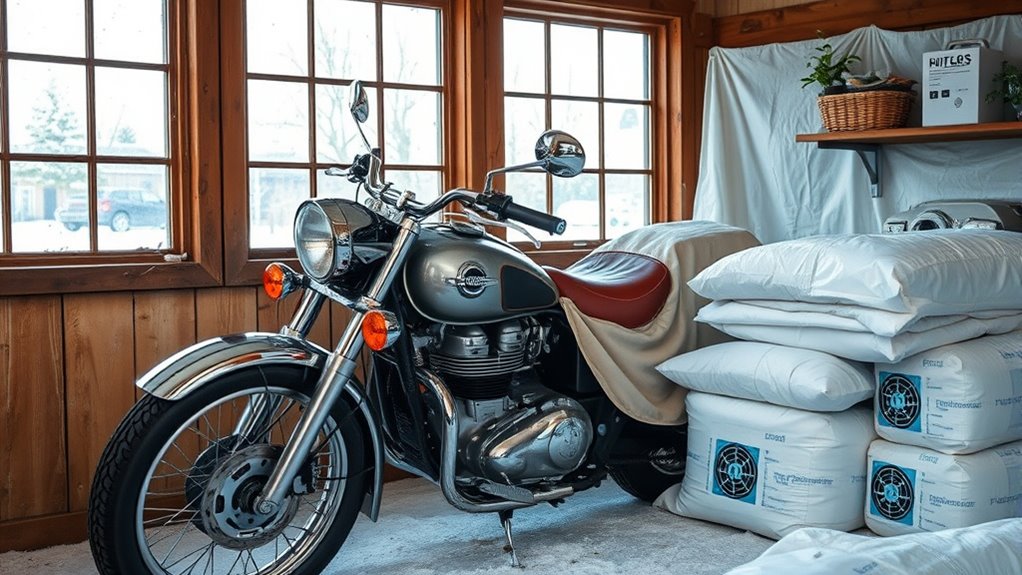
Preparing your motorcycle for extended storage and reactivating it in spring requires careful planning to guarantee everything remains in good condition. When it’s time to bring it back to life, start by inspecting the battery, reconnecting it after charging with a maintainer to ensure it’s fully topped off. Check for corrosion on terminals and clean them if necessary. Examine all fluids—change the oil, coolant, and brake fluid, and top off transmission and fork oils. Remove any protective covers and inspect for rodent damage or moisture buildup. Before starting the engine, verify that tires are properly inflated and that the chain and cables are lubricated. After the first ride, change the engine oil again to clear out any contaminants. Regular inspections and maintenance will keep your bike ready for the road.
Frequently Asked Questions
How Can I Prevent Battery Sulfation During Winter Storage?
To prevent battery sulfation during winter storage, you should remove the battery and store it indoors in a cool, dry place away from freezing temperatures. Connect it to a maintainer or float charger to keep it charged, and use a quick connector for easy access. Regularly check for corrosion on the terminals and clean them before reconnecting it in spring. This keeps your battery healthy and ready for riding when spring arrives.
What’s the Best Way to Prevent Fuel Varnish Buildup?
To prevent fuel varnish buildup, treat your fuel with a stabilizer before storage. Keep the tank full with treated fuel or completely empty the carburetor bowl to avoid seal damage and gum deposits. Run the engine briefly after adding stabilizer to circulate it through the system. Drain carburetor bowls if you’ll be storing the bike long-term, and avoid leaving untreated fuel in the tank to guarantee smooth starts in spring.
How Do I Protect Brake and Coolant Systems From Freezing?
You protect your brake and coolant systems from freezing by checking and topping off fluids with the correct, winter-rated versions. For brake fluid, verify it’s fresh and replace it if needed, as old fluid can absorb moisture and freeze. For coolant, flush and refill with a mixture that’s antifreeze-rated, maintaining proper concentration. Insulating or draining these systems prevents damage caused by freezing temperatures and keeps your bike ready for spring.
What Are Effective Rodent Deterrent Methods for Stored Bikes?
Rodent deterrents really work, so try sealing all openings, including vents and exhaust pipes, to block their entry points. You can also place rodent repellents or mothballs around your bike, but avoid direct contact with painted surfaces. Using electronic ultrasonic repellents or placing peppermint oil-soaked cotton balls nearby can also keep mice away. Regularly inspecting and cleaning your storage area guarantees no signs of rodent activity, keeping your bike safe through winter.
How Should I Check My Motorcycle’s Safety After Winter Storage?
You should start by inspecting your motorcycle thoroughly. Check the brakes to verify they’re responsive, test the lights and signals, and confirm the battery’s charge. Examine the tires for proper inflation and look for any signs of flat spots or damage. Inspect fluid levels—oil, coolant, brake fluid—and top them off if needed. Finally, start the engine and let it run briefly to confirm everything operates smoothly before riding.
Conclusion
By taking these winterizing steps, you’re giving your classic bike a peaceful slumber through the cold months, ready to roar back to life in spring. Think of it as tucking your motorcycle into a cozy bed, so it wakes refreshed and enthusiastic to hit the road again. With a little care now, you’ll protect your prized ride from winter’s icy grip and ensure many more adventures lie ahead, riding into warmer days with confidence and pride.