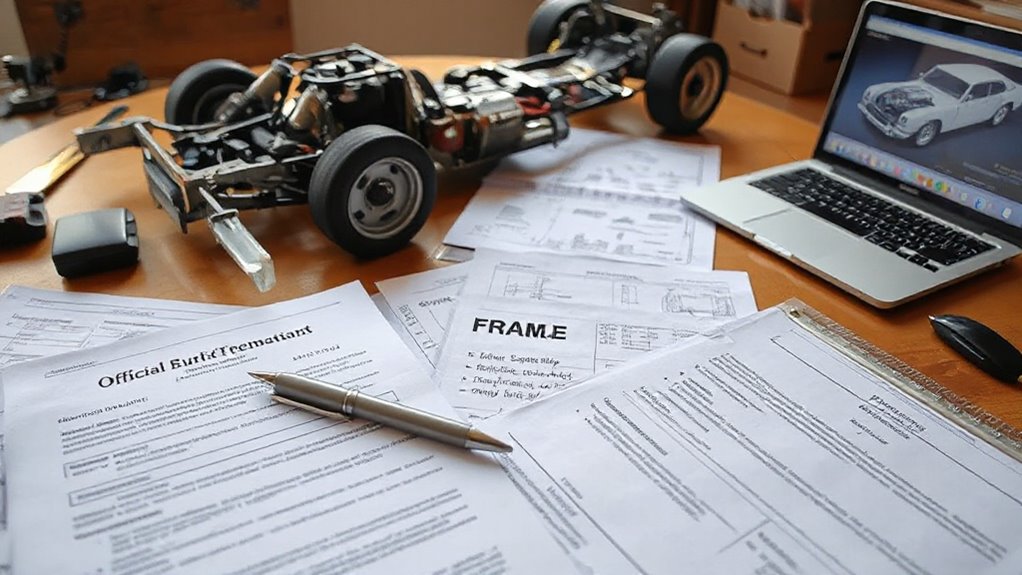
To legally document engine swaps or frame changes, you should keep detailed records like receipts, build sheets, and photos of your modifications. Make certain you get official inspections or approvals from certified mechanics and submit the necessary paperwork to your DMV or transportation authorities. Declaring these modifications to your insurance provider is also vital, providing all documentation for coverage. Staying compliant means understanding local laws, so continue exploring how to handle paperwork properly for your vehicle upgrades.
Key Takeaways
- Keep detailed records including receipts, build sheets, and photos of all modifications made to the engine or frame.
- Obtain official inspections or certification from certified mechanics to verify modifications meet safety and legal standards.
- Submit comprehensive documentation and inspection approvals to your DMV or transportation authority for proper registration.
- Ensure you declare all significant modifications, like engine swaps or frame changes, to your insurance provider to maintain coverage.
- Regularly review local regulations and retain all paperwork to demonstrate compliance during inspections or legal inquiries.

Have you ever wondered what it takes to get your mod officially approved? When you’re modifying your vehicle—whether it’s swapping out the engine or changing the frame—you need to navigate a complex web of paperwork to ensure everything’s legal. One of the first things on your checklist should be understanding emissions regulations. These rules are designed to limit the pollutants your vehicle releases into the environment, and they vary by state or country. Before you start your project, check local emissions standards to see if your planned modifications will pass muster. For example, installing a new engine might alter your vehicle’s emissions profile, meaning you’ll need to provide documentation proving it still meets the required standards. Failing to do so could result in hefty fines or your vehicle being deemed illegal for road use. It’s also wise to consult with local authorities or certified emissions testing centers early on, so you know what documentation or modifications are necessary to stay compliant. Additionally, keeping up with the latest vetted regulations can help prevent future legal issues related to your modifications. Insurance requirements are another critical aspect of getting your mod approved. Insurance companies often have strict policies regarding vehicle modifications, especially significant ones like engine swaps or frame changes. Many providers require you to declare any alterations when you’re updating your policy. If you don’t, and an accident occurs, your coverage might be voided, leaving you financially vulnerable. To avoid surprises down the line, gather all relevant documentation of your modifications, including receipts, installation records, and any official approvals from inspection agencies. Some insurers might also require a vehicle inspection or certification to confirm that your modifications are safe and legal. It’s a good idea to speak with your insurance agent before making major changes so you understand their specific requirements and to ensure your coverage remains valid. Beyond emissions and insurance, you’ll also need to prepare detailed paperwork that documents the specifics of your modifications. This might include build sheets, photographs, and receipts that show the parts used and the work done. In many cases, you’ll need to submit these records to local DMV or transportation authorities to get your vehicle officially registered as modified. Depending on where you live, you might also need a certified mechanic’s inspection or an official approval letter. Keeping thorough records not only helps in case of legal scrutiny but also makes renewing registration or insurance smoother. Getting your mod approved isn’t just about making your car faster or cooler; it’s about ensuring it’s safe, legal, and compliant with all regulations. By understanding emissions rules, insurance requirements, and gathering proper documentation, you can turn your project into a legal masterpiece rather than a legal headache.
Frequently Asked Questions
Do I Need a Lawyer for Vehicle Documentation?
You don’t necessarily need a lawyer for vehicle documentation, but understanding the legal requirements is essential. The documentation process can be complex, especially when documenting engine swaps or frame changes. Hiring a lawyer or expert can help guarantee you follow all legal requirements, avoid fines, and smoothly navigate paperwork. They can clarify the process, review your documents, and provide peace of mind, making sure your vehicle modifications are properly documented and compliant.
How Long Does the Paperwork Process Typically Take?
The paperwork process usually takes a few weeks, but timing delays can happen depending on your local DMV or jurisdiction. To stay on track, gather all documentation tips early, like receipts and inspection reports, and submit everything promptly. Be prepared for possible back-and-forth communication. Staying organized and patient helps guarantee your engine swap or frame change paperwork gets processed efficiently within the typical timeframe.
Are There Specific Forms for Engine Swaps Versus Frame Changes?
Yes, there are specific forms for engine swaps and frame changes. When you update your vehicle registration or title transfer, you’ll need to complete forms like the Title Application and possibly a Vehicle Inspection Report. For engine swaps, you might submit detailed documentation of the engine, while frame changes often require inspection reports. Always check with your DMV to verify you fill out the correct paperwork for your modifications.
Can I Do the Paperwork Myself or Must I Hire a Professional?
Sure, you can totally DIY your documentation, but don’t be surprised if the paperwork feels like a puzzle from another universe. While some folks enjoy the challenge, many prefer professional assistance to guarantee everything’s legal and hassle-free. Hiring a pro might cost more upfront, but it saves you headaches down the road. So, whether you plunge in yourself or seek expert help, just remember: legal compliance keeps your ride on the road, not in court.
What Are the Penalties for Incomplete or Incorrect Documentation?
If you submit incomplete or incorrect documentation, you risk fines, penalties, and losing your license. It can also impact your insurance implications, making it harder or more expensive to get coverage. Plus, any issues might decrease your resale value, as buyers prefer fully documented modifications. Always double-check your paperwork to avoid these problems, ensuring your vehicle remains legal, insurable, and retains its value.
Conclusion
Navigating the paperwork for mods is like steering a ship through choppy waters—you need the right charts to stay afloat. Proper documentation acts as your anchor, grounding your modifications in legality and peace of mind. Without it, you risk drifting into turbulent legal seas. So, gather your papers, follow the rules, and let your modifications sail smoothly—your vehicle’s story is one of craftsmanship, and every document is a chapter that keeps your journey on course.