To import a vintage motorcycle to the USA or Canada, you need to verify its age and confirm it qualifies for exemptions, like EPA and DOT, which often apply if the bike is over 21 or 25 years old. You’ll need proper documents, including proof of age, ownership, and compliance forms. Be aware of duties, tariffs, and shipping options. Working with import specialists helps streamline the process and avoid costly errors—continue to learn more about each step.
Key Takeaways
- Verify the motorcycle’s age (35+ years) to qualify for EPA and DOT exemptions, simplifying import compliance.
- Prepare essential documentation: proof of age, ownership, and exemption forms (EPA Form 3520-1, DOT Form HS-7).
- Consider shipping options like container or RoRo, and work with import specialists for smooth customs clearance.
- Be aware of duties, tariffs, and potential tariff savings under trade agreements like USMCA, especially for vehicles over 25 years old.
- Ensure compliance with safety, emissions, and environmental standards to avoid delays and additional costs during import.
Understanding Age and Eligibility Requirements for Vintage Motorcycles

Understanding the age and eligibility requirements for vintage motorcycles is essential if you’re planning to import or register one. In the U.S., a motorcycle is typically considered vintage if it’s around 35 years old, based on show and insurance standards. The Antique Motorcycle Club of America defines an antique as 35 years or older, which is the clearest official U.S. definition. However, some states allow registration as antiques or vintage bikes after only 20 or 25 years, creating variation in eligibility. The term “classic” generally applies to bikes 25+ years old, with distinctions depending on their use, like racing or shows. Additionally, the American Historic Racing Motorcycle Association marks vintage bikes by racing categories, pre- and post-1975. Many states also have specific rules for how vintage or antique status affects licensing and taxes, which can vary significantly. Recognizing these classifications can assist in understanding regulatory compliance and the benefits associated with vintage motorcycle registration. Knowing these thresholds helps determine your motorcycle’s status.
Navigating EPA and DOT Exemptions for Importing Classic Bikes

Understanding the eligibility age criteria and required documentation is key to a smooth import process. You’ll save money by taking advantage of EPA and DOT exemptions for motorcycles over 25 years old, but you need the right forms and proof of compliance. Once you navigate these steps, importing your vintage bike becomes much simpler and more cost-effective. Familiarizing yourself with Rhythm Failure can also inspire your journey by highlighting the importance of patience and proper preparation.
Eligibility Age Criteria
When importing vintage motorcycles to the U.S. or Canada, age plays a crucial role in determining your vehicle’s eligibility under EPA and DOT regulations.
For EPA exemption, motorcycles 21 years or older from the original production year are considered compliant if unmodified. Those under 21 need modifications, testing, and certification before import. Temporary import for nonconforming bikes is also possible with EPA pre-approval, valid for up to one year.
| Age Requirement | Regulation Type | Details |
|---|---|---|
| 21+ years | EPA | Exempt if unmodified, engine identical |
| 25+ years | DOT | Exempt from FMVSS standards |
| Under 21 | EPA & DOT | Modifications or eligibility needed |
Necessary Documentation Steps
Understanding the necessary documentation for importing vintage motorcycles involves a clear comprehension of EPA and DOT exemption requirements. Since bikes over 25 years old are exempt from EPA emission standards, you need to file EPA Form 3520-1 upon entry, declaring the exemption code “O.” A written EPA exemption letter is essential, especially for temporary imports, confirming your vehicle’s eligibility. For DOT, motorcycles over 25 years old are exempt from safety standards, but you must file DOT Form HS-7 with U.S. Customs to declare this status. Keep all documentation, including exemption letters and forms, accessible for customs clearance and vehicle registration. If you’re temporarily importing, make sure you have EPA approval beforehand, and remember to export the vehicle within one year to maintain exemption compliance. Proper documentation is crucial to ensure smooth customs processing and avoid penalties during importation. Additionally, understanding the import regulations can help streamline the process and prevent unnecessary delays.
Cost Advantages Overview
Exempting your vintage motorcycle from EPA and DOT standards can lead to significant cost savings during importation. If your bike is 21 years or older in original configuration, you avoid costly emissions testing and certification, which can be expensive and time-consuming. Similarly, motorcycles over 25 years old are exempt from DOT crash test and safety requirements, eliminating the need for modifications or additional inspections. These exemptions reduce overall import costs and streamline the process. Additionally, if your bike qualifies under the USMCA, you may benefit from duty-free treatment, further lowering expenses. Temporary import exemptions for nonresidents also provide duty-free, reduced regulatory costs, especially if you plan to export the motorcycle within a year. These exemptions make importing classic bikes more affordable and less complicated.
Essential Documentation and Paperwork for Smooth Entry

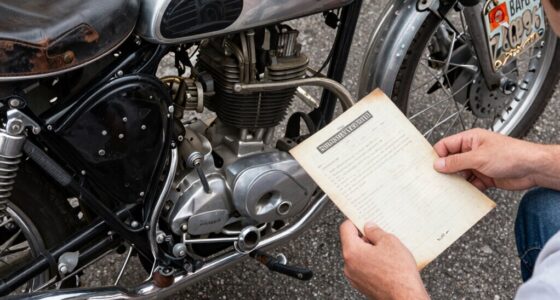
To guarantee your vintage motorcycle clears U.S. or Canadian customs smoothly, you need to gather and prepare the proper documentation in advance. Start by confirming your motorcycle’s age using VIN decoders, factory records, or marque club certificates, ensuring it qualifies under the 25-year import rule. Complete essential federal forms like EPA Form 3520-1 and DOT HS-7, checking exemption boxes for vehicles over 25 years old. Provide proof of ownership, including the original title and shipping documents, and ensure foreign documents are notarized if necessary. For nonconforming bikes, obtain EPA pre-approval and any required modifications. Always keep all paperwork organized and accessible, as customs officials will review these documents during import. Proper documentation streamlines the process and helps avoid delays or additional costs. Additionally, checking the eligibility of your motorcycle before shipping can prevent potential issues at customs and ensure a smoother import process. Ensuring your documentation is complete and accurate is a key step in import compliance and avoiding unnecessary complications.
Calculating Import Duties, Tariffs, and Associated Costs
When importing a vintage motorcycle, understanding the applicable tariffs and additional costs is essential to budget accurately. In the U.S., duty rates are generally low or duty-free for personal use, but Canada’s 25% surtax and other fees can quickly increase your expenses. You’ll need to factor in shipping, inspection fees, and potential taxes to get a complete picture of the total import costs. Additionally, considering the horsepower of the motorcycle can influence import regulations and safety requirements.
Vintage Motorcycle Tariff Rates
Understanding how to calculate import duties and tariffs is essential when bringing a vintage motorcycle into the U.S. or Canada. In the U.S., motorcycles manufactured in 2000 or earlier qualify for a reduced 2.5% duty, saving you thousands compared to the standard 25%. This exemption also waives EPA and safety compliance costs. However, recent tariffs on steel and aluminum parts can increase expenses, except for certain engine sizes. In Canada, tariffs typically hover around 6.1%, but trade agreements and vintage exemptions can lower costs. Proper documentation proves your bike’s vintage status and origin, accessing potential savings. Additionally, understanding import regulations helps ensure a smooth customs process and avoids unexpected delays or costs.
Additional Import Expenses
Calculating the total cost of importing a vintage motorcycle involves more than just paying tariffs. Shipping costs vary: sea freight ranges from $500 to $1,500 USD, while air freight can exceed $3,000 USD depending on urgency and size. Handling fees at the port, customs brokerage charges ($100–$300), and inspection costs add to expenses. Customs duties are based on the bike’s declared value, typically between 2.4% and 5%, with additional taxes like GST or HST in Canada or sales tax in U.S. states. In Canada, expect a 25% surtax unless exemptions apply. You’ll also need to budget for paperwork costs—titles, forms, VIN verification—and insurance fees, which can be 1–3% of the declared value. These combined expenses substantially impact your total import budget. Furthermore, import regulations may require additional compliance costs or fees depending on the motorcycle’s age and modifications. Proper documentation and adherence to European Union export rules can help prevent delays and unexpected charges during customs clearance.
Importing to Canada: Rules and Considerations for Classic Motorcycles

Importing a vintage motorcycle into Canada can be straightforward if you’re aware of the country’s specific rules and exemptions. Vehicles 15 years or older are exempt from the Motor Vehicle Safety Act standards, provided they match their original manufacturer specifications and appearance at the time of manufacture. Buses made before January 1, 1971, are also exempt from safety regulations. To qualify, your motorcycle must appear on the Canadian Registrar of Imported Vehicles’ Compatibility List and meet regional content requirements under USMCA to avoid tariffs. Vehicles over 25 years old from the U.S. are exempt from the 25% surtax but still incur a 2.5% duty unless they meet USMCA rules. Proper documentation, including proof of age and origin, is essential for a smooth import process. Recent tariff changes now clarify that vehicles over 25 years old are fully exempt from surtaxes, simplifying the import process for vintage motorcycles. Additionally, understanding the vintage vehicle regulations can help ensure compliance and avoid delays during customs clearance.
Shipping Options and Logistics for Vintage Motorcycle Importation
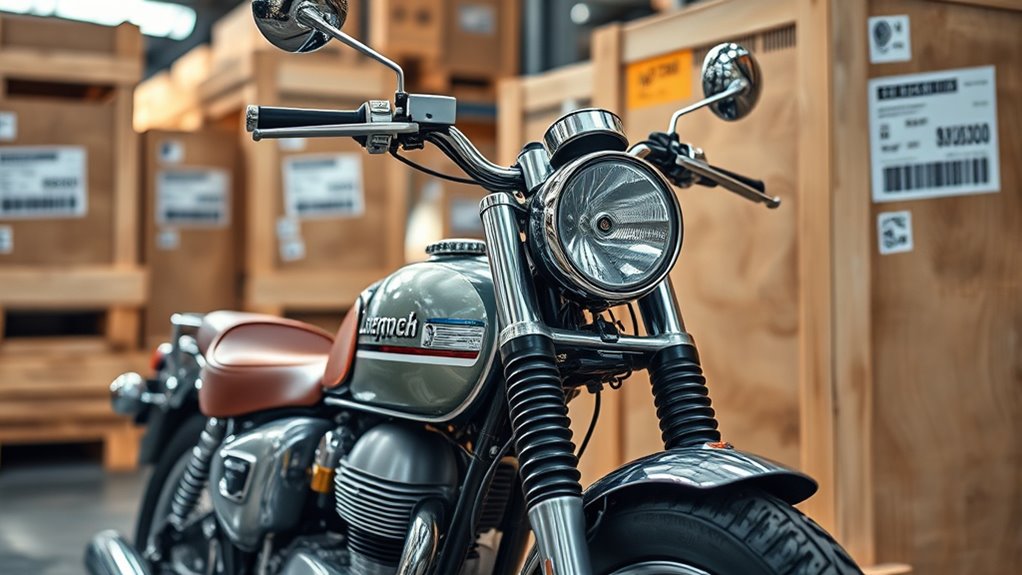
When choosing how to ship your vintage motorcycle, you have several options, each with its own advantages and considerations. Container shipping offers secure, enclosed transport, often using certified wood to prevent movement, ideal for fragile or valuable bikes. Roll-on/roll-off (RoRo) is typically less expensive; you drive the motorcycle onto the ship’s deck, but it provides less protection. Air freight delivers the fastest service, perfect for urgent shipments, but comes at a higher cost and requires crating with heat-treated wood. The best method depends on your budget, timing, and bike’s value or fragility. Shipping logistics involve selecting a port or airport in the USA or Canada, coordinating pickup and delivery, and understanding timelines. Proper planning helps minimize costs and guarantees your vintage motorcycle arrives safely. Airfreight is recommended over seafreight due to comparable costs and lower arrival charges, making it a more efficient shipping option currently. Additionally, understanding shipping regulations can prevent delays and ensure compliance with import requirements.
Working With Import Specialists and Ensuring Compliance

Partnering with import specialists can streamline the process of bringing your vintage motorcycle into the USA or Canada. These experts have in-depth knowledge of import regulations and compliance requirements, making sure you meet all legal standards. They handle everything from documentation preparation to customs clearance and titling, reducing your risk of delays or seizure. Import specialists also coordinate with licensed transporters and may offer mechanical inspections or repairs to ensure your motorcycle complies with safety and emissions standards. They guide you through complex import laws, including environmental and safety regulations from agencies like EPA and DOT. Working with brokers and customs agents, they facilitate smooth border crossings, handle duties and taxes, and help you secure the necessary permits. Their expertise guarantees a hassle-free import experience from start to finish. Their familiarity with international trade agreements and tariffs ensures that you are fully informed of any cost implications before completing your import. Additionally, understanding vehicle compliance standards can prevent costly modifications or delays during the import process.
Frequently Asked Questions
Can I Import a Vintage Motorcycle if It Has Aftermarket Modifications?
Yes, you can import a vintage motorcycle with aftermarket modifications, but it depends on the extent of those changes. If modifications impact safety features or emissions standards, you might face hurdles or denial. To avoid issues, verify your motorcycle complies with EPA and DOT requirements or Canadian regulations. Keep thorough documentation of all modifications and certifications, and consult with regulatory agencies beforehand to confirm eligibility.
What Are the Specific VIN Decoding Methods for VINtage Motorcycle Age Verification?
You can verify a vintage motorcycle’s age by decoding its VIN, especially the 10th digit, which indicates the model year. Look for the letter or number that corresponds to the production year, with letters from A to Y representing 1980-2000, and numbers 1-9 covering 2001-2009. Use online VIN decoders to interpret this digit accurately, and cross-check manufacturer-specific codes in the VIN for authenticity.
How Long Does the Entire Import Process Typically Take From Shipping to Registration?
The entire import process usually takes between 1 and 4 weeks, depending on your shipping method and paperwork readiness. Air freight can accelerate things up to under a week, while sea freight may take 2 to 3 weeks. Customs clearance, inspections, and DMV processing can add extra days or weeks. To expedite the process, prepare all documents in advance, use a customs broker, and guarantee compliance with regulations.
Are There Any Restrictions on Importing Vintage Motorcycles From Certain Countries?
Yes, there are restrictions on importing vintage motorcycles from certain countries. You might face higher barriers or even denial if the motorcycle’s origin lacks mutual recognition agreements or if it doesn’t meet U.S. or Canadian standards. Countries without verified compliance records or with unapproved standards can pose challenges, often requiring additional documentation or inspections. Always check the country of origin’s certification status to guarantee smooth importation and avoid delays or refusals.
What Are the Insurance Requirements for Vintage Motorcycles Post-Import?
You must get your vintage motorcycle insured to dodge hefty fines and keep it legal on the road. Insurance needs to meet minimum liability standards—usually around 30/60/25—regardless of age. You’ll need proof of coverage for registration, and most insurers require your bike to be in pristine, original condition or well-maintained. Limited mileage, secure storage, and specialized policies with agreed value coverage help keep your vintage ride protected and on the streets.
Conclusion
Importing a vintage motorcycle is like steering a complex maze—you’ll need to understand the rules, gather the right paperwork, and choose the best shipping options. By staying informed and working with experts, you’ll make the process smooth and rewarding. With patience and preparation, your classic bike can soon be cruising U.S. or Canadian roads, just like a cherished treasure finally finding its perfect home. Happy riding!