
TL;DR

Get business pricing on garage and car supplies
- Business-only prices and quantity discounts
- Tax-exempt purchasing
- Multiple users, one account, clear invoices
The American Wood Column Corporation, a historic maker of ornamental woodwork in New York, is closing after 51 years in business. The closure is driven by retirement and sourcing challenges, marking the end of a rare craft.
The American Wood Column Corporation, a nearly 110-year-old business specializing in ornamental woodwork, is closing its doors after 51 years of operation, due to the owners’ retirement and difficulties sourcing key materials.
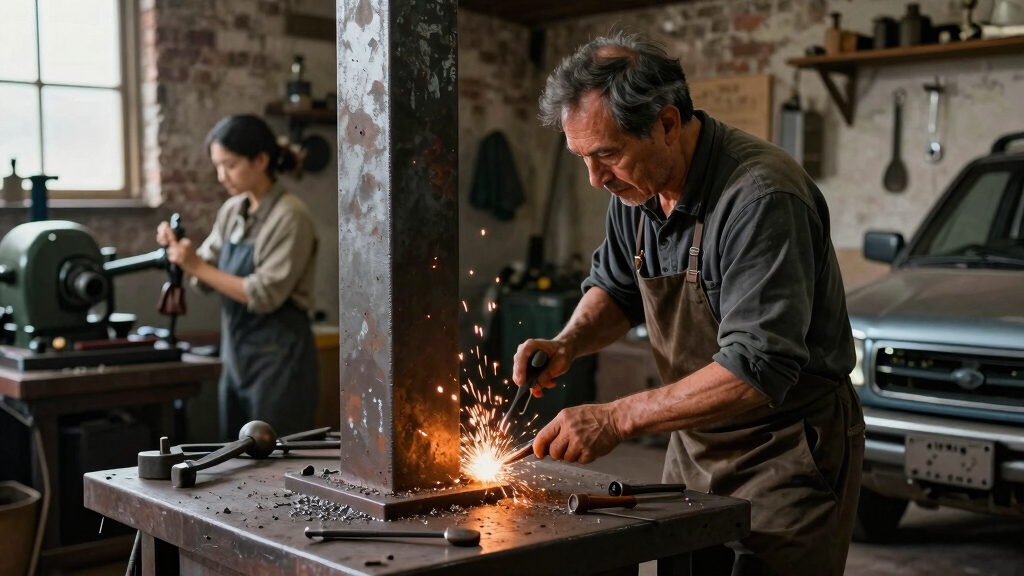
Thomas Lupo, the company’s president and CEO, confirmed that the business will cease operations as his aging crew prepares to retire. The company, based in East Williamsburg, is one of the last in the U.S. to produce intricate ornamental castings from compo, a mixture of sawdust, glue, and whiting. Lupo stated that demand for such craftsmanship has declined, and sourcing ingredients like hide glue has become increasingly difficult and expensive.
The business’s history dates back to 1916, when Lupo’s grandfather acquired the building and the company. Over the decades, the firm has made notable restorations, including work for Brooklyn’s Kings Theater, Ralph Lauren stores, and even props for films like The Godfather. Despite a niche clientele, the company has maintained enough business to support its operations until now. Lupo noted that much of the work currently involves set design and television productions, with little demand from residential clients.
Lupo emphasized that the business’s closure is not due to a decline in industry demand but rather his and his crew’s decision to retire. He also highlighted that the rarity of the craft and the difficulty in sourcing materials have contributed to the decision. The company’s warehouse still houses thousands of molds and finished pieces, representing a nearly lost art form.
Why This Closure Marks the End of an Era in Craftsmanship
The closure of the American Wood Column Corporation signifies the end of a nearly century-old tradition of handcrafted ornamental woodwork, a craft increasingly rare in the U.S. This business’s shutdown highlights broader challenges faced by niche artisans, including sourcing materials and declining demand, which threaten the survival of historic craftsmanship.
For architects, restorers, and designers, the loss of such specialized artisans could mean fewer authentic options for restoration and high-end projects. The closure also underscores the impact of changing aesthetic preferences and economic factors on traditional crafts.
Products Worth Considering

DEWALT 20V MAX 9-Tool Combo Kit with Impact Driver, Drill Driver, Oscillating Tool, Grinder, Circular Saw, Reciprocating Saw, Right Angle Dr

Innova 5610 Bidirectional OBD2 Scan Tool

DEWALT FLEXVOLT ADVANTAGE 20V MAX Combo Kit with Hammer Drill & Impact Driver, 5.0-Ah, 2-Tool (DCK2100P2)
As an affiliate, we earn on qualifying purchases.
Historical Roots and Decline of a Niche Craft
The American Wood Column Corporation was founded in 1916, with roots tracing back to Italian immigrant craftsmanship. Over the decades, it became one of the few remaining U.S. companies producing ornamental castings from compo, a craft that declined in popularity as modern construction favored cheaper, mass-produced materials. The company’s work has included notable restorations and props, but demand has waned since the 1990s, with contemporary architecture favoring sleeker, minimalist designs. The sourcing of key ingredients like hide glue has also become more difficult and costly, further challenging the business’s viability.
“No one wanted me, and now they love me. I should go out of business more often!”
— Thomas Lupo
Unclear Future of the Craft and Its Preservation
It is not yet clear whether any other artisans or companies will attempt to continue this craft or if the knowledge will be lost entirely. The precise number of remaining practitioners and their capacity to sustain the tradition are unknown. Additionally, future demand for high-end ornamental woodwork remains uncertain, especially as architectural trends shift further away from elaborate ornamentation.
Next Steps for the Business and Craft Preservation Efforts
Thomas Lupo plans to retire and sell the business property, with no current plans to transfer or preserve the craft elsewhere. The company’s molds and records may be donated or auctioned, but the future of the craft itself remains uncertain. Industry observers suggest that some efforts to document or revive traditional ornamentation techniques could emerge, but none are confirmed at this stage.
Key Questions
Why is the American Wood Column Corporation closing now?
The business is closing primarily due to the owners’ decision to retire and ongoing difficulties sourcing key materials like hide glue, which are becoming increasingly expensive and scarce.
What kind of work did the company produce?
The company specialized in ornamental castings from compo, including pillars, moldings, ceiling medallions, and props for film and television productions.
Will anyone continue this craft?
It is currently unclear if any other artisans or companies will attempt to preserve or continue this traditional craft, as demand and supply chain issues pose significant challenges.
How significant is this closure for architecture and restoration?
The closure marks the end of a nearly century-old tradition of handcrafted ornamental woodwork, reducing options for authentic restoration and high-end architectural projects.
What will happen to the company’s molds and records?
There are no confirmed plans; they may be auctioned, donated, or stored, but the future of these artifacts and the craft itself remains uncertain.
Source: Curbed