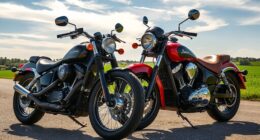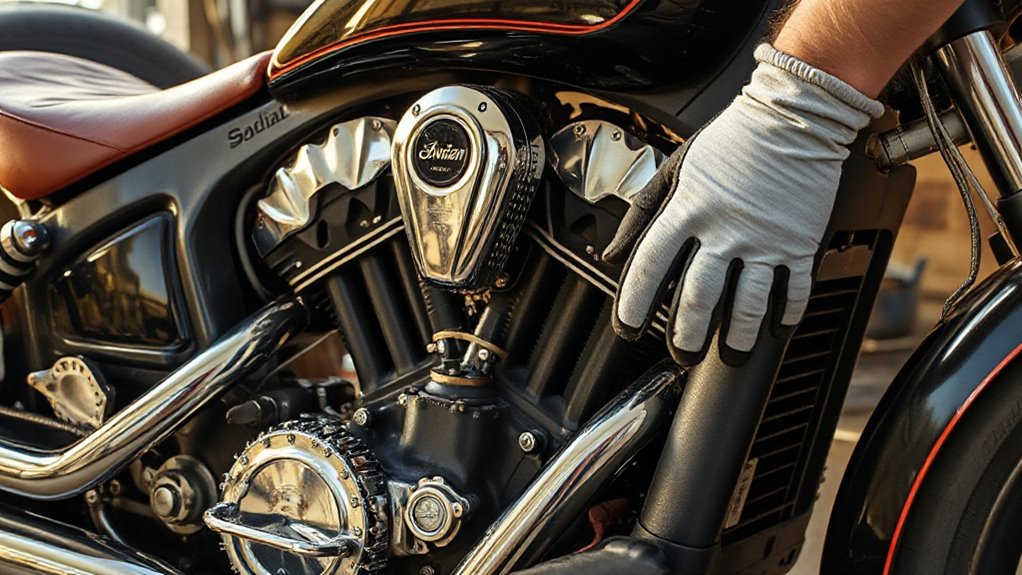
Restoring your Indian Scout involves gathering the right tools like wrenches, screwdrivers, and paint sprayers for careful disassembly and cleaning. Focus on authentic surface preparation and color matching to preserve its vintage appeal. Patience and attention to detail are key during every step, from cleaning to reassembly, ensuring a professional finish. By following these steps, you’ll bring new life to this classic motorcycle. Keep exploring to discover more tips for a successful restoration journey.
Key Takeaways
- Gather and organize essential restoration tools like wrenches, screwdrivers, and specialized equipment for efficient disassembly and cleaning.
- Carefully disassemble the Indian Scout, thoroughly clean components, and identify parts needing repair or replacement.
- Match original color schemes using vintage paint charts, then prepare surfaces with sanding and priming before painting.
- Focus on achieving color accuracy and smooth finishes to preserve the bike’s authentic appearance.
- Practice patience and attention to detail throughout each stage to ensure a professional, high-quality restoration.

Have you ever wondered how to bring a vintage Indian Scout back to life? Restoring such an iconic motorcycle demands skill, patience, and the right set of tools. The first step is gathering your restoration tools—everything from basic wrenches and screwdrivers to specialized equipment like paint sprayers and polishing kits. Having the proper tools makes the process smoother and ensures you avoid damaging delicate parts. With these tools in hand, you’ll be able to disassemble the bike carefully, clean each component thoroughly, and identify what needs replacement or repair. Properly organized tools also help you work efficiently, saving you time and frustration as you move through each stage of restoration.
Once you’ve stripped the bike down to its frame, the next critical phase is paint matching. Vintage bikes like the Indian Scout often feature specific color schemes that define their character. To faithfully restore its original look, you need to match the paint precisely. This involves sourcing the right shades and finishes—whether gloss, matte, or satin—to replicate the factory appearance. Using a color matching system or consulting vintage paint charts can help you find the exact hue. When applying new paint, it’s essential to prepare the surface properly—sanding, cleaning, and priming—to ensure smooth, even coverage. A good match not only restores the bike’s visual appeal but also preserves its authenticity, which is crucial for collectors and enthusiasts.
Additionally, understanding the importance of color accuracy in restoration helps achieve a more authentic and appealing result. Throughout the restoration process, patience is key. Take your time with each step, from cleaning and repairing to painting and reassembling. Pay close attention to detail, especially when it comes to paint matching and finishing touches, because these elements markedly impact the final look of your bike. Don’t rush through the process; the goal is to achieve a seamless, professional-quality restoration that honors the original craftsmanship of the Indian Scout. Keep your restoration tools organized and accessible, so you can work efficiently without unnecessary delays. And always double-check your paint matches before applying, as a perfect color can make or break the authenticity of your project.
Frequently Asked Questions
What Are Common Issues Faced During Indian Scout Restoration?
During your Indian Scout restoration, common issues include matching vintage paint colors, which can be tricky to replicate accurately. You might also encounter challenges with the engine overhaul, ensuring all parts are functioning smoothly. Rust and corrosion are frequent obstacles, especially on older components. Additionally, sourcing authentic parts can be difficult, requiring patience and resourcefulness. Staying meticulous and patient will help you successfully bring your classic back to life.
How Much Does a Full Indian Scout Restoration Typically Cost?
Restoring an Indian Scout is like tuning a finely crafted instrument—you’ll need to invest carefully. Typically, a full restoration costs between $5,000 and $15,000, depending on the bike’s condition. Restoration budgeting involves considering parts sourcing, which can range from OEM to aftermarket parts. Expect surprises along the way, so plan for extra funds. Staying flexible guarantees you bring your classic bike back to life without breaking the bank.
Are Original Parts Still Available for Indian Scout Models?
Yes, original parts for Indian Scout models are still available, though they can be limited and sometimes expensive. You might also find aftermarket accessories that enhance your restoration and improve performance. To guarantee a successful project, follow restoration tips like sourcing reliable parts and maintaining authenticity. Keep checking with Indian dealerships or online marketplaces, and consider custom options to personalize your bike while preserving its classic appeal.
What Tools Are Essential for Indian Scout Restoration?
Imagine your toolbox as a heartbeat, crucial for restoring your Indian Scout. Essential tools include wrenches, screwdrivers, pliers, and a torque wrench, each representing the rhythm of precise restoration techniques. Keep your tools well-maintained, like tuning an engine, ensuring smooth operation. With these essentials, you breathe new life into your motorcycle, transforming it into a true American classic, ready to roar down open roads once more.
How Long Does a Complete Indian Scout Restoration Usually Take?
A complete Indian Scout restoration typically takes between 150 to 300 hours, depending on your project’s scope and your experience. You should plan your restoration timeline carefully, breaking it into manageable phases to stay organized. Good project planning helps you avoid delays and ensures you stay on track. Be patient, and allocate extra time for unforeseen issues, so your restoration process remains enjoyable and rewarding.
Conclusion
As you finally see your Indian Scout gleaming like new, it’s almost ironic—this beast of American history now shines brighter than its past glory. You’ve breathed life into a classic, transforming rust and grime into pride. Just remember, while you’ve restored its beauty, it’s the journey, not the destination, that truly revives the spirit of this legendary machine. Now, your ride’s ready to tell its story—warts and all—on every open road ahead.