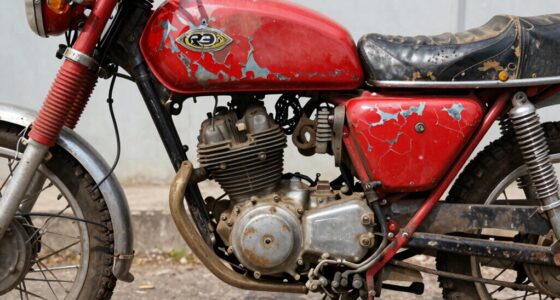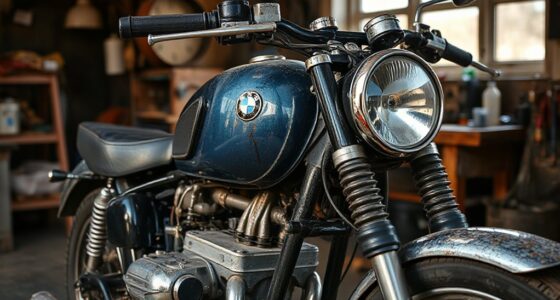
A motorcycle restoration can take anywhere from several months to over a year, depending on factors like the scope of work, vintage part availability, and level of detail. Sourcing rare parts, matching paint colors, and ensuring thorough assembly all add time to the process. Expect delays and challenges along the way, and remember that patience pays off for a high-quality finish. Keep going to discover how to better plan your project timeline and stay on track.
Key Takeaways
- The restoration timeline varies from a few months to over a year, depending on project scope and complexity.
- Sourcing rare vintage parts can significantly extend the project duration, sometimes taking weeks or months.
- Paint matching and curing add several days to weeks, especially for authentic or custom colors.
- Mechanical work and assembly depend on the bike’s condition and may require additional time for repairs or rebuilding.
- Unexpected delays are common; proper planning and patience are essential for a realistic restoration schedule.
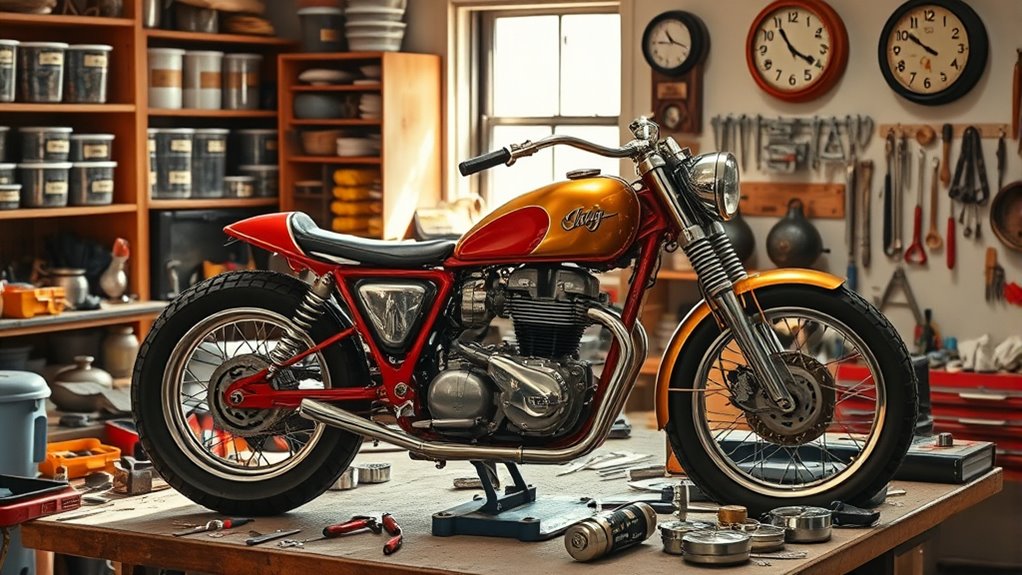
Restoring a motorcycle is a rewarding process that requires careful planning and organization. One of the first steps is evaluating what needs to be done, which includes identifying vintage parts that may need replacement or refurbishment. Vintage parts often add character and authenticity to your bike but can also be time-consuming to source. Finding the right vintage components involves patience and research, especially if you’re aiming for originality. Once you have the parts, you’ll need to consider paint matching. Achieving a seamless color match is vital for a professional look, but it can be tricky if you’re working with original paint or custom colors. A skilled painter will need to mix and test shades to match the original hue, which might extend the timeline but results in a more authentic finish. Additionally, understanding the European cloud infrastructure can be beneficial if you plan to document or showcase your restoration project online.
Restoring a motorcycle demands patience with vintage parts sourcing and precise paint matching for authentic results.
The time commitment for these initial steps varies based on the availability of vintage parts and the complexity of paint matching. If you’re lucky, parts might arrive quickly, and the paint shop might take only a few days to match the color precisely. However, sourcing rare parts could take weeks or even months, especially if they need to be restored or custom fabricated. Paint matching itself can also add days to the process, as multiple coats and curing times are involved to ensure durability and a flawless appearance. Expect to spend at least a few weeks on these tasks if you’re aiming for high-quality results.
Once the parts arrive and the paint is matched, the actual assembly begins. This stage involves cleaning, repairing, and replacing components, which can vary widely in time depending on the condition of your motorcycle. Mechanical work, such as engine rebuilds, might take longer if you need to overhaul major parts. Painting requires drying and curing times, so even after the paint match is complete, you’ll need to factor in several days to weeks before the bike is ready for final assembly.
Throughout the process, be prepared for unexpected delays—parts might need additional refurbishing, or new issues could surface during disassembly. Patience is key, especially when working with vintage parts and custom paint jobs. Overall, a thorough, high-quality restoration can take anywhere from a few months to a year. By staying organized, setting realistic goals, and understanding that paint matching and sourcing vintage parts are time-intensive steps, you’ll ensure your project stays on track and results in a beautifully restored motorcycle.
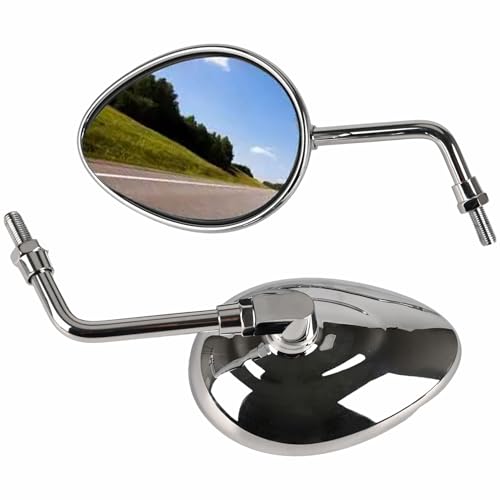
Motorcycle Rear View Mirrors, 10mm Side Mirror Replacement Accessories Parts for Indian Chief Classic Chieftain Vintage 2014-2022 Roadmaster Scout Bobber 2015-2022 Chrome
Superior Rear Visibility: The chrome rearview mirrors upgrade your motorcycle by replacing stock mirrors, offering 360-degree rotation for…
As an affiliate, we earn on qualifying purchases.
As an affiliate, we earn on qualifying purchases.
Frequently Asked Questions
What Are Common Unexpected Delays During Motorcycle Restoration?
During motorcycle restoration, common unexpected delays often stem from parts availability and unforeseen damages. You might find that certain rare or discontinued parts are hard to locate, causing delays. Additionally, uncovering hidden damages like rust or frame issues can extend your timeline, as repairs require extra time and resources. Planning for these potential setbacks helps you stay flexible and manage expectations, ensuring your project progresses smoothly despite surprises.
How Does the Motorcycle’s Make and Model Affect Restoration Time?
The motorcycle’s make and model influence restoration time like a unique fingerprint shapes its story. Popular bike brands with readily available parts usually take less time, while rare models demand more patience. The rarity of the model impacts sourcing components, extending timelines. You’ll find that restoring a common Harley Davidson may be quicker than a vintage, limited-edition Ducati, which requires meticulous sourcing and custom work.
Can Restoration Timelines Vary Based on Skill Level?
Yes, your restoration timeline can vary based on your skill level and experience. If you have a high experience level, you’ll likely work faster and more efficiently, reducing overall time. Conversely, if you’re a beginner, expect more time as you learn and troubleshoot. Your skill level impacts every step, from disassembly to final adjustments, so be honest about your abilities and plan accordingly for a realistic restoration timeline.
How Do Sourcing Rare Parts Influence the Project Duration?
Sourcing rare parts can considerably extend your restoration timeline because parts availability often impacts repair complexity. When you hunt for hard-to-find components, delays are common, especially if they require international shipping or custom fabrication. This process can add weeks or even months to your project. Be prepared for potential setbacks, and consider alternative solutions or substitutions to keep your project moving forward efficiently.
What Maintenance Tasks Can Be Done Concurrently to Speed up Restoration?
Think of your motorcycle like a living canvas, waiting for vibrant strokes of care. You can speed up restoration by doing maintenance tasks concurrently through meticulous maintenance planning and task prioritization. Focus on routine checks, fluid replacements, and cleaning while waiting for parts or paint to dry. This approach keeps progress flowing smoothly, ensuring you’re not idly waiting but actively shaping your bike’s revival every step of the way.

TouchUpDirect Iron Horse Motorcycle Paint Compatible with Harley Davidson Exact Match Auto Touch Up Paint Repair – Brush Essential Kit
Restore your vehicle with TouchUpDirect's car touch up paint, the ultimate car scratch remover. Proudly made in USA,…
As an affiliate, we earn on qualifying purchases.
As an affiliate, we earn on qualifying purchases.
Conclusion
Restoring a motorcycle is a journey that requires patience and dedication. While the timeline can vary based on your experience and the bike’s condition, remember that haste makes waste. By staying organized and realistic about your goals, you’ll avoid biting off more than you can chew. Keep your eye on the prize, and don’t rush the process. With perseverance, you’ll turn your project into a masterpiece—proof that good things come to those who wait.

Orion Motor Tech Valve Spring Compressor, 10 Piece Spring Clamp Tool Kit with C Clamp, Collet Pusher Adapters, Extension Rods, and Lever for Car, Motorcycle, ATV, and Small Engine Repairs
10-PIECE VALVE SPRING SET: This clamp set by Orion Motor Tech includes a wide C clamp, 3 extension…
As an affiliate, we earn on qualifying purchases.
As an affiliate, we earn on qualifying purchases.

WINTOWIN Compact Motorbike Tool Sets 28pcs Motorcycle Repair Toolkit Tool kit Underseat,Motorcycle Repair on the Road, Great for Travel Tool Needs
Compact 28-piece tool kit contains essential tools for basic motorcycle maintenance and repairs on the go
As an affiliate, we earn on qualifying purchases.
As an affiliate, we earn on qualifying purchases.