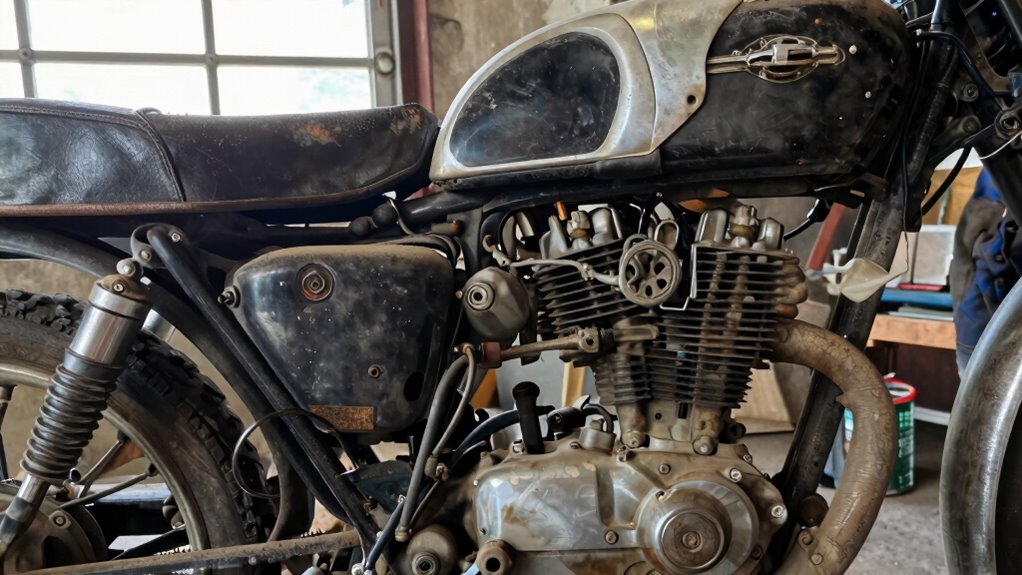

To recommission a motorcycle that’s sat idle for 10 years, start by inspecting and cleaning the fuel system, including draining old fuel, cleaning the tank, and replacing the fuel filter. Check electrical connections, test the battery, and verify all circuits are intact. Change the engine oil, replace the air filter, and try a hand turn of the engine. If the engine starts, fine-tune and test ride carefully. Keep going, and you’ll uncover more steps to get your bike back on the road safely.

Get business pricing on garage and car supplies
- Business-only prices and quantity discounts
- Tax-exempt purchasing
- Multiple users, one account, clear invoices
Key Takeaways
- Drain old fuel, clean or replace the fuel tank, and flush the system with a cleaner to remove varnish and rust deposits.
- Inspect and replace the fuel lines, filter, and perform electrical checks on the battery, connections, and ECU.
- Change engine oil, replace the air filter, and manually turn the engine to ensure free movement before attempting to start.
- Start the engine with the choke engaged, listen for unusual noises, and conduct a short ride to test brakes, tires, and handling.
- Perform final system checks, ensure safety features are functional, and verify all components are in optimal condition for riding.
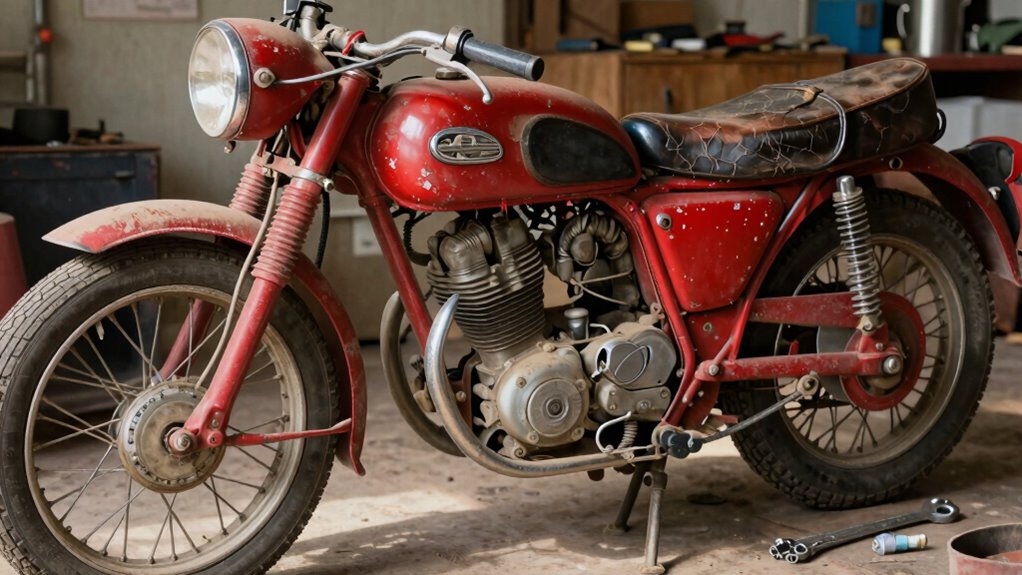
Are you ready to bring your motorcycle back to life after a period of storage? If so, you’ll need to approach the process systematically, starting with a thorough inspection of the fuel system and performing electrical diagnostics. After sitting idle for 10 years, your motorcycle’s fuel system will likely have issues like old fuel residues, gummed-up carburetors, and possible rust in the tank. Begin by draining any remaining fuel, then remove the tank for cleaning. Use a fuel system cleaner to flush out debris, rust, and varnish that have accumulated. Check the fuel lines for cracks or blockages and replace them if necessary. This guarantees fresh fuel can flow properly when you attempt to start the engine. Also, inspect the fuel filter and replace it if it appears clogged or deteriorated. These steps are essential because old fuel can cause poor engine performance or prevent starting altogether.
Next, move on to electrical diagnostics. Over a decade, electrical components like the battery, wiring, and connectors can deteriorate or corrode. Start by testing the battery’s voltage and recharge or replace it if needed. Once you have a healthy battery, check all electrical connections for corrosion, loose wires, or damaged insulation. Use a multimeter to verify the continuity of essential circuits, including the ignition, starter, and lighting systems. If the motorcycle has an electronic control unit (ECU), inspect it for damage or corrosion, and consider resetting or replacing it if necessary. Proper understanding of the electrical system is crucial for troubleshooting starting issues effectively. Additionally, inspecting the battery health can prevent unexpected failures during reassembly. It’s also helpful to review the electrical components and their specifications to ensure compatibility and proper functioning during reassembly. Recognizing common issues like corrosion can save significant troubleshooting time later.
After addressing the fuel system and electrical diagnostics, focus on the engine itself. Change the oil, check the coolant levels if applicable, and inspect the air filter. Turn the engine over by hand to ensure it moves freely, then try starting the motorcycle with the choke engaged. Be prepared for a few attempts, as old fuel and stale oil can make initial startups tricky. If it doesn’t start, consider a carburetor rebuild or cleaning. Once running, let the engine idle and listen for unusual noises, which could indicate deeper issues. Running the motorcycle through a short test ride afterward will help identify any remaining problems, like brake or tire issues, before hitting the road again. Recommissioning a motorcycle after such a long pause takes patience, but with careful attention to the fuel system and electrical diagnostics, you can restore your bike to reliable, safe riding condition.
motorcycle fuel tank cleaning kit
As an affiliate, we earn on qualifying purchases.
As an affiliate, we earn on qualifying purchases.
Frequently Asked Questions
How Do I Check the Motorcycle’s Compression After Long Storage?
To check your motorcycle’s compression, remove the spark plug and connect a compression tester. Crank the engine and note the reading—healthy compression usually ranges from 120 to 180 psi. Before testing, do an oil change and inspect the battery condition, ensuring it’s charged and functional. These steps help you accurately assess engine health after long storage and prepare it for recommissioning.
Can I Reuse Old Fuel in the Tank?
Did you know that old fuel can lose up to 40% of its combustibility after a year? You shouldn’t reuse it. Drain the tank completely and add fresh fuel with a fuel stabilizer to prevent gumming. If the engine’s been sitting for a decade, consider an engine overhaul before trying to start it. Old fuel can cause poor performance or damage, so it’s best to replace it entirely.
What Are Signs of Internal Rust or Corrosion?
You’ll notice internal rust or corrosion signs if you see a cloudy or discolored fuel, or if the tank has a rusty smell. Check for sediment or flakes in the fuel, which indicate corrosion. Inside the engine, look for rust on the cylinders or pistons, and listen for unusual noises during startup. These signs mean internal rust or corrosion has taken hold, and you should clean or replace affected parts before running the motorcycle.
How Do I Safely Dispose of Old Motorcycle Fluids?
You should safely dispose of old motorcycle fluids by taking them to a certified recycling center or hazardous waste facility. Before disposal, check your battery’s condition and perform battery maintenance to prevent leaks. Inspect your tires for cracks or dry rot, and replace if needed. Never pour fluids down drains or onto the ground. Proper disposal protects the environment and keeps your motorcycle safe to restart and ride.
Is It Necessary to Replace All Rubber Hoses and Seals?
Nearly 80% of motorcycle issues after long storage stem from rubber deterioration, making replacing all rubber hoses and seals highly recommended. Over time, rubber loses elasticity, risking leaks or failures that compromise seal integrity. Replacing these parts ensures safety, prevents costly repairs, and maintains peak performance. Don’t overlook this step; fresh hoses and seals give your motorcycle the reliability it needs after years of inactivity.
As an affiliate, we earn on qualifying purchases.
Conclusion
Recommissioning your motorcycle is like awakening a dormant spirit, ready to breathe new life into your journey. With patience and care, you rekindle its energy, just as the dawn restores light to a darkened world. As you turn the key, remember you’re not just restarting an engine—you’re reigniting an adventure waiting to unfold. Embrace this rebirth, and let your motorcycle be the vessel that carries your stories forward, illuminated by your dedication.
motorcycle fuel filter replacement
As an affiliate, we earn on qualifying purchases.
As an affiliate, we earn on qualifying purchases.
motorcycle electrical diagnostic tools
As an affiliate, we earn on qualifying purchases.
As an affiliate, we earn on qualifying purchases.
Columbus Day / Indigenous Peoples' Day Picks
long weekend sales
As an affiliate, we earn on qualifying purchases.