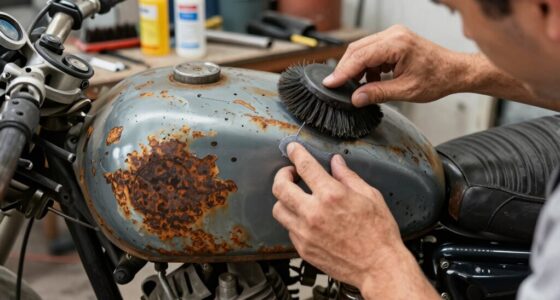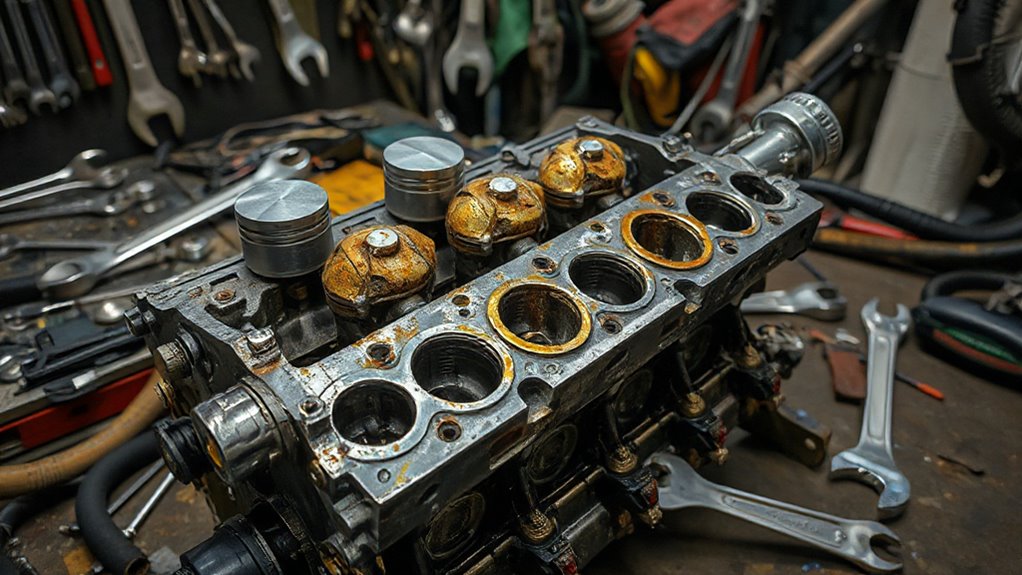

When dealing with a seized engine, start by carefully inspecting all internal components for damage, corrosion, or scoring. Use proper tear-down techniques, keeping parts organized, and replace damaged items like piston rings and bearings. Clean all parts thoroughly and maintain a dry, contaminant-free environment. Conduct a detailed oil analysis before and after the rebuild to guarantee proper lubrication. Following correct procedures and maintenance helps revive the engine effectively—continue to discover essential tips to boost your success.

Get business pricing on garage and car supplies
- Business-only prices and quantity discounts
- Tax-exempt purchasing
- Multiple users, one account, clear invoices
Key Takeaways
- Carefully inspect internal components for scoring, warping, or corrosion to assess damage and rebuild viability.
- Follow proper tear-down procedures, maintaining cleanliness and tracking parts meticulously throughout disassembly.
- Replace damaged parts like piston rings, bearings, and gaskets, considering upgrades for improved engine longevity.
- Conduct thorough oil analysis post-rebuild to ensure lubrication system health and prevent future seizure.
- Evaluate if extensive damage warrants engine replacement instead of rebuilding for cost-effective repair.
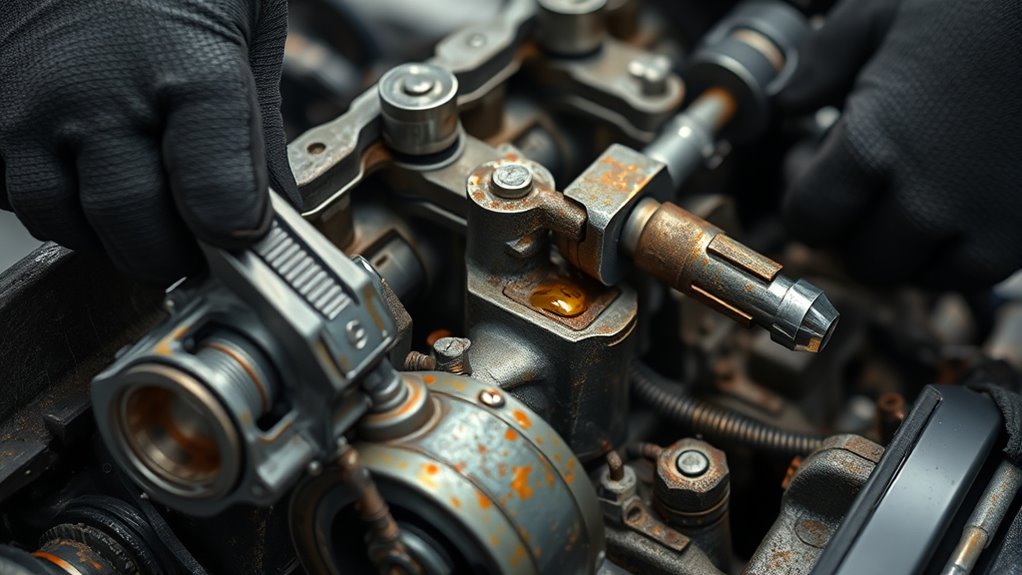
A seized engine can be a frustrating and costly problem, but understanding how to prevent and address it can save you time and money. When your engine seizes, it usually means the internal components have expanded or fused together due to lack of lubrication, overheating, or corrosion. To determine the cause and avoid future issues, start with an oil analysis. This process helps you identify contaminants, metal particles, and the overall health of your oil, revealing early signs of wear or impending failure. Regular oil analysis can catch problems before they lead to a seized engine, helping you plan maintenance more effectively. If your engine is already seized, one of the first steps is to carefully assess the damage and decide whether an engine rebuild is feasible. An engine rebuild involves stripping down the engine, inspecting all parts, and replacing any damaged or worn components. This process can be cost-effective compared to replacing the entire engine, especially if the core components are salvageable. Once you’ve disassembled the engine, you’ll need to evaluate the extent of the damage—beyond just the seized parts, look for scoring on the cylinders, warped or cracked components, and signs of corrosion. Rebuilding requires precise measurement and inspection, often with the help of specialized tools and equipment. During this process, replacing the piston rings, bearings, and gaskets is standard, and you might also consider upgrading certain parts for better longevity. After reassembly, performing a thorough oil change and conducting an oil analysis again will confirm that the engine’s lubrication system is functioning correctly, preventing future seizures. It’s essential to guarantee the cooling system is working ideally, as overheating is a common cause of engine seizure. If the damage is too extensive, and a rebuild isn’t practical, replacing the engine might be the better option. However, if you choose to rebuild, it’s critical to follow proper tear-down procedures, keep track of all parts, and maintain cleanliness throughout the process. Proper lubrication during reassembly is essential, and using high-quality oil suited for your engine’s specifications can make a significant difference. Remember, prevention is always better than repair; regular oil analysis, timely oil changes, and monitoring engine temperature can help you avoid the nightmare of a seized engine altogether. Additionally, understanding the importance of sound vibrations and their role in engine health can contribute to better maintenance practices. When dealing with a seized engine, patience and attention to detail are your best tools. With careful inspection, a methodical rebuild, and ongoing maintenance, you can restore your engine’s performance and extend its lifespan, saving you money and headaches in the long run.
Frequently Asked Questions
Can a Seized Engine Be Repaired Without Professional Help?
Yes, you can attempt DIY repairs on a seized engine if you’re comfortable with mechanics, but it’s challenging. Start with cost-effective fixes like replacing the piston rings, cleaning the cylinder walls, or applying penetrating oil. Keep in mind, though, that some repairs may require professional tools and expertise. If you’re unsure, seeking professional help might save you time and prevent further damage, ultimately being more cost-efficient.
How Long Does the Tear-Down Process Typically Take?
Did you know that the engine disassembly process can take anywhere from 4 to 12 hours, depending on your experience? Typically, the teardown timeline involves removing components like the cylinder head, pistons, and crankshaft, which can be straightforward or complex. If you’re doing it yourself, expect to spend a full day or more, especially if you’re unfamiliar. Planning ahead helps make sure you stay organized and complete the tear-down efficiently.
What Are the Signs Indicating an Engine Is Seized?
You’ll notice your engine is seized if it won’t turn over, and the engine oil condition is unusually thick or burnt smelling. You might also hear a grinding noise when trying to start it. Check for piston damage or scoring, which indicates the pistons are stuck or damaged. These signs suggest your engine needs immediate attention, as continuing to operate can cause further damage or total failure.
Is There a Way to Prevent Engine Seizure?
Yes, you can prevent engine seizure with proper preventative maintenance. Make sure you follow your vehicle’s recommended oil change frequency, as fresh oil lubricates engine parts effectively and reduces friction. Regularly check oil levels and quality, and address any leaks promptly. Additionally, keep an eye on coolant levels and avoid overheating. Consistent maintenance helps keep your engine running smoothly and reduces the risk of seizure.
What Tools Are Essential for Engine Tear-Down?
If you’re planning an engine teardown, you’ll need some essentials like an engine hoist to lift heavy parts and an engine stand to hold everything steady. Don’t forget screwdrivers, wrenches, and pliers—your trusty sidekicks. A gasket scraper and torque wrench are also invaluable to avoid turning your rebuild into a comedy of errors. With these tools, you’ll be laughing all the way to engine revival—well, maybe not laughing, but you’ll get the job done!
Conclusion
When you finally crack open that seized engine, remember—you’re holding the key to reviving a beast that could have been lost forever! With patience, the right tools, and a little luck, you can turn that stubborn block back into a roaring powerhouse. Don’t give up, because saving a seized engine isn’t just repair; it’s like breathing life back into a dormant giant that’s ready to conquer the road again. Your victory is just one tear-down away!
Halloween Picks
halloween
As an affiliate, we earn on qualifying purchases.