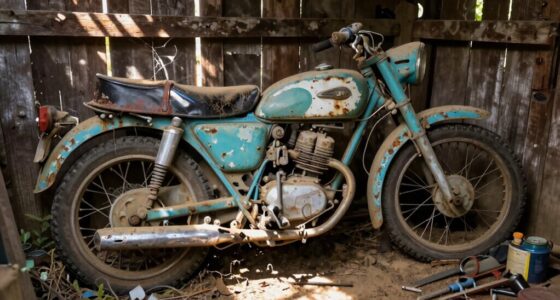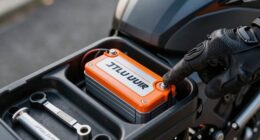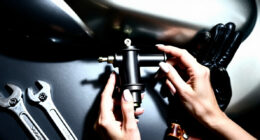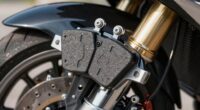
To rebuild a classic sidecar rig, start by carefully disassembling and documenting each part, noting how everything fits together. Remove rust, repair any damage, and restore the frame with rust-proof primer and period-appropriate paint colors. Refinish the body, polish or re-chrome trim, and reupholster the interior to match vintage styles. Carefully reassemble all components, ensuring proper alignment and safe electrical connections. If you keep exploring, you’ll discover detailed steps to bring your sidecar back to its original charm.
Key Takeaways
- Document disassembly meticulously with photos and labels to ensure accurate reassembly of the sidecar components.
- Remove rust and corrosion, then sand and prime the frame for a smooth, durable surface and authentic finish.
- Repair or replace damaged body panels, maintaining the original vintage silhouette and period-appropriate colors.
- Polish or re-chrome chrome parts and reupholster interior elements to restore classic style and comfort.
- Carefully reassemble, verify component fitment, and ensure electrical systems are functional for a safe, authentic ride.

Are you ready to bring a vintage sidecar back to life? Restoring a classic sidecar is a rewarding project that demands patience, precision, and a good eye for detail. To start, you’ll want to gather some essential restoration tips to ensure your project stays on track and preserves the timeless charm of the original design. Classic design elements, like rounded edges, chrome accents, and vintage paintwork, are what make these sidecars stand out, so your goal should be to restore them as authentically as possible. First, carefully disassemble the sidecar, noting how each part fits together and taking plenty of photos along the way. This will make reassembly smoother and help you remember where each component belongs.
Restoring a vintage sidecar requires patience, attention to detail, and an eye for classic design elements.
When it comes to restoring the frame, focus on removing rust and corrosion without damaging the metal. Use a wire brush or rust remover suited for vintage metalwork, and then sand it down to a smooth surface. Applying a rust-inhibiting primer before repainting will help protect your sidecar from future corrosion. For the body panels, inspect for dents or cracks, and consider replacing or repairing damaged sections to maintain the classic silhouette. When choosing paint, opt for colors that complement the era—classic hues like deep greens, maroons, or cream shades tend to preserve the vintage aesthetic. Be meticulous with your paint job, applying multiple thin coats for an even, durable finish.
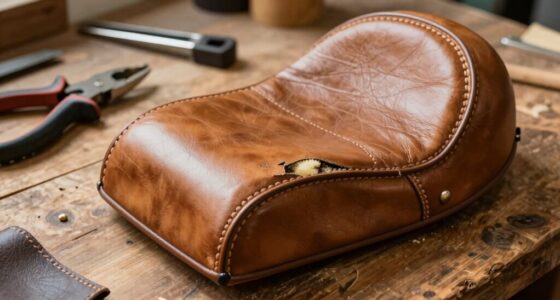
Chrome parts hold a special place in classic design, so spend time polishing or re-chroming items like the bumpers, handles, and trim. Polishing old chrome can bring back that shiny vintage look, but if they’re too pitted or damaged, re-chroming might be your best bet. The interior of the sidecar also deserves attention; reupholster seats with period-appropriate fabric or leather, and replace any worn or torn padding. Make sure all electrical components, like lighting or indicators, are restored or upgraded to ensure safety and functionality, but aim to keep the original style intact. Additionally, understanding the contrast ratio of your components can help in selecting lighting that maintains the vintage ambiance while providing sufficient visibility.
Finally, reassemble everything carefully, double-checking that all parts are securely attached and aligned. Your efforts will be worth it when you see the restored sidecar’s classic design shining through, ready to be mounted on a vintage motorcycle. Restoring a sidecar isn’t just about fixing what’s broken; it’s about honoring its history and preserving its character. With patience and the right restoration tips, you’ll bring this vintage piece back to life, making it a true eye-catcher on the road once again.

CV Carburetor Rebuild Kit for Harley Davidson CV40 27421-99C 27490-04 XL883 40mm Carb Repair Kit 27421-99A Rebuild Kit,CV40 Rebuild Kit, CV Carb Jet Kit by BOOTOP PIN
CV Carburetor Rebuild Kit,CV Carb Repair Kit for Harley Davidson CV40 CV 40mm XL883 XL1200 carb engine. CV...
As an affiliate, we earn on qualifying purchases.
Frequently Asked Questions
What Are the Best Tools for Sidecar Restoration?
You’ll need essential tools like screwdrivers, wrenches, and pliers for sidecar restoration. A rotary tool helps with detailed work on vintage motorcycle details, while sanders and grinders assist in restoring metal surfaces. Use paint sprayers for finishing touches, and a mallet for delicate adjustments. These tools support your restoration techniques, ensuring you preserve the vintage look and feel of the sidecar. Proper tools make all the difference in achieving a professional result.
How Do I Find Authentic Replacement Parts?
Did you know that 65% of vintage motorcycle enthusiasts prioritize authentic parts for historical accuracy? To find genuine replacement parts, explore specialized vintage accessories shops, attend classic motorcycle shows, and join online forums dedicated to sidecar restoration. You can also contact vintage motorcycle clubs or check with reputable salvage yards. These sources help guarantee your sidecar maintains its original charm and authenticity, making your restoration both accurate and rewarding.
What Safety Checks Are Essential After Restoration?
After restoration, you should perform a thorough safety inspection before riding. Check the structural integrity of the frame, making certain there are no cracks or rust. Review your maintenance checklist, focusing on brakes, lights, and steering. Verify all bolts and fasteners are tight. Test the suspension and tire pressure. Don’t forget to inspect the coupling between the sidecar and motorcycle. These steps ensure your rig is safe and ready for the road.
How Can I Enhance the Sidecar’s Aesthetic Appeal?
To enhance your sidecar’s aesthetic appeal, start by choosing eye-catching paint color options that complement your motorcycle. Add decorative accents like custom pinstripes, decals, or vintage badges to give it personality. You can also upgrade the upholstery with stylish, durable materials. Regular polishing and detailing will keep it looking fresh. These touches make your sidecar stand out and reflect your unique style, turning it into a true eye-catcher.
What Is the Average Cost of a Full Restoration?
A full restoration typically costs between $3,000 and $10,000, depending on the condition and parts needed. You should do a thorough cost estimation to set your restoration budget. Factors like sourcing authentic parts, labor, and custom work can influence the total. Planning carefully helps avoid surprises and guarantees you get the best value for your investment in restoring your classic sidecar.
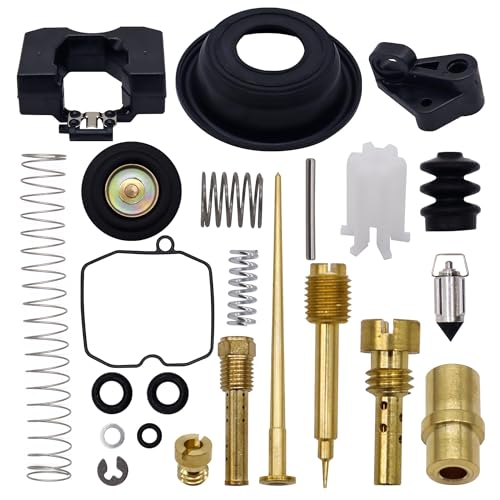
OXCANO 27421-99C Carburetor Rebuild Carb Repair Kit Compatible with Harley Davidson Dyna Sportster 40mm XL883 XLH1200, Keihin HD CV40, 883 Roadster XL, HD Super Glide FXR, HD Softail Deluxe FLSTN
[Fitment]-Compatible with Harley Davidson Sportster 40mm XL883 XLH1200,Keihin HD CV40 Carburetor,CV Carburetor,1200 Custom XLC,1200 Low XL,1200 Roadster XLR,1200...
As an affiliate, we earn on qualifying purchases.
Conclusion
As you finish restoring your sidecar rig, it’s almost poetic how the pieces came together just when you needed them most. That unexpected spare part, the perfect vintage touch—everything aligned perfectly, turning your project into a true masterpiece. Restoring a sidecar isn’t just about rebuilding; it’s about rediscovering the joy of creation and coincidence. Now, you’re not just riding a classic, but making history—one unexpected turn at a time.

POLICE 1000 KZ1000 1991-2003 Carburetor Rpair Kit Float parts KZ1000-P (repair kit)
Different pictures contain different accessories, please make sure to look carefully before taking a picture, thank you.
As an affiliate, we earn on qualifying purchases.

4x Carburetor Carb Rebuild repair Kit Fit for 81-83 KZ1000 LTD J ELR CSR
This item is made with High quality materials. All made in Taiwan.
As an affiliate, we earn on qualifying purchases.