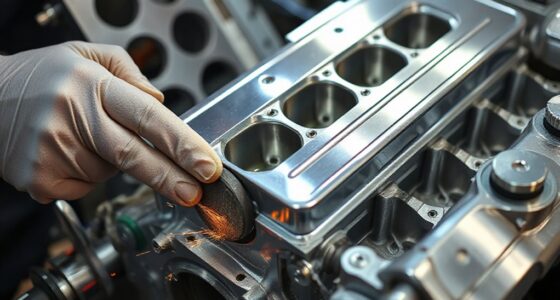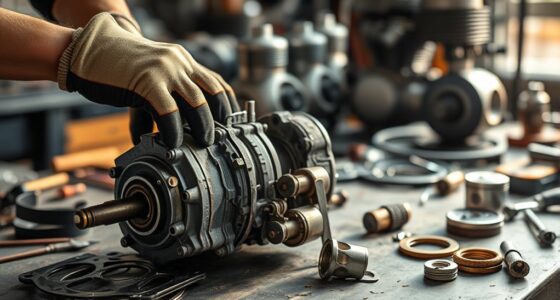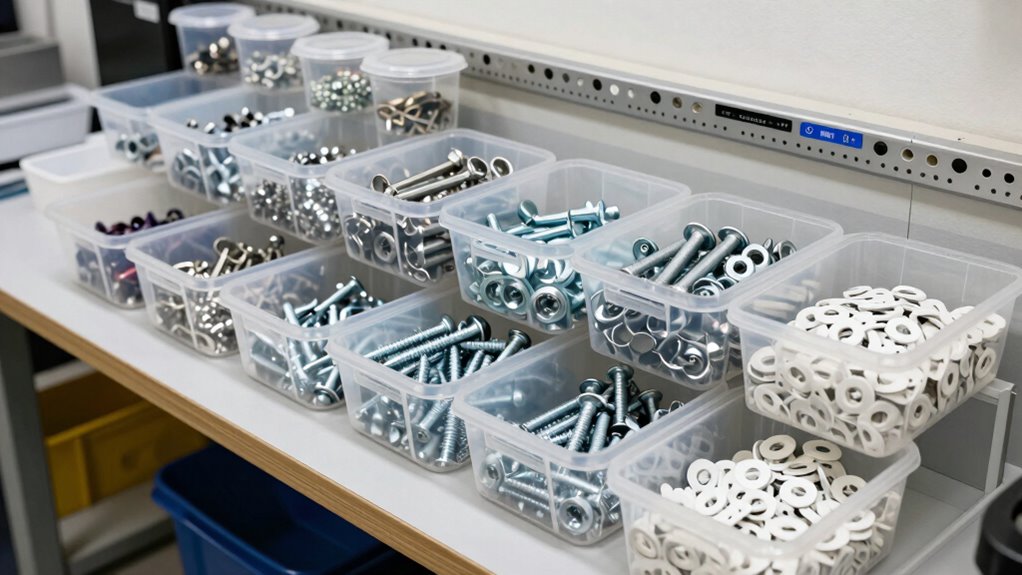

To store spare parts properly, you should create designated zones for different types, using clear labels for quick access. Maintain ideal conditions by controlling humidity, temperature, and ensuring dry, dust-free environments. Use proper containers and shelving to protect items from damage, and group similar parts for easy management. Regularly inspect and update your records to prevent deterioration and shortages. If you want to guarantee your storage is effective and organized, keep exploring for more tips.

Get business pricing on garage and car supplies
- Business-only prices and quantity discounts
- Tax-exempt purchasing
- Multiple users, one account, clear invoices
Key Takeaways
- Designate specific zones for different types of spare parts to enhance organization and quick access.
- Store electronic components in dry, static-free environments to prevent damage.
- Use proper shelving, containers, and clear labels for easy identification and protection.
- Implement FIFO practices for consumables and regularly inspect items for damage or deterioration.
- Train staff on proper storage procedures and maintain accurate inventory records to ensure quality and readiness.

Have you ever struggled to find the right spare part when you need it most? It’s frustrating, especially when delays can halt production or cause inconvenience. To avoid this, proper storage is essential, and that begins with solid inventory management. When you manage your spare parts inventory effectively, you know exactly what you have, where it is, and when to reorder. Keeping detailed records—whether digitally or manually—ensures you don’t overstock or run out of critical components. Regular audits help maintain accuracy, so you’re always prepared. This way, you can quickly locate the part you need without wasting time searching through cluttered shelves or piles.
Effective inventory management ensures quick access and prevents delays when you need spare parts most.
Storage conditions are just as important as inventory management. Each spare part has specific requirements to maintain its integrity over time. For example, electronic components should be stored in dry, static-free environments, while mechanical parts might need to be kept in a clean, dust-free space to prevent corrosion. Temperature control is also essential; extreme heat or cold can degrade certain materials, making them unusable when you finally need them. Humidity levels should be monitored and kept within recommended ranges to prevent rust or mold, especially for metal or rubber parts. Using proper shelving and containers helps protect parts from physical damage, dust, and environmental factors. Label everything clearly, so you can identify and retrieve items swiftly, reducing handling time and potential mix-ups.
Creating designated zones for different types of spare parts can streamline your storage process. Grouping similar items together simplifies inventory management and reduces the risk of misplaced parts. Implementing a first-in, first-out (FIFO) system for consumables and perishable components helps guarantee that older stock gets used before it deteriorates, saving you money and reducing waste. Regularly inspecting stored items for signs of damage or deterioration keeps your inventory in top condition. Additionally, effective inventory control practices can help you better forecast future needs and avoid overstocking or shortages. Properly training staff on storage procedures and handling techniques is also crucial to maintaining the quality of your inventory and preventing accidental damage. When you combine meticulous inventory management with ideal storage conditions, you drastically improve your ability to access the right spare part quickly, saving time, money, and frustration. Additionally, understanding and maintaining storage conditions play a crucial role in prolonging the lifespan of your spare parts and ensuring their reliability when needed.
Ultimately, proper storage isn’t just about keeping parts on shelves—it’s about creating a systematic approach that guarantees the longevity and usability of your inventory. By paying attention to storage conditions and maintaining accurate records, you’ll guarantee your spare parts are always ready when needed. This proactive approach minimizes downtime and enhances operational efficiency, so you’re never caught unprepared. The right storage practices make all the difference, turning what could be chaos into a well-organized, reliable system you can trust.
As an affiliate, we earn on qualifying purchases.
Frequently Asked Questions
How Often Should Spare Parts Be Rotated or Inspected?
You should inspect and rotate spare parts regularly, ideally every 6 to 12 months, depending on their shelf life and storage techniques. Regular inspections help identify deterioration, corrosion, or damage, ensuring the parts remain usable when needed. Proper storage techniques, like keeping parts in climate-controlled environments and organized shelving, extend shelf life and make rotation easier. This proactive approach minimizes downtime and maintains the quality of your spare parts.
What Are the Best Labels for Identifying Spare Parts?
You should use clear, durable labels with bold lettering for easy identification. Incorporate effective labeling techniques like barcode labels or RFID tags for quick scanning. Color coding is especially useful: assign specific colors to different categories or priority levels of spare parts, making identification faster and reducing errors. Make sure labels are waterproof and resistant to wear, so they stay legible over time, even in harsh storage conditions.
How to Prevent Corrosion of Stored Metal Parts?
You might think metal parts are invincible, but corrosion loves to sneak in. To prevent this, apply protective coatings that act like armor, shielding surfaces from moisture. Keep humidity levels in check with dehumidifiers or silica gel packs, so moisture doesn’t settle in unnoticed. Ignoring these steps could turn your valuable spare parts into rusty relics—surely not a fate you want for your investments.
What Temperature Range Is Ideal for Storing Different Parts?
You should aim for a temperature range of 50-70°F (10-21°C) for storing most parts, ensuring consistent temperature control to prevent expansion or contraction. Humidity management is equally important; keep humidity levels around 30-50% to avoid corrosion and mold. By maintaining stable temperatures and managing humidity, you protect your spare parts from damage, ensuring they stay in good condition and ready for use when needed.
How to Manage Spare Parts Inventory Effectively?
To manage spare parts inventory effectively, you should implement accurate inventory tracking systems to monitor stock levels and usage. Regularly audit your inventory to identify slow-moving parts and prevent overstocking. Additionally, maintain strong supplier coordination to guarantee timely restocking and avoid shortages. By combining precise tracking with proactive supplier communication, you can optimize your spare parts management, reduce costs, and keep operations running smoothly.
electronic components static-free storage
As an affiliate, we earn on qualifying purchases.
As an affiliate, we earn on qualifying purchases.
Conclusion
By following these simple storage strategies, you’ll keep your spare parts secure, sorted, and ready whenever you need them. Properly storing supplies saves space, speeds up your service, and stops sudden shortages. Stay smart, systematic, and sorted to streamline your spare parts storage. Remember, the key is to keep everything clearly categorized and consistently cared for. With these tips, you’ll confidently conquer clutter, curb chaos, and craft a convenient, clutter-free workspace.
adjustable shelving for tool storage
As an affiliate, we earn on qualifying purchases.
As an affiliate, we earn on qualifying purchases.
As an affiliate, we earn on qualifying purchases.
Halloween Picks
halloween
As an affiliate, we earn on qualifying purchases.