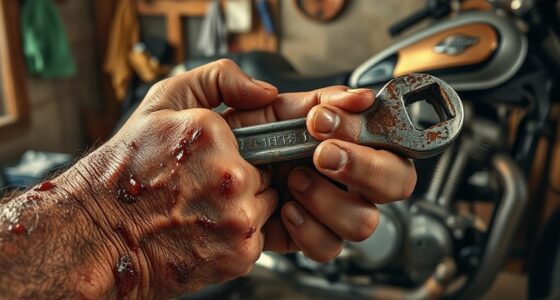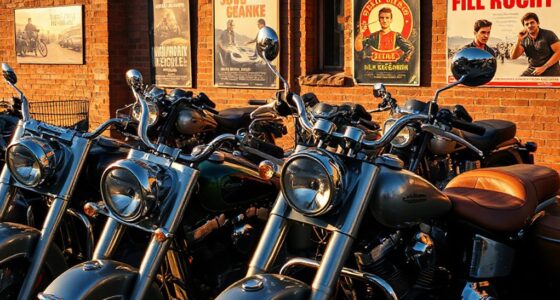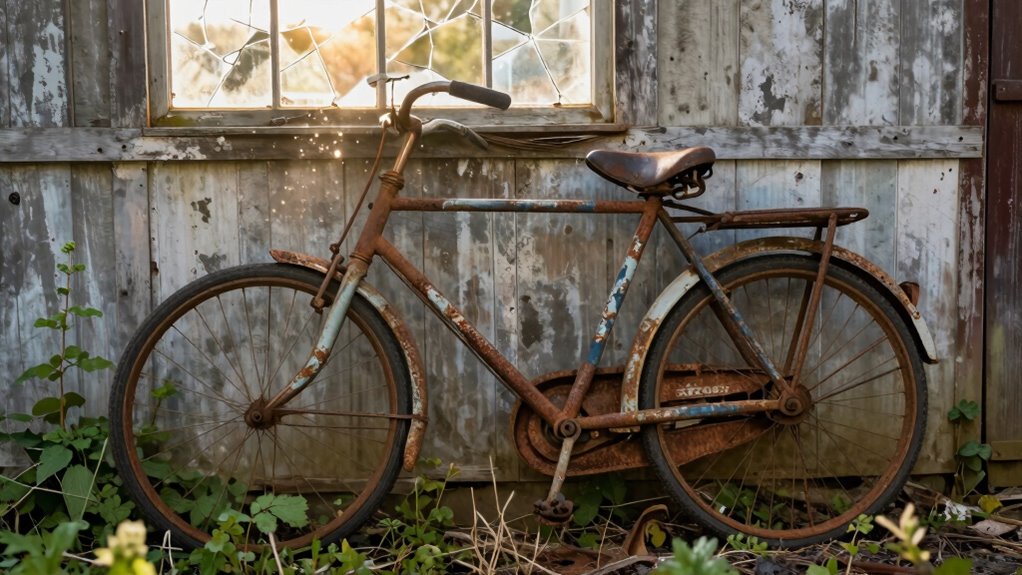

If you’re passionate about vintage bikes, uncovering barn finds offers an incredible thrill. You can discover rare, authentic motorcycles hidden in barns, sheds, or containers, often needing restoration. Tracking down these treasures involves exploring remote locations, working with communities, and overcoming challenges like rust and missing parts. The excitement grows as you see a piece of history come back to life. Keep exploring, and you’ll uncover more about the fascinating world of barn find motorcycle treasures.
Key Takeaways
- Barn finds are rare vintage bikes hidden in barns or remote locations, offering authentic links to the past.
- Discovering a barn find often involves navigating challenging terrains and uncovering forgotten collections.
- Restoration requires careful cleaning, sourcing original parts, and preserving the bike’s original craftsmanship.
- Proper storage and preservation techniques are essential to maintain the bike’s condition and value over time.
- Community sharing and visual documentation amplify the excitement and cultural significance of vintage bike discoveries.
Understanding the Definition and Scope of Barn Finds
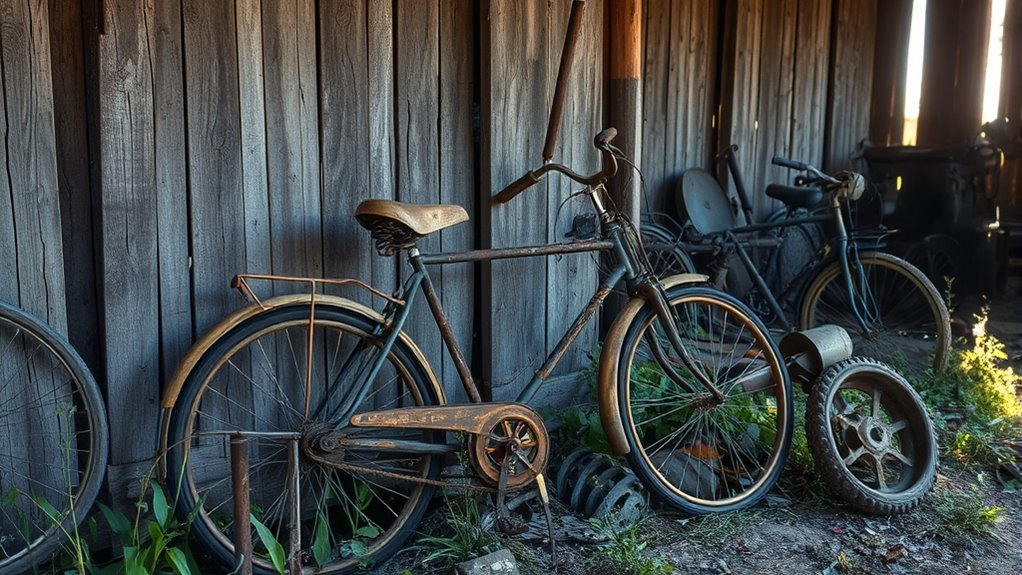
Barn finds are rare, vintage vehicles—mainly cars and motorcycles—that have been stored away in barns, sheds, or garages for many years without much disturbance. They’re prized for their originality, often untouched or only minimally altered since storage, giving them a true time capsule feel. Originally, the term referred mainly to rural barns, but now it includes any long-forgotten classic vehicle in hidden spots. A true barn find usually has historic or collectible value, attracting enthusiasts and collectors alike. The scope covers bikes from the 1960s to 1980s, with some earlier or unique models highly sought after. Conditions vary—rust, damage, or decay are common—requiring extensive restoration. The key is rarity and authenticity, though overuse has diluted the term’s meaning among the community. Vehicles stored in hidden or out-of-the-way locations can also qualify as barn finds, expanding the definition beyond traditional barns. Additionally, understanding the importance of originality preservation is crucial for collectors seeking authentic restorations.
Legendary Discoveries and Notable Finds in Vintage Motorcycles
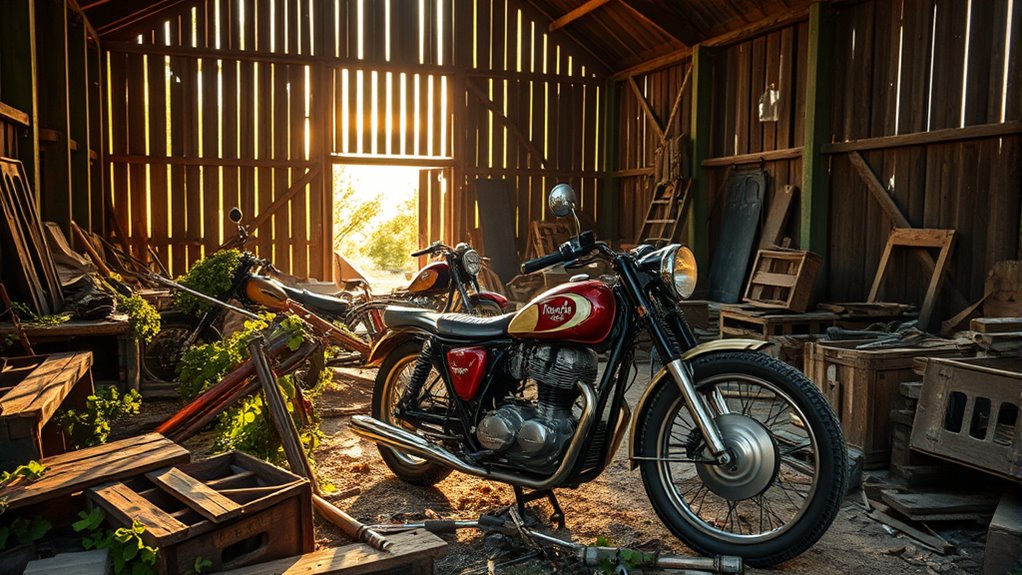
Some of the most legendary barn finds include rare motorcycles like a 100-year-old Harley-Davidson with an unusual 8-valve engine and a 1912 Pearson still in working condition. These discoveries often reveal models with unmatched originality and historical significance, transforming collectors’ dreams into reality. Exploring these notable finds highlights the enduring appeal of restoring iconic motorcycles and preserving their stories. The collection in South Carolina underscores the vast diversity and rarity of vintage bikes still awaiting discovery and preservation. Additionally, understanding farming tips can be crucial when managing a property that houses valuable vintage vehicles, as proper care and maintenance help sustain these historic machines for future generations.
Iconic Barn Find Stories
Throughout motorcycle history, a handful of discoveries stand out as legendary for their scale and significance. One of the most remarkable is a collection of 180 vintage British bikes found near Michigan, including BSA, Triumph, Norton, Velocette, and AJS, transported in five large containers. This massive haul involved winching bikes and parts from an upper barn floor, revealing a treasure trove for collectors. The find showcased the importance of Free Floating storage methods in preserving vintage motorcycles over decades. Another iconic story is the 1947 Harley-Davidson UL, hidden inside an oil drum in a barn for 42 years, retaining much of its original patina. Stories like these highlight rare models such as the Velocette Venom Thruxton, Vincent Rapide, and vintage Harley-Davidsons, each preserving history and sparking renewed interest in the rich legacy of motorcycling. These finds symbolize the enduring allure of uncovering forgotten classics. The recent discovery of a massive British motorcycle collection underscores the ongoing fascination with unearthing lost treasures in barns and sheds, fueling the passion of enthusiasts worldwide.
Rare Vintage Models Discovered
Among the most exciting aspects of vintage motorcycle discovery are the legendary models that surface in private collections and museums, sparking intense interest among collectors. You might come across rare gems like a 1938 Vincent HRD Series A Twin, now highly coveted after being found in a private collection. The Los Angeles-based discovery of the one-of-a-kind Grigg Motorcycle, alongside several Vincents, highlights the rarity of such finds. The Traub Bike, concealed behind a wall during demolition, exemplifies extraordinary craftsmanship and uniqueness, with no known duplicates. Recent discoveries also include European models like Rumi and Zundapp, preserved in museums, showcasing diverse craftsmanship. These legendary finds deepen your appreciation for vintage bikes and their rich, often hidden, histories.
Historic Motorcycle Restorations
Historic motorcycle restorations transform forgotten relics into stunning showcases of vintage engineering, revealing the stories behind legendary models. You begin with a thorough evaluation to determine the scope of work, then carefully disassemble the bike, labeling and organizing parts for reassembly. Techniques like paint correction remove scratches and oxidation without harming original finishes, while engine rebuilding restores performance through inspection, cleaning, and replacement of worn components. Sourcing original parts can be challenging, often requiring patience and community support, with manuals guiding precise repairs. Cosmetic restoration involves rust removal, dent repair, and professional paint matching to preserve authenticity. You might also restore details like white-wall tires or add period-correct decals, ensuring each bike’s history shines through in its final, vibrant form. Passive voice detection tools can assist in identifying areas where writing can be made more active and engaging.
The Excitement of Uncovering Hidden Collections in Remote Locations
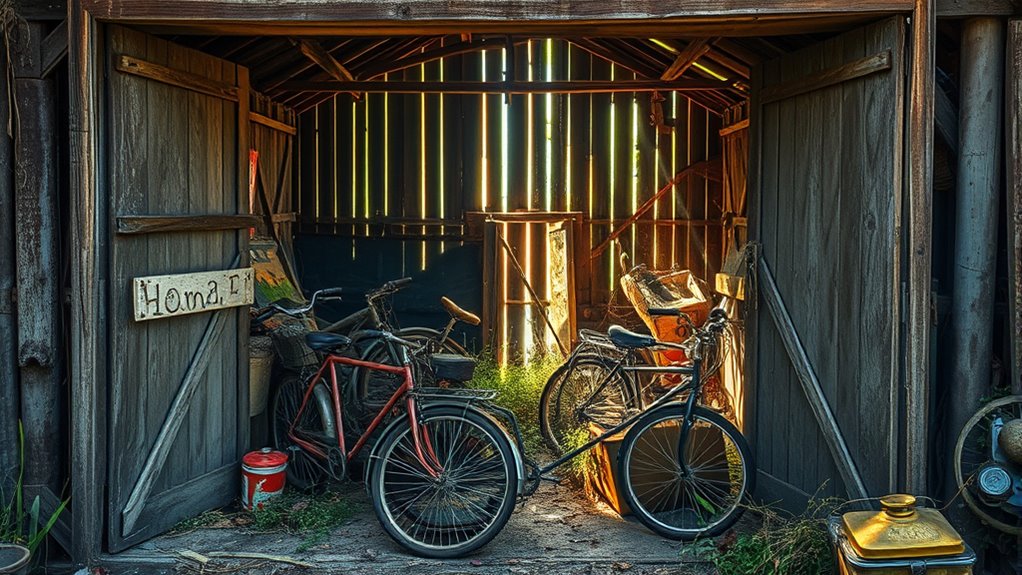
Discovering hidden vintage bike collections in remote locations offers a thrill unlike any other. You might stumble upon a vintage motorcycle museum in a converted shop in California or find memorials tucked away in the Mojave Desert, reached only after long off-road journeys. Rural salvage yards like Alabama’s Escambia Motorcycles hold vast arrays of undiscovered bikes, some over a century old, waiting to be uncovered. Mountain valleys, barns, and caves often conceal private collections, untouched for decades due to inaccessibility. Traveling to these sites requires off-road skills and rugged vehicles, adding adventure to the hunt. Each discovery connects you to history—whether a pristine relic or a weathered machine—highlighting the global heritage of motorcycling and fueling your passion for exploration. The Museum in Solvang is a notable example of a hidden collection, housing over 100 rare and historic motorcycles in a converted store on Alisal Road, accessible during weekends and by appointment. Exploring rare motorcycle collections often involves navigating difficult terrains and uncovering stories preserved in forgotten places.
Challenges Faced During Restoration of Vintage Bikes
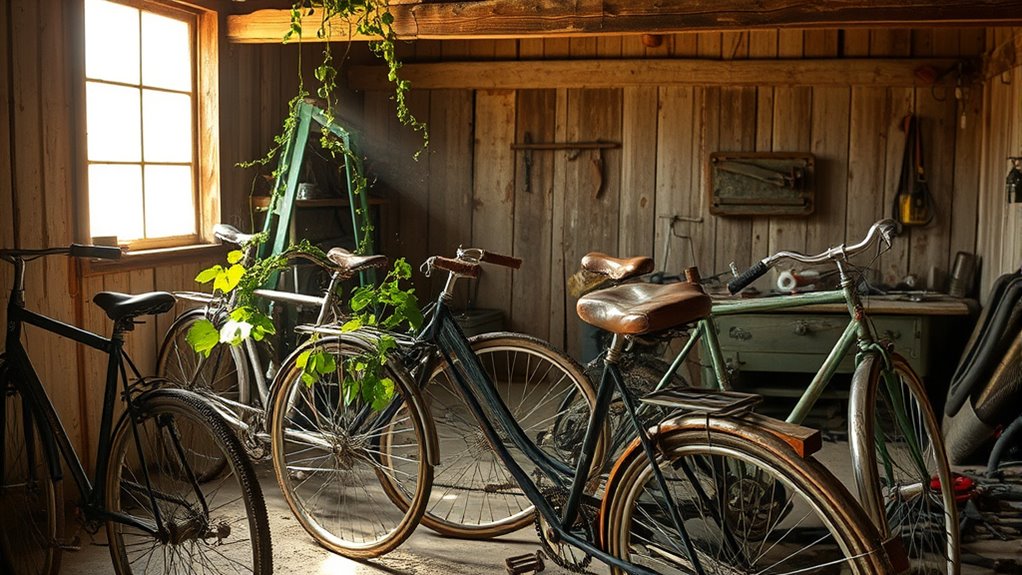
Restoring vintage bikes presents tough challenges like removing rust and corrosion without damaging the original parts. Finding authentic, rare components can be frustrating and often requires creative solutions. Maintaining the bike’s original appearance while making it safe and functional demands patience and skill. Proper restoration techniques are essential to preserve the value and integrity of the motorcycle during the process. Employing color accuracy in selecting paint and finishes can also help match the original aesthetics more closely.
Rust and Corrosion Removal
Removing rust and corrosion from vintage bike parts presents several significant challenges that can complicate restoration efforts. You need to choose the right method to avoid damaging delicate components or losing original finishes. Chemical solutions like Evapo-Rust or oxalic acid are effective for soaking small or larger parts, but require careful rinsing afterward. White vinegar combined with aluminum foil can surface rust easily, while electrolytic removal reverses rust buildup with low-voltage currents. Mechanical techniques include gentle steel wool or Scotchbrite pads for fragile surfaces, and abrasive tools like flap discs or sandblasting for thicker rust. Complex shapes or internal components, such as gas tanks, need specialized treatments to prevent water intrusion. Proper safety precautions are essential when handling chemicals like oxalic acid or power tools, and understanding corrosion removal methods can help prevent further damage. Patience and proper handling are essential to restore metal without compromising integrity or appearance.
Sourcing Rare Parts
Sourcing rare parts for vintage bikes often proves to be one of the biggest hurdles in restoration projects. You’ll need to search through online forums, auctions, scrapyards, swap meets, and specialized dealers, as availability varies greatly depending on the bike’s make, model, and rarity. Some parts are nearly impossible to find or exist in limited quantities. Restoration forums and online communities become crucial for trading or sharing information about these components. Many restorers rely on donor bikes or salvaged parts, but increasing demand and dwindling supplies drive up prices and extend wait times. Additionally, quality can be inconsistent—aftermarket parts may look authentic but lack durability. Custom fabrication, 3D printing, and expert evaluation often become necessary to guarantee the parts meet safety, authenticity, and mechanical standards. Exploring the latest technologies can also aid in creating or sourcing components when traditional options fall short.
Restoring Original Appearance
Achieving an authentic vintage bike appearance presents numerous challenges, primarily because every detail must match the original specifications. You need to source accurate factory colors, patterns, and wiring routes, often relying on museum references or surviving bikes. Restoring paint involves careful preparation to preserve fragile layers, and repairing body panels requires skill to avoid losing authenticity. Mechanical elements like carburetors, ignition systems, and engine parts demand thorough cleaning, precise adjustments, or replacements to replicate original performance. Additionally, time-consuming disassembly, organization, and planning are indispensable to prevent losing parts or making errors. Patience is key, as projects often take months to complete. Ensuring these details align perfectly preserves the vintage look and feel, making the restoration both a challenge and a rewarding achievement. Attention to detail and thorough documentation are essential to maintaining authenticity throughout the restoration process.
Preserving History: The Cultural Significance of Barn Finds
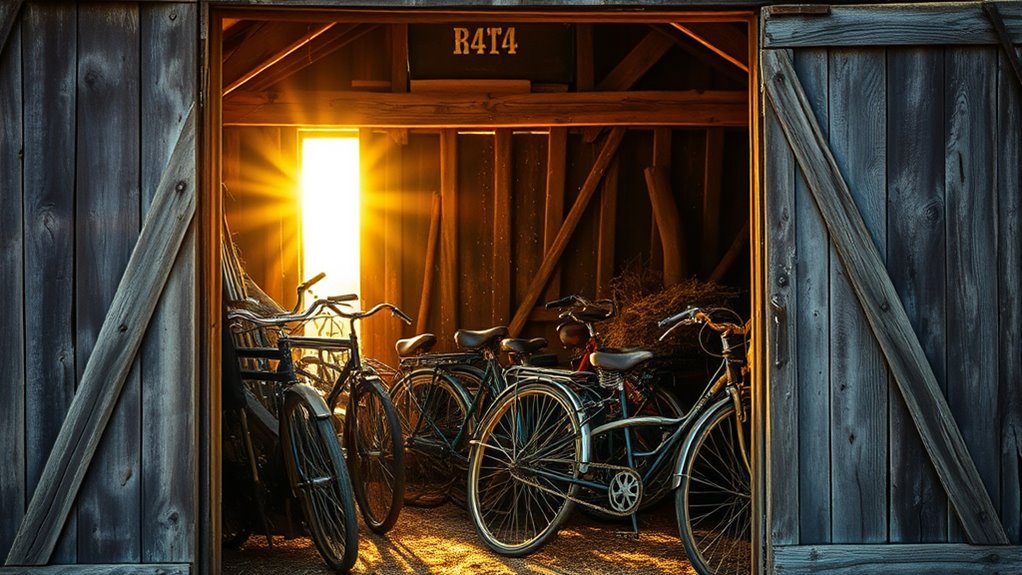
Preserving barn finds is essential because these motorcycles serve as authentic links to our past, capturing the original materials, designs, and use marks that define their historical era. These finds offer tangible connections to earlier times, maintaining their integrity through untouched patina and wear. By cataloguing serial numbers, manufacturing details, and provenance, you help preserve the story of motorcycle evolution. Furthermore, barn finds embody regional and community histories, reflecting local cultures and lifestyles. They foster a sense of identity among enthusiasts and serve as focal points for storytelling and cultural pride. Displaying these machines in museums or exhibitions educates the public about industrial craftsmanship and technological progress, ensuring that the heritage, memories, and societal influences tied to these bikes endure for future generations. The collection’s value could be significant, highlighting the importance of preserving these relics for both historical and monetary reasons. Recognizing the cultural significance of vintage bikes reinforces their role as tangible symbols of our societal and technological development.
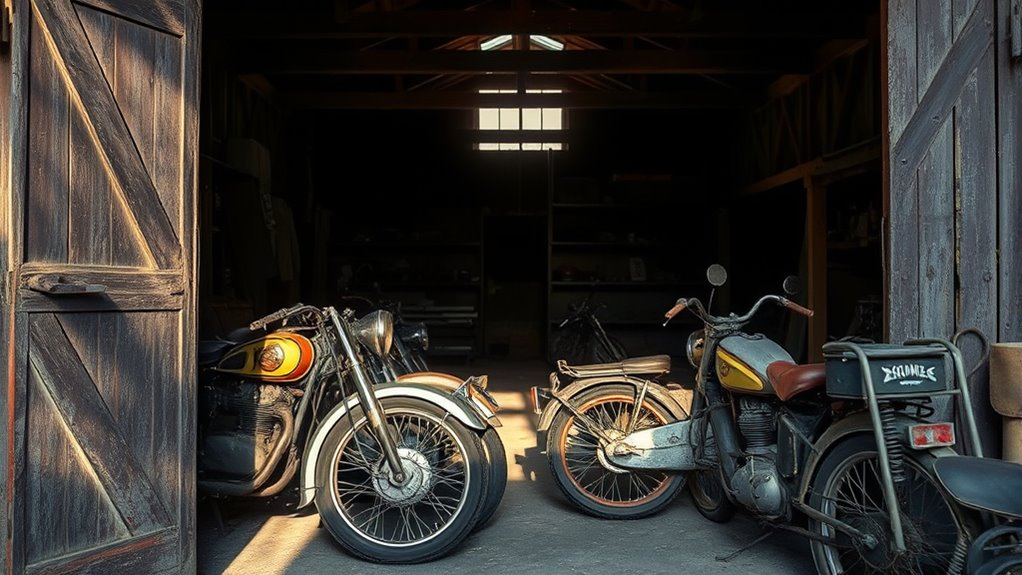
Barn finds markedly influence the vintage motorcycle market by shaping both prices and collector interest. Unrestored, historically significant bikes can fetch high auction estimates, sometimes over £100,000, especially with provenance linked to notable owners or clubs. The rarity of original, untouched models from the early 20th century boosts their desirability and value compared to restored examples. Auctions reveal that exclusivity and untouched condition drive premium prices, though valuation varies by brand, rarity, and condition.
- High-profile finds can trigger price spikes for specific marques or models
- Increased supply from barn finds may temporarily lower market prices for common bikes
- Market trends and demand for originality sustain or boost prices despite fluctuations
- Resale speculation adds volatility, creating gaps between estimates and actual sales
The Role of Enthusiast Communities and Social Media in Discoveries
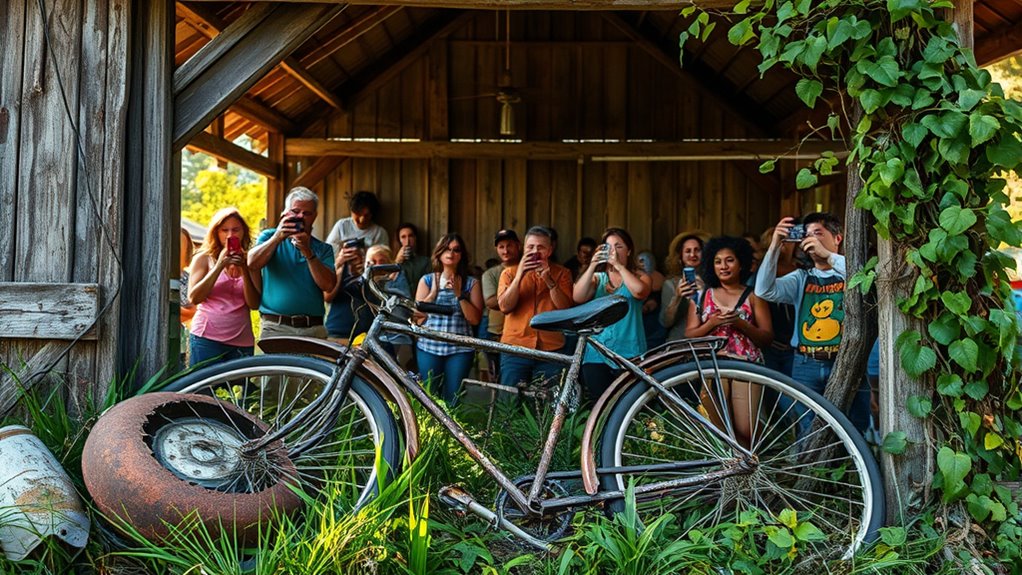
Enthusiast communities and social media platforms play an essential role in uncovering vintage motorcycle treasures. These networks facilitate knowledge sharing, connecting collectors, riders, and restorers. Online forums and groups—like Vintage Motorcycle Club or Café Racer Community—offer dedicated spaces for advice, leads, and historical insights. Community events such as rallies and shows enable direct exchanges that often lead to barn finds. Social media accelerates discovery by allowing enthusiasts to quickly post photos, leads, and restoration updates. Hashtags and groups create searchable repositories, making barn find leads accessible worldwide. Visual content attracts new participants and raises awareness. Influencers and content creators further expand the reach, inspiring fresh searches. This synergy between communities and platforms keeps the vintage motorcycle discovery cycle active and vibrant.
| Community Type | Key Function | Example Platforms |
|---|---|---|
| Enthusiast Groups | Share knowledge, organize events | AMCA, local clubs |
| Online Forums | Peer advice, barn find leads | Vintage Motorcycle Club, Reddit |
| Social Media Groups | Rapid sharing, visual storytelling | Facebook, Instagram |
| Community Events | Direct networking, discovery opportunities | Rallies, shows |
Showcasing and Celebrating Restored Barn Find Motorcycles

Sharing before-and-after photos and highlights of restored bikes lets you showcase their transformation and craftsmanship. These visuals not only celebrate the revival but also inspire others in the vintage motorcycle community. By highlighting key details, you help preserve the bike’s story and cultural significance.
Before and After Photos
Have you ever wondered how a neglected, rust-covered motorcycle transforms into a stunning vintage treasure? The magic is in the before and after photos that vividly showcase the restoration journey. These images highlight the dramatic change from decay to shine, emphasizing craftsmanship and effort. You’ll see:
- Rusted, dented frames before, then polished, hammered finishes after
- Corroded chrome parts replaced or painted over, revealing shiny surfaces
- Damaged fuel tanks repaired with fillers, then expertly painted
- Worn exhaust systems restored or replaced, showcasing their new condition
Capturing these contrasts not only celebrates the restoration process but also inspires pride in the transformation. Effective photos focus on areas of greatest deterioration, making the final result all the more impressive and visually striking. Photographs are essential in illustrating the extent of the restoration and the skill involved.
Restored Bike Highlights
Restored barn find motorcycles are true monuments to craftsmanship and dedication, showcasing the incredible transformations from neglected relics to eye-catching vintage bikes. When you see these restored machines, you notice the careful work involved—disassembly, paint correction, and engine rebuilding—that bring them back to life. Original parts are refurbished whenever possible, with OEM replacements used to maintain authenticity. Modern upgrades like LED lighting or custom paint jobs add personal flair without sacrificing period accuracy. The restoration process relies on detailed documentation and precise tools, ensuring each bike’s history and character are preserved. Most detailed manual is an OEM factory repair manual, usually used by service techs. These highlights celebrate the passion behind restoring forgotten bikes, transforming them into stunning pieces of history that honor their vintage roots while embracing modern reliability.
Tips and Strategies for Identifying Potential Barn Finds
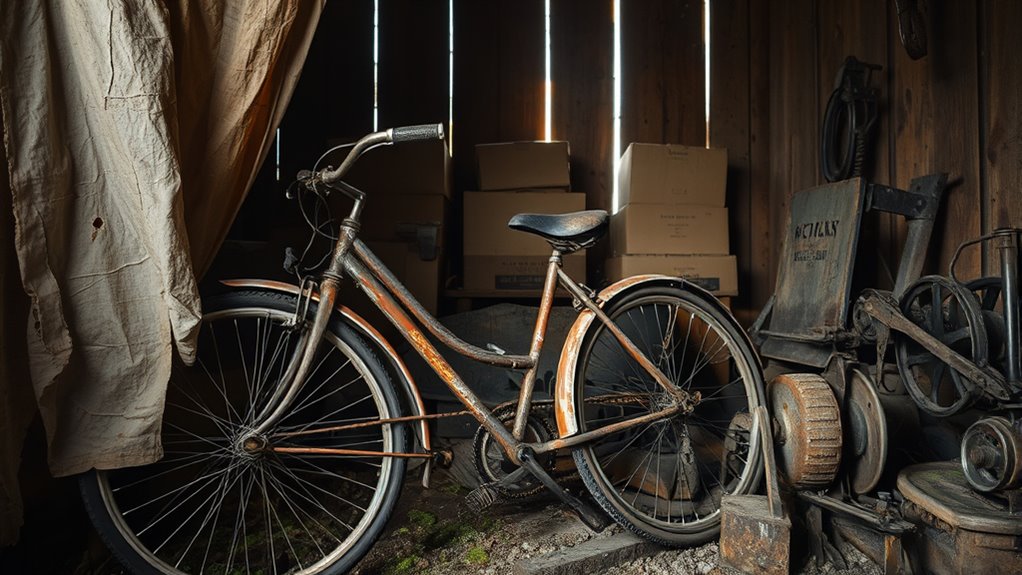
When evaluating a potential barn find, a thorough visual and physical inspection is essential to uncover hidden issues and assess overall condition. Look closely for cracks, rust, or structural damage on the frame, especially under grime or paint. Check for missing or damaged parts against factory diagrams, and examine metal components like bolts and screws for corrosion. Pay attention to wear points such as chains, sprockets, and wheel bearings, as they reveal usage history. Also, note signs of past repairs or modifications that could impact restoration.
Thoroughly inspect for cracks, rust, damage, and signs of repairs to assess barn find condition.
- Inspect for cracks, rust, and hidden damage on the frame
- Verify parts against factory diagrams and manuals
- Assess condition of fasteners and wear points
- Look for repairs, modifications, or missing components
The Future of Barn Find Hunting and Preservation Efforts

Advances in storage and environmental control are transforming how vintage bikes are preserved, making it easier to protect barn finds from deterioration. Climate-controlled facilities are increasingly available, shielding bikes from extreme temperatures, moisture, and UV rays that cause rust and paint breakdown. Commercial storage options with regulated environments provide better protection than typical home garages, reducing long-term damage risks. If controlled storage isn’t an option, high-quality ventilated covers are a last resort, preventing moisture buildup. Future trends include advanced protective coatings like ceramic layers that resist UV, oxidation, and contaminants for years. Battery management has also improved, with trickle chargers and pre-charged batteries maintaining electrical health. Proper preservation techniques and modern technology ensure your vintage bikes stay preserved longer, making barn find hunting more rewarding and sustainable.
Frequently Asked Questions
How Can I Legally Access Private Property for Barn Find Searches?
To legally access private property for barn find searches, you should always get permission from the landowner first, preferably in writing. Check property deeds and titles to confirm rights of way or easements. If the land is landlocked, consider negotiating easements or legal access through a lawyer. Avoid trespassing, as it can lead to legal penalties. Respect property rights to make sure your search remains lawful and hassle-free.
What Are the Best Tools for Assessing a Vintage Motorcycle’s Condition?
Ever wonder how to accurately assess a vintage motorcycle’s condition? Use a bright LED flashlight and magnifying glass to spot cracks, corrosion, and small defects. Check engine health with a compression gauge, and verify electrical systems using a multimeter. Measure wear with calipers and feeler gauges. Document everything with your phone, and cross-reference market values via blue books or AI tools. These tools help you make informed, confident decisions about your find.
How Do I Authenticate the Originality of a Barn Find Motorcycle?
You authenticate a barn find motorcycle by inspecting key parts like the tank, frame, and engine for original shapes, markings, and era-specific details. Check the paintwork for authenticity, and verify serial numbers and date codes. Review documentation, including titles and service records, to confirm provenance. Consult specialists or authentication services to validate originality, ensuring the bike’s components and markings match factory specs, and confirm that it’s legally registered and compliant.
What Are Common Hidden Damages in Rusted Vintage Bikes?
Rust on a vintage bike often hides deeper issues, like a silent skeleton within a weakened frame, ready to crack under stress. You might find dents or bends suggesting impact damage, or corroded welds that compromise integrity. Hidden rust spots on rims could mask bent spokes or cracked rims. Inside, engine parts like pistons and valves may be seized or pitted, and fuel tanks might harbor internal corrosion, all lurking beneath the surface.
How Do Market Prices Fluctuate After a Barn Find Is Restored?
Market prices tend to rise after you restore a barn find, but fluctuations happen based on model rarity, restoration quality, and provenance. If you choose a top-quality, original restoration, you’ll likely see higher returns, especially on rare bikes. However, market demand, collector trends, and overall condition also influence prices. Sometimes, even well-restored bikes don’t meet expected values, so understanding these factors helps you make smarter investment decisions.
Conclusion
So, next time you stumble upon a dusty, forgotten motorcycle in a barn, don’t just walk away—imagine the fame, fortune, and Instagram likes waiting to be yours. Who needs a fancy new bike when you can channel your inner Indiana Jones and unearth vintage treasures? Just remember, with great discovery comes great responsibility—mainly, figuring out how to restore that relic without turning it into a pile of rust. Happy hunting!