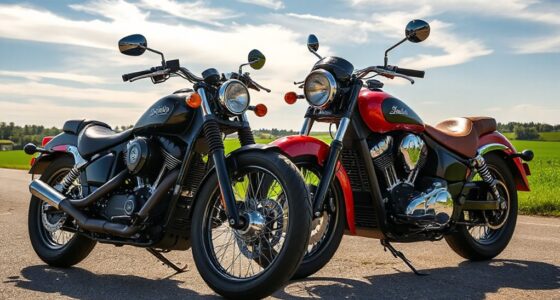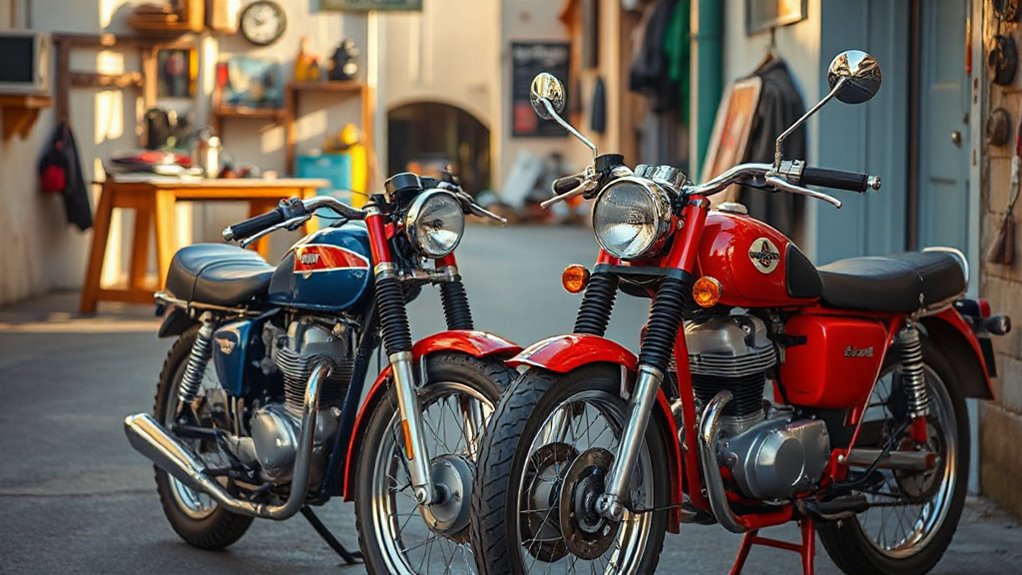

Two-stroke engines are making a notable comeback as they blend nostalgic charm with modern technology. You’ll love their classic look, lightweight design, and high power-to-weight ratio, perfect for small machines. Thanks to innovations like fuel injection and catalytic converters, these engines now produce fewer emissions while preserving their vintage appeal. This mix of old-school appeal and eco-friendly upgrades keeps them relevant today. Stay tuned to see how these engines continue evolving and balancing tradition with innovation.
Key Takeaways
- Modern innovations like catalytic converters and fuel injection are reducing emissions in two-stroke engines.
- Efforts aim to preserve vintage aesthetics while meeting strict environmental standards.
- Ongoing research focuses on balancing classic engine design with eco-friendly technology.
- The resurgence caters to enthusiasts seeking nostalgic appeal with cleaner, more efficient operation.
- Advances enable two-strokes to remain relevant in small machinery markets by combining tradition and modernity.
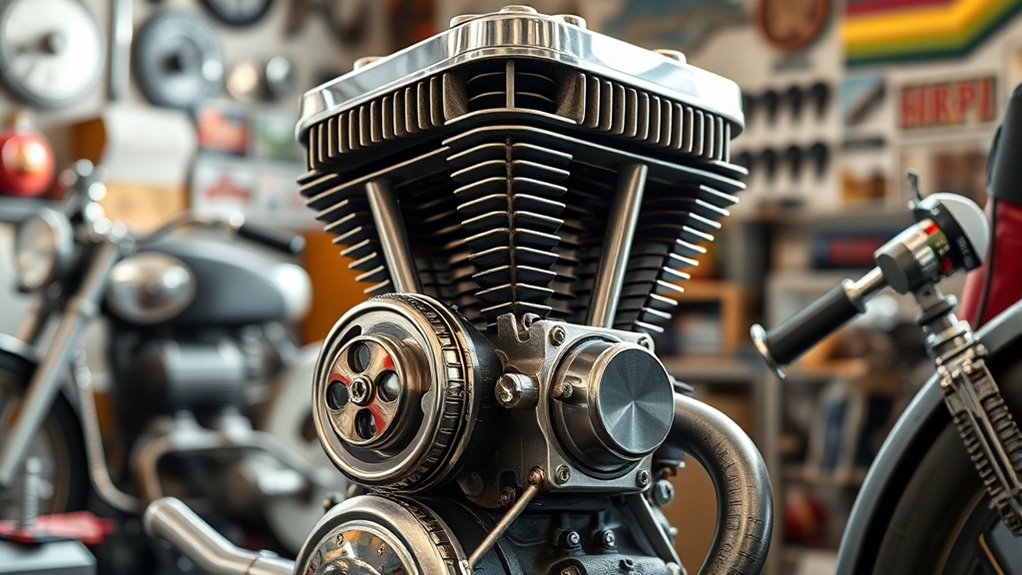
Two-stroke engines have long been admired for their simplicity and lightweight design, making them a popular choice in small machinery like chainsaws, motorcycles, and outboard motors. Their compact build and power-to-weight ratio give you a sense of vintage aesthetics—those classic, rugged looks that evoke nostalgia for simpler times. However, despite their charm, two-strokes face significant emission challenges that have kept them from being universally embraced in recent years. You might notice that older models produce more smoke and pollutants, which has led to stricter regulations and a push toward cleaner engine technologies. Yet, the appeal of their raw, mechanical feel remains strong, especially among enthusiasts and vintage collectors.
Two-stroke engines combine vintage charm with modern efforts to reduce pollution.
As technology advances, manufacturers are working to bridge the gap between the nostalgic appeal of two-strokes and the modern demand for environmental responsibility. New innovations focus on reducing emissions without sacrificing their iconic lightweight and powerful characteristics. You’ll find that some newer models incorporate catalytic converters or fuel injection systems designed specifically to minimize smoke and pollutants, addressing those emission challenges head-on. These improvements help preserve the vintage aesthetics—think of the sleek, retro look of a classic chainsaw or a vintage motorcycle—while meeting contemporary standards for cleaner operation.
Despite these strides, the core challenge remains: balancing the engine’s simple, two-stroke cycle with environmental concerns. The inherent design, which involves a single crankcase stroke that mixes oil with fuel, makes complete emission control tricky. But recent developments aim to optimize fuel combustion and reduce unburned hydrocarbons, giving you a more eco-friendly two-stroke experience. This means you can enjoy the nostalgic feel of a vintage engine, with its distinctive sound and aesthetic appeal, while also being mindful of pollution limits.
Furthermore, ongoing research into innovative emission control technologies continues to push the boundaries of what’s possible for two-stroke engines. In essence, the comeback of two-strokes is about blending old-school charm with modern tech. You benefit from the engine’s lightweight and straightforward mechanics, which make maintenance easier and operation more accessible. At the same time, you get to be part of a movement that recognizes the importance of reducing emissions. It’s a balancing act—satisfying your love for vintage aesthetics while adhering to today’s environmental standards. As innovations continue, two-stroke engines are poised to reclaim their place in small machinery, offering a nostalgic yet responsible choice for enthusiasts and practical users alike.
Frequently Asked Questions
How Do Two-Stroke Engines Compare to Four-Stroke in Fuel Efficiency?
Two-stroke engines generally have lower fuel efficiency compared to four-strokes, meaning they consume more fuel for the same work. Their efficiency metrics show higher fuel consumption because they complete power cycles faster but lose some fuel during incomplete combustion. If you’re looking for better fuel economy, a four-stroke engine typically outperforms a two-stroke, making it more cost-effective and eco-friendly over time.
What Are the Environmental Impacts of Modern Two-Stroke Engines?
Like a double-edged sword, modern two-stroke engines cut both ways environmentally. They tend to produce higher emissions due to incomplete combustion, making it harder to meet emissions regulations. However, eco-friendly alternatives like cleaner-burning fuels and catalytic converters are helping reduce their impact. While they’re more efficient than their predecessors, you’ll still want to weigh their environmental footprint against newer four-stroke options for a greener ride.
Can Two-Stroke Engines Be Easily Adapted for Electric Hybrid Systems?
Yes, you can adapt two-stroke engines for electric hybrid integration, but conversion challenges exist. You’ll need to modify the engine to accommodate electric motors and batteries, which can be complex and costly. Ensuring proper cooling and maintaining performance are also critical. While it’s doable, expect some technical hurdles, and it’s best to work with specialists experienced in hybrid conversions to achieve seamless integration.
What Maintenance Challenges Are Unique to Vintage Two-Stroke Engines?
You’ll face unique maintenance challenges with vintage two-strokes, like regularly mixing oil with fuel and fine-tuning the carburetor. Unlike modern engines, these require precise oil ratios to prevent wear, and carburetor tuning becomes essential for smooth operation. The juxtaposition of nostalgic charm and technical demands means you must stay vigilant, balancing old-school care with modern techniques to keep your engine running reliably and efficiently.
Are There Legal Restrictions on Using Two-Stroke Engines Today?
Yes, there are legal restrictions on using two-stroke engines today due to emission regulations. Many regions have strict laws limiting or banning their use because they produce higher emissions compared to four-stroke engines. You might face restrictions on operating vintage or aftermarket two-strokes, especially in environmentally protected areas. Always check local laws before using or restoring a two-stroke engine to avoid fines or penalties.
Conclusion
You can almost hear the roar of old two-strokes blending with the hum of modern tech, a dance of nostalgia and innovation. As these engines breathe new life, they paint a vivid picture of roaring past and promising future. Feel the thrill of the past igniting again, fueling your passion with every pulse and spark. It’s a rhythmic comeback, where tradition and tomorrow collide, leaving you enthusiastic for the next ride.