
To guarantee a smooth old iron tour, focus on thorough maintenance of your vintage motorcycle, replacing worn parts and lubricating moving components. Select comfortable, vintage-inspired gear for safety and style, and communicate clearly with your group about routes and stops. Maintain a steady pace, respect each rider’s skill level, and use hand signals or radios for safety. Pay attention to handling quirks and carry essential tools. Continue exploring these tips to make your group ride enjoyable and trouble-free.
Key Takeaways
- Ensure all vintage bikes are thoroughly maintained, with regular inspections and essential replacements to prevent breakdowns during the ride.
- Communicate route details, stops, and pace clearly using hand signals or radios to keep the group coordinated and safe.
- Choose appropriate vintage-inspired safety gear that fits well, enhances visibility, and provides adequate protection for all riders.
- Maintain a steady, predictable riding pace suitable for the entire group, avoiding sudden maneuvers to ensure smooth flow.
- Keep the group size manageable and encourage camaraderie, scenic enjoyment, and respect for each rider’s skill level.
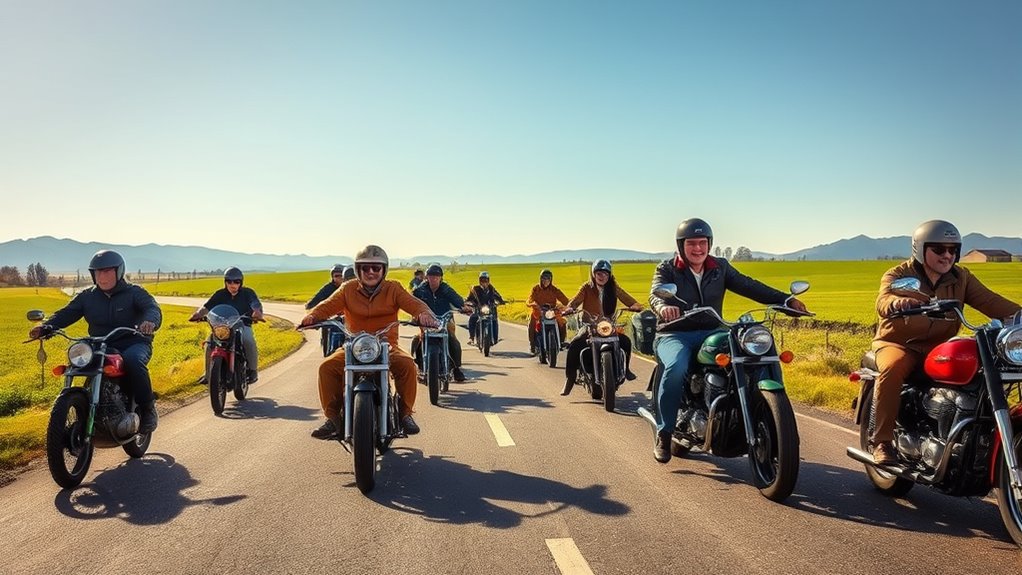
There’s something truly special about hitting the open road on vintage motorcycles, especially when you’re surrounded by fellow enthusiasts. Riding in a group with shared passion creates an experience that’s both nostalgic and exhilarating. But to make sure your vintage motorcycle ride goes smoothly, it’s essential to pay attention to a few key details before hitting the highway. Proper preparation, including restoration tips, can keep your bike running reliably, while choosing the right riding gear ensures safety and comfort for everyone involved.
Riding vintage motorcycles with friends is nostalgic and exhilarating—prepare thoroughly for a safe and memorable journey.
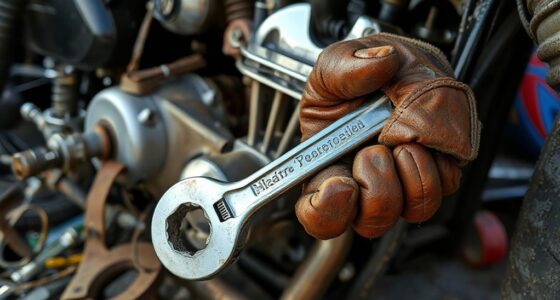
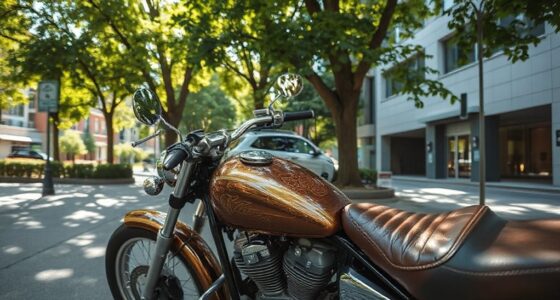
When it comes to restoration tips, focus on making your vintage bike as dependable as possible. Check the engine thoroughly, replace worn-out parts, and ensure your brakes and tires are in top condition. Lubricate all moving parts and consider upgrading critical components if needed, but always keep the bike’s original charm intact. A well-maintained vintage motorcycle not only performs better but also reduces the risk of breakdowns during a group ride. It’s also wise to carry essential tools and spare parts, just in case you encounter any issues along the route. This proactive approach helps maintain a smooth flow and minimizes delays, making the ride more enjoyable for everyone. Incorporating preventive maintenance into your routine can significantly enhance your riding experience.
Equally important is selecting the right riding gear. Vintage-inspired helmets, leather jackets, and gloves aren’t just stylish—they provide critical protection. When choosing your gear, prioritize fit and visibility. Bright colors or reflective elements can help you stay seen in group formations, especially in low-light conditions. Comfortable riding gear also prevents fatigue and discomfort during longer rides, allowing you to focus on the road and your fellow riders. Remember, safety gear isn’t just for you; it sets a good example and fosters a safety-first mindset within the group.
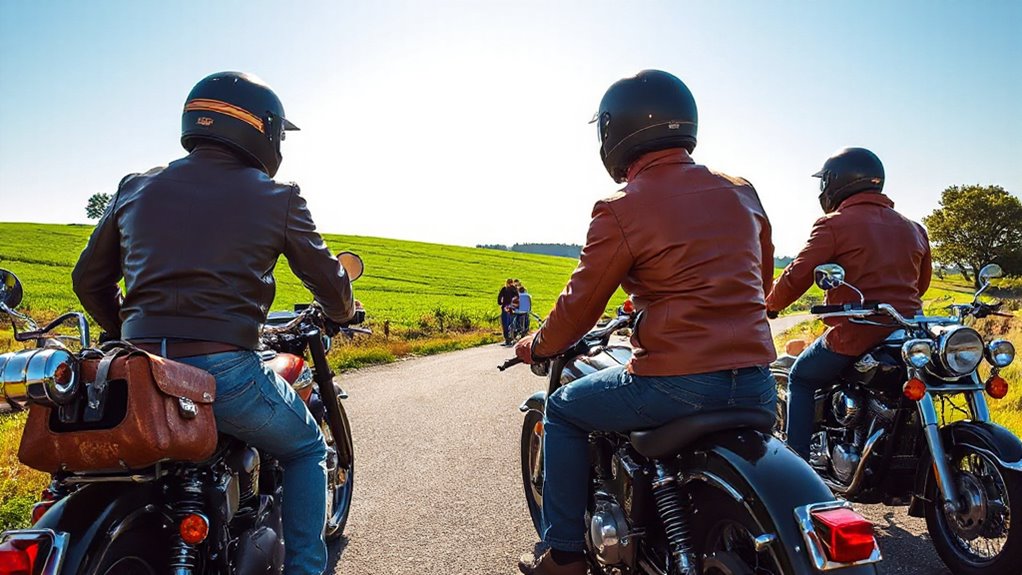
Before setting off, communicate clearly with your fellow riders about the route, stops, and pace. Establish some basic hand signals or radio communication to keep everyone connected. Keep the group size manageable—large groups can be difficult to coordinate and may lead to safety concerns. Stay close enough to maintain visual contact but allow enough space to handle unexpected obstacles or sudden stops.
During the ride, maintain a steady pace and avoid sudden maneuvers. Be mindful of your vintage motorcycle’s unique handling characteristics, especially if it’s been restored or modified. Respect each rider’s skill level and encourage smooth, predictable riding. With proper preparation, your vintage motorcycle group ride will be a memorable adventure filled with camaraderie, scenic views, and the timeless thrill of riding old iron on the open road.
Frequently Asked Questions
How Do I Find Vintage Motorcycle Groups Nearby?
To find vintage motorcycle groups nearby, start by checking local club events in your area. Attend meetups to connect with enthusiasts and learn about upcoming rides. Also, join vintage motorcycle forums online; they’re great for discovering groups, sharing experiences, and getting tips. Social media platforms like Facebook often have local vintage motorcycle pages or groups where members organize rides. Engaging with these communities makes it easy to find nearby vintage motorcycle groups.
What Safety Gear Is Essential for Vintage Bike Rides?
You should always wear a helmet that meets safety standards to safeguard your head during vintage bike rides. Additionally, don’t forget protective clothing like durable gloves, a sturdy jacket, and riding pants to shield you from road rash and weather. These gear pieces ensure helmet safety and overall protection, making your ride safer and more enjoyable. Prioritize safety gear to handle any unexpected situations confidently on your vintage motorcycle adventures.
How to Handle Breakdowns During a Vintage Motorcycle Tour?
When your vintage motorcycle breaks down, stay calm and assess the situation. Use your mechanical troubleshooting skills to identify the issue, like loose wires or a flat tire. If you can’t fix it on the spot, call roadside assistance for help. Carry basic tools and spares, and communicate clearly with your group to guarantee everyone stays safe. Remember, patience and preparedness make all the difference during breakdowns.
Are Vintage Motorcycles Suitable for Long-Distance Rides?
Yes, vintage motorcycles are suitable for long-distance riding if you prepare properly. Your classic motorcycle needs regular maintenance, reliable parts, and a good understanding of its limits. You should carry essential tools and spare parts, plan your route carefully, and ride at a comfortable pace. With the right preparation, you can enjoy extended journeys on your vintage bike, making long-distance riding a rewarding experience.
What Maintenance Should I Do Before a Vintage Motorcycle Tour?
Before your vintage motorcycle tour, you should start with an oil check to make certain proper lubrication and top it off if needed. Next, inspect your tires for any signs of wear, cracks, or low pressure, and replace or inflate them accordingly. Also, check the brakes, chain tension, and lights. Doing this prep helps prevent breakdowns and keeps you safe, making your ride smooth and enjoyable.
Conclusion
Riding vintage motorcycles in a group creates unforgettable memories, blending nostalgia with camaraderie. Remember, safety and communication are key for a smooth ride. Did you know that vintage bike rallies have grown by 30% over the past five years? Embrace the charm of your old iron, stay attentive, and enjoy every mile with fellow enthusiasts. With proper preparation, your vintage adventure will be as timeless as the bikes themselves.