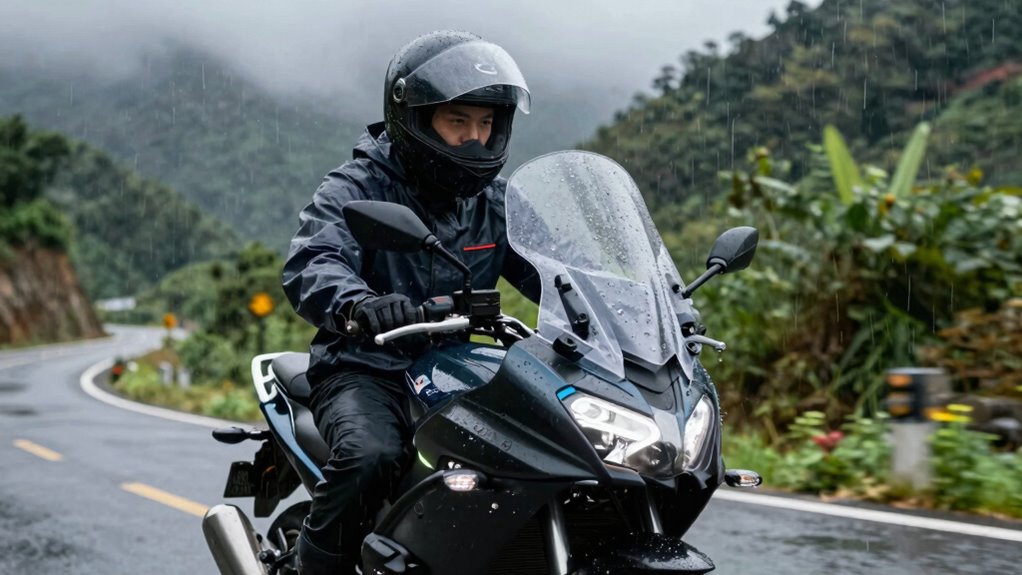
To build a better rain setup for motorcycle travel, start by upgrading and maintaining your gear—check for wear, clean waterproof items, and store them properly. Waterproof critical components like electrical connections and air intakes, using sprays or covers. Use a rain cover for your helmet and apply anti-fog treatments to visors. Adjust your riding style and gear layers for safety and comfort in wet conditions. Keep exploring more tips to stay dry and safe during rainy rides.

Get business pricing on garage and car supplies
- Business-only prices and quantity discounts
- Tax-exempt purchasing
- Multiple users, one account, clear invoices
Key Takeaways
- Use high-quality, waterproof gear and regularly inspect and repair for optimal protection.
- Apply waterproof sprays or coatings to vulnerable motorcycle components to prevent water ingress.
- Equip your helmet with anti-fog visors and rain covers for clear visibility and protection.
- Adjust riding techniques, such as reducing speed and shielding vulnerable areas, in wet conditions.
- Store gear properly in a dry, ventilated area and incorporate waterproofing into routine maintenance.
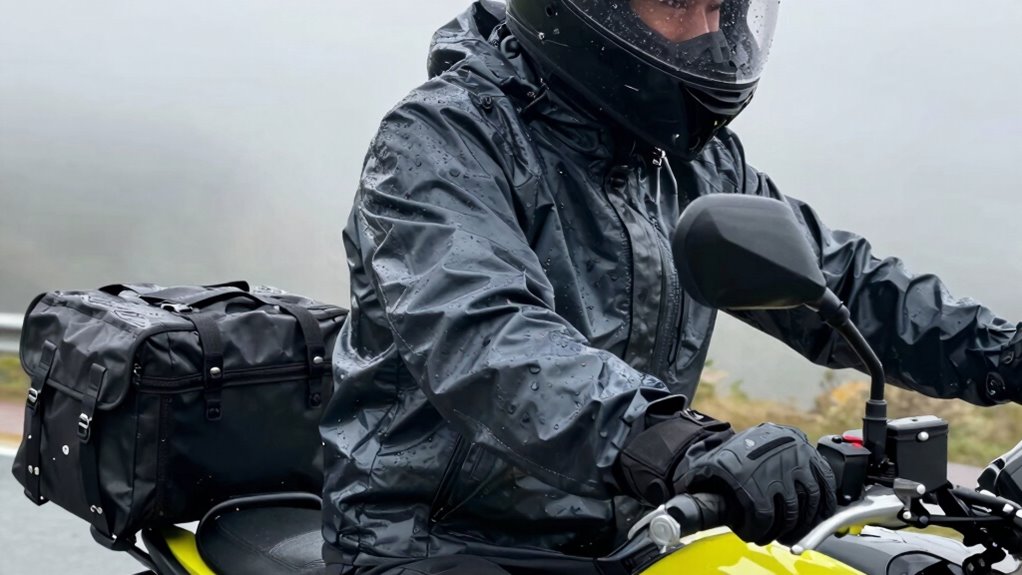
Rainy conditions can quickly turn an enjoyable motorcycle trip into a challenging ordeal, but with the right setup, you can stay dry and comfortable. The key to a successful rain setup is guaranteeing your gear is in top shape and your bike is properly waterproofed. Regular rain gear maintenance is essential; check your rain suit, gloves, and boots before every ride. Look for tears, worn-out seams, or compromised zippers, and repair or replace damaged items promptly. Clean your waterproof gear after each ride to remove dirt and prevent material breakdown, which helps maintain its effectiveness over time. Proper storage is equally important—store your rain gear in a dry, ventilated area to prevent mold and deterioration.
Keep your rain gear in top condition with regular checks, cleaning, and proper storage for reliable protection.
When it comes to motorcycle waterproofing, start by guaranteeing your bike’s critical components are sealed correctly. Inspect the electrical connections, air intake, and exhaust system for any gaps or leaks that might let water in. Applying waterproof sprays or coatings on vulnerable areas can add an extra layer of protection, especially if your bike’s factory seals have started to weaken. Consider installing additional waterproof covers for vulnerable parts like the air filter or electronic modules. These simple steps help prevent water ingress, which can lead to mechanical issues or electrical failures during your ride. Ensuring your waterproofing techniques are up to date can make a significant difference in wet conditions. Additionally, regularly checking for potential water entry points can help you identify vulnerabilities before they cause problems. Incorporating waterproofing methods into your maintenance routine ensures your motorcycle remains resilient against rain-related challenges. Staying aware of water ingress risks and addressing them proactively can save you from unexpected breakdowns.
Your helmet is another essential piece of your rain setup. Use a clear, anti-fog visor and keep it clean to avoid visibility issues. If your helmet’s venting system isn’t adequate, consider adding anti-fog inserts or treatments inside the visor. Also, invest in a good helmet rain cover to shield it from direct rain when parked or stopped for extended periods. This prevents water from seeping inside and keeps your head dry and comfortable.
Beyond gear and bike protection, think about your riding strategy. Adjust your speed and riding position to minimize water spray and splash. Use your body to shield vulnerable areas—lean into curves and maintain a steady, cautious pace. Wearing moisture-wicking base layers under your rain gear can also keep you comfortable by managing sweat and reducing chafing.
Building a better rain setup isn’t just about having the right gear; it’s about maintaining it and preparing your motorcycle for wet conditions. Regular rain gear maintenance, thorough waterproofing, and smart riding techniques will help you tackle rainy rides with confidence. Being proactive ensures you stay dry, safe, and comfortable, turning what could be a miserable experience into a manageable adventure.
As an affiliate, we earn on qualifying purchases.
Frequently Asked Questions
What Are the Best Materials for Waterproof Motorcycle Gear?
The best materials for waterproof motorcycle gear combine material durability with breathability enhancement. Look for gear made from Gore-Tex or eVent fabrics, which offer excellent waterproofing while allowing moisture to escape. These materials resist tearing and wear, ensuring longevity on your rides. Additionally, choose gear with breathable membranes to prevent sweat buildup, keeping you dry and comfortable even during long, rainy journeys.
How Do I Prevent Fogging Inside Rain Gear?
To keep fogging at bay inside your rain gear, think of it as giving your gear a little gust of fresh air. Use ventilation techniques like opening vents or adjusting zippers, allowing moisture to escape. Apply anti-fog sprays on the inside of your visor or gear to create a clear barrier. Regularly wipe the inside with a soft cloth to maintain visibility, ensuring your ride stays safe and enjoyable even in rain.
Can I Customize Rain Setups for Different Weather Conditions?
Yes, you can customize rain setups for different weather conditions by using adjustable waterproofing features and weather-specific gear. For hot, humid days, opt for breathable, lightweight rain gear with adjustable vents. In cold, wet weather, layer with insulated, waterproof clothing. Having versatile gear that adapts to changing conditions guarantees you’re comfortable and protected, making your motorcycle travel safer and more enjoyable regardless of the forecast.
What Safety Precautions Should I Take During Heavy Rain?
When facing heavy rain, don’t forget your safety. Keep your rain gear well-maintained—stiff, soaked gear can be a hazard. Make certain your motorcycle visibility is maximized by cleaning and adjusting lights, and wear bright or reflective clothing. Avoid sudden maneuvers and reduce your speed, because even the best rain setup won’t save you from poor judgment. Remember, staying visible and alert is the real key to riding safely in a downpour.
How Do I Dry Motorcycle Gear Quickly After Rain?
To dry your motorcycle rain gear quickly, start by removing excess water and hanging it in a well-ventilated area. Use moisture absorption materials like silica gel packs or a towel to absorb remaining moisture. Store your rain gear in a dry, breathable rain gear storage bag to prevent mildew. Regularly airing out your gear helps it dry faster and keeps it fresh, ensuring you’re ready for your next ride.
As an affiliate, we earn on qualifying purchases.
Conclusion
So there you have it—your foolproof plan to turn a soggy, miserable ride into a drizzly delight. Just follow these tips, embrace your inner waterproof warrior, and maybe, just maybe, you’ll look back at that muddy mess and laugh. Or cry. Either way, you’ll be the hero of your own soggy adventure. After all, who needs dry roads when you can master the art of the perfect rain-soaked motorcycle voyage? Happy riding, rain or shine!
As an affiliate, we earn on qualifying purchases.
electrical connection waterproof spray
As an affiliate, we earn on qualifying purchases.
As an affiliate, we earn on qualifying purchases.
Fall Picks
fall essentials
As an affiliate, we earn on qualifying purchases.