
To find an oil leak fast, start by inspecting the area above the stain for signs of dripping or wetness, focusing on seals, gaskets, or drain plugs. Clean the engine thoroughly with a degreaser, dry it, and run the engine for a few minutes while observing suspected spots. Use paper towels or cardboard to catch fresh leaks. For precise detection, consider UV dye and specialized tools—stick with it, and you’ll uncover the source more efficiently.

Get business pricing on garage and car supplies
- Business-only prices and quantity discounts
- Tax-exempt purchasing
- Multiple users, one account, clear invoices
Key Takeaways
- Clean the engine thoroughly to reveal fresh oil leaks more clearly.
- Use paper towels or cardboard under suspected areas to trace new drips.
- Focus on common leak points like valve covers, oil pan gaskets, and drain plugs.
- Run the engine and observe for fresh oil spots or drips during operation.
- Employ UV dye and UV light for precise detection of hard-to-see leaks.
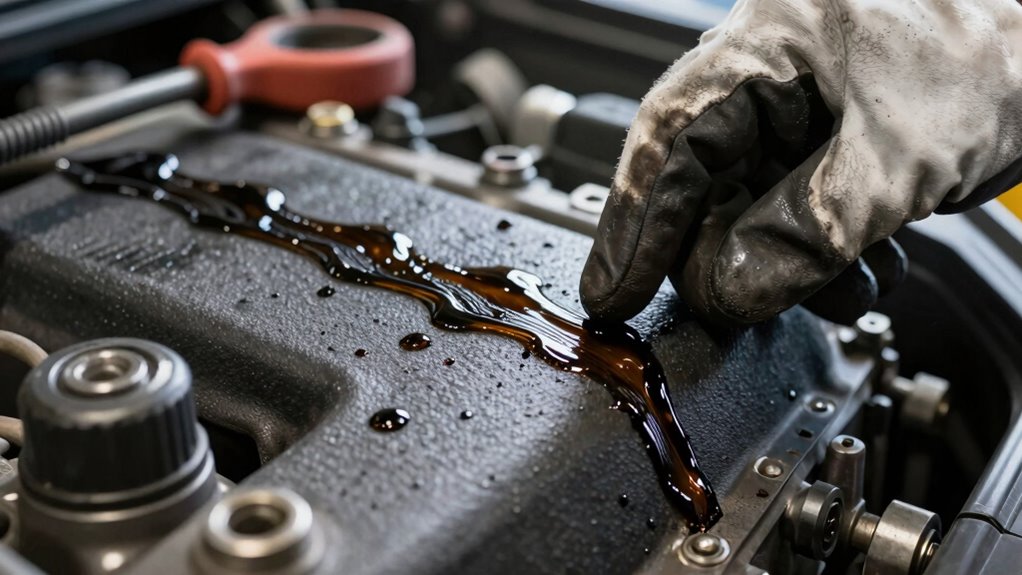
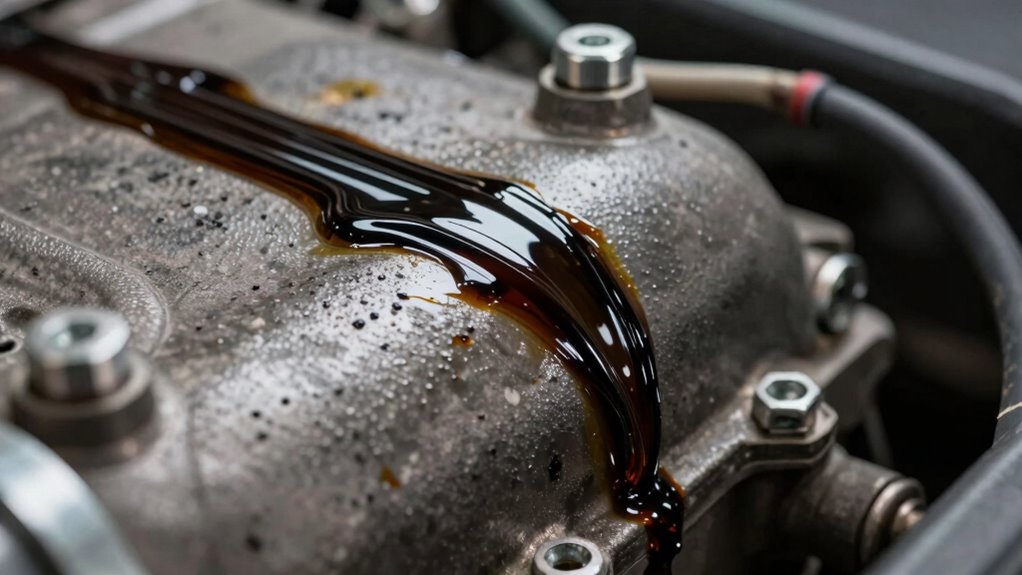
Oil leaks can be frustrating, but identifying their source quickly is essential to preventing costly damage. When you notice an oil stain on your driveway or garage floor, it’s a clear sign that a leak is present, and prompt action can save you a lot of trouble down the line. Start by inspecting the area where the stain appears. Look for the origin of the oil—often, it’s right above the stain on the engine or under the vehicle. Keep in mind that oil stain detection isn’t just about spotting the wet spot; it’s about following the trail of oil to its source. You might see drips on the underside of the engine or around seals and gaskets that are prone to wear.
To effectively find the leak’s source, use leak prevention techniques like cleaning the engine thoroughly before inspection. A degreaser and a good rinse will help you see new leaks more clearly. Once the engine is clean and dry, start the vehicle and let it run for a few minutes. During this time, observe the engine and the underside of the vehicle for fresh oil leaks. If you notice oil seeping from a particular area, that’s your leak’s origin. Sometimes, leaks can be slow and tricky to detect; in these cases, placing paper towels or cardboard beneath the suspected area can help catch drips, making pinpointing easier. Additionally, understanding common leak points such as seals and gaskets can speed up your diagnosis process. Consider inspecting common leak points such as valve covers, oil pan gaskets, and drain plugs. These are typical culprits, especially if your vehicle is older. Tightening loose bolts or replacing worn gaskets might be enough to stop the leak. If you’re unsure, using UV dye oil and a UV light can make leaks more visible, especially in hard-to-see spots. This is a reliable leak detection method and can save you hours of guesswork. Regularly inspecting engine components can help catch leaks early before they cause significant damage. Recognizing signs like oil stains in unexpected areas can also lead to a quicker diagnosis. Employing the right leak detection tools and techniques can greatly improve the accuracy of your inspection. Remember, the key is to be methodical—eliminate possibilities one by one until you find the exact source.
As an affiliate, we earn on qualifying purchases.
Frequently Asked Questions
Can a Small Oil Leak Be Ignored Temporarily?
You shouldn’t ignore a small oil leak temporarily because oil leak severity varies, and even minor leaks can worsen quickly. Temporary neglect might seem harmless, but it can lead to engine damage or more costly repairs down the line. You’re better off addressing the leak promptly, even if it appears minor, to prevent further issues. Regularly check your vehicle and get it inspected to keep your engine running smoothly and avoid unexpected breakdowns.
What Tools Are Best for Detecting Hidden Leaks?
You need reliable tools for leak detection, like an oil dye and UV light, which act like a secret agent’s toolkit. The oil dye is injected into the system and glows under UV light, revealing hidden leaks. This combination allows you to pinpoint even the smallest, concealed leaks quickly. Using these tools makes the search precise, saving you time and preventing further damage, so you get back on track faster.
How Often Should I Check for Oil Leaks?
You should check for oil leaks regularly, ideally every few hundred miles or at least once a month. Frequent inspections help catch oil leak causes early, preventing costly damage. Look for signs like oil spots or low oil levels, and use leak prevention techniques such as inspecting seals and gaskets. Staying vigilant guarantees you spot leaks promptly, maintaining your vehicle’s health and safety.
Is It Safe to Drive With an Oil Leak?
Driving with an oil leak isn’t safe because it can lead to engine damage or breakdown. Focus on oil stain identification to determine the leak’s severity. If the leak is minor, consider leak repair methods like tightening fittings or replacing seals. However, if the leak is significant, it’s best to avoid driving until you’ve had it professionally repaired, preventing further damage and ensuring your safety on the road.
Can an Oil Leak Cause Engine Damage?
An oil leak can be a ticking time bomb for your engine, causing more damage than you might realize. Oil contamination can lead to poor lubrication, increasing friction and wear. If unchecked, it can cause engine overheating, risking severe damage or failure. Promptly addressing an oil leak prevents these issues, preserving your engine’s health and performance. Don’t let a small leak turn into a costly catastrophe.
As an affiliate, we earn on qualifying purchases.
Conclusion
Now that you know how to spot and trace the oil leak, you’re like a detective with a keen eye for clues. Remember, patience and careful inspection are your best tools. By staying vigilant, you’ll uncover the source faster than you can say “oil spill,” preventing bigger problems down the road. Keep your eyes sharp and your engine happy—soon, your car will be running smoothly, like a well-oiled machine ready to hit the road again.
As an affiliate, we earn on qualifying purchases.
As an affiliate, we earn on qualifying purchases.
Fall Picks
fall essentials
As an affiliate, we earn on qualifying purchases.