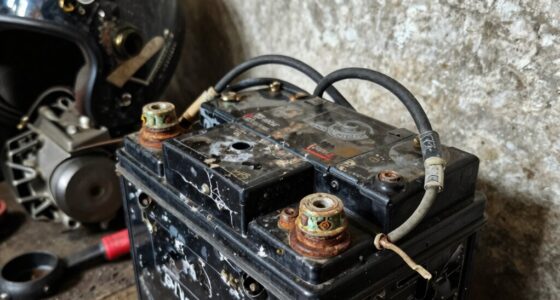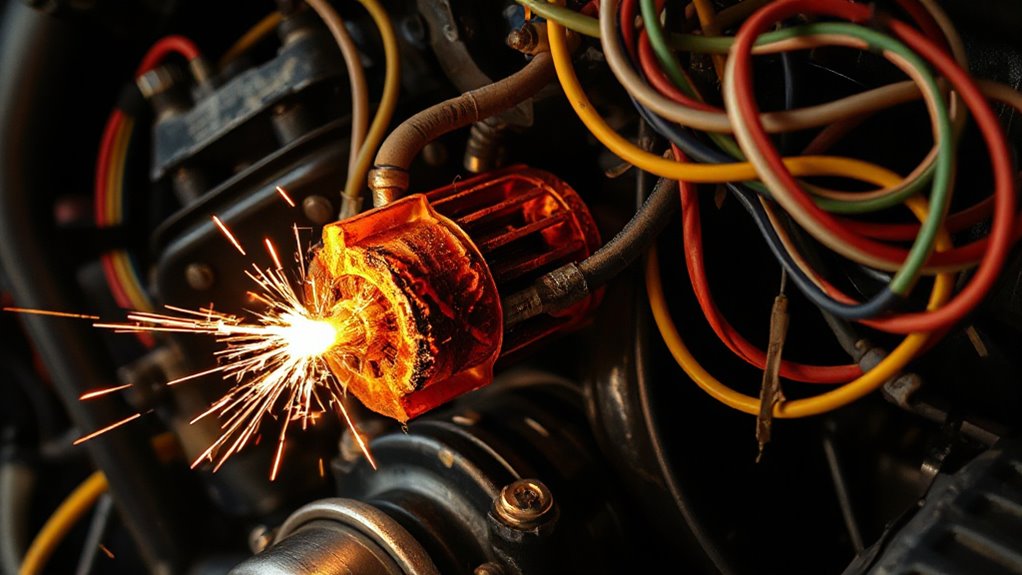

If your battery is overcharging, the likely culprit is a faulty voltage regulator or rectifier. To fix this, start by inspecting the connections and testing the alternator’s output with a multimeter—anything above 14.8 volts indicates a problem. Replacing a worn or malfunctioning regulator or rectifier usually restores proper voltage levels. Keep in mind, ensuring proper installation and professional diagnosis can prevent future issues—if you want to learn more, this guide covers key steps you should follow.

Get business pricing on garage and car supplies
- Business-only prices and quantity discounts
- Tax-exempt purchasing
- Multiple users, one account, clear invoices
Key Takeaways
- Test the alternator’s voltage output with a multimeter; it should be below 14.8 volts.
- Inspect and replace faulty or worn regulator/rectifier components to prevent overvoltage.
- Ensure all electrical connections are secure and correctly installed after repairs.
- Check for system irregularities or damage that could cause voltage regulation failure.
- Regularly monitor vehicle’s electrical system to catch overcharging early and maintain proper function.

Overcharging a battery might seem harmless, but it can lead to serious damage and safety hazards. When your vehicle’s charging system malfunctions, it often involves issues with the alternator or the regulator/rectifier. Proper alternator repair is vital because a faulty alternator can produce excessive voltage, which then causes overcharging. Voltage regulation is the key process that prevents this problem, guaranteeing your battery gets the right amount of charge without risking damage. If the voltage regulator isn’t functioning correctly, it might send too much current to the battery, leading to overcharging that can shorten the battery’s lifespan or even cause it to swell or leak.
You need to understand the significance of the regulator/rectifier component in your vehicle’s charging system. These parts work together to control and convert the electrical current produced by the alternator, maintaining a steady voltage level. When this system fails, your vehicle’s electrical components are at risk. Overcharging can generate excessive heat, which damages not only the battery but also other sensitive electronic parts. That’s why diagnosing and fixing issues related to alternator repair and voltage regulation should be your priority the moment you notice symptoms like dimming lights, battery warning lights, or a battery that’s quickly losing its charge.
To address overcharging, you must first verify whether the problem stems from the alternator or the regulator/rectifier. Testing the alternator output with a multimeter helps determine if it’s producing too high a voltage, usually above 14.8 volts in most vehicles. If the alternator is overachieving, then the regulator/rectifier might be faulty or worn out. Replacing these components isn’t overly complicated, but it requires some mechanical skill and proper tools. Guaranteeing a good connection and correct installation is vital, as a loose or improper connection can mimic signs of a malfunction. Once replaced or repaired, it’s important to test the system again to confirm that voltage regulation is now working correctly. Regular inspections and system diagnostics can help prevent overcharging issues before they become serious.
Keep in mind that regular maintenance and inspections can prevent overcharging issues. If you’re comfortable working with electrical systems, periodically checking your vehicle’s voltage output can save you from costly repairs later. Otherwise, seek professional help for alternator repair and voltage regulation adjustments. Ignoring overcharging problems can lead to a cascade of electrical failures, battery damage, or even safety hazards like fires. Addressing the root cause promptly guarantees your vehicle’s electrical system stays balanced, reliable, and safe for everyday driving. Proper diagnosis and timely repairs will safeguard your battery and keep your vehicle running smoothly without risking costly damage or dangerous situations.
Top picks for "overcharg battery regulator"
As an affiliate, we earn on qualifying purchases.
Frequently Asked Questions
Can Overcharging Damage My Motorcycle’s Electrical System Permanently?
Yes, overcharging can permanently damage your motorcycle’s electrical system. When your regulator/rectifier malfunctions, it can cause excess voltage, which harms your battery and other electrical components. To prevent this, you should regularly perform battery maintenance and electrical troubleshooting to catch issues early. Ignoring overcharging risks long-term damage, so addressing it promptly helps preserve your motorcycle’s electrical health and guarantees reliable performance.
How Do I Test if My Regulator/Rectifier Is Faulty?
You can test if your regulator/rectifier is faulty by using a multimeter to measure voltage. Start the engine and set your multimeter to DC voltage. Connect the probes to the battery terminals; a healthy regulator/rectifier should produce around 13.5-14.5 volts at higher RPMs. If the voltage is too high or too low, it indicates a problem. Regular voltage measurement helps identify if your regulator/rectifier needs replacement.
Is Overcharging Dangerous to My Battery’s Lifespan?
Yes, overcharging is dangerous to your battery’s lifespan because it accelerates battery degradation, making it lose capacity faster. It can also create safety hazards like overheating or even causing a fire. When your regulator or rectifier malfunctions, it sends too much voltage to the battery, so you should address this issue promptly to protect both your battery and your safety. Regular maintenance helps prevent long-term damage.
What Are the Signs of a Failing Regulator/Rectifier?
When your bike starts acting up, signs of a failing regulator/rectifier are clear as day. You’ll notice voltage spikes that send your electrical system on a wild ride, or your battery drain increases unexpectedly. It’s as if your bike’s power is playing tricks on you. Keep an eye out for dimming lights, weird electrical behavior, or difficulty starting—these clues point to a regulator/rectifier that’s lost its mojo.
Can I Fix a Regulator/Rectifier Myself or Need Professional Help?
You can attempt a DIY repair if you’re comfortable with electrical work and have the right tools, but for safety and reliability, professional replacement is often better. Fixing a regulator/rectifier yourself involves diagnosing, sourcing parts, and careful wiring—mistakes can cause further damage. If you’re unsure, it’s wise to seek professional help to guarantee the job’s done correctly and your bike stays safe.
Conclusion
Now that you’ve tackled the regulator and rectifier, your bike’s charging system is like a well-orchestrated symphony, humming smoothly instead of clashing chaos. Think of your battery as a delicate garden—when overcharged, it’s like watering it with too much rain, drowning the roots. But with your fixes, you’ve become the gardener, nurturing it back to health. Trust in your hands; a balanced charge keeps your ride vibrant and alive, ready to conquer every road ahead.
Fall Picks
fall essentials
As an affiliate, we earn on qualifying purchases.