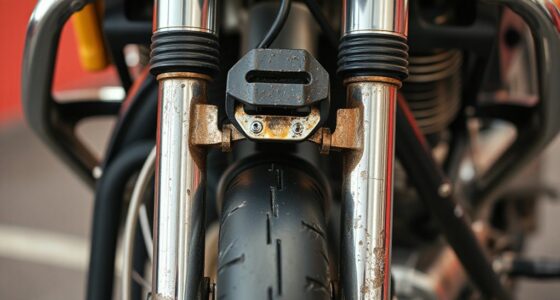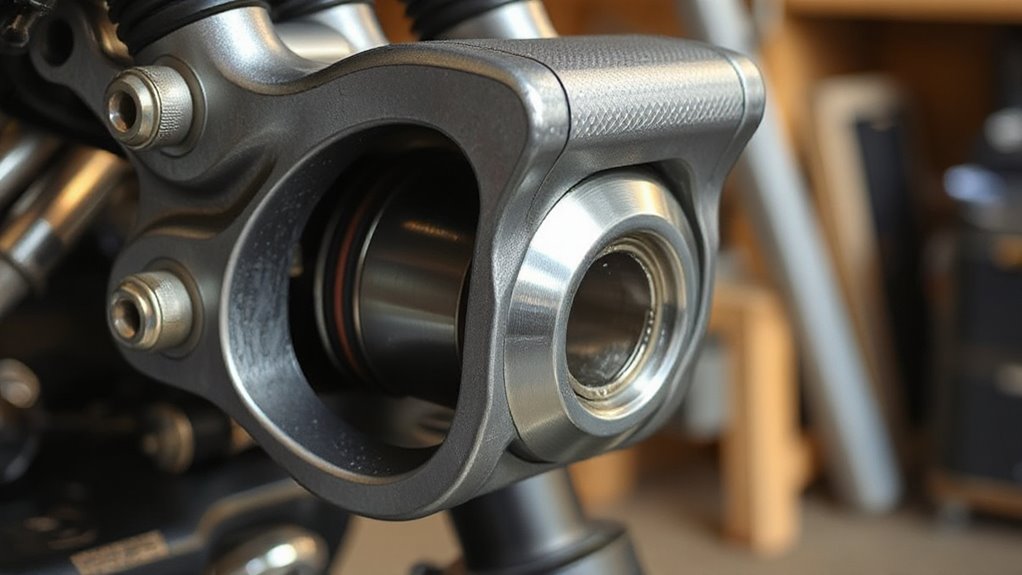

If you notice a clunking noise when turning or hitting bumps, your steering head may have loose or worn bearings. To diagnose this, lift the front wheel, grip the forks, and check for excessive side-to-side play or roughness. If you find any signs, you’ll need to disassemble the head, inspect, and replace the bearings as needed. Proper reassembly and alignment are crucial. Keep reading to discover detailed steps on fixing this common issue and ensuring safe handling.
Key Takeaways
- Lift the front wheel and check for excessive side-to-side or up-and-down play in the forks.
- Listen for grinding noises or feel roughness when manipulating the handlebars to identify bearing wear.
- Disassemble the steering head to inspect bearing condition, looking for wear, rust, or damage.
- Replace worn or damaged bearings with high-quality, correctly matched replacements, ensuring proper torque during reassembly.
- Regularly inspect and maintain steering components to prevent looseness, uneven load, and safety issues.
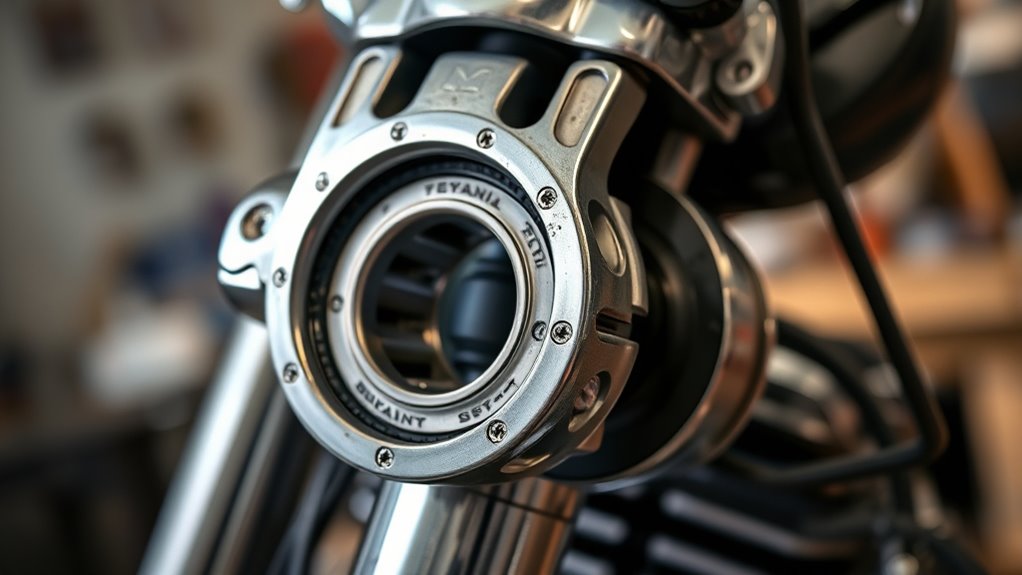
A steering head clunk is a common issue that can signal underlying problems with your motorcycle’s front suspension or steering components. If you notice this knocking sound when you turn the handlebars or go over bumps, it’s vital to diagnose the root cause quickly. Often, the problem lies in loose or worn steering bearings, which can cause instability and uneven steering response. One of the first things to check is the fork alignment. Misaligned forks can lead to uneven load distribution on the bearings, accelerating wear and contributing to the clunking noise. Proper fork alignment ensures smooth steering and reduces unnecessary stress on your front-end components.
Over time, bearing wear becomes a major factor behind steering head clunking. Bearings, especially if not regularly maintained or lubricated, can develop play or become rough. When bearings wear out, they lose their ability to support the steering head smoothly, leading to loose steering and the characteristic clunk. To diagnose this, lift your front wheel off the ground and grasp the front forks firmly. Move them side to side and up and down to feel for any excessive play or roughness. If you sense play or feel grinding, it’s a sign your bearings need attention. Worn bearings not only cause noise but can also compromise handling safety, especially at higher speeds or during sharp turns.
Fixing loose steering bearings involves a careful inspection and replacement. Start by disassembling the steering head, which may require removing the top triple clamp and carefully extracting the bearings. During this process, check the fork alignment to ensure everything is straight and aligned properly. Misalignment can sometimes be corrected without replacing parts but often indicates the need for a professional realignment. When replacing bearings, choose high-quality replacements suited for your motorcycle model. Proper installation is vital—if bearings are too tight or too loose, they can cause premature wear or continued steering issues. Use a torque wrench to tighten the bearing races evenly, avoiding uneven pressure that can cause additional problems.
Once installed, reassemble everything carefully, double-checking fork alignment and ensuring that the steering feels smooth with no play or noise. Regularly inspecting your steering bearings and maintaining proper fork alignment can save you from more serious issues down the line. Addressing bearing wear early keeps your motorcycle handling sharp and safe, preventing the annoying clunking sounds and potential steering failures. Remember, maintaining your front suspension isn’t just about comfort; it’s about safety and reliable performance every time you ride.

Fork Neck Steering Head Stem & Bearings Set for Dirt Pit Bike Motorcycle
Fits many pit bike dirt bike with Honda horizontal style motor from 50cc to 150cc. Brands like SDG,…
As an affiliate, we earn on qualifying purchases.
As an affiliate, we earn on qualifying purchases.
Frequently Asked Questions
Can Loose Bearings Cause Handling Issues Besides Clunking?
Yes, loose bearings can cause handling issues beyond just clunking. You might notice a vague or unstable feeling when steering, making it harder to control your bike. Loose bearings can also lead to uneven tire wear and misaligned wheels, which further impact handling. To keep your ride smooth and safe, it’s crucial to check your wheel alignment and address any bearing looseness promptly.
How Long Does a Typical Steering Head Bearing Repair Take?
A typical steering head bearing repair can feel like a race against time, usually taking around 2 to 4 hours. You’ll need specific tools like a bearing puller, a torque wrench, and possibly a press. The process involves bearing replacement, which can be straightforward or tricky depending on your bike model. Planning for a few hours guarantees you have enough time to do it right without rushing.
Are There Aftermarket Parts for Improved Steering Head Stability?
Yes, there are aftermarket upgrades for better steering head stability. You can find aftermarket parts like high-quality bearings, stiffer steering stems, and enhanced steering dampers that improve handling and reduce clunking. These steering enhancements are designed to provide a tighter, more responsive feel. Just make sure you select parts compatible with your bike model, and consider professional installation for maximum results and safety.
What Are the Risks of Ignoring a Steering Head Clunk?
Ignoring a steering head clunk risks worsening your bike’s handling, increasing wear on steering components, and causing dangerous instability. When you delay, steering fluid may leak or become contaminated, and misalignment can develop, making control even harder. Regularly check for looseness, perform alignment adjustments promptly, and address issues early to prevent costly repairs and ensure safe, smooth rides. Don’t compromise your safety—act quickly when you notice the clunk.
How Often Should Steering Head Bearings Be Inspected?
You should inspect your steering head bearings at least every 5,000 to 7,500 miles or during your regular maintenance schedule. Use inspection techniques like checking for play or roughness in the steering, feeling for looseness, and listening for any unusual noises. Regular inspections help catch issues early, preventing dangerous steering problems and ensuring smooth handling. Don’t wait until you notice a clunk—stay proactive with your maintenance.

BIGLKNM Steering Stem Bearing Seal Kit Fit for Dyna Low Rider Road Glide Road King Softail Sportster OEM#48300-60 48315-60
Fitment: These bearing seal kit fit for most Harley models, 1991-2016 Dyna; 1985-2016 Softail; 1988-2009 Softail Springer; 2001-2016…
As an affiliate, we earn on qualifying purchases.
As an affiliate, we earn on qualifying purchases.
Conclusion
A steering head clunk is like a loose bolt in a finely tuned orchestra—if left unchecked, it can throw the whole symphony off balance. By diagnosing the issue early and tightening those bearings, you bring harmony back to your ride. Think of it as tuning your bike’s heartbeat, ensuring every turn and bump feels smooth and confident. Don’t let a small clunk turn into a costly repair—take action and keep your journey steady as a steady drumbeat.

Motion Pro 08-0412 Fork Alignment Tool
Reduces stiction and improves the performance of your front suspension
As an affiliate, we earn on qualifying purchases.
As an affiliate, we earn on qualifying purchases.

Neiko 03727A 1/4-Inch-Drive Beam Torque Wrench, SAE and MM Bicycle and Automotive Wrench, Reads in 0–80 Inches/Pounds and 0–9 Newton/Meter Increments
HIGH-PRECISION TORQUE WRENCH: With a dual measurement system, our inch-and-pound torque wrench offers precise readings in standard (SAE)…
As an affiliate, we earn on qualifying purchases.
As an affiliate, we earn on qualifying purchases.