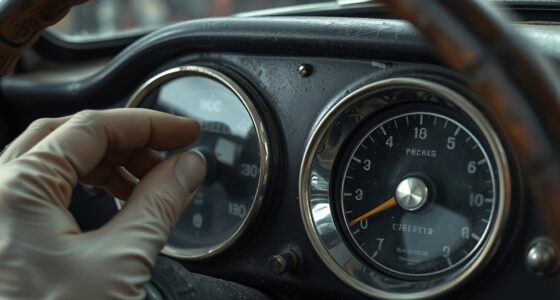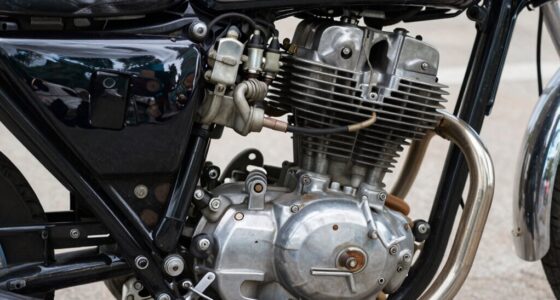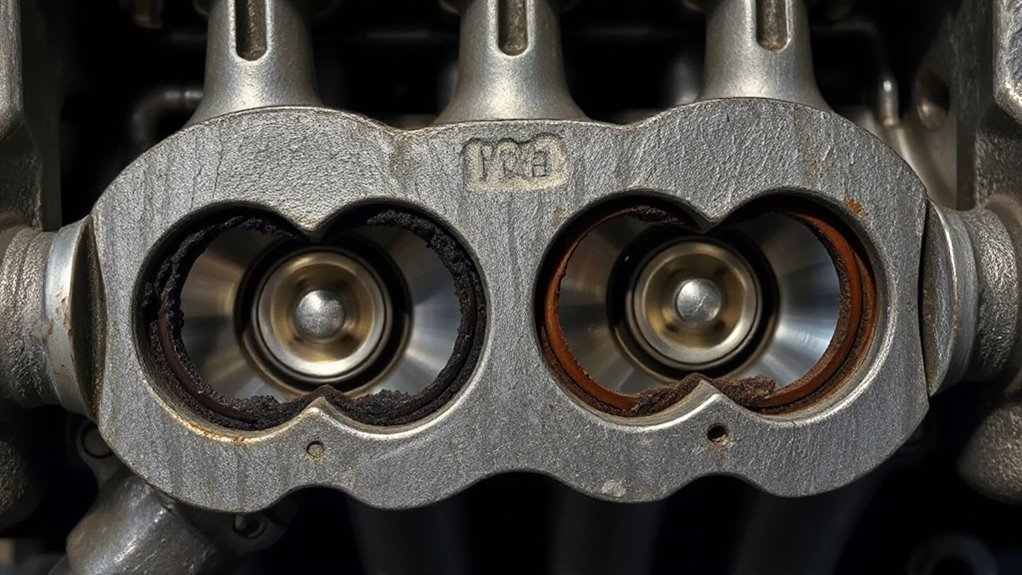
To diagnose worn piston rings or valves causing low compression, start with a compression test to measure cylinder pressure. If readings are low across all cylinders, worn piston rings are likely the cause; if only specific cylinders show low pressure, valve seals may be to blame. You can also check for signs like oil consumption or smoke. Continuing further will help you understand how to pinpoint and fix these issues effectively.
Key Takeaways
- Conduct a compression test to compare pressure readings across cylinders; low uniform readings suggest piston ring wear.
- Identify specific cylinders with low pressure to determine if valve seals or piston rings are faulty.
- Check for oil fouling on spark plugs and blue exhaust smoke as signs of worn piston rings or leaking valve seals.
- Listen for irregular engine performance or rough idling, indicating possible sealing issues.
- Use diagnostic tools, like leak-down tests, to pinpoint whether leaks originate from piston rings or valves.
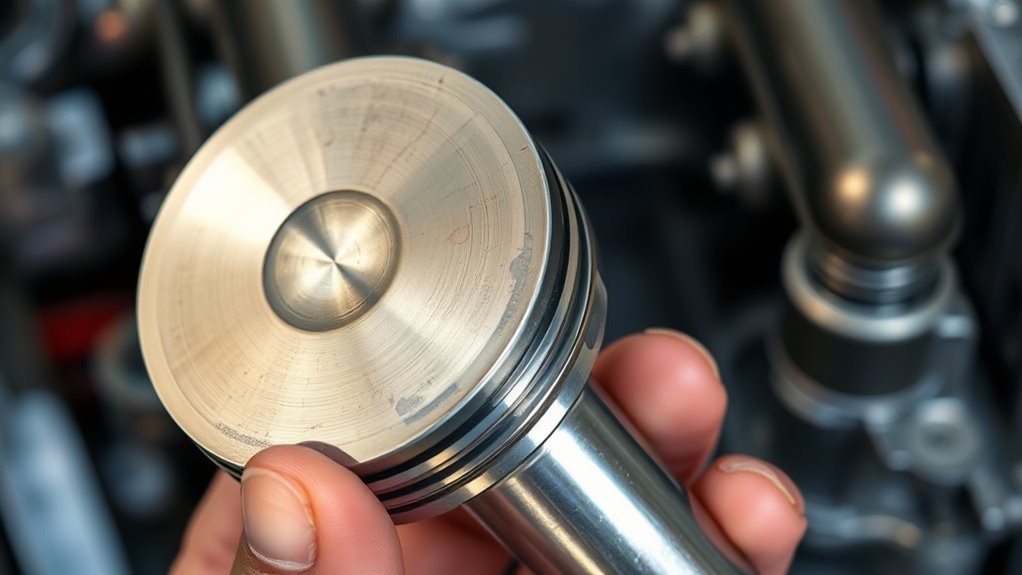
Low compression occurs when an engine’s cylinders fail to generate the expected pressure during the intake and combustion processes. When this happens, your engine struggles to produce the power it should, leading to rough idling, difficulty starting, and reduced overall performance. The root causes often involve worn piston rings or valve seal issues, and understanding how these contribute can help you diagnose and address the problem effectively. Piston ring wear is a common culprit behind low compression. Piston rings seal the combustion chamber, preventing gases from escaping and ensuring proper pressure build-up during the compression stroke. Over time, these rings can become scratched, cracked, or worn down due to constant friction and heat. When piston rings lose their sealing ability, combustion gases leak past them into the crankcase, reducing the pressure inside the cylinder. This not only diminishes power output but can also cause increased oil consumption and smoke from the exhaust. If you notice a drop in engine performance or a rise in oil consumption, worn piston rings may be the cause. Conducting a compression test can confirm low cylinder pressure, pointing toward piston ring wear as a likely issue. Valve seal issues also play a notably role in low compression. Valve seals prevent oil from leaking into the combustion chamber through the intake and exhaust valves. If these seals deteriorate or become damaged, oil can seep into the cylinders during the intake stroke. This contamination causes incomplete combustion, leading to lower pressure levels and misfires. Additionally, worn valve seals can result in oil fouling on spark plugs, further impairing engine performance. During a compression test, if one or more cylinders show considerably lower pressure readings, and you notice bluish smoke from the exhaust, valve seal problems might be contributing to the issue. Replacing or repairing valve seals can restore proper sealing and improve compression levels. Both piston ring wear and valve seal issues require timely diagnosis to prevent further engine damage. You can start by performing a compression test, which provides a clear picture of your engine’s pressure levels. If the readings are low across all cylinders, piston ring wear could be the primary concern. If only specific cylinders show low pressure, or if you observe oil consumption and oil smoke, suspect valve seal problems. Addressing these issues typically involves either replacing piston rings or valve seals, depending on the root cause. Recognizing the signs early allows you to plan repairs before more serious damage occurs, ensuring your engine runs smoothly and efficiently. Regular maintenance and inspections can help catch these problems early before they lead to more costly repairs.
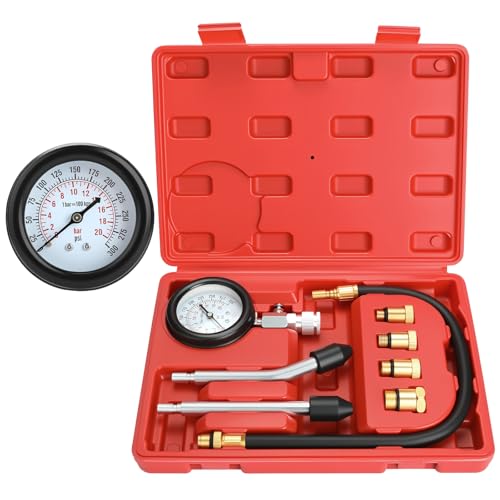
BETOOLL HW0130 8pcs Petrol Engine Cylinder Compression Tester Kit Automotive Tool Gauge
Checking Compression On Petrol Engine Quickly And Accurately
As an affiliate, we earn on qualifying purchases.
As an affiliate, we earn on qualifying purchases.
Frequently Asked Questions
Can Low Compression Cause Engine Overheating?
Yes, low compression can lead to engine overheating. When compression drops, your engine struggles to operate efficiently, which can cause the coolant leak to worsen, reducing cooling effectiveness. A worn timing belt might also disrupt proper engine timing, increasing the risk of overheating. Addressing low compression early helps prevent further damage, including overheating, by maintaining proper compression, coolant flow, and timing in your engine.
How Does Low Compression Affect Fuel Efficiency?
You’ll notice your fuel efficiency drops markedly when your engine has low compression—up to 15% less fuel economy. This happens because your engine’s performance suffers, making it work harder to generate power. Low compression means incomplete combustion, which increases fuel consumption and reduces overall efficiency. As a result, your vehicle burns more fuel for less performance, costing you more at the pump and stressing your engine’s longevity.
Are There Temporary Fixes for Low Compression?
Yes, there are temporary fixes for low compression. You can try engine sealing products, like compression sealers or additives, which temporarily improve the seal around piston rings and valves. These products can boost compression and restore some engine performance. However, keep in mind that these are short-term solutions; for a permanent fix, you’ll need to repair or replace the worn components.
What Tools Are Best for Measuring Compression?
You need a reliable compression testing tool to get accurate results, so choose a high-quality compression gauge. Look for one with a clear, easy-to-read dial and a sturdy hose connection to guarantee gauge accuracy. When you attach it to the spark plug hole and crank the engine, you’ll uncover the truth behind low compression. Be precise, and watch your diagnosis become clear – the right tool makes all the difference.
Is Low Compression Always Due to Piston Rings or Valves?
Low compression isn’t always caused by piston wear or valve leakage. Other factors, like a blown head gasket, damaged piston crowns, or carbon buildup, can also reduce compression. You should perform detailed tests, including a compression test and leak-down test, to identify the root cause. Keep in mind that worn piston rings or leaky valves are common issues, but a thorough diagnosis ensures you address the real problem effectively.

ePathChina 3inch Car Engine Piston Ring Compressor Tool Piston Installer Plier with Wrench and Feeler Gauge, Adjustable Sizes From 2-1/8 Inches To 7 Inches, Piston Ring Installer Removal Kit
This package includes a piston ring compressor, a piston ring pliers, a stainless steel feeler gauge and a…
As an affiliate, we earn on qualifying purchases.
As an affiliate, we earn on qualifying purchases.
Conclusion
So, if you’re noticing low compression, it’s time to roll up your sleeves and diagnose those piston rings or valves. Don’t forget, even Sherlock needed his magnifying glass to crack the case! With a bit of patience and proper testing, you’ll pinpoint the culprit and get your engine roaring like a vintage hot rod. Remember, ignoring these signs could turn your trusty ride into a real “horse of a different color.” Happy troubleshooting!

Fluidmaster K-400A-023 Mansfield Toilet Fill Valve and Flush Valve Seal Repair Kit
Quickly repair your toilet’s fill and eliminate leaks on your Mansfield toilet
As an affiliate, we earn on qualifying purchases.
As an affiliate, we earn on qualifying purchases.

Marvelity Cylinder Leak Down Tester Kit, Automotive Engine Compression Leakage Test Kit with Extension Rod, Multi-Function for Gasoline Engines, Pressure Check & Leakage Rate Test on Cars, Motorcycles
Dual-gauge design: Clear dial with highly readable markings directly displays pressure and leak rate, with measurement ranges of…
As an affiliate, we earn on qualifying purchases.
As an affiliate, we earn on qualifying purchases.