
If your classic bike hesitates on throttle, it’s often due to carburetor issues, worn spark plugs, or clogged filters. Misadjusted air-fuel mixtures or dirty components can cause poor acceleration and engine bogging. Make sure your carburetor is properly tuned, your spark plugs are clean and in good condition, and filters aren’t blocked. Addressing these common causes can restore smooth throttle response, and if you continue, you’ll discover additional tips to get your bike running perfectly.
Key Takeaways
- An out-of-adjustment or dirty carburetor can cause an improper air-fuel mixture, leading to hesitation during acceleration.
- Worn or fouled spark plugs impair ignition, resulting in misfires and sluggish throttle response.
- Clogged air filters or contaminated fuel restrict airflow and fuel delivery, causing bogging when accelerating.
- Incorrect or worn-out spark plug heat ranges can hinder proper combustion, affecting throttle smoothness.
- Lack of regular maintenance and calibration can lead to component misalignment, causing acceleration hesitation.
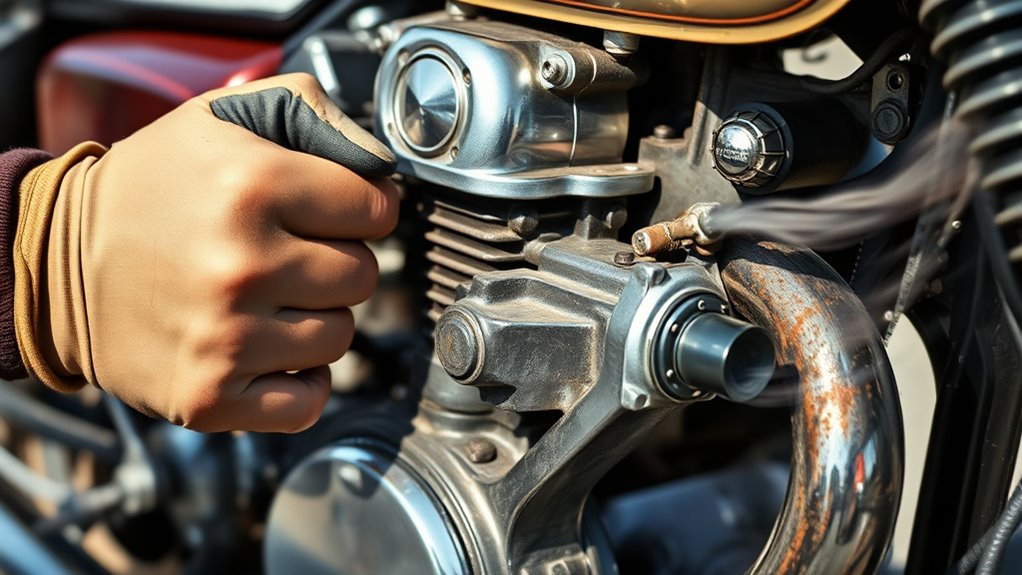
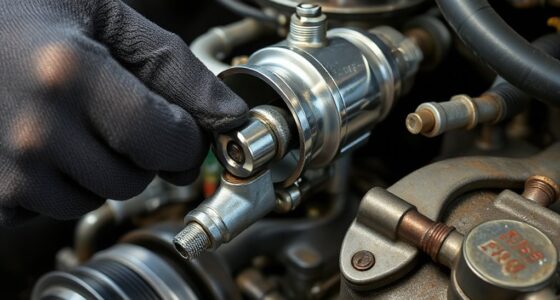
Have you ever pressed the gas pedal and felt your vehicle hesitate or struggle to accelerate smoothly? If so, you’re not alone. This common issue, often called “bogging,” can stem from several underlying causes, especially in classic bikes. One key area to examine is your carburetor tuning. Over time, the carburetor can become out of sync, leading to an improper air-fuel mixture. When it’s not tuned correctly, your engine might struggle to get the right amount of fuel during acceleration, causing that bogging sensation. Adjusting the carburetor involves fine-tuning the idle mixture screws and ensuring the jets are clean and properly seated. If you’re unfamiliar with carburetor tuning, it’s worth consulting a manual or a professional mechanic, because even small adjustments can markedly improve throttle response.
Another critical factor to think about is the spark plug condition. A worn or fouled spark plug can hinder proper ignition, causing misfires or weak combustion. When the spark plug isn’t firing correctly, your engine won’t generate enough power to accelerate smoothly, resulting in hesitation or bogging. Regularly inspecting your spark plugs for signs of wear, such as carbon build-up or worn electrodes, is essential. Replacing old or fouled spark plugs with new ones often restores proper ignition and helps eliminate acceleration issues. Keep in mind that spark plugs come in different heat ranges, so selecting the correct type for your bike’s engine guarantees peak performance.
A fouled or worn spark plug can cause misfires and hesitation during acceleration.
Beyond these specific components, other factors like clogged air filters or fuel lines can also contribute to bogging. A dirty air filter restricts airflow, throwing off your carburetor’s air-fuel mix, which can cause hesitation. Similarly, old or contaminated fuel can lead to poor combustion, making acceleration sluggish. Addressing these issues by cleaning or replacing filters and ensuring fresh fuel can make a noticeable difference. Additionally, proper carburetor calibration is essential for optimal engine performance and responsiveness.
Ultimately, diagnosing bogging on acceleration involves a systematic approach. Start by checking your carburetor tuning and spark plug condition, as these are often the root causes. If adjusting the carburetor and replacing spark plugs doesn’t resolve the problem, move on to inspecting filters and fuel quality. Keeping these components in top shape ensures your classic bike runs smoothly and responds crisply to throttle inputs. Regular maintenance and attention to detail will help prevent bogging, allowing you to enjoy a reliable and responsive ride every time you twist the throttle.

Alltooetools Universal Vacuum Carburetor Synchronization Balancer Gauge Carb Synchronizer Adjustment Tool Kit Compatible with Motorcycle BMW Honda Yamaha Kawasaki Suzuki GS KZ XS CB 550 650 750
【Applicable】This Alltooetools vacuum carburetor synchronization balancer gauge carb synchronizer adjustment tool kit is designed for Gs Kz 550…
As an affiliate, we earn on qualifying purchases.
As an affiliate, we earn on qualifying purchases.
Frequently Asked Questions
Can Fuel Additives Help Prevent Bogging Issues?
Fuel additives can help improve fuel quality, but their effectiveness in preventing bogging issues varies. If you choose a reputable additive, it might clean your carburetor and improve combustion, reducing hesitation. However, additives aren’t a guaranteed fix. You should focus on high-quality fuel and proper maintenance first. If problems persist, checking your carburetor and fuel system is more reliable than solely relying on additives.
How Does Carburetor Tuning Affect Throttle Response?
Carburetor adjustment directly impacts your bike’s throttle response by fine-tuning the air-fuel mixture. When you properly set the idle speed and mixture screws, you’ll notice improved throttle sensitivity, making acceleration smoother and more responsive. If the carburetor isn’t tuned correctly, your bike may hesitate or bog down when you twist the throttle. Regular adjustments help maintain peak performance, ensuring your classic bike responds promptly to every throttle input.
Is It Safe to Ride With a Bogging Engine?
Think of your engine as a delicate dance partner—if it stumbles, safety’s at risk. Riding with a bogging engine isn’t safe because it indicates underlying issues needing engine diagnosis. Ignoring the problem can lead to further damage or sudden stalls. Always prioritize safety precautions by stopping and inspecting your bike before riding. Address the bogging promptly to guarantee smooth, reliable performance and avoid potential accidents.
What Are the Signs of a Failing Ignition System?
You’ll notice a failing ignition system when your bike misfires, stalls unexpectedly, or has difficulty starting. Check the spark plug for signs of wear or carbon buildup, and test the ignition coil for cracks or weak sparks. If the spark is weak or inconsistent, it suggests a problem. Regular maintenance guarantees your spark plug and ignition coil are functioning properly, preventing hesitation and rough running.
How Often Should I Perform Maintenance to Avoid Bogging?
You should perform regular maintenance every 1,000 to 2,000 miles to prevent bogging. Keep a close eye on your fuel system, ensuring no clogs or leaks, and replace the air filter before it becomes clogged. Don’t wait for performance issues to appear—regular checks can reveal hidden problems. Staying proactive means your bike runs smoothly, avoiding those nerve-wracking moments when throttle response suddenly drops.

E3 Spark Plugs E3.36 Premium Powersports Spark Plug for V-Twin Motorcycles, Harley Davidson Engines, and Other High-Performance Powersport Vehicles, Pack of 1
UNIVERSAL FIT: The E3.36 spark plug is designed to fit a wide range of powersport applications, including V-Twin…
As an affiliate, we earn on qualifying purchases.
As an affiliate, we earn on qualifying purchases.
Conclusion
So, next time your classic bike stumbles just when you twist the throttle, remember—it’s probably not the engine’s way of saying hello. Instead of panicking, enjoy the irony that your beloved ride’s hesitation might just be a sign it’s begging for a little love, tuning, or a simple adjustment. After all, what’s more classic than a bike that’s just a bit too characterful? Embrace the quirks—your bike’s attitude might surprise you.

MUYI 2-Piece Pack 1.97inches Motorcycle Air Filters Round Tapered Clamp-on Pod Intake Filter Cleaner for Dirt Bike ATV Moped Pit Bike Scooter Vintage Black(Dia 50mm)
Package include – 4 pcs 50mm air filters (1.97 inches)
As an affiliate, we earn on qualifying purchases.
As an affiliate, we earn on qualifying purchases.
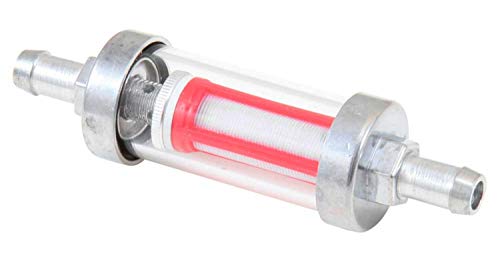
K&N 81-0300 Replacement Fuel Filter
Replaceable inner filter element design
As an affiliate, we earn on qualifying purchases.
As an affiliate, we earn on qualifying purchases.