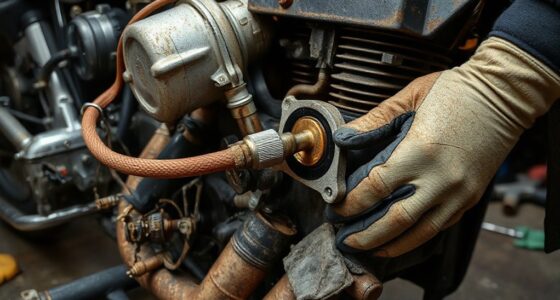
If your vintage motorcycle has weak brakes, start by inspecting the brake components for wear, corrosion, or damage. Check the hydraulic system for contaminated or moisture-laden brake fluid, and consider rebuilding or replacing calipers, pistons, and seals. Upgrading to braided steel lines and ensuring proper adjustment can greatly boost stopping power. Regular maintenance is key, and if issues persist, there are more advanced fixes that could revitalize your bike’s braking performance.
Key Takeaways
- Inspect brake components for wear, glazing, or corrosion, and replace damaged parts as needed.
- Check and replace old, contaminated brake fluid to restore hydraulic pressure.
- Examine brake lines for swelling or leaks; upgrade to braided steel lines for better responsiveness.
- Adjust brake shoes or pads for proper contact and clearance with drums or discs.
- Rebuild or refurbish calipers, pistons, and seals to eliminate sticking and improve braking efficiency.

Motorcycle Brake Master Cylinder Rebuild Kit for Yamaha XS1100L:Midnight Special 1981
Brakecrafters is a leader in motorcycle braking products, and we include only top quality components in our kits….
As an affiliate, we earn on qualifying purchases.
As an affiliate, we earn on qualifying purchases.
Common Causes of Weak Brakes in Vintage Motorcycles
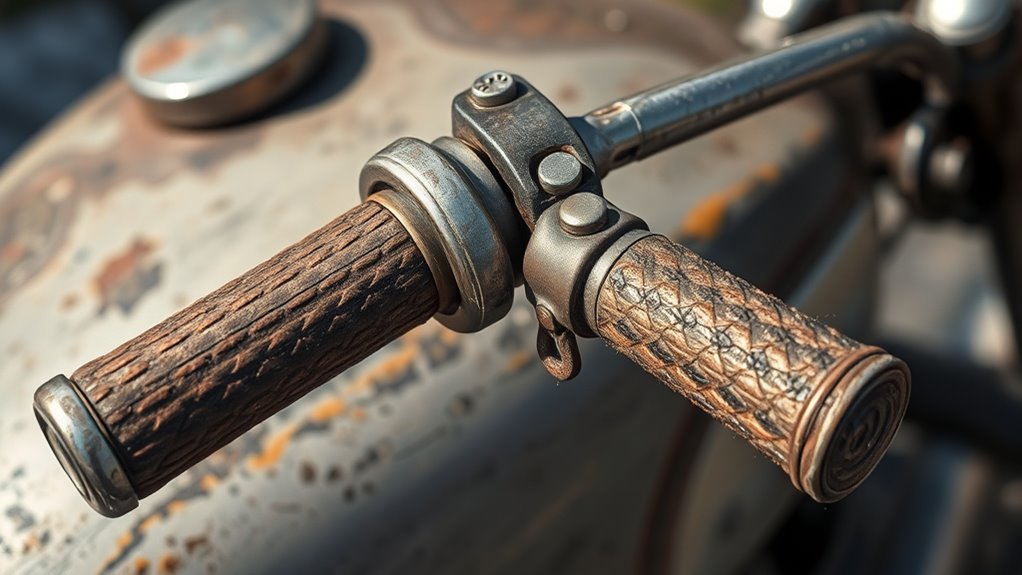
Weak brakes on vintage motorcycles often stem from a combination of aging components and lack of proper maintenance. Over time, brake fluid absorbs moisture, leading to corrosion inside master cylinders and calipers, reducing hydraulic efficiency. Worn or hardened brake seals and pistons cause sticking calipers, which decrease clamping force. Rusted or pitted caliper pistons hinder smooth movement, lowering braking effectiveness. Old rubber brake lines swell, become brittle, and create a spongy feel, compromising pressure delivery. Additionally, brake shoes or pads can wear beyond their limits, diminishing friction needed for effective stopping, especially in drum brake systems. These issues compound, resulting in weak braking performance. Addressing these causes involves thorough inspection, replacing worn parts, and maintaining proper fluid conditions to restore safety and confidence on your vintage motorcycle.

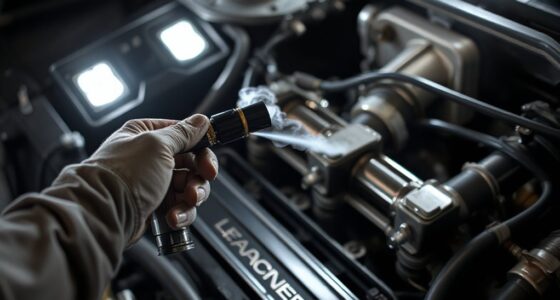
FSTURIOS Brake Fluid Liquid Tester Pen, DOT 3 DOT 4 DOT 5.1 Brake Fluid Diagnostic Testing Pen, Vehicle High-Precision Hydraulic Liquid Oil Moisture Analyzer with 5 LED Indicators
Enhancing Safety: Brake fluid may lose its braking performance and affect driving safety after absorbing water. This tester…
As an affiliate, we earn on qualifying purchases.
As an affiliate, we earn on qualifying purchases.
Diagnosing Drum Brake Performance Issues
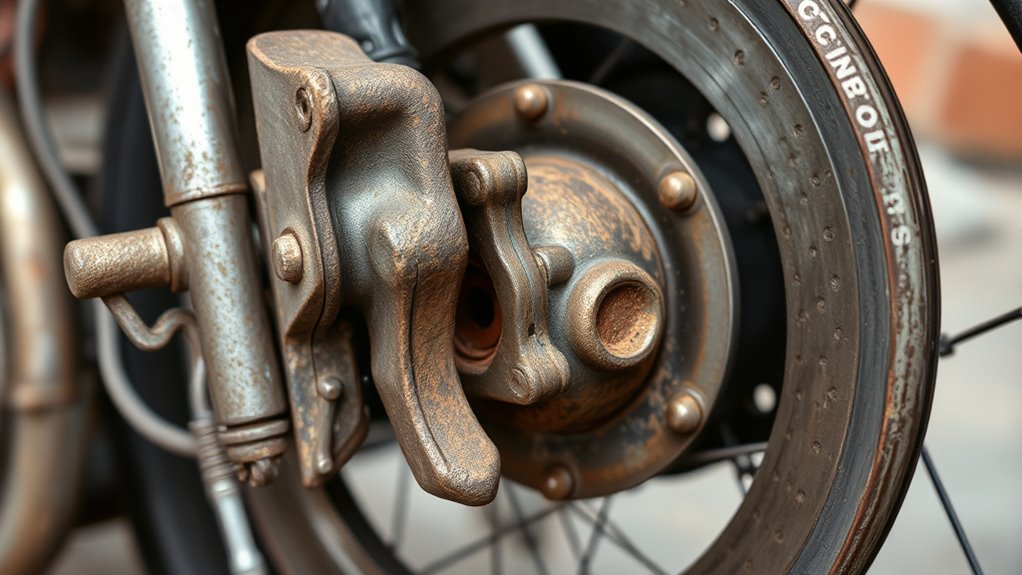
Diagnosing drum brake performance issues requires a systematic approach to identify the root cause of reduced stopping power. Start by inspecting the brake shoes for wear or glazing, as worn or hardened shoes can’t generate enough friction. Check the drum surface for scoring, warping, or corrosion, which can impair contact and cause uneven braking. Ensure the brake linkage, springs, and adjustment mechanisms move freely; seized or misaligned components weaken application. Adjust the brake shoes for proper contact and clearance, as misadjustment reduces force transmission. Examine the brake assembly for corrosion or debris that could hinder movement. Confirm the condition of the brake lever or cable for slack or damage. Additionally, the contrast ratio of the braking system can influence how effectively the brake components perform under different conditions. It’s also helpful to verify that the brake fluid is at the correct level and free of contamination, as fluid issues can impair hydraulic performance. Properly lubricating brake components can prevent sticking and ensure smooth operation. Regular inspection and maintenance of the entire brake system can reveal hidden issues that might otherwise go unnoticed. By methodically evaluating these areas, you can pinpoint issues hampering your vintage drum brake’s performance.

Stainless Braided Steel Brake Line – Motorcycle Brake Hose, Clutch Line – Pack of 1, Flexible 60cm/23.6" Silver
[Braided Brake Line Durable]: The brake steel hose produced by QDJUNE consists of a three-layer structure, with a…
As an affiliate, we earn on qualifying purchases.
As an affiliate, we earn on qualifying purchases.
Addressing Hydraulic System Problems and Rebuild Strategies
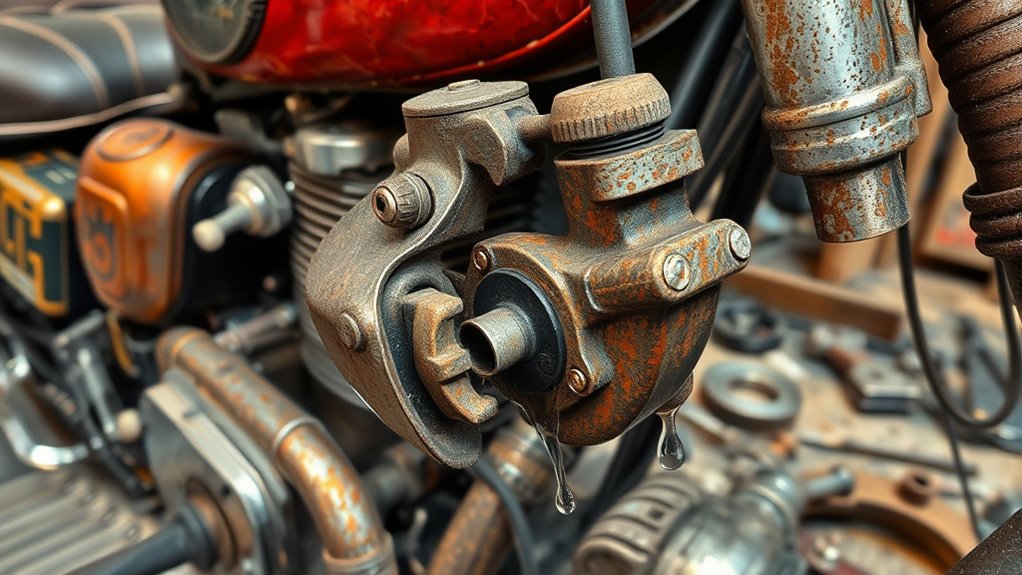
To restore your vintage motorcycle’s hydraulic brakes, start by inspecting the brake fluid for contamination or moisture. Rebuilding the system involves cleaning and replacing seals, and upgrading to braided steel lines can markedly improve pressure and feel. Regularly maintaining and bleeding the hydraulic system ensures consistent, reliable stopping power.
Brake Fluid Maintenance
Maintaining proper brake fluid is essential for ensuring your vintage motorcycle’s hydraulic system performs reliably. Over time, brake fluid absorbs moisture, which can cause corrosion inside the master cylinder, calipers, and lines, leading to reduced pressure and spongy brakes. Regularly check fluid levels and inspect the fluid’s color—dark or cloudy fluid indicates it’s time for a change. Replace old fluid with fresh, manufacturer-recommended DOT types, and avoid mixing different fluids. Flushing the system thoroughly removes contaminants and air, restoring proper pressure. Using high-quality, sealed brake fluid prevents moisture ingress and maintains brake performance. Understanding hydraulic systems can help you better troubleshoot and maintain your motorcycle’s braking performance. Consistent maintenance of brake fluid is a simple yet critical step in preventing hydraulic issues and ensuring your vintage bike stops safely and effectively. Proper fluid replacement also extends the lifespan of your braking components and enhances stopping power.
Hydraulic System Restoration
Over time, the hydraulic components of your vintage motorcycle’s brake system can develop corrosion, leaks, and internal contamination that severely diminish braking efficiency. To restore performance, start by disassembling the master cylinder and calipers. Clean all parts thoroughly to remove rust, debris, and old brake fluid residues. Replace worn or damaged seals and pistons with OEM or high-quality aftermarket parts. Consider installing braided steel brake lines to replace aging rubber hoses, which improves pressure consistency and lever feel. Properly bleed the system to remove air, ensuring firm, responsive brakes. If corrosion or internal damage is extensive, rebuilding or replacing the master cylinder and calipers may be necessary. Regular maintenance and careful rebuilds can restore hydraulic efficiency and markedly enhance your vintage motorcycle’s stopping power. Additionally, inspecting Free Floating components can prevent uneven wear and ensure smooth operation of the hydraulic system.

Raguso Brake Caliper Piston Repair Kit Motorcycle Brake Piston Removal Set 12 Adapters Lasting Performance Motorcycle Brake Piston Removal Tool for Motorcycle
As an affiliate, we earn on qualifying purchases.
As an affiliate, we earn on qualifying purchases.
Assessing and Replacing Worn Brake Components
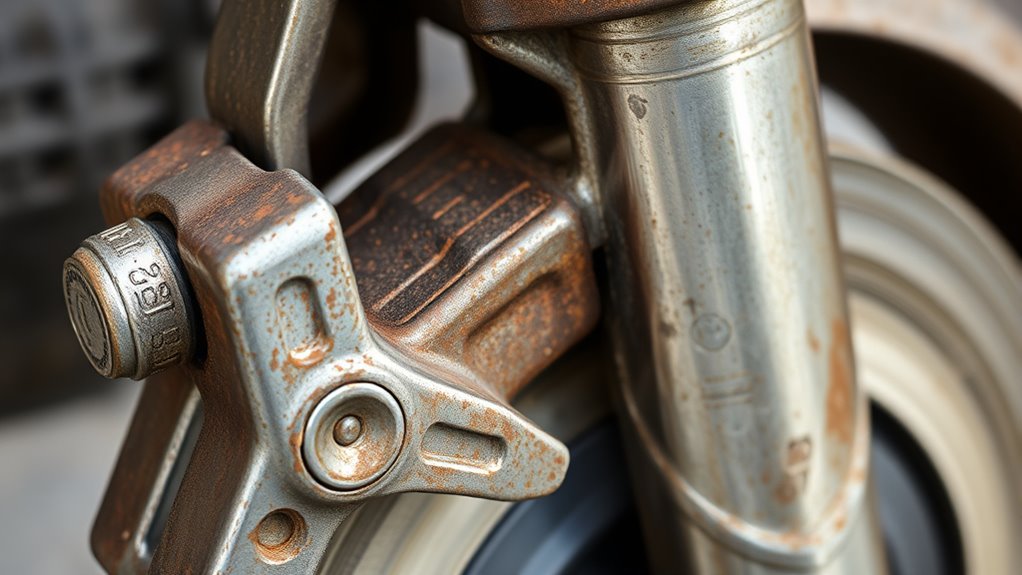
Evaluating and replacing worn brake components is a crucial step in restoring your vintage motorcycle’s stopping power. Start by inspecting your brake shoes or pads; if they’re thin, cracked, or glazed, replace them with suitable modern or reproduction parts. Check the brake drums or discs for scoring, warping, or excessive wear—machining or replacing may be necessary. Examine calipers, pistons, and seals for corrosion, sticking, or leaks; replace worn seals and pistons to ensure proper pressure. Inspect brake lines for cracks, swelling, or leaks, and upgrade to braided steel lines if needed. Adjust brake shoes or pads to eliminate slack and improve contact. Regularly replacing worn components ensures your braking system functions efficiently and restores stopping power to your vintage motorcycle. Proper maintenance of brake components not only improves safety but also prolongs the lifespan of your braking system, making regular inspections an essential part of your motorcycle care routine. For optimal performance, consider the condition of your brake fluid and replace it periodically to prevent moisture buildup and corrosion within the system.
Upgrading Old Brake Lines and Calipers for Better Stopping Power
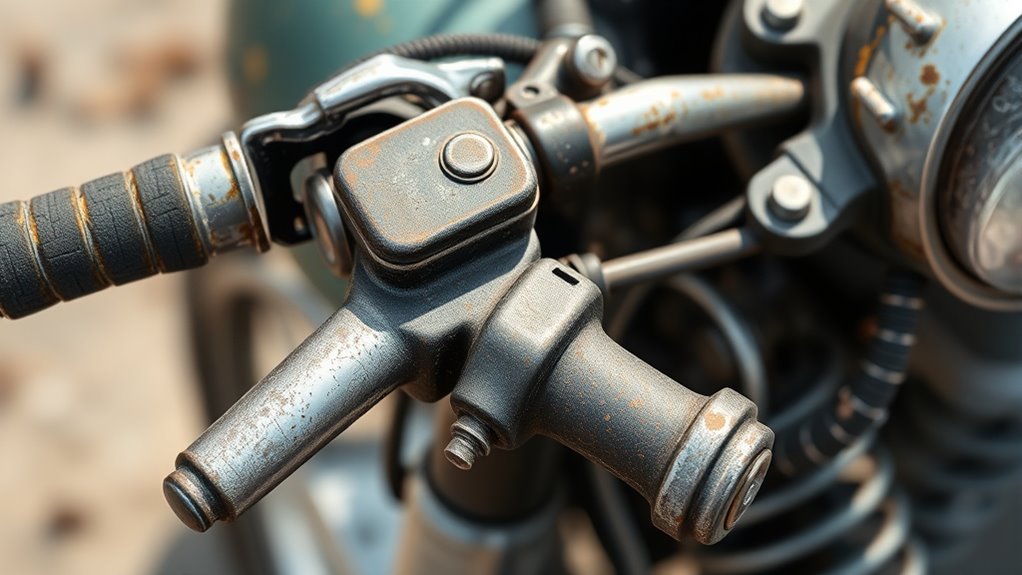
Upgrading your brake lines with modern stainless steel or braided hoses can ensure improved brake feel and responsiveness. Restoring or replacing calipers using proper techniques guarantees even pressure and better leverage on the pads. These upgrades make a noticeable difference in stopping power, especially on vintage bikes with outdated components. Incorporating innovative European cloud servers into your maintenance data management can help track and optimize your brake system upgrades for better performance. Additionally, ensuring proper brake fluid compatibility is essential for maintaining braking efficiency and avoiding corrosion or seal damage. Regularly inspecting and maintaining brake components can further prolong their lifespan and ensure consistent stopping performance, while understanding hydraulic system principles can help diagnose and address common issues effectively. Proper brake system maintenance is also crucial to maintain the integrity of all components and prevent future failures.
Modern Brake Line Materials
Replacing old brake lines with modern materials can substantially improve your vintage motorcycle’s stopping power. Traditional rubber lines degrade over time, swell under pressure, and trap moisture that leads to corrosion. Upgrading to stainless steel braided brake lines offers a significant boost in responsiveness and pressure consistency. These lines are resistant to expansion, ensuring your brake lever feels firm and direct. They also resist corrosion and swelling, maintaining performance longer. Modern brake line materials often feature a PTFE inner lining, reducing friction and allowing for smoother fluid flow. This combination enhances braking efficiency and reduces fade during prolonged use. Installing these lines is straightforward and requires minimal tools, but the impact on stopping power is profound, making your vintage bike safer and more responsive on the road. Additionally, choosing high-quality lines can help prevent expansion and swelling, ensuring safer and more reliable braking performance over time. Using advanced materials can further extend the lifespan and performance of your brake system.
Caliper Restoration Techniques
Restoring old calipers is essential for improving your vintage motorcycle’s braking performance, especially when upgrading brake lines. Start by disassembling the caliper and inspecting all parts for corrosion, pitting, or wear. Clean pistons and bores thoroughly using brake cleaner and a soft brush, removing any brake dust and debris. Replace worn or damaged seals and dust boots with high-quality OEM or aftermarket kits to ensure proper sealing and piston movement. If pistons are corroded or scored, consider sourcing new or refurbished ones. Lubricate sliding pins with high-temperature brake grease to prevent sticking. Reassemble the caliper carefully, ensuring all parts fit correctly. Finally, bleed the hydraulic system to remove air, restoring consistent pressure and improved stopping power. Additionally, maintaining brake system components is crucial for optimal safety and performance.
Maintenance Tips to Restore and Improve Braking Efficiency

Maintaining your vintage motorcycle’s brakes is essential for ensuring reliable stopping power, especially since many older systems can degrade over time. Start by regularly changing the brake fluid to prevent moisture buildup and corrosion, which can weaken hydraulic components. Replace old rubber brake lines with stainless steel braided hoses to improve responsiveness and reduce swelling. Clean and lubricate caliper slide pins and pistons to prevent sticking and uneven brake application. Check and adjust drum brake shoes, springs, and levers to ensure proper mechanical contact and force distribution. If your brakes remain weak, consider upgrading to modern parts, like multi-piston calipers or disc brake conversions, where possible. These steps help restore braking efficiency, making your vintage motorcycle safer and more reliable on the road. Proper brake maintenance significantly extends the lifespan of your braking system components and enhances overall safety. Regular inspection and timely repairs are vital to maintain optimal stopping power and prevent potential accidents. Additionally, understanding the security zone info for your motorcycle storage can help prevent theft or vandalism when parked.
Frequently Asked Questions
Can I Upgrade My Vintage Motorcycle’s Brake System to Modern Disc Brakes?
Yes, you can upgrade your vintage motorcycle’s brake system to modern disc brakes. You’ll need to find compatible disc brake kits designed for your bike’s model or customize mounting brackets. Upgrading involves replacing the wheel hub, caliper, and brake lever, and possibly adjusting the fork or frame. While it requires effort and some mechanical skills, upgrading to disc brakes dramatically improves stopping power and reliability, making your ride safer and more responsive.
How Often Should I Replace Brake Fluid on a Vintage Motorcycle?
Did you know that brake fluid can absorb up to 3% moisture annually? You should replace the brake fluid on your vintage motorcycle every 1 to 2 years. Moisture buildup causes corrosion and reduces hydraulic efficiency, leading to spongy brakes and decreased stopping power. Regularly changing the fluid guarantees the best performance, prevents costly repairs, and keeps your motorcycle’s braking system in top condition for safe riding.
Are There Aftermarket Options for Vintage Brake Pads and Shoes?
Yes, you can find aftermarket brake pads and shoes for your vintage motorcycle. Look for reputable brands that offer modern compounds designed for better wet weather performance and heat resistance. Reproduction parts are often available from specialty suppliers or online stores, so verify they match your bike’s specifications. Upgrading to these options can substantially improve your stopping power, especially if your original parts are worn or obsolete.
What Is the Best Way to Prevent Caliper Pistons From Sticking?
You’ll want to keep your caliper pistons sliding like they’re on a dance floor—smooth and effortless. Regularly clean and lubricate the pistons and sliding pins with high-temperature brake grease, avoiding contamination of the pads. Use fresh brake fluid and bleed the system to prevent moisture buildup. This prevents pistons from sticking, ensuring your vintage bike stops with the grace of a well-choreographed ballet, not a jammed dance partner.
Is It Worth Converting From Drum to Disc Brakes on My Vintage Bike?
Converting from drum to disc brakes on your vintage bike is definitely worth considering if you want better stopping power, improved heat dissipation, and more reliable performance. Modern disc brakes are more responsive and easier to maintain, making your ride safer and more enjoyable. While it might require some customization and investment, the upgrade considerably enhances braking efficiency and reduces fade issues common with older drum systems.
Conclusion
If your vintage motorcycle’s brakes feel weak, don’t ignore the signs. For instance, a rider found that replacing worn brake pads and upgrading old lines doubled their stopping power. By diagnosing issues early and performing targeted repairs, you can guarantee confidence on the road. Regular maintenance and thoughtful upgrades make certain your vintage ride stops safely and reliably, giving you peace of mind with every stop. Stay proactive, and enjoy riding with confidence.