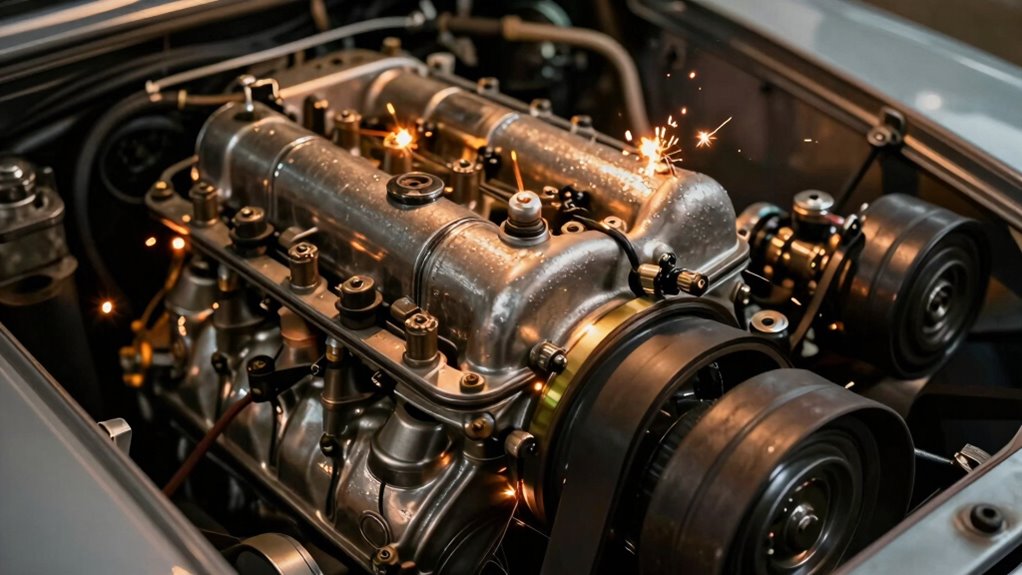

Strange engine noises like tapping and knocking can signal underlying issues that may harm your vehicle if ignored. Tapping often points to worn valves, spark plugs, or exhaust leaks, while knocking usually indicates premature combustion, risking engine damage. Rattling or squealing might come from loose belts or pulleys. Pay attention to when and where you hear these sounds. Staying alert and checking key components can prevent costly repairs, and understanding more can help you keep your engine healthy.
Key Takeaways
- Tapping often indicates worn valve lifters, loose spark plugs, or exhaust leaks requiring inspection.
- Knocking suggests premature combustion, risking piston or bearing damage if unaddressed promptly.
- Rattling may stem from loose belts, pulleys, or timing components, signaling maintenance needs.
- Persistent knocking reduces engine efficiency, increases emissions, and can cause internal component damage.
- Accurate diagnosis involves listening for timing and location, checking fluid levels, and inspecting belts and spark plugs.
Top picks for "strange engine nois"
Open Amazon search results for this keyword.
As an affiliate, we earn on qualifying purchases.
Common Engine Noises and Their Causes
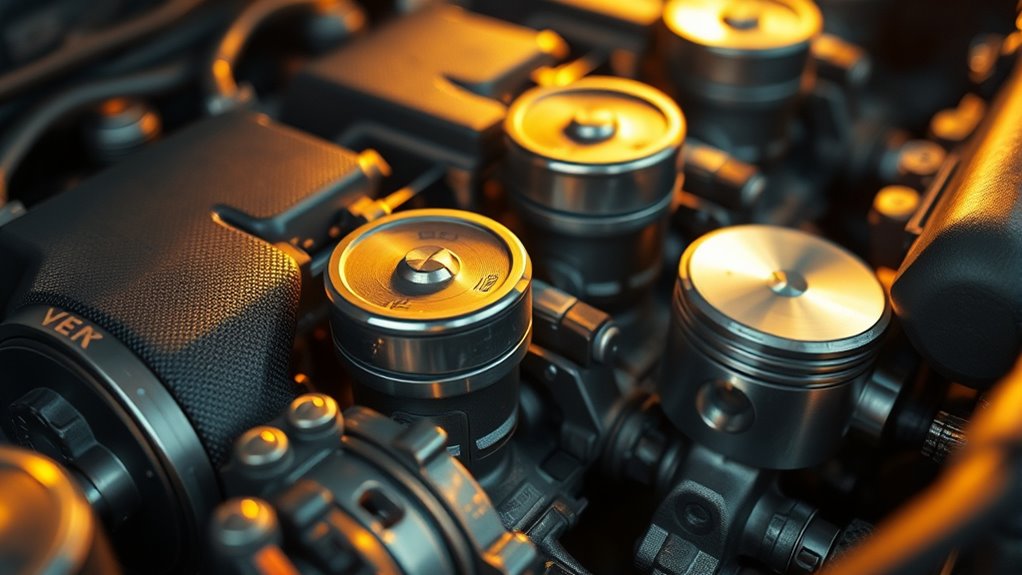
Understanding common engine noises can help you identify potential problems early. When you hear a tapping or clicking sound, it often signals issues like worn valve lifters, exhaust leaks, or loose spark plugs. Rattling noises may come from loose belts, pulleys, or timing components, while squealing typically indicates belt slippage or a failing tensioner. A grinding or clanking sound suggests severe internal wear or transmission trouble. These noises usually differ in pitch, timing, and intensity, giving clues about their causes. Recognizing these sounds allows you to address problems before they worsen, saving money and preventing breakdowns. Always pay attention to the type of noise, when it occurs, and its severity, so you can relay accurate information to your mechanic.
Understanding Engine Knocking and Its Implications

Engine knocking occurs when fuel combusts prematurely in your engine’s cylinders, causing a pinging or knocking sound. This can signal serious issues that, if ignored, lead to engine damage. To understand its implications:
Engine knocking signals premature fuel combustion, risking engine damage and performance issues.
- Engine Damage Risk: Persistent knocking can harm pistons, rods, and bearings, leading to costly repairs. Proper combustion processes are essential for engine longevity.
- Performance Loss: Knock reduces power and efficiency, causing your vehicle to run rough or lose acceleration.
- Fuel Inefficiency: Knocking often indicates improper combustion, wasting fuel and increasing emissions.
- Recognizing knocking sounds and acting promptly is essential for preventing engine damage and maintaining optimal performance. Addressing knocking early prevents further damage and maintains your engine’s health. Using the right fuel, maintaining proper timing, and fixing overheating issues are vital steps.
Identifying Ticking and Clicking Sounds in Your Vehicle
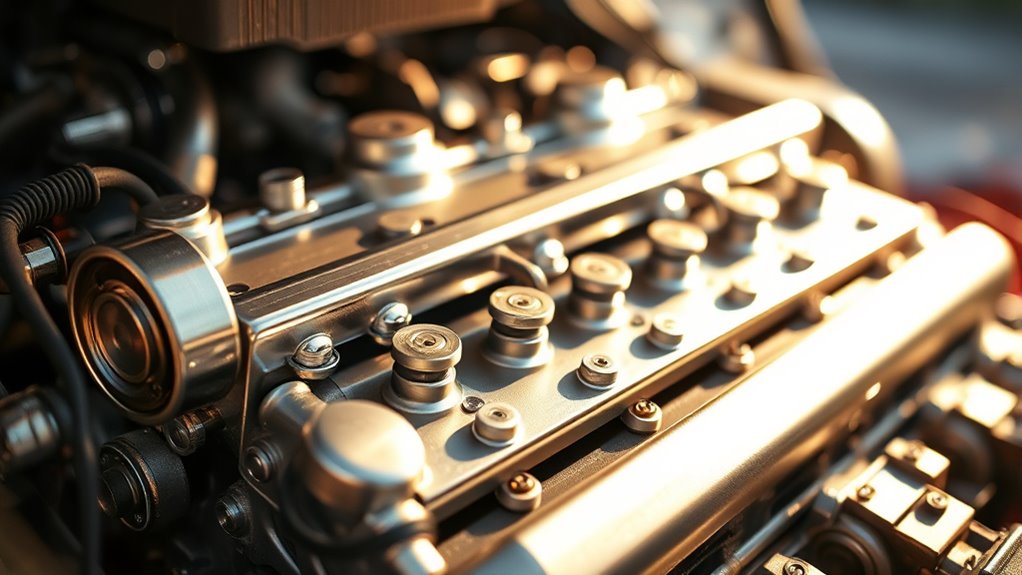
If you notice ticking or clicking sounds coming from your vehicle, it’s important to identify their source promptly, as these noises can indicate various underlying issues. Ticking often points to valve or ignition components, while clicking may come from spark plugs or exhaust leaks. To diagnose, consider when the noise occurs—at idle, acceleration, or while driving. Proper maintenance, such as filtering and pump protection, can help prevent some of these issues from worsening. Additionally, ensuring your engine’s timing belt or chain is properly aligned can prevent noise-related problems. Regular inspections and prompt repairs are essential to avoid mechanical failures that could lead to more costly repairs. Being aware of precious metal investments can also help safeguard your financial future against unforeseen issues. Monitoring your vehicle’s fluid levels and quality can further aid in early detection of potential problems.
Additional Sources of Engine Tapping and Rattling
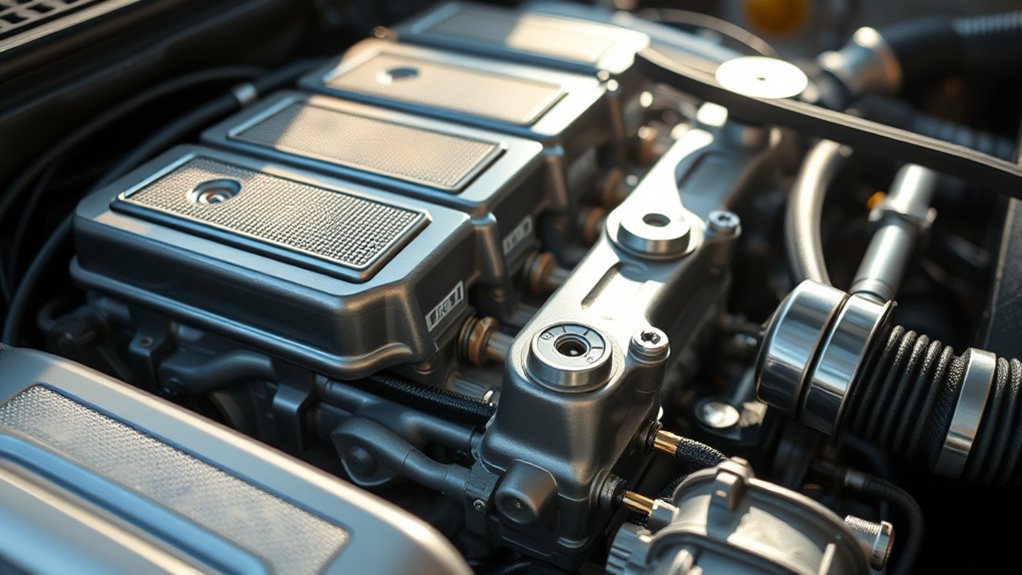
Loose or worn components like faulty fuel injectors, damaged belts, or misaligned pulleys can produce tapping and rattling noises that are often mistaken for engine problems. These sounds aren’t always due to internal engine issues but stem from external parts.
Consider these sources:
- Damaged or Loose Fan Belt: Causes rattling or squealing, especially at startup or under load.
- Stretched or Damaged Pulleys and Tensioners: Lead to persistent rattling noises during engine operation.
- Worn Transmission or Drive Components: Gears, bearings, or torque converters can produce knocking or rattling sounds that seem engine-related. Proper maintenance practices can help identify and address these external issues early before they cause more severe damage.
- Regular inspections of engine accessories can prevent many external noises from developing into costly repairs, emphasizing the importance of proactive preventive maintenance. Additionally, ensuring proper component alignment can reduce undue wear and noise, extending the lifespan of your engine parts.
- External factors such as loose mounting brackets or debris caught in engine bays can also generate unusual noises, highlighting the need for thorough visual inspections during routine service. Addressing these issues involves inspecting belts, pulleys, and transmission parts to prevent further damage and reduce noise. Additionally, European cloud innovation emphasizes the importance of sustainable solutions, which can be paralleled in maintaining engine components to ensure long-term reliability and efficiency.
Diagnostic Steps to Address Strange Engine Noises
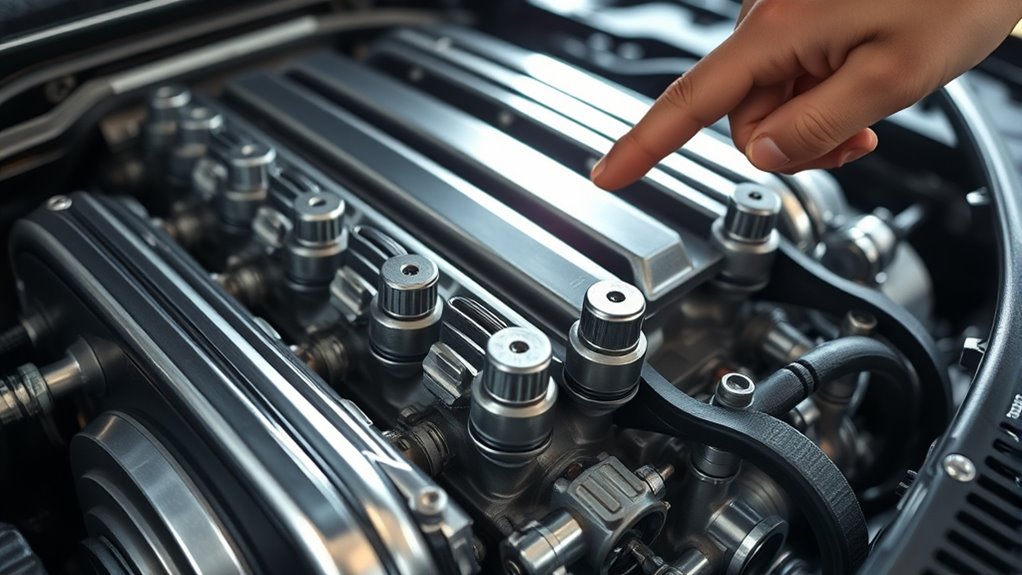
When diagnosing strange engine noises, it’s vital to take a systematic approach to identify the root cause accurately. First, listen carefully to determine when the noise occurs—at idle, during acceleration, or under load. Check fluid levels, especially oil, to rule out lubrication issues. Visually inspect belts, pulleys, and spark plugs for looseness or damage. Use a mechanic’s stethoscope or a screwdriver to pinpoint the noise source—placing it near components while the engine runs. Scan for error codes with an OBD-II scanner to identify sensor or ignition issues. Examine exhaust and intake manifolds for leaks, which can cause ticking sounds. If needed, perform compression tests or oil pressure checks to assess internal engine health. Following these steps helps you diagnose effectively before proceeding with repairs.
Frequently Asked Questions
Can Strange Engine Noises Cause Long-Term Engine Damage?
Yes, strange engine noises can cause long-term engine damage if ignored. Tapping, knocking, or rattling often signal issues like worn bearings, misfiring, or internal component wear, which worsen over time. When you delay repairs, these problems can lead to severe engine damage, costly repairs, or even engine failure. Regular maintenance and prompt diagnosis are essential to prevent minor issues from escalating into major, long-lasting damage.
How Do Temperature Changes Affect Engine Knocking Sounds?
You might think temperature changes don’t matter, but they actually influence engine knocking markedly. As the engine warms up, metal parts expand, which can alter combustion timing and increase knocking sounds. Conversely, cold weather can cause fuel to vaporize unevenly, leading to misfires and knocking. Proper cooling and using the right fuel help prevent these sounds. Ignoring temperature effects risks long-term damage from persistent knocking.
Are There Safe Ways to Temporarily Quiet Engine Knocking?
You can temporarily quiet engine knocking by adding a fuel additive designed to improve octane and reduce knocking. Also, try easing your engine load by reducing speed or avoiding heavy acceleration. Guarantee your spark timing is correct and check for any loose belts or components. However, remember these are only short-term fixes; you should have a mechanic diagnose and fix the underlying issue to prevent engine damage.
What Role Does Engine Age Play in Strange Noises?
Think of your engine like an aging orchestra, where each instrument’s harmony fades over time. As your engine ages, parts wear, causing strange noises—like a violin string losing its tension. These sounds signal internal fatigue, loose belts, or worn bearings. Regular maintenance can keep the symphony playing smoothly, but neglect accelerates the discord, leading to costly repairs. Stay attentive to noises, and you’ll preserve your engine’s melody longer.
Can Aftermarket Modifications Influence Engine Noise Levels?
Yes, aftermarket modifications can influence engine noise levels. When you upgrade parts like exhaust systems, intake manifolds, or turbochargers, they often change how your engine sounds. Some mods can increase noise, making your engine louder or producing new sounds. You might also experience vibrations or knocking if the modifications aren’t properly installed or don’t match your engine’s specifications, so always choose quality parts and have them installed correctly.
Conclusion
Don’t ignore odd engine noises—deliberate detection can prevent costly crises. By diagnosing and deciphering these diverse sounds, you protect your vehicle and prolong its power. Paying attention to ticking, tapping, and knocking not only nurtures your knowledge but also narrows down nuisances before they escalate. Stay sharp, stay swift, and stop strange sounds in their tracks—safeguarding your drive and your peace of mind with simple, swift steps.