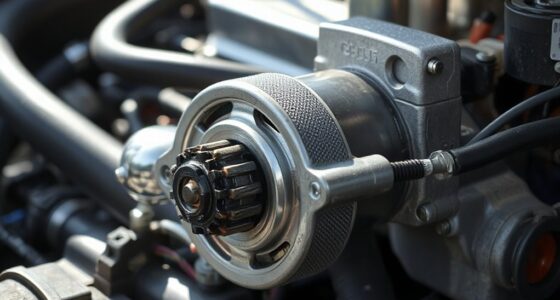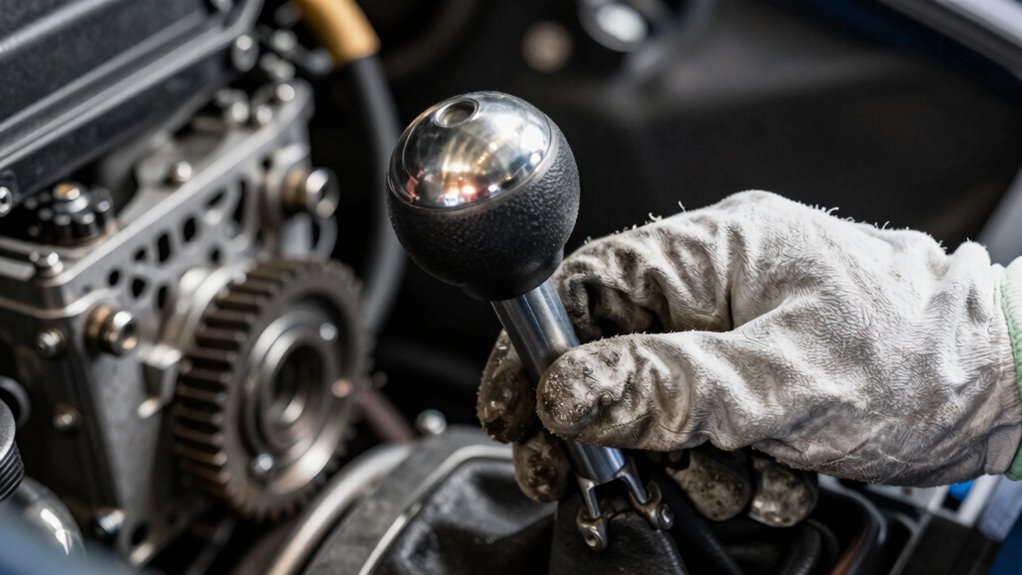

If you experience false neutrals or stuck gears, first stay calm and keep a firm grip on the handlebars. Check your clutch and make certain proper shifting techniques—smooth, deliberate movements help. Inspect your shift linkage and gear lever for looseness or damage. If you notice symptoms like grinding noises or resistance, it may be a mechanical issue like worn shift forks or damaged gear dogs. Continuing with proper troubleshooting steps can help you identify and fix these gearbox gremlins effectively.
Key Takeaways
- Regularly check and replace transmission fluid to ensure proper lubrication and prevent internal wear.
- Inspect and adjust shift linkage and cables for proper alignment and smooth gear engagement.
- Examine shift forks, gear dogs, and shift stars for wear or damage, replacing worn components promptly.
- Use proper shifting techniques, matching engine RPM and applying smooth, deliberate gear changes.
- Stay alert to early warning signs like resistance, noises, or vibrations, and address issues promptly to avoid further damage.
Top picks for "gearbox gremlin deal"
Open Amazon search results for this keyword.
As an affiliate, we earn on qualifying purchases.
Understanding the Causes of False Neutrals
False neutrals happen when your transmission shifts into a neutral position other than the true neutral between first and second gear. This often results from incomplete gear shifts where gear dogs fail to disengage or re-engage properly, especially between higher gears like fourth to fifth or fifth to sixth. Excessive engine braking can also stress the transmission components, causing wear on shift forks and gears, leading to false neutrals. Mechanical issues such as bent shift forks, damaged gear dogs, loose shift stars, or faulty linkages can cause the transmission to slip into neutral unexpectedly. Additionally, rider error, like improper shifting technique, can contribute. Recognizing these causes helps you identify potential problems early and take steps to prevent false neutrals from disrupting your ride. Understanding these issues highlights the importance of transmission maintenance for reliable gear engagement. Regular maintenance and diagnostic tools can help detect early signs of wear or damage, preventing unexpected gear slipping. Incorporating modern diagnostic tools can provide more precise insights into transmission performance and potential issues.
Recognizing the Symptoms of Transmission Issues

You’ll notice transmission issues through unusual gear shifts or strange noises from the engine or gearbox. These symptoms often signal internal problems like worn gear dogs or shift forks. Recognizing these early can help prevent further damage and keep your ride smooth. Being aware of common repairs and their signs allows for timely intervention before costly repairs become necessary. Additionally, understanding home maintenance practices can aid in early detection of mechanical issues that may affect your vehicle’s performance. Regular inspections and proper lubrication are essential components of preventative maintenance, which can extend the lifespan of your transmission components. Monitoring transmission fluid quality is also vital, as degraded fluid can contribute to gear engagement problems and lead to more significant issues down the road.
Unusual Gear Shifts
Unusual gear shifts are often the first sign that your transmission is experiencing issues. You might notice resistance when shifting, or the gear lever feels stiff or loose. Sometimes, gears slip out unexpectedly or you hear grinding noises during shifts. These symptoms indicate that something isn’t aligning properly inside the gearbox. You may also experience delays between shifting and the gear engaging, or feel vibrations through the lever. If you notice your bike shifting unevenly or suddenly refusing to stay in gear, it’s a clear warning sign of transmission trouble. These irregularities often result from worn gear engagement components, misaligned shift linkages, or internal mechanical damage. Proper lubrication and maintenance can help prevent some of these issues from developing. Addressing unusual shifts early can prevent more serious damage and ensure safer, smoother riding. Recognizing early signs of transmission issues can help you maintain optimal performance and avoid costly repairs. Regular maintenance and proper gearbox care are essential in preventing these problems from worsening over time.
Engine or Transmission Noise
Transmission issues often manifest through unusual noises that can alert you to internal problems before they worsen. You might hear grinding, whining, or clunking sounds during shifts or while riding at specific speeds. These noises often indicate worn gear teeth, damaged bearings, or misaligned components within the gearbox. A whining noise that increases with engine RPM could signal gear or bearing wear, while grinding sounds during shifting suggest synchronization issues or worn shift forks. Clunking or banging noises might indicate loose or broken gear dogs. Pay attention to these sounds, especially if they occur consistently or worsen over time. Recognizing these auditory signals early can help you diagnose transmission trouble before it leads to more severe damage or complete failure. Incorporating connected diagnostic tools can assist in monitoring and identifying issues more precisely, enabling proactive maintenance and avoiding catastrophic failures. Understanding the symptoms can also help you determine whether a repair or replacement is necessary, saving time and money in the long run. Additionally, staying aware of early warning signs can facilitate timely intervention, potentially extending the lifespan of your transmission components. Being attentive to vehicle data provided by modern sensors can further enhance your ability to catch problems early and prevent costly repairs.
The Risks Associated With False Neutrals and Stuck Gears
False neutrals and stuck gears can seriously compromise your control on the road, making it harder to maintain stability. When your bike unexpectedly loses drive or shifts unpredictably, your chances of losing traction or crashing increase. Recognizing and addressing these issues promptly is vital to keeping safe and avoiding accidents. Regular maintenance and understanding gear measurements can help prevent some of these problems. Being aware of simple organizing strategies can also help you keep your motorcycle components in check, reducing the likelihood of gear issues.
Loss of Control Risks
When a false neutral or stuck gear occurs, your control of the motorcycle can be quickly compromised, increasing the risk of accidents. Loss of power transmission to the rear wheel can cause unexpected deceleration or acceleration, disrupting your stability. This sudden change can make handling unpredictable, especially at high speeds or in turns. You might feel the bike hop or skip, which can lead to a loss of traction. Panic reactions like hard braking or abrupt steering can worsen the situation, causing you to lose balance or even crash. False neutrals and stuck gears undermine your ability to respond smoothly to road conditions. Without quick, correct actions, you risk losing control, putting yourself and others in danger. Staying alert and prepared is essential to mitigate these risks. Understanding the mechanics of transmission can help you better anticipate and handle such issues effectively.
Accident Potential Increase
The risk of accidents markedly increases when your motorcycle experiences false neutrals or stuck gears because you lose essential control and timing. Suddenly losing drive can cause unexpected deceleration or surging, prompting panic reactions like abrupt braking or swerving. In a turn, this loss of momentum can destabilize your bike, risking a slide or fall. Rear tire hopping or slipping increases crash chances, especially if you’re not prepared for the sudden change. Mechanical failures or misshifts can leave you stranded or unable to accelerate out of danger. Quick, unpredictable movements in response to gear issues heighten collision risk, especially in traffic or hazardous conditions. Staying alert and addressing gearbox problems early helps reduce these dangerous scenarios, keeping your riding safer. Additionally, understanding Free Floating principles can assist in diagnosing and preventing some gear-related issues before they occur.
Diagnosing Mechanical Problems in Your Gearbox

Diagnosing mechanical problems in your gearbox requires careful observation of shifting behavior and transmission sounds. Pay attention to signs like difficulty shifting, grinding noises, or inconsistent gear engagement. To pinpoint issues, consider these steps:
Carefully observe shifting behavior and sounds to diagnose gearbox issues effectively.
- Check for loose or damaged shift linkage and ensure it’s properly aligned. Proper linkage adjustment can prevent many shifting problems early on. Additionally, inspecting for gearbox wear can reveal underlying issues that contribute to shifting difficulties. Regularly monitoring gearbox health helps maintain optimal performance.
- Inspect shift forks, gear dogs, and shift star mechanisms for signs of wear or damage.
- Test for excessive play or looseness in the gear lever or shift drum.
- Listen for unusual noises during shifts, such as grinding or clunking, which indicate internal damage.
- Remember that a well-sourced approach to diagnosing gearbox issues helps ensure accurate identification and effective repairs. Regular inspection of internal components can also help catch problems before they worsen.
Preventive Measures to Avoid False Neutrals
To prevent false neutrals, focus on using proper shifting techniques, like matching engine revs with throttle blipping. Regular transmission checks help catch wear or damage early before they cause shifting issues. Staying proactive with your gear management can avoid many common gearbox gremlins. Additionally, understanding the transmission system and its components can help identify potential problems before they become severe. Incorporating diagnostic tools can further assist in early detection of transmission issues.
Proper Shifting Technique
Proper shifting technique is essential for preventing false neutrals and maintaining smooth transmission operation. To do this effectively, focus on these key points:
- Use smooth, deliberate shifts—avoid rushing or forcing the gear lever, which can cause incomplete engagement.
- Match engine revs to gear speed by blipping the throttle during downshifts, ensuring gears mesh smoothly.
- Pull the clutch fully before shifting, then release gradually to reduce stress on internal components.
- Shift within the correct rev range—avoid shifting at high or low engine speeds, which can cause gear dogs to fail or slip.
Following these steps helps prevent mechanical wear and operator error, keeping your transmission functioning reliably.
Routine Transmission Checks
Regular transmission checks are essential to catch wear and damage before they cause false neutrals or stuck gears. You should regularly inspect for signs of mechanical wear, loose linkages, or damaged components. Check the shift forks, gear dogs, and shift star for any looseness or visible damage. Confirm that shift linkages move smoothly without excess play. Lubricate the gearbox according to the manufacturer’s schedule to prevent corrosion and deterioration.
| Inspection Area | Key Checks |
|---|---|
| Shift forks and gear dogs | Look for wear, damage, or bending |
| Shift linkage | Ensure smooth, tight movement |
| Shift star mechanism | Confirm proper engagement and no looseness |
| Lubrication | Check oil level and quality, change if needed |
Proper Shifting Techniques to Minimize Gear Slips
Smooth shifting begins with understanding how to match engine speed to the transmission’s gear. To minimize gear slips, focus on these techniques:
- Blip the throttle when downshifting to match engine RPMs with the lower gear.
- Use smooth, deliberate clutch releases to ensure gears engage fully without skipping or slipping.
- Shift at appropriate RPMs—avoid shifting too early or late, which stresses the transmission.
- Apply consistent pressure on the shift lever, avoiding abrupt or forceful movements that can cause incomplete gear engagement.
Practicing these techniques helps your transmission engage smoothly, reducing false neutrals and gear slips. Properly matched engine and transmission speeds promote seamless gear changes and extend the lifespan of your gearbox.
Step-by-Step Procedures for Handling False Neutral Situations

When you encounter a false neutral while riding, your first priority is to stay calm and maintain control of the motorcycle. Keep a firm grip on the handlebars and avoid abrupt movements. Immediately pull in the clutch to disengage power transmission and prevent sudden deceleration or acceleration. If you’re in a shift, gently try to re-engage the gear by shifting up or down smoothly, matching engine revs if possible. Do not force the shift or panic; instead, focus on maintaining stability. If the gear remains stuck or you suspect internal damage, safely reduce speed and pull over as soon as it’s safe. Once stopped, inspect the transmission or seek professional repair. Avoid riding further until the issue is diagnosed and fixed.
Mechanical Repairs and Part Replacements for Gearbox Troubles
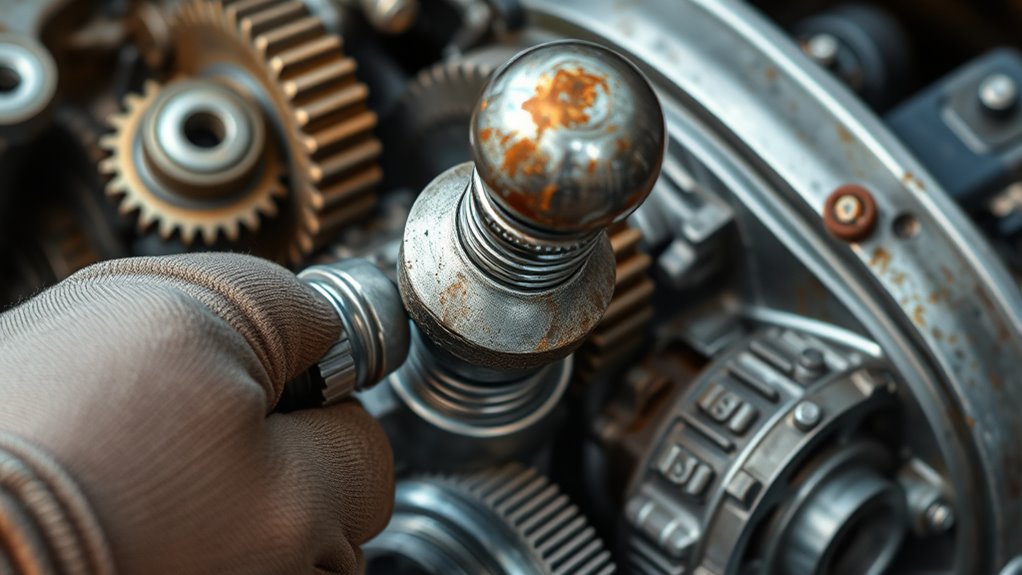
To restore proper function to a gearbox experiencing false neutrals or stuck gears, you need to perform targeted mechanical repairs and replace worn or damaged parts. Start by inspecting the shift forks for bending or wear, replacing them if necessary. Next, check the gear dogs for damage or excessive wear, replacing any broken or worn components. Examine the shift drum and shift star for looseness or damage, tightening or replacing as needed. Finally, inspect the shift linkage for misalignment or wear, adjusting or replacing it to ensure smooth gear engagement.
- Replace worn or broken shift forks
- Swap out damaged gear dogs
- Repair or replace the shift drum and shift star
- Adjust or replace the shift linkage for proper alignment
Riding Strategies to Maintain Control During Gearbox Malfunctions

Encountering a gearbox malfunction or false neutral while riding can be alarming, but maintaining control is essential to safety. Your immediate focus should be on smooth throttle application and clutch control to prevent sudden speed changes. When a false neutral occurs, quickly pull in the clutch and avoid panicking. Use this table as a quick guide:
| Situation | Your Action | Key Focus |
|---|---|---|
| False neutral during acceleration | Pull in clutch, re-engage gear smoothly | Maintain stability and avoid abrupt moves |
| Gear stuck or slipping | Stop riding if possible, check for damage | Prevent further mechanical harm |
| Encountering resistance in gear | Ease clutch, try shifting again gently | Minimize transmission stress |
Stay calm, avoid aggressive braking, and shift carefully. Reacting smoothly preserves your balance and control.
Regular Maintenance Tips for a Healthy Transmission

Regular transmission maintenance is key to preventing false neutrals and gear sticking issues. To keep your gearbox in top shape, follow these essential tips:
- Regularly check and change transmission fluid to ensure proper lubrication and reduce wear.
- Inspect shift linkage and cables for looseness or damage, tightening or replacing as needed.
- Examine shift forks, gear dogs, and shift stars for wear or damage during routine service.
- Use proper shifting techniques, matching engine revs and avoiding aggressive downshifts.
Frequently Asked Questions
Can False Neutrals Be Completely Eliminated With Proper Maintenance?
Yes, false neutrals can be largely eliminated with proper maintenance. You should regularly inspect and replace worn shift forks, gear dogs, and shift linkages, and keep the transmission well-lubricated. Properly adjusting the clutch and practicing smooth shifting techniques also help prevent false neutrals. Routine maintenance reduces internal wear and mechanical issues, substantially lowering the chances of encountering false neutrals while riding.
How Do I Differentiate Between Rider Error and Mechanical Failure?
You can tell if it’s rider error or mechanical failure by observing your shifting consistency. If false neutrals happen randomly regardless of technique, mechanical issues like worn shift forks or damaged gear dogs are likely. But if they occur after improper shifting, rough handling, or during specific maneuvers, it’s probably rider error. Always inspect the transmission for physical damage and review your shifting technique to identify the root cause.
Are There Specific Motorcycle Models More Prone to False Neutrals?
Some motorcycle models are more prone to false neutrals, especially those with older or less refined gearboxes. You’ll notice sportbikes and certain touring bikes often experience this issue more frequently than newer, higher-end models. While advanced technology can help, wear and mechanical design flaws still cause false neutrals. You should keep an eye on your bike’s shifting performance, and regular maintenance helps prevent these issues, regardless of the model.
What Safety Precautions Should I Take During a Gear Stuck in Neutral?
When your gear gets stuck in neutral, you should immediately pull in the clutch to prevent loss of control. Keep calm, avoid aggressive braking, and avoid riding through the neutral. Re-engage the clutch smoothly, and try shifting again carefully. If you suspect mechanical issues, stop riding, and have a professional inspect your transmission. Wearing protective gear and staying alert helps you stay safe until you can address the problem.
Is It Safe to Continue Riding After Experiencing a False Neutral?
You shouldn’t continue riding after a false neutral. It’s risky because it can cause sudden power loss, affecting your control and stability. When you experience a false neutral, pull in the clutch immediately, stop if possible, and inspect the situation. Riding through it can worsen transmission damage or cause an accident. Always prioritize safety by addressing the problem fully before resuming your ride, preferably with professional mechanical help.
Conclusion
Dealing with false neutrals and stuck gears can seem intimidating, but staying vigilant and following proper maintenance routines makes a difference. Think of your gearbox like a finely tuned orchestra—each part must work in harmony. Regular checks and quick responses keep your ride smooth. Even if it feels overwhelming at first, addressing issues early prevents costly repairs. With the right care, you’ll confidently navigate any gear shift challenge and enjoy a safer, more reliable ride.