Tweaking your camshaft timing in old engines can markedly boost performance by shifting the power band to your preferred RPM range. Advancing the cam improves low-end torque and throttle response, while retarding it enhances high-RPM power. Fine-tuning these adjustments alongside ignition timing helps optimize efficiency and engine life. You can achieve better results with simple tools and careful calibration. Keep exploring to discover detailed methods for maximizing your engine’s potential with camshaft and timing tweaks.
Key Takeaways
- Adjust camshaft timing to shift engine power bands for improved torque or top-end horsepower.
- Use precise tools like degree wheels to ensure accurate cam timing modifications.
- Synchronize ignition timing with cam adjustments to maximize performance and prevent knocking.
- Consider variable valve timing (VVT) systems for dynamic, real-time performance optimization.
- Monitor engine response and valve clearance to avoid damage and maintain reliability during tuning.

Motion Pro Degree Wheel 080092
Motion Pro Degree Wheel | Aluminum (08-0092)
As an affiliate, we earn on qualifying purchases.
As an affiliate, we earn on qualifying purchases.
Understanding Camshaft Timing and Its Impact on Power Curves

Understanding camshaft timing is essential because it directly influences where your engine produces its power. When you adjust the camshaft, you change the timing of valve openings and closures, which shifts the engine’s power band. Advancing the camshaft moves power to lower RPMs, giving you better torque at idle and during low-speed driving. Retarding the camshaft shifts power toward higher RPMs, boosting top-end speed and horsepower. The specific timing affects how efficiently your engine breathes at different speeds. Proper cam timing ensures ideal airflow, cylinder filling, and scavenging, which all contribute to the desired power curve. Additionally, knowing how camshaft and timing tweaks impact your engine can help you optimize performance for specific driving needs. Optimizing camshaft timing can also improve fuel efficiency and engine longevity, making it a crucial aspect of engine tuning. Recognizing the importance of valve timing helps ensure that modifications lead to the desired performance outcomes. Furthermore, understanding how AI-powered tools can assist in tuning processes can streamline adjustments and improve accuracy.
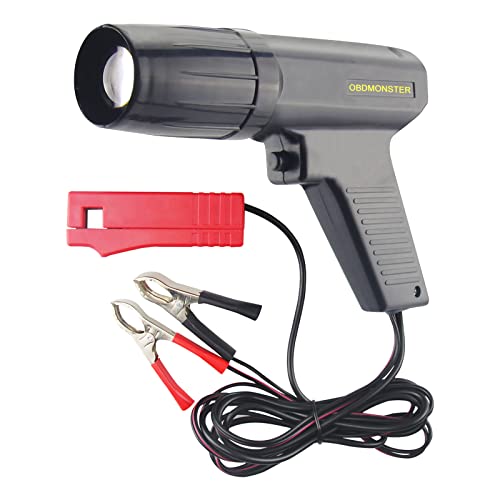
Automotive Timing Light 12V, Inductive Ignition Timing Light Gun for 2&4 Stroke Petrol Engine for Old Classical Car Motorcycle
Ignition Timing Light: Design to re-timing your car's ignition to get the best performance that you can. Suitable…
As an affiliate, we earn on qualifying purchases.
As an affiliate, we earn on qualifying purchases.
How Advancing or Retarding Cam Timing Shapes Engine Performance

When you advance your cam timing, you’ll notice better low-end torque, making acceleration smoother from a stop. Retarding the timing shifts power to higher RPMs, boosting top-end horsepower but often reducing low-speed response. Just remember, these changes also require adjustments to your ignition timing to keep the engine running smoothly. Additionally, understanding engine dynamics can help you fine-tune your modifications for optimal performance. Proper piercing care and hygiene are essential to prevent infections that could compromise your engine’s health, especially if you perform modifications or maintenance yourself.
Low-End Torque Gains
Advancing your camshaft timing can substantially boost low-end torque by closing the intake valve earlier in the engine cycle, which helps fill the cylinders more effectively at lower RPMs. This creates a quicker throttle response and improved acceleration from a standstill. When you advance the cam, the intake valve closes sooner, trapping a denser air-fuel mixture and increasing cylinder pressure. As a result, you get more torque at lower speeds, making everyday driving smoother and more responsive. Just keep in mind that too much advance can cause rough idle or knocking, so small adjustments are best. Retarding the cam, on the other hand, shifts power away from the low end, favoring higher RPM performance. For ideal low-end torque gains, careful fine-tuning and proper ignition timing are essential. Additionally, considering free floating techniques in your engine setup can help optimize performance and efficiency, especially when combined with engine tuning strategies to maximize power delivery.
High-RPM Power Shift
Ever wondered how camshaft timing adjustments can boost your engine’s power at high RPMs? When you retard the cam timing, you delay the intake valve closing, which shifts power to higher engine speeds. This change improves top-end horsepower by allowing better exhaust scavenging and more efficient airflow at elevated RPMs. Retarding the cam also enables slightly more ignition advance, helping prevent detonation under high stress. Conversely, advancing the cam timing moves power down to lower RPMs, reducing high-RPM performance. Keep in mind, excessive retarding can reduce low-end torque, so find a balance that suits your driving style. Adjusting cam timing for high-RPM shifts open up more horsepower at the top end, making your engine more responsive in racing or spirited driving.
Ignition Timing Adjustments
Adjusting ignition timing is a key factor in maximizing engine performance when camshaft timing is modified. When you advance ignition timing, the spark ignites the fuel-air mixture earlier, boosting low-end torque and throttle response. However, if you go too far, you risk knocking and engine damage. Retarding ignition timing delays the spark, which can help prevent knocking at higher compression or when cam timing is retarded. This improves top-end power and allows for safer operation at higher RPMs. If you modify cam timing—advancing or retarding—you need to adjust ignition timing accordingly. Proper synchronization ensures smooth idle, peak power delivery, and fuel efficiency, preventing detonation and maximizing the benefits of your camshaft tweaks. Always test and fine-tune ignition timing after any cam or valve adjustments. Proper synchronization is essential to maintain engine safety and performance.

AULINK 917-224 OCV Oil Control Variable Valve (2.0L 2.4L L4) Timing VVT Solenoid For Acura RSX 2002-2006,Honda Civic 2002-2005,Accord 2003-2007,CR-V 2002-2009,Element 2003-2011 15810RAAA03
【OEM Part Number】 917-224, 15810RAAA03, 15810RAAA02, 15810-RAA-A01, 15810PPAA01, 15810PNEG01, 15810-RAA-A03, 917224, SK917224, 2T1147, VTS1189, R53013, VV0122, 2VTS0143, VVS214,…
As an affiliate, we earn on qualifying purchases.
As an affiliate, we earn on qualifying purchases.
Selecting the Right Camshaft: Duration, Lift, and Lobe Separation Angle
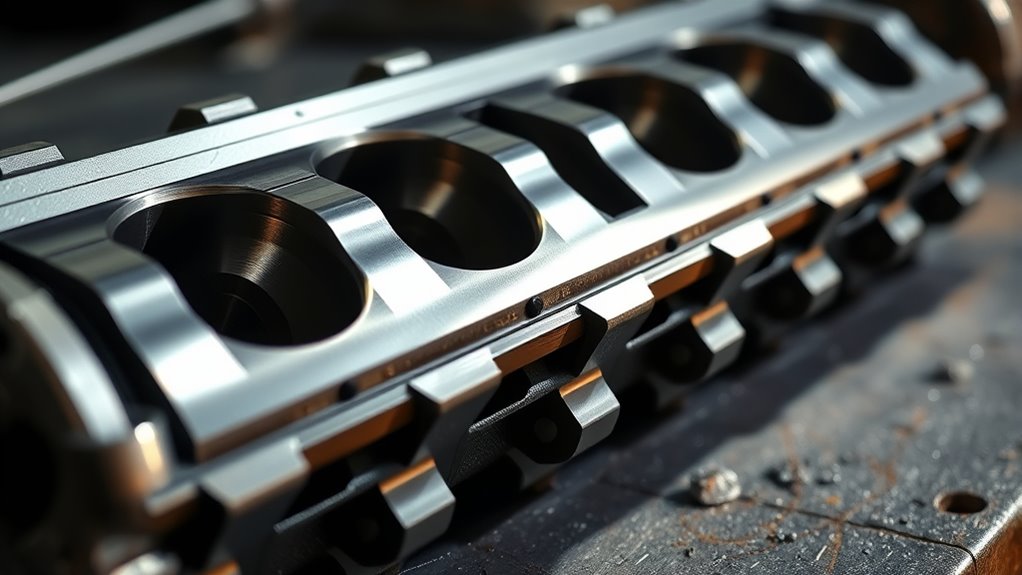
Choosing the right camshaft depends on your engine’s goals and how you plan to use your vehicle. Duration at .050-inch lift determines the power band; longer durations boost high-RPM airflow but can reduce low-end torque. Lift affects how much air enters the cylinder; higher lift increases performance but requires stronger springs. Lobe separation angle (LSA) influences overlap: a wider LSA improves idle quality and low-end torque, while a narrower LSA enhances high-RPM power. Consider your driving style—street use favors moderate duration and wider LSA for smoothness, while racing benefits from longer duration and narrower LSA for maximum top-end power. Always match cam specs with your engine’s compression, intake, and exhaust setup to optimize performance and reliability. Proper cam selection ensures your engine performs efficiently across your desired RPM range.
Automotive Timing Light 12V, Inductive Ignition Timing Light Gun for 2&4 Stroke Petrol Engine for Old Classical Car Motorcycle
Ignition Timing Light: Design to re-timing your car's ignition to get the best performance that you can. Suitable…
As an affiliate, we earn on qualifying purchases.
As an affiliate, we earn on qualifying purchases.
The Role of Overlap and Valve Event Control in Optimizing Power
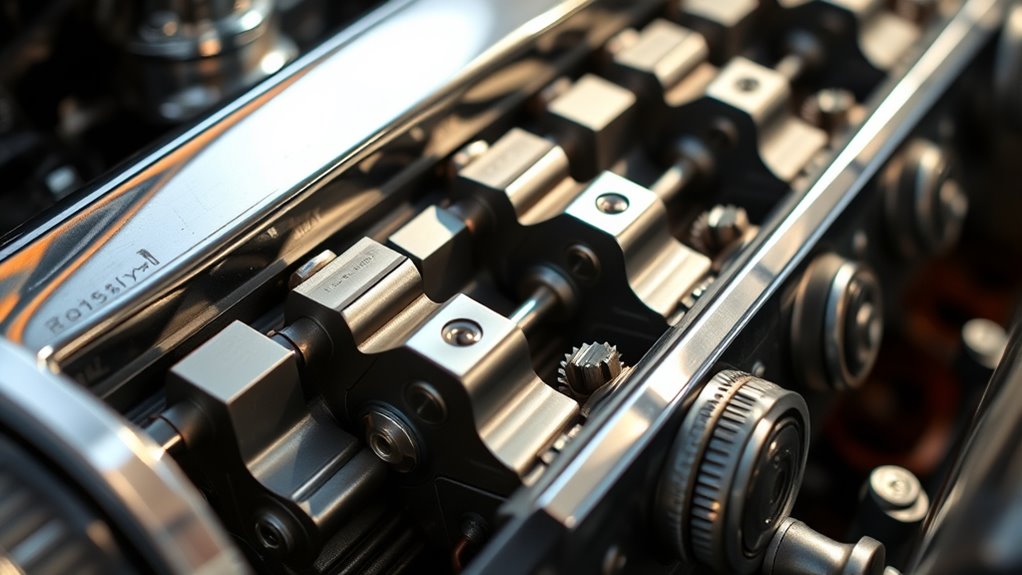
Overlap and valve event timing play a critical role in shaping an engine’s power characteristics by controlling how and when the intake and exhaust valves open and close during each cycle. When you adjust overlap—the period both valves are open—you influence how well exhaust gases are expelled and fresh air enters the cylinder. More overlap at high RPM improves scavenging and boosts top-end power, but too much can cause rough idle and poor low-end torque. Conversely, less overlap enhances idle quality and low-speed torque but may limit high-RPM performance. Proper valve event control guarantees ideal cylinder filling and scavenging. By fine-tuning these timings, you can maximize power output across your engine’s RPM range, tailoring performance to your driving needs.
Practical Methods to Adjust Cam Timing on Older Engines
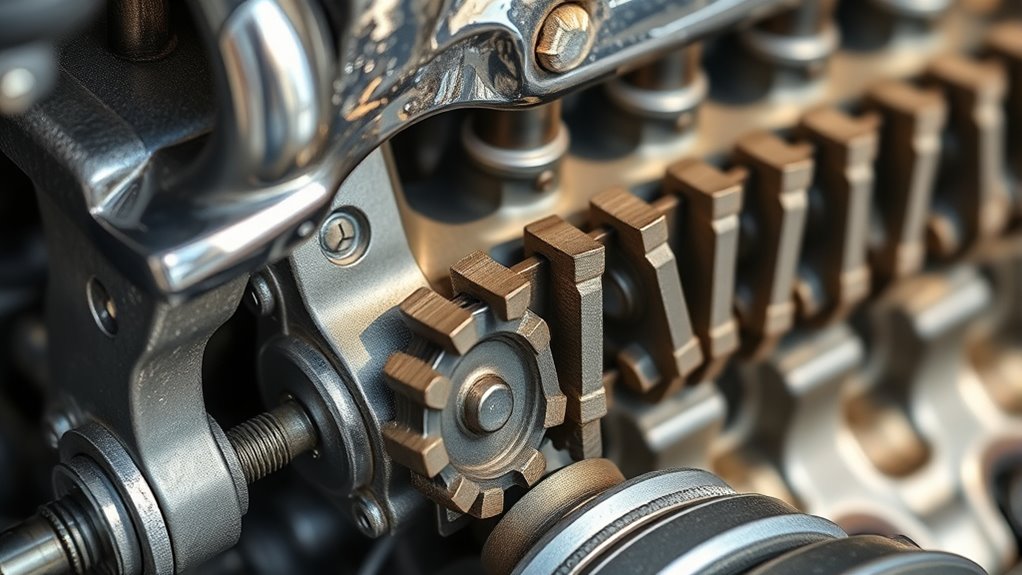
To modify cam timing on older engines, you need practical tools and a clear understanding of the process. First, you’ll need a timing light, a degree wheel, and possibly offset keys or adjustable cam gears. Begin by removing the accessory belts and timing cover to access the crankshaft pulley and cam gears. Use the degree wheel attached to the crankshaft to find Top Dead Center (TDC) on cylinder one. Mark the factory timing marks on the pulley. To advance or retard the cam timing, rotate the cam gear using adjustable gears or install offset keys between the cam and sprocket. Reassemble, then start the engine and verify timing with a timing light, making fine adjustments to optimize performance.
Navigating Variable Valve Timing Systems for Classic Engines

Variable valve timing can greatly boost your classic engine’s performance and efficiency, but understanding its benefits and limitations is key. You’ll need to decide between manual and automatic control systems, each offering different levels of customization and complexity. Adjusting VVT settings correctly ensures you get the most out of your engine without risking damage or drivability issues.
VVT Benefits for Classics
Implementing VVT systems in classic engines offers significant benefits by dynamically adjusting valve timing to optimize performance, fuel economy, and emissions. With VVT, you can fine-tune valve timing on the fly, adapting to different driving conditions without manual adjustments. This flexibility enhances low-end torque, improves high-RPM power, and reduces fuel consumption. Plus, VVT helps meet emissions standards by optimizing exhaust timing. You gain a broader power band and smoother operation, making your engine more responsive. Additionally, understanding simple systems used in engine tuning can help you better implement and maintain VVT setups, especially as connected technology becomes more integrated into automotive engineering. Familiarity with basic electrical components can also aid in troubleshooting and optimizing electronic VVT controls.
Manual vs. Automatic Control
Understanding the differences between manual and automatic control of VVT systems in classic engines requires understanding how each approach impacts tuning and drivability. With manual control, you’re responsible for setting cam timing during installation or adjustments, giving you direct influence over performance characteristics. It’s straightforward but demands mechanical knowledge and precision, making fine-tuning more hands-on. Automatic control, however, uses electronic actuators to adjust cam timing in real-time based on engine data, optimizing power, efficiency, and emissions dynamically. This system reduces driver input and simplifies maintenance, but it limits your ability to fine-tune manually. For older engines, manual control offers more customization, while automatic systems provide convenience and consistent performance without constant adjustments. Choose based on your experience level and desired balance between control and ease.
Adjusting VVT Settings
Have you ever wondered how to fine-tune your classic engine’s VVT system for ideal performance? Adjusting VVT settings lets you optimize valve timing dynamically, improving power, efficiency, and emissions. To do this effectively, you need to comprehend your system’s capabilities and limitations.
- Use a degree wheel or timing tool for precise adjustments.
- Focus on advancing or retarding intake and exhaust cam angles based on desired power bands.
- Monitor changes in throttle response and fuel economy during tuning.
- Keep an eye on engine knock and detonation, adjusting timing accordingly.
- Recheck your settings after modifications to ensure consistency.
Balancing Cam Timing and Ignition for Maximum Efficiency
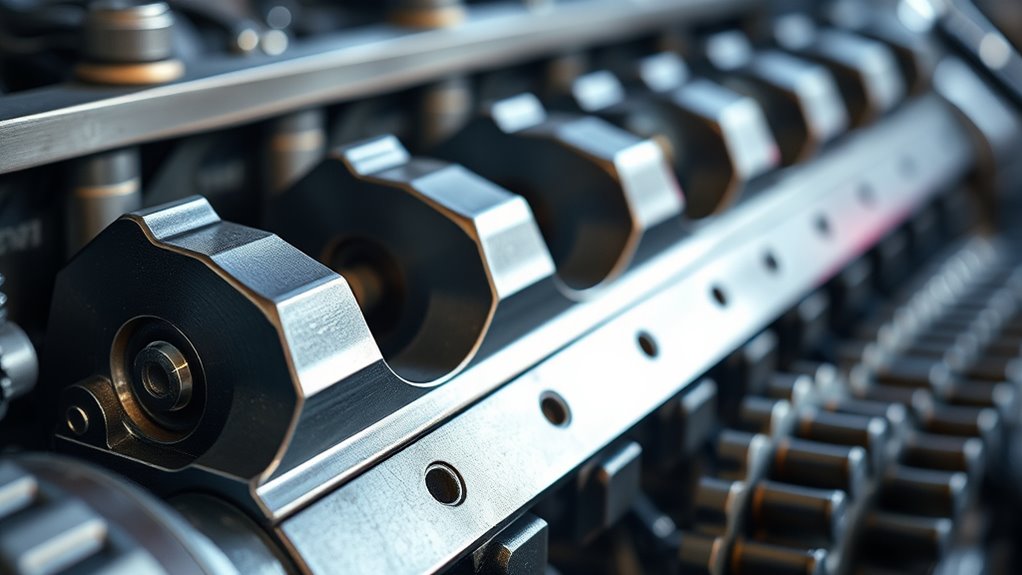
Balancing cam timing and ignition settings is essential for maximizing engine efficiency, as both parameters directly influence how well the engine breathes and burns fuel. When you adjust cam timing, you’re changing how air and exhaust flow through the engine, impacting power and responsiveness. Ignition timing controls when spark plugs ignite the fuel mixture, affecting combustion quality. To optimize performance, synchronize these adjustments carefully. For example, advancing cam timing may require retarding ignition to prevent knocking, while retarding cam timing can allow for more ignition advance. Properly understanding engine tuning principles can help you make more precise adjustments for optimal results. Additionally, utilizing timing adjustments effectively allows for fine-tuning engine behavior to achieve the best balance between power and efficiency. Recognizing the interplay between cam and ignition timing is crucial when making these modifications, as it ensures your engine operates smoothly and efficiently. Understanding how different engine parameters interact can lead to more effective tuning strategies. Use the table below to visualize these relationships:
| Cam Timing Adjustment | Ignition Timing Adjustment |
|---|---|
| Advance | Retard |
| Retard | Advance |
| Neutral | Neutral |
Tips for Maintaining Engine Reliability While Tweaking Camshaft Settings
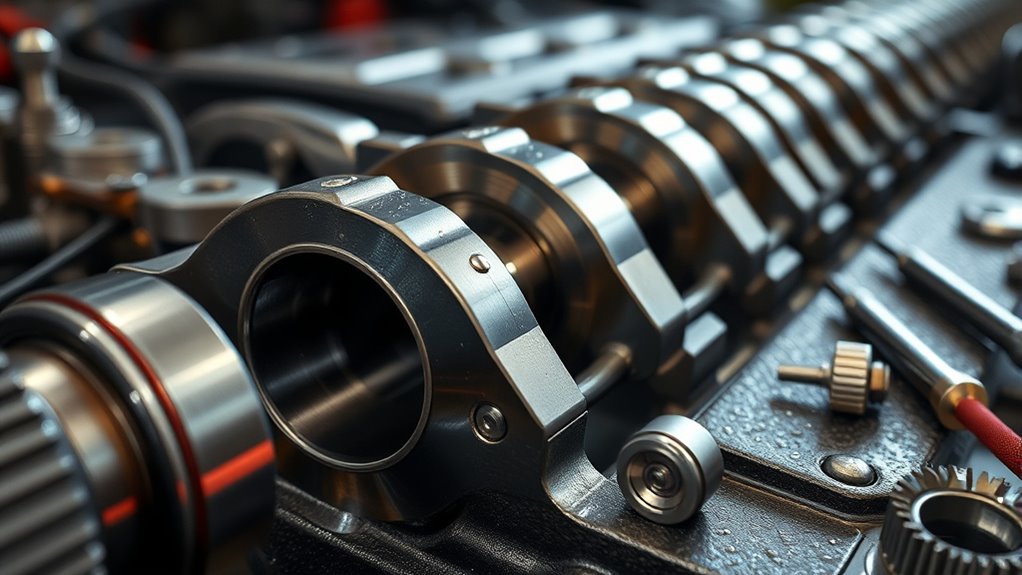
When tweaking camshaft settings, maintaining engine reliability requires careful attention to mechanical clearances and proper adjustments. You need to verify that valve-to-piston clearance stays within safe limits to prevent interference or damage. Always verify cam timing with precise tools like degree wheels and avoid excessive advances or retards that can cause uneven wear or knocking. Regularly check your valve lash and adjust as needed to prevent misfires or loss of performance. Cooling and oil systems should be monitored to handle increased engine stress. It’s also important to consider automotive repair software to assist in precise timing adjustments and diagnostics.
Frequently Asked Questions
How Does Camshaft Timing Affect Fuel Economy in Older Engines?
Camshaft timing influences fuel economy by optimizing how the engine breathes. Advancing the camshaft can improve low-end torque, making your engine more responsive and efficient at lower speeds. Retarding the cam shifts power to higher RPMs, which may reduce fuel consumption during everyday driving. Proper timing adjustments guarantee better fuel metering, reduce pumping losses, and enhance overall efficiency, especially when combined with modern systems like VVT for real-time optimization.
Can Camshaft Tweaks Improve Engine Longevity or Cause Wear?
Camshaft tweaks can both bolster engine longevity and cause wear. When you carefully calibrate cam timing, you reduce stress and smooth operation, boosting durability. However, if you push the limits or neglect proper adjustments, you risk increased wear, valve damage, or uneven engine operation. You gotta be cautious, making precise, purpose-driven tweaks, and always match modifications with proper fuel, ignition, and maintenance measures to maximize longevity and minimize wear.
What Are the Risks of Retarding Cam Timing Excessively?
Retarding your cam timing excessively risks knocking, poor fuel economy, and reduced low-end torque. It can cause valve-to-piston interference if advanced too far, leading to engine damage. You might also see increased emissions and rough idling. Over-retarding can cause incomplete combustion, overheating, and possible damage to valves or pistons over time. Always guarantee your cam timing stays within safe, recommended limits to avoid costly repairs.
How Do I Know if My Engine Is Suitable for Cam Timing Adjustments?
Think of your engine like a vintage radio; if it’s well-maintained, adjustments work smoothly. You can tell if your engine is suitable for cam timing tweaks by checking for a solid compression test, minimal oil consumption, and consistent idle. If your engine runs smoothly and responds well to minor tuning, it’s likely ready. Always verify clearance and use proper tools to avoid damage, and consult your engine’s specifications before making changes.
Is It Necessary to Re-Tune Fuel and Ignition Systems After Cam Changes?
Yes, you need to re-tune your fuel and ignition systems after cam changes. Altering cam timing affects how your engine breathes, which impacts air-fuel mixture and combustion. To prevent knocking, make sure your fuel mixture is correct and ignition timing is adjusted for the new cam setup. Doing so optimizes power, efficiency, and engine reliability, especially when making significant adjustments like advancing or retarding the camshaft.
Conclusion
Did you know that a simple camshaft tweak can boost your engine’s power by up to 15%? By understanding and adjusting cam timing, you unlock hidden performance in your old engine without costly upgrades. Whether you’re advancing or retarding the cam, small changes can substantially improve your driveability and efficiency. So, get hands-on, experiment carefully, and enjoy the thrill of reviving classic power—your engine’s potential is waiting to be unleashed.