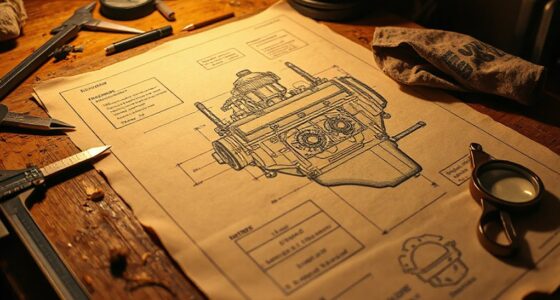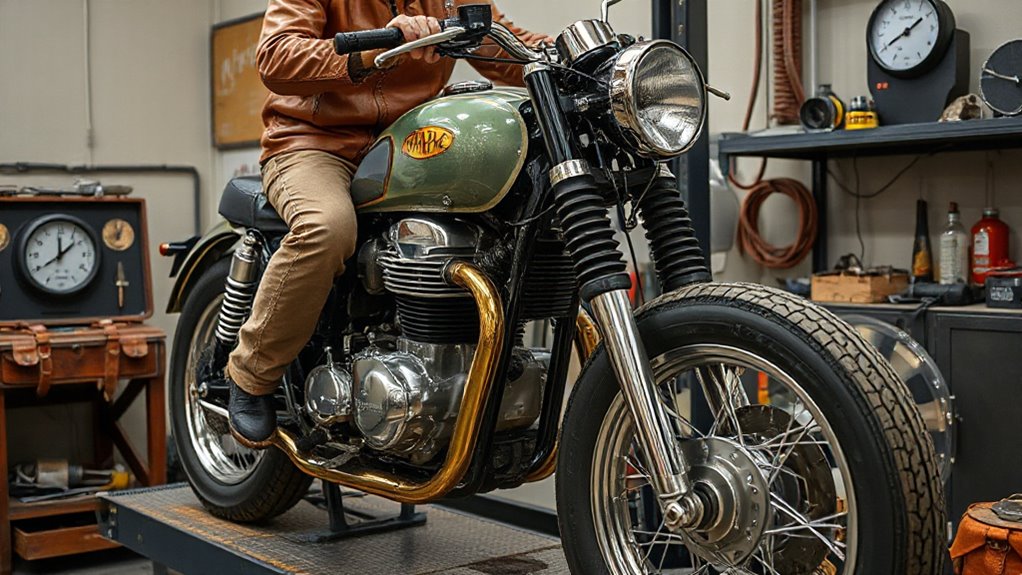

Dyno tuning your vintage motorcycle helps you open its full potential by optimizing performance, reliability, and character. It provides precise measurements of horsepower and torque, lets you identify issues early, and guarantees upgrades like exhausts or carbs deliver real gains. This targeted approach preserves your bike’s classic feel while boosting smoothness and power. To get the most out of your vintage engine, understanding how dyno tuning fine-tunes every detail keeps your ride running at its best.
Key Takeaways
- Dyno tuning restores vintage engine performance, ensuring smoother rides and maximizing power output without compromising engine integrity.
- It accurately diagnoses issues like misfires or fuel mixture problems, allowing targeted adjustments for optimal engine health.
- Real-time feedback during dyno sessions verifies that performance upgrades deliver desired results and proper calibration.
- Regular dyno tuning helps maintain vintage motorcycle reliability and extends engine lifespan by catching problems early.
- Personalized calibration through dyno tuning preserves the original character of vintage engines while enhancing overall performance.
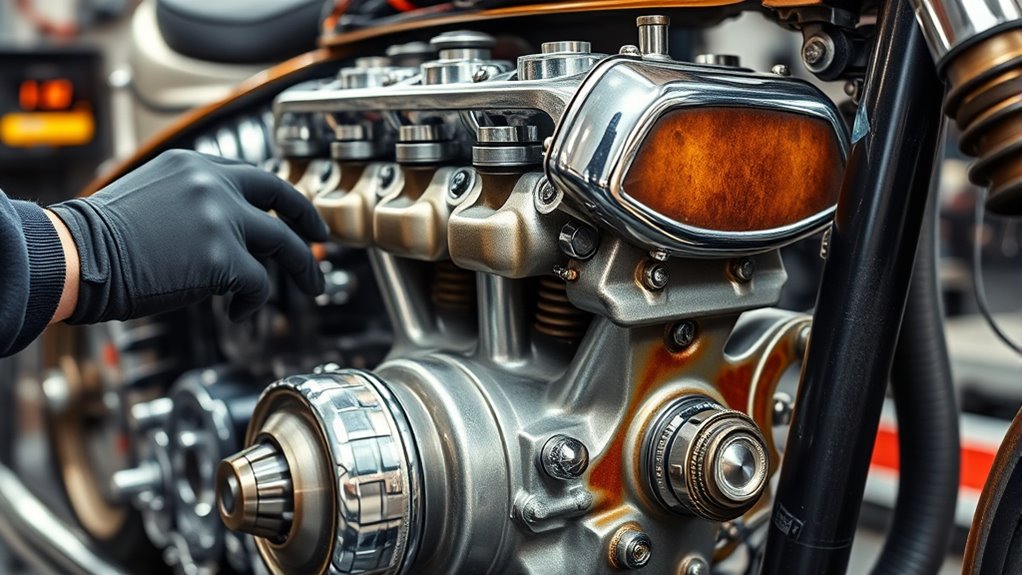
If you own an old motorcycle, dyno tuning can be a game-changer for restoring its performance and dependability. Vintage engines often suffer from years of wear, outdated parts, or imprecise tuning, which can lead to sluggish acceleration, poor fuel economy, and inconsistent power delivery. By utilizing a dynamometer, you can precisely measure your motorcycle’s horsepower, torque, and overall engine performance. This data allows you to identify weak points and optimize your engine’s settings for maximum efficiency. Whether you’re aiming for smoother rides or more power, dyno tuning provides a tailored approach that traditional tuning methods can’t match. It’s especially valuable when seeking performance upgrades, as it ensures modifications are fully optimized and won’t compromise engine integrity.
Dyno tuning old motorcycles restores performance, ensuring reliability and optimal engine settings for smoother, more powerful rides.
One of the key benefits of dyno tuning old motorcycles is the ability to perform detailed engine diagnostics. Over time, components like spark plugs, carburetors, and ignition systems can fall out of sync, causing subpar performance. The dynamometer helps you pinpoint issues such as misfires, uneven power output, or fuel mixture problems. With precise diagnostics, you can make targeted adjustments—whether it’s fine-tuning the air-fuel ratio, adjusting ignition timing, or calibrating carburetors—leading to smoother operation and improved reliability. This process is far more effective than trial-and-error tuning, saving you time and reducing the risk of damaging your vintage engine. Additionally, engine diagnostics can help extend the lifespan of your engine by catching issues early before they lead to major failures.
When it comes to performance upgrades, dyno tuning plays an essential role. After installing new parts—like high-performance exhausts, carburetor kits, or aftermarket ignition systems—you need to verify that these modifications deliver the desired results. The dynamometer provides real-time feedback, allowing you to see how the upgrades affect your engine’s power curve. You can then make incremental adjustments to optimize performance gains, ensuring that each upgrade contributes meaningfully to your motorcycle’s overall capabilities. This precise calibration is especially important with older engines, which may have limited tolerance for aggressive modifications.
In essence, dyno tuning old motorcycles isn’t just about squeezing more power out of your engine; it’s about restoring and maintaining the integrity of a vintage machine. It ensures that your engine runs as efficiently and reliably as possible, whether you’re riding for fun or preparing for a vintage motorcycle show. By combining performance upgrades with thorough engine diagnostics, you get a detailed approach that enhances your motorcycle’s performance while preserving its character. Ultimately, dyno tuning helps you get the most out of your vintage engine, making every ride smoother, more powerful, and more enjoyable.
Frequently Asked Questions
Can Dyno Tuning Improve Fuel Economy on Vintage Motorcycles?
Yes, dyno tuning can improve fuel efficiency on vintage motorcycles by optimizing engine performance. When you get a precise tune, your engine runs more smoothly and efficiently, which reduces fuel consumption. You’ll notice better throttle response and power delivery, making your rides more economical. Regular dyno tuning helps keep your vintage engine running at its best, ensuring you get the most out of every gallon while maintaining reliable performance.
How Often Should a Vintage Engine Be Dyno Tuned?
You should consider dyno tuning your vintage engine every 6 to 12 months, especially if you ride frequently or notice performance issues. Regular tuning helps optimize engine lubrication and carburetor calibration, ensuring smooth operation. Changes in weather, riding style, or engine wear can affect performance, so staying proactive keeps your vintage motorcycle running efficiently and extends its lifespan. Routine tuning is key to getting the most out of your classic engine.
Are There Risks of Damaging Old Engines During Dyno Tuning?
Like walking a tightrope, dyno tuning vintage engines carries some risks, but with careful tuning precision, you minimize engine wear. Modern techniques and experienced technicians understand how to avoid over-revving or stressing old components. While there’s always a slight chance of damage, proper tuning guarantees your vintage engine remains reliable and performs at its best, preserving its character while preventing unnecessary strain or harm.
What Are the Signs That My Motorcycle Needs a Dyno Tune?
If your motorcycle experiences irregular idling or you notice spark plug fouling, it’s time for a dyno tune. These signs indicate your engine isn’t running efficiently, and tuning can optimize performance. You might also feel a loss of power or rough acceleration. Addressing these issues with a proper dyno session helps restore smooth running and prevents further engine problems, ensuring your vintage bike runs reliably and at its best.
Is Dyno Tuning Suitable for All Types of Vintage Engines?
Dyno tuning isn’t suitable for all vintage engines, especially older or heavily modified ones. While many engines benefit from precise tuning, some may face compatibility issues or tuning limitations due to their design or condition. Imagine fine-tuning a classic guitar—some strings respond better than others. You need to assess engine compatibility first; if it’s too worn or complex, a dyno may not deliver the desired improvements.
Conclusion
Dyno tuning your vintage motorcycle is like fine-tuning a classic symphony; each note and nuance matters. With patience and precision, you reveal hidden melodies in your engine’s performance, breathing new life into old machinery. Remember, it’s not just about boosting power but restoring harmony and character. Embrace the process, and your classic ride will sing like a well-rehearsed masterpiece—timeless, powerful, and uniquely yours.