
Before converting to electronic ignition, you should check your vehicle’s compatibility and choose the right system type, whether distributor-based or crank trigger. You’ll need to modify or upgrade your wiring harness and verify your spark plugs match system requirements for maximum performance. Review installation guides and gather tools beforehand to avoid mistakes. Doing thorough research helps prevent issues and guarantees a smoother upgrade. If you want to learn more about each step, keep exploring the details.

Get business pricing on garage and car supplies
- Business-only prices and quantity discounts
- Tax-exempt purchasing
- Multiple users, one account, clear invoices
Key Takeaways
- Ensure spark plugs are compatible with electronic ignition, focusing on heat range and electrode design.
- Review wiring diagrams and plan for modifications to maintain proper voltage and grounding.
- Choose an ignition system suited to your vehicle and skill level, whether plug-and-play or requiring extensive wiring.
- Gather all necessary tools and parts, and thoroughly read installation guides before starting.
- Research system types and manufacturer recommendations to prevent compatibility issues and optimize performance.

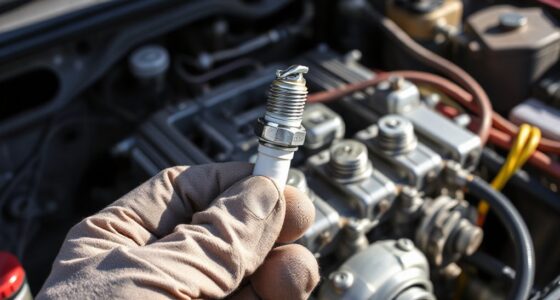
Are you tired of dealing with unreliable points ignition and constant tuning? Upgrading to an electronic ignition system can significantly improve your vehicle’s performance and reliability. But before you make the switch, it’s essential to understand what’s involved. One of the first things to consider is spark plug compatibility. Not all spark plugs work seamlessly with electronic ignitions. You’ll need to ensure that your current spark plugs match the new system’s requirements, especially regarding heat range and electrode design. Some systems may require specific types of plugs to optimize performance and prevent misfires. Checking the manufacturer’s recommendations will save you time and potential headaches later on.
Another critical aspect is wiring harness modifications. Converting to electronic ignition usually means altering or replacing the existing wiring setup. Many systems come with detailed wiring diagrams, but you need to be comfortable with electrical work or willing to seek professional help. Proper wiring ensures that the ignition system receives consistent voltage and ground, which is vital for reliable operation. Pay close attention to the connections for the coil, distributor, and power source. Incorrect wiring can lead to poor engine performance or even damage your new ignition system. In some cases, you might need to modify or upgrade your wiring harness to match the new components, especially if your vehicle’s original wiring is aged or incompatible. Additionally, understanding electronic ignition system types can help you select the best fit for your vehicle. Familiarizing yourself with the different system configurations can also aid in making an informed choice.
Proper wiring is essential for reliable electronic ignition performance and avoiding engine issues.
Additionally, it’s worth considering the type of electronic ignition system you want to install. There are points replacement modules, distributor-based systems, and crank trigger systems, each with its installation nuances. Choose one that fits your vehicle’s make and model, and that aligns with your maintenance preferences. Some systems are plug-and-play, requiring minimal modifications, while others demand more extensive work. It’s smart to review installation guides and gather the necessary tools before starting. Knowing the compatibility requirements of your chosen system can prevent installation issues and ensure optimal performance. Exploring the specific wiring needs for each system type can further streamline your upgrade process. Furthermore, researching installation procedures can help you understand the steps involved and avoid common pitfalls. Proper planning and thorough research can significantly reduce the installation time and increase satisfaction with your upgrade.
electronic ignition system for cars
As an affiliate, we earn on qualifying purchases.
As an affiliate, we earn on qualifying purchases.
Frequently Asked Questions
How Long Does the Conversion Process Typically Take?
The conversion process for switching to an electronic ignition system usually takes about 1 to 3 hours, depending on your vehicle’s make and your experience. You’ll need to replace the points and condenser with the electronic module, then rewire the system accordingly. If you’re comfortable working on your ignition system, the process moves quicker, but if you’re new, it might take a bit longer to guarantee everything’s installed correctly.
Will Converting Affect My Vehicle’s Warranty?
Converting to electronic ignition can affect your vehicle’s warranty coverage if not done correctly. Some manufacturers may consider aftermarket modifications as voiding parts of your ignition system warranty. You should check your vehicle’s warranty policy and consult your dealer or manufacturer before making the switch. Proper installation by a professional can help guarantee your warranty remains intact and your ignition system functions reliably.
Are There Specific Models That Are Easier to Convert?
Some vehicle models are easier to convert to electronic ignition, especially those with simple, factory-compatible systems. You’ll find it simpler if your car has a points-based ignition system, making adjustments to ignition timing more straightforward. Check if the electronic ignition kit is compatible with your vehicle’s factory setup. Models with straightforward wiring and accessible components typically require less modification, ensuring a smoother conversion process.
What Tools Are Required for the Conversion?
Think of your ignition system as the heartbeat of your car; to upgrade it, you’ll need specific tools. For the conversion, gather a screwdriver, pliers, wire strippers, and a multimeter. The key component is a well-matched conversion kit for your vehicle. These tools help you remove the old system and install the electronic ignition, ensuring a smooth shift. Proper tools make the process easier, safer, and more effective.
Can I Revert to the Original Ignition System Later?
Yes, you can revert to the original ignition system later, but it depends on the conversion compatibility of your vehicle. Keep all original parts and wiring, as they’re essential for a smooth switch back. When considering reversion, verify you follow proper procedures to avoid damage. It’s wise to document your conversion process, so you can easily restore the ignition system without complications.
spark plugs compatible with electronic ignition
As an affiliate, we earn on qualifying purchases.
As an affiliate, we earn on qualifying purchases.
Conclusion
Converting to electronic ignition is like upgrading from a bicycle to a motorcycle — it’s a game-changer that boosts performance and reliability. I once watched a friend’s vintage car start instantly after the switch, saving him frustration on chilly mornings. Just as a smooth engine hums like a well-tuned orchestra, electronic ignition guarantees your vehicle runs more efficiently. So, before you make the switch, remember: a small upgrade can turn your driving experience into a seamless ride.
As an affiliate, we earn on qualifying purchases.
distributor-based electronic ignition
As an affiliate, we earn on qualifying purchases.
As an affiliate, we earn on qualifying purchases.
Halloween Picks
halloween
As an affiliate, we earn on qualifying purchases.