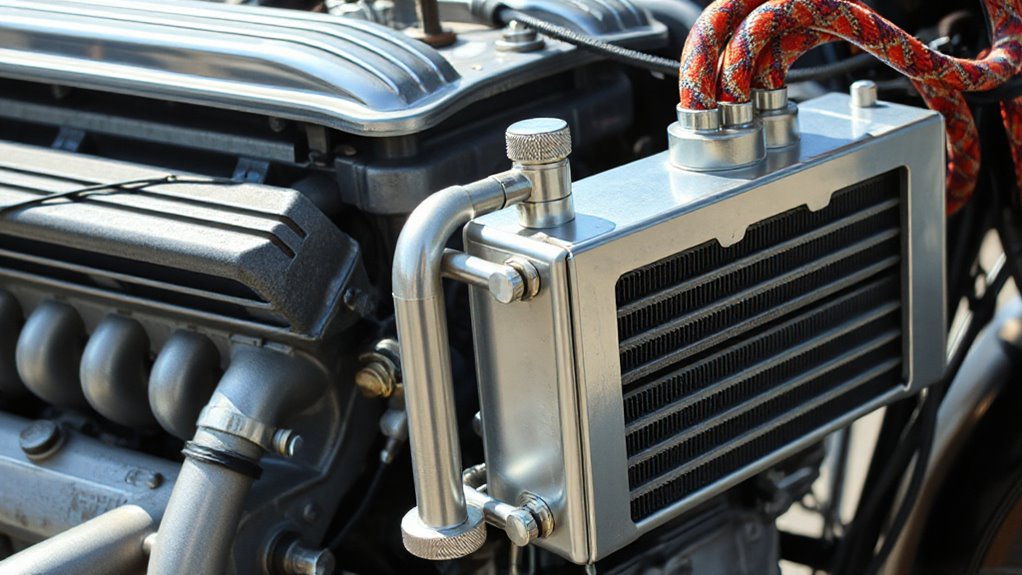

Adding an oil cooler to your air-cooled engine helps prevent overheating by dissipating heat from the oil through fins or radiators. This simple upgrade maintains ideal oil temperature, reducing engine wear and thermal stress. It boosts performance, especially under demanding conditions like hot weather or heavy loads. Regular maintenance keeps everything running smoothly. To discover how this simple addition can improve your engine’s lifespan and efficiency, keep exploring the benefits it offers.
Key Takeaways
- Oil coolers help prevent overheating and maintain optimal oil temperature for better engine performance.
- Installing an oil cooler is a straightforward upgrade that enhances cooling efficiency during demanding conditions.
- They dissipate heat from hot oil, reducing thermal stress and extending engine component lifespan.
- Proper maintenance of the cooling system ensures consistent oil flow and prevents heat buildup.
- Adding an oil cooler is especially beneficial in hot climates, tough terrain, or high-performance applications.
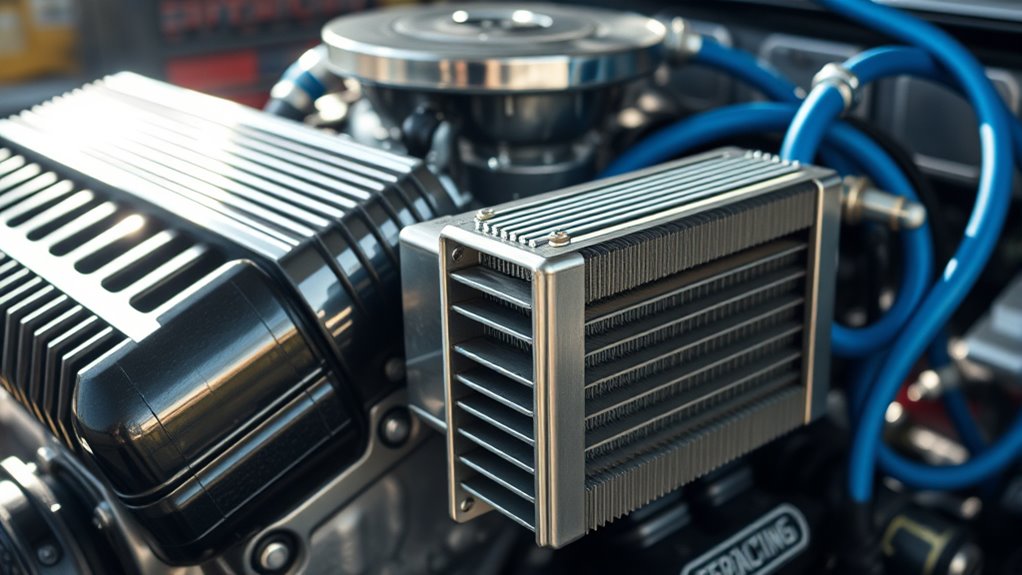
Have you ever noticed your air-cooled engine running hotter than you’d like? When an engine operates at elevated temperatures, it can lead to reduced performance, increased wear, and even potential failure. One effective way to combat this issue is by adding an oil cooler, which helps improve oil flow and enhances temperature regulation. Oil coolers act as a dedicated heat exchange system, drawing heat away from the oil before it circulates back into the engine. This process ensures that the oil maintains an ideal temperature, preventing it from breaking down or becoming too viscous. By maintaining proper oil flow, you support the engine’s ability to stay cool, especially during demanding conditions like long drives, heavy loads, or hot weather.
Adding an oil cooler helps keep your air-cooled engine running cooler and more efficiently.
When an air-cooled engine heats up, it’s often because the oil isn’t cooling efficiently or the temperature regulation system isn’t enough to offset heat buildup. An oil cooler makes a significant difference here. It functions by passing the hot oil through a series of fins or a radiator-like component, where heat dissipates into the surrounding air. This process helps keep the oil at a consistent, manageable temperature, reducing stress on engine parts and preventing overheating. Proper temperature regulation through an oil cooler also means your engine components experience less thermal expansion and contraction, extending their lifespan and maintaining ideal performance.
Installing an oil cooler is a straightforward upgrade that can yield immediate benefits. It’s especially useful if you regularly push your engine to its limits or operate in hot environments. Ensuring good oil flow is essential because if the oil doesn’t circulate properly, heat can build up rapidly, causing the engine to overheat. An oil cooler helps maintain steady flow, even under high demand, by preventing oil from becoming too thick or too thin. This balance allows your engine to run smoothly and reliably, with less risk of damage caused by excessive heat.
In essence, adding an oil cooler to your air-cooled engine is about giving it a fighting chance against heat stress. It’s a proactive step that improves temperature regulation and keeps oil flowing efficiently, which in turn protects your engine and prolongs its life. Regular maintenance of cooling systems can further optimize your engine’s thermal management. Whether you’re tackling tough terrain or enduring extreme temperatures, this upgrade helps ensure your engine stays cool, performs well, and remains dependable for miles to come.

Hydraulic Air Cooler AH0608T-CA Air-Cooled Oil Radiator DC 12V 48W 60L/min Compatible with Most 1-2 Ton Excavator Makes and Models
【Premium OEM Replacement】Precision-engineered to replace OEM Part Numbers: AH0608T-CA, AH0608TCA, and AH0608T Hydraulic Oil Radiator. This brand-new, unused…
As an affiliate, we earn on qualifying purchases.
As an affiliate, we earn on qualifying purchases.
Frequently Asked Questions
Can Oil Coolers Be Added to Vintage Air-Cooled Engines?
Yes, you can add oil coolers to vintage air-cooled engines. This modification boosts cooling efficiency, helping prevent overheating during long drives or hot weather. Vintage modifications like installing an oil cooler are practical and straightforward, fitting into the engine’s existing setup. You’ll notice improved engine performance and longevity, making it a smart upgrade for your classic vehicle. Just make certain proper installation to maximize the benefits.
What Are the Signs Indicating the Need for an Oil Cooler?
Think of your engine as a busy kitchen stove—when it starts to overheat, it’s time to check the signs. If you notice overheating symptoms like high engine temperatures or fluctuating oil pressure, that’s a clear signal you need an oil cooler. These symptoms indicate your engine is struggling to shed heat, and adding an oil cooler can help keep things running smoothly without overheating or oil pressure drops.
How Does an Oil Cooler Affect Engine Oil Change Intervals?
Adding an oil cooler can extend your engine oil change intervals by keeping the oil temperature lower, which reduces breakdown and oxidation. When oil stays cooler, its lifespan increases because it resists thermal degradation. This means you won’t need to change it as often, saving you time and money. Plus, maintaining ideal oil temperature helps your engine run smoothly and efficiently, ultimately prolonging its overall lifespan.
Are There Specific Oil Types Compatible With Added Coolers?
Yes, certain oil types work better with added coolers. Synthetic oils are usually more compatible because they handle higher temperatures and maintain their viscosity longer, making them ideal for cooled engines. Mineral oils can also be used but may break down faster under cooler conditions. Always check your engine manufacturer’s recommendations to guarantee you choose the right oil type for your air-cooled engine with an added cooler.
What Maintenance Is Required for Oil Coolers in Air-Cooled Engines?
In the days of steam engines, maintenance was straightforward, but now, you need to regularly inspect your oil cooler. Keep an eye on cooler installation and look for leaks or blockages. Clean the cooler fins and ensure proper fluid flow. An oil cooler inspection every few thousand miles helps prevent overheating. Replacing worn hoses or damaged parts promptly keeps your engine running smoothly and extends its lifespan.

A-Premium Engine Coolant Radiator with Transmission Oil Cooler Compatible with Ford Escape 2001-2007 & Mazda Tribute 2001-2006 & Mercury Mariner 2005-2007, V6 3.0L Only, Replace# YL8Z8005LB, ZZC215200
[Vehicle Fitment]: Compatible with Ford Escape 2001-2007 V6 3.0L; Compatible with Mazda Tribute 2001-2006 V6 3.0L; Compatible with…
As an affiliate, we earn on qualifying purchases.
As an affiliate, we earn on qualifying purchases.
Conclusion
Now that you’ve added an oil cooler, you’ve taken a big step toward better engine health. But will it be enough to keep overheating at bay? As you hit the road or track, keep an eye on those temperatures—things can change in an instant. With this upgrade, you’ve boosted your engine’s resilience, but stay alert. The true test is yet to come. Are you ready to see just how far your engine can go?

Motorcycle Aluminum Quick Cooling Engine Oil Cooler Oil Cooling Radiator System Kit Fit for CB for CG6 100CC-250CC(65ML-Silver)
【Fitment】The engine oil cooler radiator is fit for Honda GY6 100CC-150CC engine.
As an affiliate, we earn on qualifying purchases.
As an affiliate, we earn on qualifying purchases.

Upgraded Aluminum Engine Oil Filter Housing Kit with Oil Cooler Sensors and Gaskets Compatible with 2011-2016 Chrysler 200 300, Dodge Charger Challenger Journey, Wrangler, Ram ProMaster 3.6L
Perfect Replacement: The original plastic oil filter housing very easy break, that will cause a leak and allow…
As an affiliate, we earn on qualifying purchases.
As an affiliate, we earn on qualifying purchases.