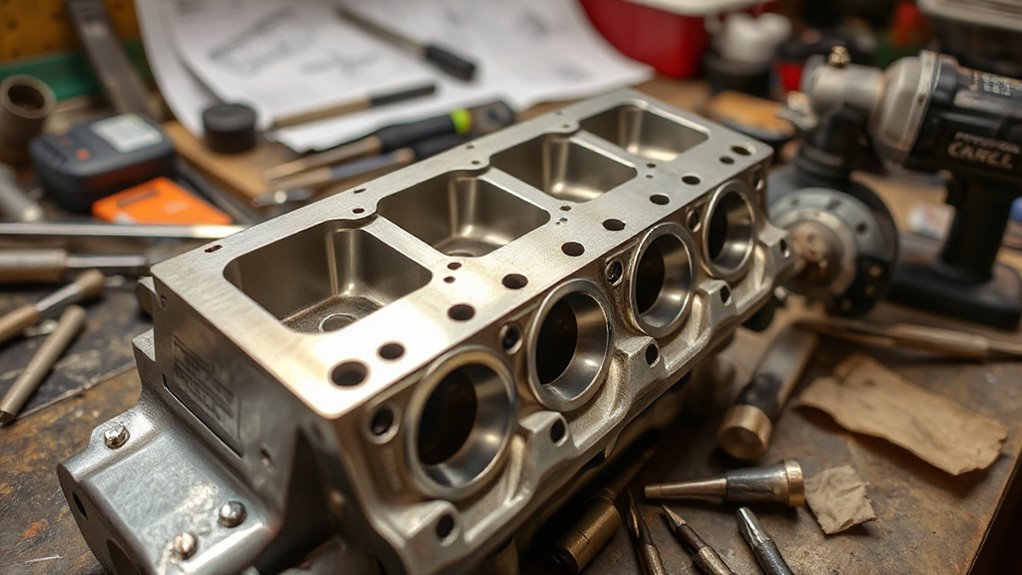

Porting and polishing your cylinder head can definitely boost your engine’s performance, power, and efficiency if you do it yourself. By improving airflow through careful shaping and smoothing of the ports, you help your engine breathe better and burn fuel more effectively. While it’s a cost-effective upgrade, it requires patience, proper tools, and some understanding of airflow dynamics. Keep exploring to learn how precise work can maximize your engine’s potential without costly upgrades.
Key Takeaways
- Proper DIY porting and polishing can improve airflow, leading to increased engine power and efficiency if performed correctly.
- Enhancing airflow pathways reduces restrictions and promotes better fuel combustion, boosting overall performance.
- Skilled DIY work with quality tools can achieve significant gains, but uneven or rough finishes may negate benefits.
- Studying engine-specific flow patterns and following detailed guides helps optimize the porting and polishing process.
- Patience and precision are crucial; improper work may cause airflow issues and diminish performance gains.
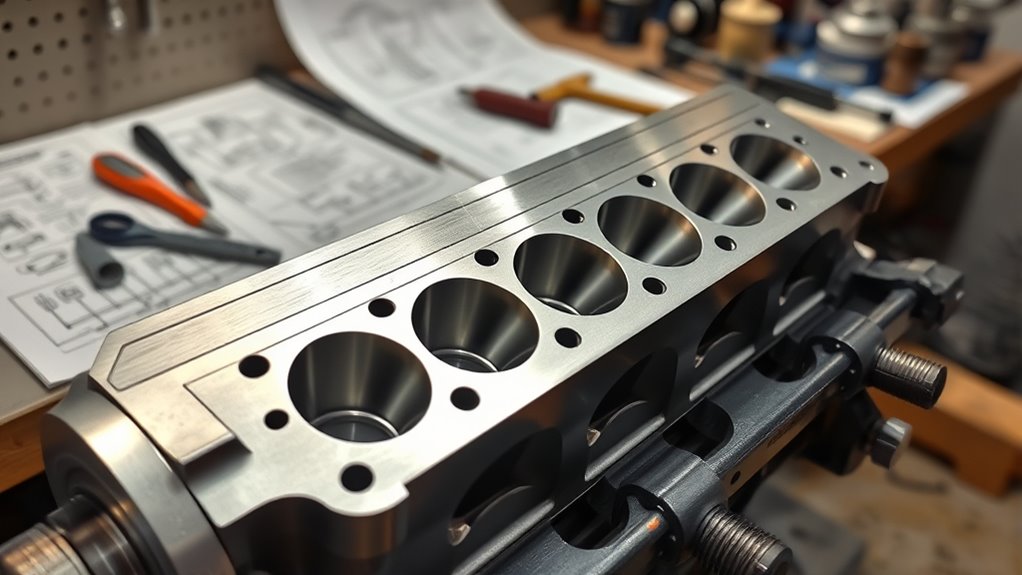
If you’re looking to boost your engine’s performance, understanding porting and polishing is crucial. These modifications involve refining the intake and exhaust ports of your cylinder head to improve airflow, which can lead to noticeable gains in power and efficiency. While many enthusiasts consider porting and polishing a professional job, with the right tools and careful technique, a skilled DIYer can achieve meaningful results. One of the key benefits of porting and polishing is enhanced fuel efficiency. When air flows more smoothly into the combustion chamber, your engine burns fuel more completely, reducing waste and helping you save on fuel costs. Better airflow also means your engine can produce more power with less effort, translating into increased responsiveness and overall performance.
In addition to performance, porting and polishing can contribute to emissions reduction. An optimized airflow path ensures more complete combustion, which results in fewer unburned hydrocarbons and lower emissions. This not only helps your vehicle meet environmental standards but also extends the lifespan of your catalytic converter and other exhaust components. When you modify your cylinder head, you’re fundamentally tuning the breathing capabilities of your engine, which can make a significant impact on how efficiently it runs. It’s important to approach this work with patience and precision, as uneven port matches or rough finishes can negate the benefits or cause issues down the line.
For a DIY project, start by thoroughly cleaning your cylinder head to remove any dirt, carbon buildup, or residue. Use quality tools like carbide burrs and polishing stones, and take your time to shape and smooth the ports carefully. The goal is to eliminate any restrictions or rough edges that hinder airflow, but avoid over-polishing, which can reduce turbulence essential for proper mixing of air and fuel. It’s a delicate balance between smoothing surfaces and maintaining the proper port shape. You might want to study specific flow patterns or consult guides tailored to your engine type to ensure your modifications align with your performance goals. Additionally, understanding the importance of airflow dynamics can help you achieve more effective results in your porting and polishing efforts.
Frequently Asked Questions
Can Porting and Polishing Damage My Engine if Done Incorrectly?
Yes, porting and polishing can damage your engine if you use improper techniques. If you don’t know what you’re doing, you risk removing too much material, which weakens the cylinder head and could lead to engine damage. Using the wrong tools or rushing the process increases the chances of creating uneven surfaces or cracks. Always research thoroughly or consult a professional to avoid costly mistakes that harm your engine.
How Much Does DIY Cylinder Head Work Cost Compared to Professional Services?
DIY cylinder head work typically costs less than professional services, making it appealing if you’re on a budget. Your DIY expenses mainly include tools, abrasives, and replacement parts, which can add up but are generally affordable. In contrast, professional services charge for labor and expertise, often resulting in higher costs. So, if you’re experienced and careful, DIY can save money, but mistakes could lead to costly repairs later.
What Tools Are Essential for Safe DIY Porting and Polishing?
To safely perform DIY porting and polishing, you need safety gear like goggles, gloves, and a dust mask to safeguard yourself from debris and fumes. Essential precision tools include carbide burrs, rotary tools, and polishing pads to ensure accurate work. Always wear safety gear, work in a well-ventilated area, and handle tools carefully to avoid injury and achieve professional results.
How Long Does a Typical DIY Porting and Polishing Process Take?
You might find that a DIY porting and polishing session takes anywhere from 4 to 12 hours, depending on your skill level and the complexity of the head. If you’re a beginner, expect it to lean toward the longer end. A skilled DIYer might breeze through in a single weekend, but patience is key. Remember, taking your time guarantees better results and avoids costly mistakes.
Are There Specific Engine Types That Benefit Most From Porting and Polishing?
You’ll find that diesel engines and high performance models benefit the most from porting and polishing. Diesel engines, with their unique combustion chamber design, see improved airflow and fuel efficiency, while high performance models gain increased power and throttle response. If you’re working on these types, DIY porting can be rewarding, but make sure you have the right tools and knowledge to avoid damaging your engine.
Conclusion
Now that you’ve learned the basics of porting and polishing, imagine what releasing that extra horsepower could do for your ride. Are you ready to take the leap and see real performance gains? The possibilities are waiting just beneath the surface, but the choice is yours—dive in and discover what your engine is truly capable of. Don’t settle for average; push your limits and unleash the potential that’s been hiding right under your nose.