To assess your motorcycle’s engine health, start by inspecting your spark plug’s color and deposit patterns. A light tan or gray shows proper fuel mixture and timing, while black, sooty deposits point to too rich a mix. White or ashy deposits mean it’s too lean. Overheating, fouling, or discoloration can reveal timing or mechanical issues. Regular checks help catch problems early. Keep exploring, and you’ll learn more tips to keep your bike running smoothly.
Key Takeaways
- Examine the color and deposit patterns: tan/gray indicates proper tune, while black or white deposits signal rich or lean mixtures.
- Check for signs of overheating like blistered or white insulators, which suggest ignition timing issues.
- Look for fouling or damage, indicating oil leaks, worn components, or ignition problems needing attention.
- Use deposit appearance to adjust fuel mixture and ignition timing for optimal engine performance.
- Regularly inspect and interpret spark plug signs to prevent engine damage and maintain peak motorcycle performance.
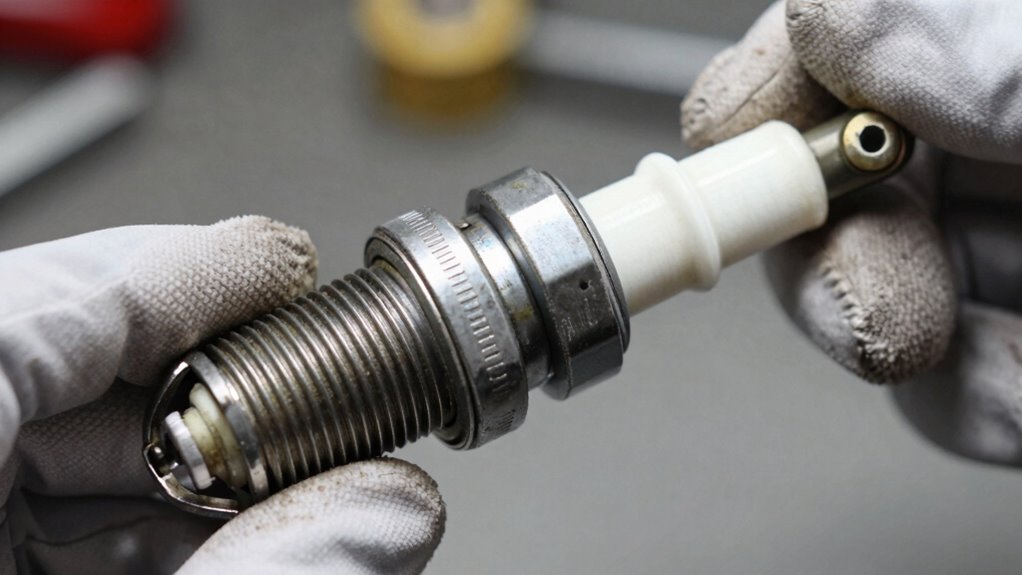
Ever wonder how to diagnose engine issues just by inspecting your spark plugs? When you get up close and personal with those small components, you unlock a wealth of information about your motorcycle’s health. The key to reading spark plugs effectively lies in understanding what their appearance reveals about ignition timing and fuel mixture. These two factors are critical for optimal engine performance, and slight deviations can cause noticeable issues like misfires, poor acceleration, or increased fuel consumption.
Start by examining the spark plug’s color and deposit patterns. A light tan or grayish hue usually indicates a healthy mixture—neither too rich nor too lean—and proper ignition timing. If the plug’s insulator tip is black and sooty, that’s a sign of a rich fuel mixture, meaning your engine is getting too much fuel relative to air. Conversely, a white or ashy deposit suggests a lean mixture, where there’s too little fuel or too much air. Such imbalances affect how your engine runs and can lead to knocking or misfiring if not corrected. When inspecting, pay attention to these subtle color cues, as they point directly to whether your fuel mixture needs adjustment. Proper inspection techniques can help you better interpret these signs. Recognizing common spark plug deposit patterns can also assist in diagnosing other underlying engine issues more effectively. Being familiar with the appearance of spark plugs can help you quickly identify potential problems before they escalate.
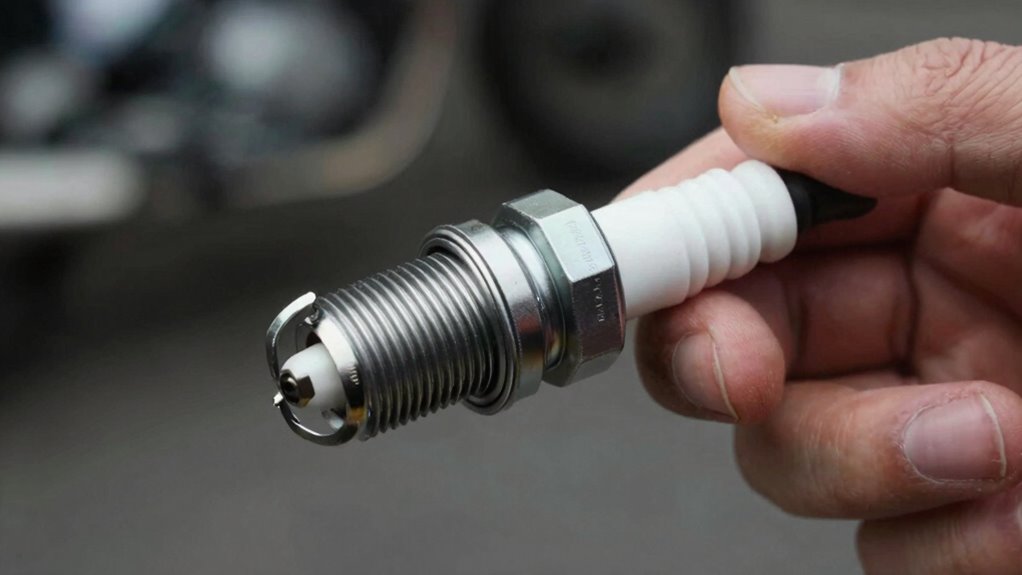
Healthy spark plugs show a light tan or grayish hue, indicating proper fuel mixture and ignition timing.
Ignition timing also plays a significant role in spark plug appearance. If the spark occurs too early (advanced timing), you might see signs of overheating, such as a white or blistered insulator. This can cause pre-ignition or knocking, which damages the plug and engine over time. On the other hand, delayed ignition (retarded timing) often results in carbon buildup, giving the plug a sooty look. Regularly inspecting these signs helps you determine if your ignition system is correctly timed. Adjustments to ignition timing should be made carefully, as even small changes can impact engine efficiency and longevity.
As you examine the spark plug, look for signs of fouling or damage that might indicate other issues, such as oil leaks or worn-out components. A clean, properly colored plug with no signs of excessive deposits or damage suggests your engine runs smoothly with the right ignition timing and fuel mixture. If you notice inconsistencies in color or deposits, it’s a cue to fine-tune your carburetor or fuel injection system, and possibly check your ignition timing. Additionally, understanding spark plug deposits can help you diagnose underlying engine problems more accurately.
In essence, reading spark plugs is about interpreting their color, deposit patterns, and signs of wear to gauge whether your ignition timing and fuel mixture are properly balanced. With practice, you’ll develop a keen eye for these details, allowing you to troubleshoot engine issues quickly and keep your motorcycle running at peak performance.
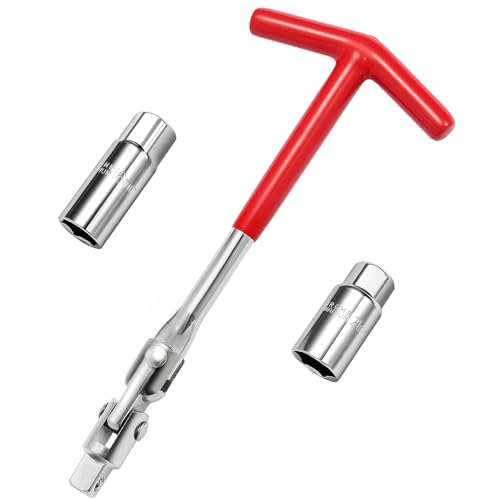
pwkauka 3Pcs Spark Plug Socket Wrench Set T-Handle, Universal 5/8" & 13/16" Spark Plug Tool Remover and Installer Tool for Motorcycles, Lawn Mowers, Small Motor Vehicles, Car Accessories
Multi functional set: Spark Plug Wrench T-shaped handle,16mm (5/8 ") and 21mm (13/16") spark plug socket, providing a…
As an affiliate, we earn on qualifying purchases.
As an affiliate, we earn on qualifying purchases.
Frequently Asked Questions
How Often Should I Check My Spark Plugs?
You should check your spark plugs every 3,000 to 5,000 miles, but it varies depending on riding conditions. If you ride in harsh conditions, like frequently in rain or dusty environments, check them more often. Spark plug lifespan can be shortened by aggressive riding or poor maintenance. Regular inspections guarantee the best performance, fuel efficiency, and early detection of wear or damage, helping you avoid unexpected breakdowns.
Can Spark Plug Color Indicate Engine Issues?
Imagine a neon sign flashing red—your spark plug’s color can reveal engine health. A tan or light brown indicates a healthy fuel mixture and good combustion efficiency. Black soot suggests a rich mixture, while white or blistered insulator points to overheating. By checking these colors regularly, you catch potential issues early, ensuring your engine runs smoothly and efficiently, just like a well-oiled machine from a vintage garage.
What Tools Are Best for Inspecting Spark Plugs?
For spark plug inspection, you’ll want reliable tools like a spark plug socket, ratchet wrench, and a spark plug gauge. A wire brush helps clean deposits, and a magnifying glass or inspection mirror lets you examine the electrode closely. Tool recommendations include a socket with rubber inserts to protect the ceramic, and a torque wrench guarantees proper tightening. These tools make inspecting and reading your spark plugs more accurate and efficient.
How Do I Clean or Replace a Spark Plug?
Imagine your spark plug as the heart of your motorcycle’s engine, needing proper care. To clean or replace it, first remove the spark plug carefully, using a spark plug removal tool. For cleaning, gently scrub the electrode with a wire brush, removing carbon deposits. If the plug is worn or damaged, replace it with a new one, ensuring it’s correctly gapped before installation. Proper maintenance keeps your engine firing smoothly.
Do Different Motorcycle Models Require Different Spark Plug Types?
Yes, different motorcycle models require specific spark plug types. You need to take into account spark plug materials like copper, platinum, or iridium, which impact performance and longevity. Also, your motorcycle engine type—whether it’s a single-cylinder, V-twin, or multi-cylinder—determines the right spark plug. Always check your owner’s manual for the recommended spark plug specifications to guarantee peak performance and avoid engine issues.

Nitrous Outlet Top Spark Plug Reading Tool
Nitrous Outlet Top Spark Plug Reader
As an affiliate, we earn on qualifying purchases.
As an affiliate, we earn on qualifying purchases.
Conclusion
Now that you know how to read your spark plugs, you’re no longer just a rider—you’re a mechanic, a detective, a protector of your motorcycle’s soul. Each deposit and crack tells a story, revealing both the health of your engine and your dedication. Just like a seasoned rider feels the road beneath them, you’ll feel the confidence in understanding what your spark plugs say. Embrace this knowledge—your bike and your skills will thank you.

UNLRAE Spark Plug Cleaner,Car Accessories Pneumatic Spark Plug Cleaner Sandblaster,Automotive Tools,High-Efficiency Air Sandblaster with Brasive Material,Suitable for Most Motorcycle,Lawn Mower,Cars
[High-Quality Materials]: The pneumatic spark plug cleaner is made of high-quality plastic, brass, and steel clip materials, making…
As an affiliate, we earn on qualifying purchases.
As an affiliate, we earn on qualifying purchases.

Fiada 9 Pieces Automotive Compression Tester Kit and Spark Plug Tester, Universal Car and Motorcycle Engine Testing Tools for Cylinder Pressure Gauge (Blue)
Cylinder Testing Kit: the pressure tester kit is a professional tool for quickly and accurately measuring gas engine…
As an affiliate, we earn on qualifying purchases.
As an affiliate, we earn on qualifying purchases.