To boost your vintage bike’s horsepower, start by upgrading to a high-flow exhaust system to improve airflow. Reflash your ECU and fine-tune fuel delivery for better combustion efficiency. Improve air intake and replace filters to maximize airflow. Consider internal engine mods like porting heads or increasing compression, and upgrade ignition components for stronger sparks. These modifications work together to release more power—continue exploring to discover detailed tips for each upgrade.
Key Takeaways
- Install an aftermarket full exhaust system or slip-on to improve airflow and increase horsepower.
- Reflash and fine-tune the ECU for optimized fuel and ignition maps after modifications.
- Upgrade to high-flow air filters and intake kits to enhance combustion efficiency.
- Perform internal engine modifications like porting, polishing, and high compression pistons for power gains.
- Enhance ignition components such as spark plugs and coils to ensure complete combustion and better responsiveness.
Upgrading Your Exhaust System for Better Flow
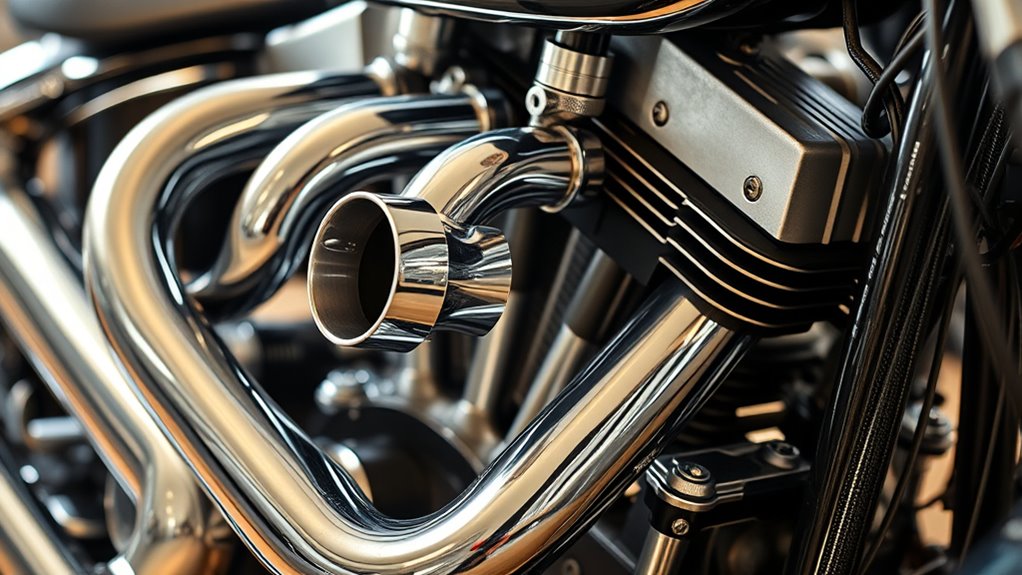
Upgrading your exhaust system is one of the most effective ways to improve your vintage bike’s performance by enhancing exhaust flow. Replacing the stock exhaust with an aftermarket full system reduces restrictions and allows gases to escape more freely. This improved airflow not only boosts horsepower and torque but also enhances throttle response. Slip-on exhausts are a lighter alternative that cuts weight, helping your bike accelerate quicker. Expect weight savings of about 6 pounds, which can translate to a 2-3 HP increase depending on your model. Remember, simply installing a new exhaust isn’t enough—you need to tune your ECU afterward to maximize gains and prevent power loss. Proper exhaust upgrades optimize airflow, improving engine efficiency, liberating your vintage bike’s true potential on the road. Smart home technology can even be integrated into your garage or workshop to monitor maintenance schedules or control climate conditions for optimal working environments. Additionally, considering proper airflow management can further enhance overall engine efficiency and longevity, especially when combined with other performance upgrades.
Reflashing the ECU and Fine-Tuning Fuel Delivery

Reflashing the ECU and fine-tuning your fuel delivery are essential steps to unfastening your vintage bike’s full performance potential after exhaust and intake upgrades. When you reprogram the ECU, you optimize fuel and ignition maps to match your modified engine. This ensures the engine runs efficiently and safely under increased airflow and power demands. Using aftermarket fuel controllers like Power Commander or Vance & Hines FuelPak lets you fine-tune the air/fuel mixture across different RPMs, maximizing horsepower and torque. Proper tuning prevents issues like detonation or sluggish response. It’s best to have a professional or experienced technician handle ECU flashing to avoid damaging your bike. With precise fuel delivery adjustments, you’ll notice smoother throttle response, improved power delivery, and better overall engine performance.
Improving Air Intake and Filtration Efficiency
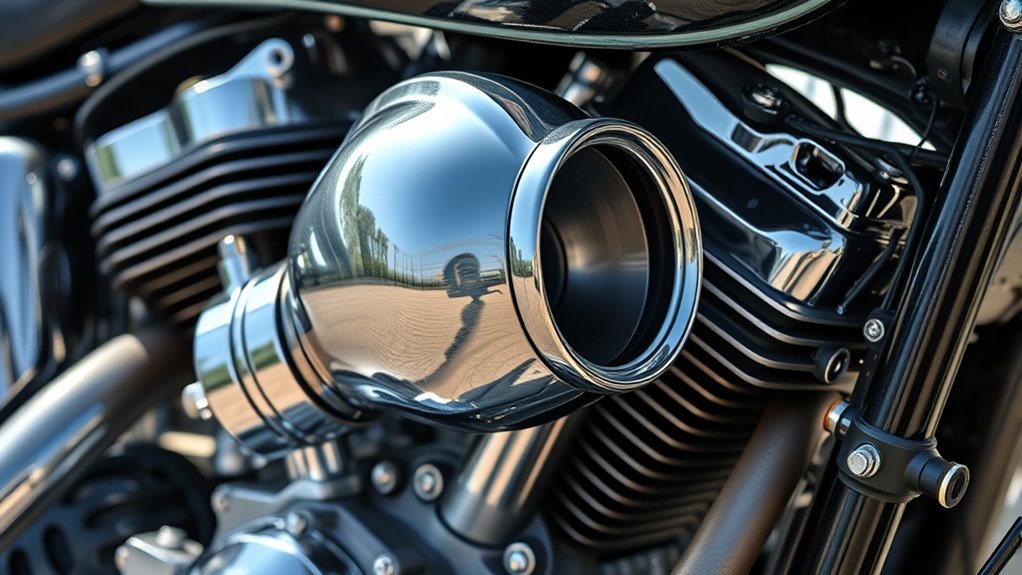
Enhancing your bike’s air intake and filtration system can considerably boost engine performance by increasing airflow and combustion efficiency. Upgrading to an aftermarket air filter allows more air to reach the engine, promoting better combustion and power output. Assemblies like high-flow intake kits improve throttle response and overall efficiency, especially when paired with exhaust upgrades. Keep in mind, increasing airflow requires tuning your fuel delivery systems to maintain the ideal air-fuel mixture and prevent engine issues. Stock components often restrict airflow to meet emissions standards, so replacing them with high-performance parts can release hidden power. Incorporating air filtration improvements alongside intake modifications can help prevent contaminants from entering the engine, prolonging its lifespan. Combining intake improvements with exhaust modifications and fuel tuning creates a synergistic effect, maximizing horsepower gains while maintaining engine reliability. Attention to detail and systematic testing, including regular use of automated testing practices, can help ensure that modifications achieve the desired performance improvements without compromising engine integrity.
Internal Engine Modifications for Power Gains

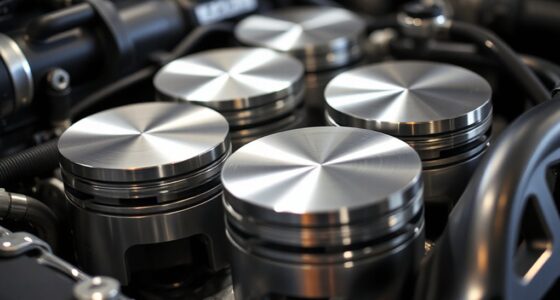
Internal engine modifications can substantially boost your vintage bike’s power when done correctly. By porting and polishing cylinder heads, you improve airflow, increasing volumetric efficiency and horsepower. Larger valves allow more air and fuel to enter, boosting power output. Installing high compression pistons elevates combustion pressures, delivering more torque, but requires precise tuning and premium fuel. Upgrading internal components like rods and crankshafts enhances durability, supporting higher power levels. Carburetor or flat-slide carb upgrades optimize fuel delivery, improving throttle response. These modifications not only elevate performance but also require careful attention to balance and compatibility, ensuring that all components function harmoniously. Additionally, employing internal engine modifications can lead to significant power gains, provided they are executed with precision. Proper engine tuning ensures that all components work harmoniously, maximizing power gains and reliability.
Enhancing Ignition Components for Stronger Combustion
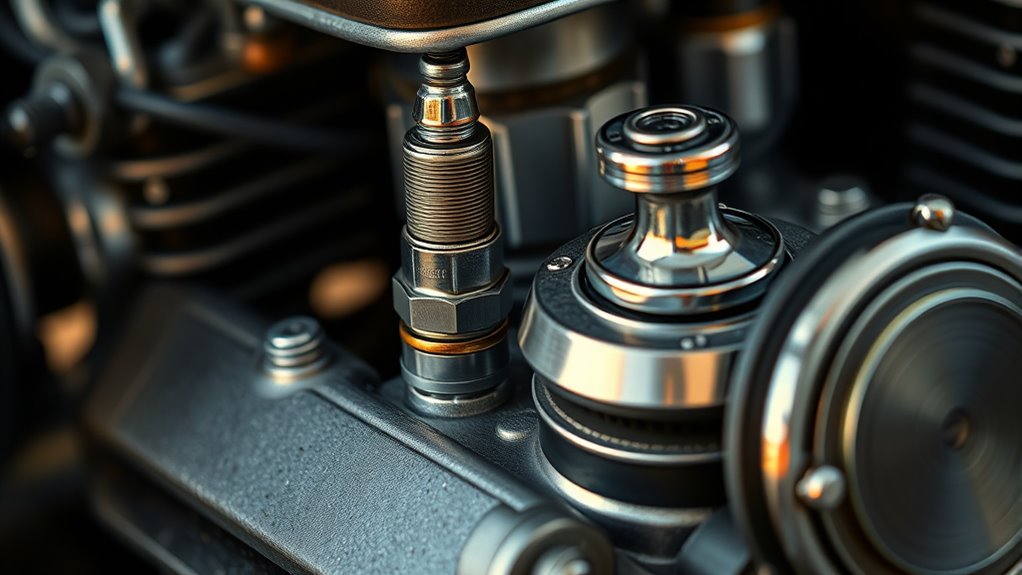
Upgrading your ignition components is a straightforward way to achieve more reliable and powerful combustion in your vintage bike. By installing high-quality spark plugs, you guarantee a stronger spark that ignites the air-fuel mixture more completely. Upgrading ignition coils improves spark energy and timing accuracy, leading to better throttle response and smoother power delivery. Aftermarket ignition systems, like digital ignitions or advanced CDI units, allow precise control of ignition timing across RPMs, revealing hidden horsepower. Proper tuning of these components guarantees optimal combustion, reducing misfires and knocking. Keep in mind, stock ignition parts are often conservative to enhance durability, so choose upgrades based on your bike’s performance goals. When done correctly, these modifications boost efficiency, power, and engine responsiveness without sacrificing reliability.
Frequently Asked Questions
How Do I Choose the Best Exhaust System for My Vintage Bike?
You should choose an exhaust system that matches your bike’s make and model for ideal fit and performance. Look for aftermarket full exhausts that improve airflow and reduce weight, boosting power. Guarantee proper tuning, like ECU flashing, after installation to prevent power loss. Consider your riding style, whether you want a louder sound or better torque, and check reviews to find a reputable brand that offers reliable durability and performance.
Can I Upgrade My Engine Without Professional Help?
You can upgrade your engine without professional help, but it’s a gamble. Coincidentally, many DIY enthusiasts have successfully installed exhausts, air filters, or even reprogrammed their ECUs, saving money and gaining a sense of pride. However, remember that tuning is critical; improper adjustments can harm your engine or reduce performance. If you’re confident, follow detailed guides and take your time. Otherwise, consult a professional to avoid costly mistakes.
What Are the Risks of Tuning My ECU Myself?
Tuning your ECU yourself risks damaging your engine if you’re inexperienced or use incorrect settings. You might cause poor fuel economy, rough running, or even engine failure. Without proper tools or knowledge, you could also void your warranty. It’s best to consult a professional or use reputable tuning software, ensuring you follow safety procedures. Otherwise, you might end up spending more fixing issues caused by amateur tuning.
How Much Horsepower Can I Realistically Expect From These Mods?
You can realistically expect a 10-20% boost in horsepower from these mods, turning your vintage bike into a spirited stallion. Upgrading the exhaust, ECU, and intake works like tuning a finely crafted instrument, revealing hidden potential. With proper tuning and quality parts, you might see an extra 5-15 horsepower—enough to make your ride roar with newfound vigor. Just remember, the more you push, the more precision it demands.
Are There Legal or Emissions Issues With Engine Modifications?
You might face legal and emissions issues with engine modifications. Many regions require your bike to meet specific emissions standards, and aftermarket parts can sometimes make it non-compliant. If you modify your exhaust or ECU without proper approval, you could get fined or fail inspections. Always check local laws before upgrading, and consider using approved aftermarket parts or keeping your modifications reversible to avoid legal trouble.
Conclusion
Now that you’ve unleashed these five powerful upgrades, your vintage bike will roar like a beast released, leaving everyone in the dust. With each mod, you’re transforming your ride into a thunderous masterpiece that defies time and physics. Get ready for jaw-dropping acceleration and head-turning power that’ll make your friends question if they’re riding a classic or a rocket. Buckle up—your vintage bike’s unstoppable transformation is just getting started!