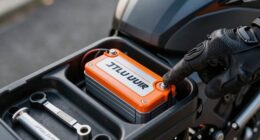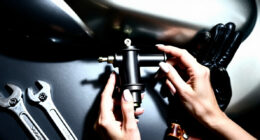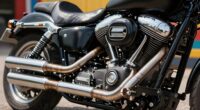
To upgrade your older motorcycle’s braking, start by swapping in high-performance brake pads like sintered types for better initial bite and heat resistance. Upgrade to high-quality rotors made from stainless steel or cast iron for improved heat dissipation, and replace rubber hoses with steel-braided lines for a more responsive feel. Consider a master cylinder with adjustable features to fine-tune your braking control. Continue exploring how these upgrades can transform your ride’s stopping power.
Key Takeaways
- Upgrade to sintered brake pads for increased friction, heat resistance, and improved initial bite.
- Install high-performance stainless steel or carbon rotors with floating or drilled designs for better heat dissipation.
- Replace rubber brake lines with steel-braided hoses to enhance responsiveness and reduce flex under pressure.
- Upgrade to aftermarket master cylinders with larger pistons for improved hydraulic pressure and brake modulation.
- Regularly maintain the system with proper fluid selection and cleaning to ensure consistent, reliable braking performance.
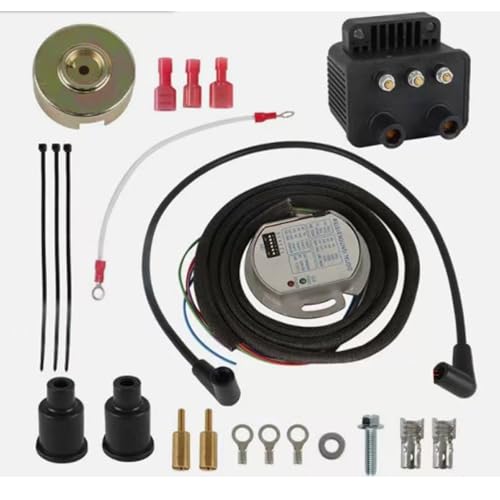
Single Fire Programmable Ignition Coil Kit - Compatible with 1970-1999 Harley-Davidson Big Twin (Except Twin Cam) & 1986-2003 Sportster (Except S models), Replaces 53-660
Wide Compatibility: Compatible with Harley-Davidson Big Twin models 1970–1999 (except Twin Cam) and Sportster 1986–2003 (except ‘S’ models).Also...
As an affiliate, we earn on qualifying purchases.
Upgrading Brake Pads for Enhanced Stopping Power

Upgrading your brake pads is one of the most effective ways to boost your motorcycle’s stopping power without replacing other components. Switching from stock semi-metallic pads to sintered brake pads markedly increases friction and delivers a stronger initial bite. Sintered pads resist brake fade better under heat, making them perfect for aggressive riding or track days. They handle high temperatures without losing effectiveness, providing consistent braking performance. If you prefer a softer, more progressive feel for low-speed control, organic pads are an option, though they offer less initial bite and heat resistance. Popular aftermarket choices like EBC HH, Brembo Sintered Road Pads, and TRW’s CRQ Hyper-Carbon pads offer reliable performance. Upgrading your brake pads is affordable, easy, and can dramatically improve your stopping power and overall braking feel. Additionally, choosing the right brake pad material can enhance your motorcycle’s braking performance across various riding conditions. Understanding brake pad materials can help you select the best option for your specific riding style and needs. Selecting the appropriate material can also help you optimize your motorcycle’s safety in diverse riding scenarios. Incorporating water-resistant pads can be especially advantageous for riding in wet conditions, ensuring consistent braking power.

32 Amp Alternator Charging System for 1970-1984 Shovelhead & 1984-1999 "EVO Evolution Big Twin FX/FL, Softail, Dyna, FXR, Touring Models (Except Twin Cam & EFI Models) with Stator, Rotor, Reg/Rec
Upgrade your '70-'84 Big Twins weak charging system with this upgraded 32 Amp Kit! These systems are the...
As an affiliate, we earn on qualifying purchases.
Choosing High-Performance Brake Rotors
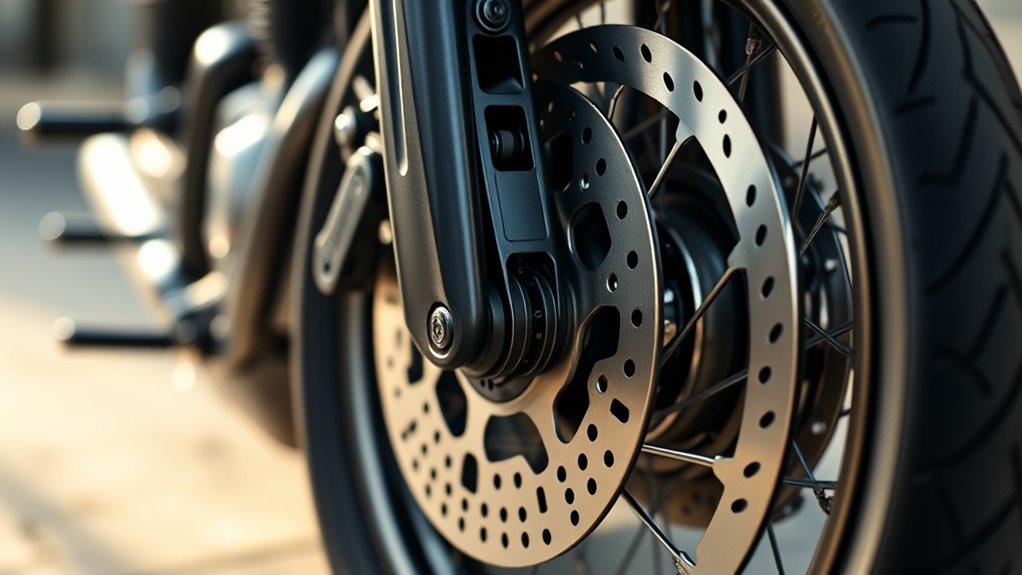
After upgrading your brake pads, focusing on high-performance rotors can further boost your braking capabilities. Choose rotors made from materials like stainless steel, carbon, or cast iron for better heat dissipation and reduced warping. Floating or semi-floating designs ensure consistent contact with pads and help prevent deformation under heat. Two-piece rotors, with steel outer rings and anodized inner rings, are excellent for high-performance riding, minimizing heat-related deformation. Wavy or drilled rotors improve cooling and reduce weight, enhancing overall response. When selecting rotors, consider your riding style and the demands placed on your bike. Proper piercing care and hygiene can prevent contamination and ensure the longevity of your braking components. Additionally, selecting advanced brake rotor technology can further improve heat management and braking efficiency. Utilizing vented or slotted designs allows for better heat dissipation during intense braking sessions. Incorporating innovative manufacturing techniques can also lead to more durable and reliable rotors. Pairing high-quality rotors with upgraded pads maximizes braking power, reduces fade, and guarantees reliable performance, especially during aggressive or prolonged braking situations.
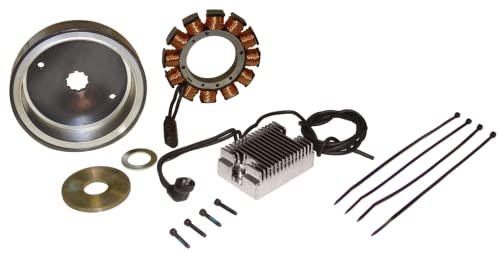
Heavy Duty 32 Amp Alternator Charging System w/HD One-Piece Rotor for 1970-1984 Harley Shovelhead & 1984-1999 EVO Big Twin Motor (Except Twin Cam & EFI Models) Chopper Bobber
Upgrade your '70-'84 Big Twins weak charging system with this HEAVY DUTY 32 Amp Kit! These systems are...
As an affiliate, we earn on qualifying purchases.
Improving Brake Line Responsiveness With Steel-Braided Hoses
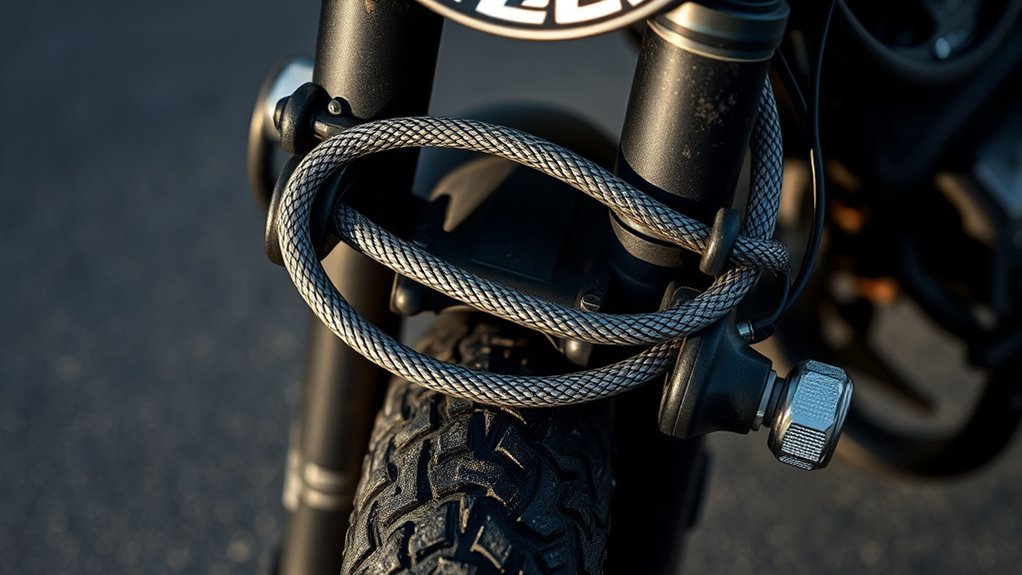
Steel-braided brake hoses considerably improve responsiveness by reducing hose expansion under pressure, which guarantees your brake lever feels firm and direct. Rubber lines can stretch or swell when you apply force, causing a spongy or inconsistent brake feel. Upgrading to steel-braided hoses minimizes this flex, resulting in more precise feedback and faster response during braking. This upgrade enhances control, especially during aggressive or sustained stops, giving you greater confidence. Steel-braided lines also resist expansion from heat, maintaining consistent performance under demanding conditions. They’re compatible with ABS and modern braking systems, making them suitable for most motorcycles. Plus, these kits are often prefabricated and TÜV-certified, ensuring safety and quality. Proper installation and material durability can further optimize your upgrade process and ensure durability over time. Additionally, understanding brake system compatibility can help prevent potential installation issues and maximize performance benefits. Maintaining proper brake fluid levels is also essential for optimal brake response and safety.

MaxxHaul Adjustable Motorcycle Wheel Chock Stand with Auto-Lock Cradle, Fits 15"–21" Tires – Heavy-Duty Steel Bike Stand for Trailer, Garage & Truck Bed, Includes Mounting Hardware – 70075
Universal Wheel Compatibility: Designed to accommodate most motorcycle wheels, this wheel chock ensures a secure fit for a...
As an affiliate, we earn on qualifying purchases.
Master Cylinder Upgrades for Better Brake Modulation

Replacing your stock master cylinder with an aftermarket unit can substantially enhance your brake modulation, giving you more precise control over braking force. A larger piston diameter increases hydraulic pressure, resulting in stronger, more responsive braking. This upgrade allows you to modulate braking force smoothly, especially during aggressive riding or emergency stops. Better master cylinders also reduce lever travel, making your brake feel more immediate and confident. They often feature adjustable pushrod settings, enabling fine-tuning to match your riding style and brake setup. While more costly than pads or lines, this upgrade delivers a significant jump in performance. Most motorcycle models have compatible aftermarket options designed to work with high-performance calipers, ensuring you get the most out of your upgraded braking system. Proper installation is essential to ensure optimal performance and safety when upgrading your brake components.
Optimizing Brake System Maintenance and Fluid Selection
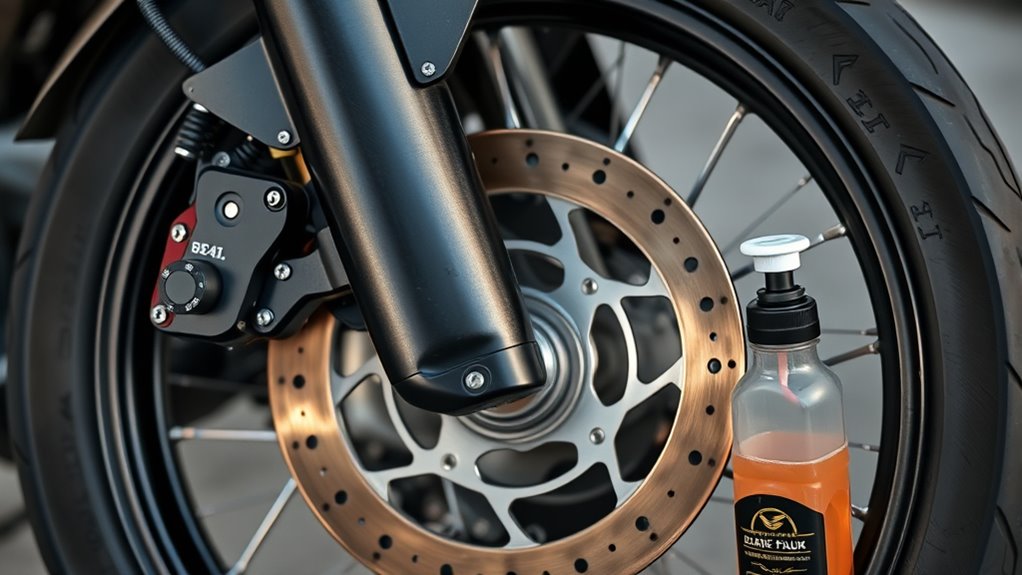
Maintaining your brake system and choosing the right fluid are essential for consistent performance and safety. Proper maintenance prevents issues like brake fade, spongy feel, and uneven wear. To optimize your brakes, focus on these key steps:
- Regularly bleed your brakes to remove air bubbles, ensuring firm lever feel.
- Use high-performance brake fluid with a higher boiling point, like DOT 4 or DOT 5.1, to handle heat better.
- Inspect brake lines and replace rubber hoses with steel-braided ones for improved response.
- Clean calipers, rotors, and pads routinely to prevent dirt buildup and corrosion.
- Keep an eye on the condition of your brake fluid and replace it as recommended to maintain optimal performance. Regularly checking your brake system helps identify potential issues early and prolongs component life, especially in vehicles used in extreme conditions or demanding riding environments. Additionally, understanding the air-purifying qualities of certain low light office plants can help create a more comfortable and healthier workspace environment.
Following these steps keeps your braking system reliable, maximizes the benefits of upgrades, and enhances safety during every ride. Proper maintenance is your best investment in braking performance.
Frequently Asked Questions
Can Upgraded Brakes Be Installed on Any Motorcycle Model?
Upgraded brakes can be installed on most motorcycle models, but compatibility varies. You need to check your bike’s specific make, model, and year to guarantee the parts fit correctly. Some upgrades, like larger calipers or custom rotors, may require modifications or adapters. It’s best to consult your manufacturer’s guidelines or a professional mechanic to confirm compatibility and achieve maximum braking performance safely.
What Is the Typical Cost Range for a Full Brake Upgrade?
A full brake upgrade can cost anywhere from $500 to over $2,500, depending on how deep you want to go. You might spend less by just swapping out brake pads and lines, or invest more for high-end rotors, calipers, and master cylinders. Think of it as transforming your bike’s braking into a lightning-fast, super-hero level system—one that offers unmatched stopping power and confidence.
How Long Do High-Performance Brake Pads Usually Last?
High-performance brake pads usually last between 10,000 and 15,000 miles, depending on your riding style, riding conditions, and maintenance. Aggressive riding or frequent track use can shorten their lifespan, while cautious riding and proper care can extend it. Keep an eye on pad thickness and replace them when they’re worn down to guarantee ideal braking performance and safety. Regular inspections help you catch wear early and maximize your brake pads’ longevity.
Is It Necessary to Upgrade Calipers When Changing Pads and Rotors?
Think of your brake system as a team working together. Upgrading pads and rotors is like giving your team new shoes and tools—they work better together. You don’t always need to upgrade calipers, but if they’re old or flex under pressure, it’s like weak links in the chain. Upgrading calipers enhances control and power, making sure your new pads and rotors perform at their best and stop your bike safely.
Do Brake Upgrades Require Professional Installation or Can I Do It Myself?
You can definitely upgrade your brakes yourself if you have basic mechanical skills and the right tools. Replacing pads, rotors, and brake lines is straightforward with proper instructions. However, for complex upgrades like calipers or master cylinders, it’s best to seek professional help to make certain of safety and correct installation. Always follow manufacturer guidelines and double-check your work before hitting the road.
Conclusion
Upgrading your motorcycle’s brakes is like giving it a heartbeat—more responsive, reliable, and ready to stop on a dime. By choosing the right pads, rotors, hoses, and master cylinder, you turn a vintage ride into a modern powerhouse. Regular maintenance and fluid checks keep everything in sync. Think of your brake system as the soul of your bike—nurture it, and it’ll always be ready to bring you home safely, no matter the road ahead.