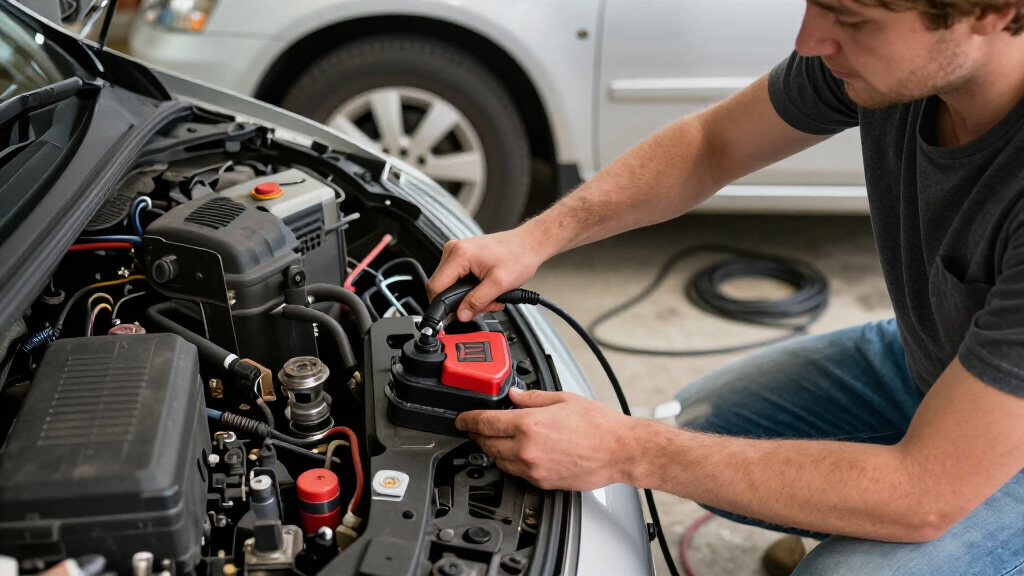
The best car battery chargers balance the charging speed you need with the right level of automation and battery support. My best overall pick is the Schumacher Electric SC1280, a 15A 6V/12V charger and maintainer that offers a practical middle ground between low-current maintenance models and heavy starting units. The NOCO GENIUS10 stands out for a smart 10A setup, while the Schumacher SC1445 suits buyers who need a wheeled charger with substantial engine-start capability. The main tradeoffs are charging rate, portability, battery compatibility, and whether you need maintenance or jump-start assistance. Read on for the full breakdown of all 13 car battery chargers and how I’d match each one to a buyer’s needs.
Complete the kit


Key Takeaways
- The SC1280 is the balanced pick: its 15A output and 6V/12V support make it more versatile than the 6A maintainers without stepping up to a bulky engine-start unit.
- Charging speed depends on matching amperage to the job: the NOCO GENIUS1 is suited to maintenance, while 10A and 15A models are more practical for replenishing a drained battery.
- Engine-start models serve a different purpose: the SC1446, SC1445, and TowerTop add starting assistance, but their extra capability can mean more size and less convenience for routine maintenance.
- Voltage and battery chemistry must match: 6V/12V options cover more vehicles, while several 12V/24V chargers may fit a narrower set of applications; buyers should verify battery type support before connecting.
- Portability separates the shortlist: compact NOCO chargers are easier to store and leave connected for maintenance, while the wheeled SC1445 is better suited to a fixed garage or workshop.


More Details on Our Top Picks
12V/24V Smart Car Battery Charger with LCD Display, Automatic Battery Maintainer & Trickle Charger, Temperature Compensation, Overcharge Protection
I’d shortlist this charger for households or workshops that need one unit for both 12V and 24V systems. That voltage range sets it apart from the Craftsman CMXCESM258 and Schumacher SC1280, which handle 6V/12V batteries instead. Its LCD status display makes charging progress easier to check, while automatic maintenance and temperature compensation are useful for batteries left connected through changing seasons. Safety protections cover overcharging, short circuits, and reverse polarity. The tradeoff is that the product details don’t specify charging amperage, so I can’t recommend it for buyers prioritizing a known fast-charge rate. It also does not support LiFePO4 batteries, unlike the Craftsman and E-FAST options, and users need to identify their battery type before choosing settings.
Pros:- Supports both 12V and 24V battery systems.
- LCD provides live voltage and charging-status information.
- Automatic charging and maintenance modes help limit overcharging.
- Temperature compensation and several electrical protections support year-round use.
Cons:- Not compatible with LiFePO4 batteries.
- Charging amperage and charging speed are not specified.
- Requires users to identify battery types for appropriate operation.
Best for: Owners of vehicles or equipment with 12V and 24V batteries who want one charger with a readable display and automatic maintenance.
Not ideal for: LiFePO4 battery owners or buyers who need a clearly stated charging rate to plan recovery time.
- Output voltage:12V/24V support stated in product title and description
- Listed output voltage:12 volts
- Input voltage:12 volts
- Compatible devices:Cars, trucks, SUVs, motorcycles
- Display:LCD
- Charging functions:Automatic charging, maintenance, trickle charging
- Protection:Overcharge, short-circuit, reverse-polarity protection
- Temperature feature:Temperature compensation
- Dimensions:1″ D x 0.98″ W x 1″ H
Our verdict“Choose this model if 12V/24V coverage and an LCD matter more than lithium support or a published charging rate.”
Craftsman 12A Car Battery Charger & Maintainer, 6V/12V – CMXCESM258
The Craftsman CMXCESM258 is a practical choice when battery chemistry matters as much as voltage. It covers 6V and 12V batteries, including standard, AGM, deep-cycle, and LiFePO4, giving it broader stated battery compatibility than the Schumacher SC1280, which lists lead-acid types. Automatic voltage detection reduces setup work, and the digital display and indicators make charging status easier to follow. Its 12A charging output is a middle ground: more substantial than the NOCO Genius1’s 1A maintenance-focused output, but below the Schumacher SC1280’s 15A. The Craftsman also offers a 3A maintain mode and six-foot power and battery cables. It isn’t a jump starter, and operation depends on an AC outlet, so it won’t suit roadside use without power.
Pros:- Supports 6V and 12V batteries, including LiFePO4.
- Automatic voltage detection reduces manual setup.
- Offers 12A charging and a separate 3A maintenance mode.
- Six-foot power and battery cables provide useful reach.
Cons:- Maximum charging output is limited to 12A.
- Requires access to an AC power outlet.
- No booster or engine-start function is listed.
Best for: Drivers and equipment owners with a mix of 6V/12V standard, AGM, deep-cycle, or LiFePO4 batteries who want one outlet-powered charger.
Not ideal for: People who need a portable roadside starting aid or faster charging than a 12A unit can provide.
- Voltage:6V/12V
- Maximum charging current:12A
- Maintenance current:3A
- Battery compatibility:Standard, AGM, deep-cycle, LiFePO4
- Charging technology:Automatic voltage detection and smart charging
- Protection and indicators:Reverse hook-up protection, bad battery indicator
- Power cord length:6 feet
- Battery cable length:6 feet
- Warranty:2 years
Our verdict“Pick the Craftsman for broad battery compatibility and everyday charging, but choose a higher-output model if speed is the priority.”
Schumacher Electric 15A Car Battery Charger & Maintainer, 6V/12V – SC1280
The Schumacher SC1280 earns its place for buyers who want more than routine battery maintenance. Its 15A output exceeds the Craftsman CMXCESM258’s 12A, making it the stronger fit when a compatible 6V or 12V battery needs a more assertive charge. The combination of charge, maintain, test, and restore functions also gives it a broader diagnostic role than the simpler NOCO Genius1. Its desulfation mode is intended to help address sulfation, though it can’t guarantee that an old or damaged battery will recover. This model lists standard, AGM, gel, and deep-cycle batteries, but not lithium; the Craftsman is the better match for LiFePO4. The higher output and multiple functions add capability, but may be more charger than small batteries need, and the unit takes more storage space.
Pros:- 15A output is higher than the Craftsman CMXCESM258’s 12A.
- Combines charging, maintaining, testing, and restoring functions.
- Desulfation and multi-stage charging add battery-care options.
- Automatic voltage detection and reverse-clamp protection support safer setup.
Cons:- Does not list lithium battery compatibility.
- 15A output may be excessive for small or delicate batteries.
- Bulkier than compact maintenance chargers.
Best for: Vehicle and boat owners with compatible 6V/12V lead-acid batteries who want a higher-output charger with testing and restoration functions.
Not ideal for: LiFePO4 owners, people charging small delicate batteries, or buyers who need a compact unit for tight storage.
- Voltage:6V/12V
- Amperage:15A
- Modes:Charge, maintain, test, restore
- Battery types:Standard, AGM, gel, deep-cycle
- Desulfation:Included
- Voltage detection:Automatic
- Charging stages:Multi-stage charging
- Protection:Reverse-clamp protection
Our verdict“Choose the SC1280 when you want 15A charging plus test and restore modes for compatible 6V/12V lead-acid batteries.”
E-FAST 25A Smart Car Battery Charger, 12V/24V Automatic Automotive Battery Maintainer & Desulfator with 200s Booster Mode
For larger vehicles and batteries, the E-FAST stands apart with 25A output and support for both 12V and 24V systems. That gives it more charging headroom than the 15A Schumacher SC1280, while its listed LiFePO4 compatibility adds an option the Schumacher lacks. Adjustable current settings let users tailor the charge, and pulse repair and a 200-second booster mode add functions beyond the NOCO Genius1’s slow, maintenance-oriented approach. The tradeoff is complexity: buyers need to understand battery type and settings, and the booster mode works only with 12V batteries. It also requires 110V input and weighs 3.7 pounds, so it’s better suited to a garage or workshop than a compact glove-box kit. I’d skip it for buyers who only need gentle upkeep for a small battery.
Pros:- 25A output provides more charging capacity than the Schumacher SC1280’s 15A.
- Supports 12V and 24V systems and lists LiFePO4 compatibility.
- Adjustable current settings suit different charging needs.
- Includes pulse repair, a 200-second booster mode, and an aluminum housing with active cooling.
Cons:- Booster mode is limited to 12V batteries.
- Multiple modes and settings may be challenging for inexperienced users.
- Requires 110V input and is less compact than a small maintainer.
Best for: Owners of trucks, SUVs, boats, or RVs with 12V/24V lead-acid or LiFePO4 batteries who want adjustable, higher-output charging.
Not ideal for: Beginners seeking a simple maintainer, users without 110V power, or anyone expecting booster mode to work on 24V systems.
- Output voltage:12V/24V
- Input voltage:110V
- Amperage:25A
- Compatible batteries:Lead-acid AGM, GEL, SLA, flooded, EFB; LiFePO4
- Current settings:Adjustable
- Booster mode:200 seconds; 12V only
- Repair function:Pulse repair
- Housing and cooling:Aluminum housing with active cooling
- Dimensions and weight:8.5″ D x 4.9″ W x 7.5″ H; 3.7 pounds
Our verdict“Choose the E-FAST for higher-output 12V/24V charging and varied battery types, provided you’re comfortable managing its settings.”
NOCO Genius1 1A 6/12V Smart Battery Charger, Trickle Charger & Maintainer
The NOCO Genius1 is built for slow, ongoing battery care rather than quick charging. Its 1A output suits maintaining a vehicle that sits for long stretches, while the Schumacher SC1280’s 15A and the Craftsman CMXCESM258’s 12A are better choices for charging a depleted battery more quickly. The Genius1 handles 6V and 12V lead-acid and lithium-ion batteries, adds temperature compensation, and can recover deeply discharged batteries according to the product description. It can stay connected for indefinite maintenance, which is useful for seasonal vehicles and equipment. The tradeoff is pace: larger batteries may take a long time to charge, and this unit needs AC power. It also lacks the digital display and broader diagnostic modes found on the Schumacher, so I’d choose it for steady upkeep, not hands-on troubleshooting.
Pros:- Compact 1A output suits long-term maintenance and smaller batteries.
- Supports 6V/12V lead-acid and lithium-ion batteries.
- Temperature compensation adapts charging to ambient conditions.
- Designed for indefinite connection and can recover deeply discharged batteries.
Cons:- 1A charging is slow for larger or substantially depleted batteries.
- Requires an AC power source.
- No advanced digital display or smartphone connectivity is listed.
Best for: Owners of motorcycles, ATVs, lawn equipment, or stored cars who want a compact charger for long-term battery maintenance.
Not ideal for: Drivers who need to recharge large batteries quickly or want a display, battery testing, or a higher-output charger.
- Output voltage:12 volts
- Battery voltage support:6V/12V
- Input voltage:120 volts
- Amperage:1A
- Battery compatibility:Lead-acid and lithium-ion
- Temperature feature:Thermal sensor and temperature compensation
- Charging functions:Charging, trickle charging, maintenance, desulfation
- Recovery feature:Can recover deeply discharged batteries
- Listed charge time:10 hours
Our verdict“Pick the Genius1 for compact, ongoing maintenance; choose the Craftsman or Schumacher when faster charging matters more.”
Schumacher Electric 10A Car Battery Charger & 200A Engine Start – SC1446
The SC1446 suits buyers who want a charger that can also deliver a substantial starting boost. Its 200A engine start and 40A boost mode give it more muscle for larger engines than the automatic 6A SC1281, while the 10A charge rate handles routine charging more quickly. The tradeoff is control: its manual timer lets an attentive owner set the charging period, but it does not replace monitoring with automatic shutoff. This wheeled, steel-bodied unit is better suited to a garage than a roadside kit; its solid wheels help with repositioning, though its weight works against portability. I’d choose it over the SC1445 when 200A starting power is enough and a less powerful start rating is preferable to extra peak output.
Pros:- 200A engine-start rating supports starting larger engines.
- 10A charging and 40A boost provide more charging power than the SC1281’s 6A rate.
- Supports 6V and 12V batteries, including AGM, gel, and deep-cycle types.
- Steel housing, wheels, and retractable handle aid durability and garage mobility.
Cons:- Manual operation requires the user to monitor charging and manage the timer.
- Heavy wheeled design is less convenient to carry or store than a compact smart charger.
Best for: Garage owners who maintain cars, boats, or power-sport batteries and want a 200A start function with hands-on control.
Not ideal for: Drivers seeking a compact, unattended maintainer or anyone who does not want to monitor charging manually.
- Engine start:200A
- Charge current:10A
- Boost mode:40A
- Battery compatibility:6V and 12V; AGM, gel, and deep-cycle
- Timer:135 minutes
- Cable length:6 feet
- Housing:Heavy-duty steel
- Mobility:Solid wheels and retractable handle
Our verdict“Choose the SC1446 if you want strong starting assistance and manual charging control, but skip it if unattended charging is a priority.”
Schumacher Electric 6A Car Battery Charger & Maintainer, 6V/12V – SC1281
The SC1281 is the lineup’s more hands-off choice for owners who want charging, maintenance, and basic battery checks in one unit. Its microprocessor-controlled, multistage charging is a clear contrast with the manual SC1446 and SC1445, where users must manage the charging process themselves. It also adds desulfation, battery testing, and a 100A engine-start function, making it more versatile than a simple maintainer. The limitation is speed: 6A charging is modest beside the 10A options, so large or deeply discharged batteries may take longer. Its many modes can also be more than a casual owner needs, and the bulky form is less suited to a small trunk. I’d pick it for feature breadth and automatic operation, not for fast charging or minimal setup.
Pros:- Automatic multistage charging reduces the need for manual charge management.
- Works with 6V and 12V batteries.
- Includes 100A engine start, battery testing, and desulfation functions.
- Supports standard, AGM, deep-cycle, and LiFePO4 batteries as listed.
Cons:- The 6A charge rate is slower than the 10A SC1446 and NOCO GENIUS10.
- Multiple features and modes may take time to learn.
- Bulky construction is less convenient to carry or store.
Best for: Car, truck, and boat owners who want automatic charging plus battery testing and maintenance for 6V or 12V batteries.
Not ideal for: Drivers who need faster charging, a lightweight emergency charger, or a simple device with few settings.
- Voltage:6V and 12V
- Charging current:6A
- Engine start:100A
- Boost charge:30A to 12A
- Charge modes:Multistage, trickle, and desulfation
- Battery types:Standard, AGM, deep-cycle, and lithium (LiFePO4)
- Control:Fully automatic microprocessor control
Our verdict“Choose the SC1281 for automatic, feature-rich 6V/12V battery care, but look to a higher-amperage charger if charging speed matters more.”
Schumacher Electric Wheeled 6/12V 250A Car Battery Starter/Charger – SC1445
For buyers prioritizing a powerful engine-start function, the SC1445’s 250A peak rating puts it ahead of the SC1446’s 200A start output. It also has 10A charging and 25A and 50A boost settings, so it can serve as a substantial garage charger for cars, marine batteries, and power-sport equipment. The main compromise is that this is a manual unit without automatic shutoff. Its 135-minute timer gives the owner control, but charging calls for attention rather than the set-and-leave approach offered by the automatic SC1281. The steel body and wheels make sense for workshop use, not frequent carrying. I’d rank it above the SC1446 only for shoppers who value its higher peak starting output; if 200A is sufficient, the SC1446 offers a similar manual format without that extra rating.
Pros:- 250A peak engine-start rating is higher than the SC1446’s 200A rating.
- 10A charging plus 25A and 50A boost settings provide multiple power levels.
- Supports 6V and 12V standard, AGM, gel, and deep-cycle batteries.
- Steel housing, wheels, and retractable handle suit garage positioning.
Cons:- Manual charging and the lack of automatic shutoff require supervision.
- Bulky wheeled design is cumbersome for portable or roadside use.
- The 6-foot cables may limit placement around some vehicles.
Best for: Home mechanics and workshop owners who need high peak starting power and can supervise manual charging.
Not ideal for: Drivers who want an automatic charger, a lightweight portable unit, or maintenance charging without regular oversight.
- Voltage:6V and 12V
- Peak engine-start output:250A
- Charge current:10A
- Boost charge:25A and 50A
- Timer:135 minutes
- Battery types:Standard, AGM, gel, and deep-cycle
- Cable length:6 feet
- Housing and mobility:Heavy-duty steel with retractable handle and solid wheels
Our verdict“Pick the SC1445 when its higher peak starting output matters and you are comfortable monitoring a manual charger.”
NOCO GENIUS10 10A 6/12V Smart Battery Charger, Trickle Charger & Maintainer
The NOCO GENIUS10 combines a 10A charge rate with smart charging, desulfation, and long-term maintenance in a compact format. Unlike the wheeled SC1445 and SC1446, it is built for owners who want a charger that is easier to store and can remain connected for ongoing battery care. Its thermal regulation adjusts charging to conditions, while its recovery capability may help with deeply discharged batteries—useful features for seasonal vehicles. The important distinction is that it does not list an engine-start function, so it cannot fill the role of the Schumacher units when a vehicle needs a starting boost. The supplied specs also list 12V output, despite the product title’s 6/12V wording, so buyers needing 6V charging should verify compatibility before purchase. I’d favor it for smart maintenance over workshop starting power.
Pros:- 10A output offers a faster listed charge rate than the SC1281’s 6A.
- Thermal regulation helps adapt charging to temperature conditions.
- Desulfation and recovery functions address some neglected or deeply discharged batteries.
- Indefinite maintenance mode supports long-term storage care.
Cons:- No engine-start function is listed, unlike the Schumacher SC1445 and SC1446.
- The supplied specifications list 12V output, leaving 6V compatibility unclear.
- Smart features may require reading the manual, and it is positioned above basic chargers in cost.
Best for: Owners of 12V cars, motorcycles, boats, or seasonal vehicles who want smart charging and ongoing battery maintenance in a compact unit.
Not ideal for: Anyone who needs an engine-start boost, confirmed 6V charging, or a basic charger with little setup or learning.
- Output voltage:12V listed in supplied specifications
- Input voltage:120V
- Amperage:10A
- Battery charge time:10 hours
- Battery compatibility:Lead-acid and lithium-ion, per product description
- Charging functions:Smart charging, desulfation, and maintenance
- Thermal control:Thermal regulation
- Recovery:Designed to recover deeply discharged batteries
Our verdict“Choose the GENIUS10 for compact, smart 12V charging and maintenance, but not for engine starting or if you need confirmed 6V support.”
12V 24V Car Battery Charger Heavy Duty, 0-15A Automatic Battery Maintainer, Upgraded Model 2026, Fast & Trickle Charge, Pulse Repair for AGM Lead-Acid Deep Cycle Batteries
This charger’s standout advantage is its stated ability to automatically detect 12V and 24V batteries, a broader voltage range than the 12V-listed GENIUS10 and the 6V/12V Schumacher models. Its 0–15A automatic charging, digital readout, and fast, trickle, winter, and pulse-repair modes give owners more options for cars, trucks, boats, and other listed vehicles. That range comes with a narrower chemistry fit: the supplied information limits it to lead-acid batteries, so it is not the pick for lithium-ion packs. At 12.2 pounds, it is also less convenient to move than the compact NOCO. The multiple modes may take some getting used to, but automatic operation and displayed charging information can make routine charging easier once configured. I’d choose it for 24V lead-acid flexibility, not portability or lithium compatibility.
Pros:- Automatically detects 12V and 24V batteries, unlike the listed 12V-only GENIUS10 specification.
- Adjustable 0–15A charging supports both faster charging and trickle maintenance.
- Digital display reports voltage, current, and charging percentage.
- Includes winter and pulse-repair modes plus reverse-polarity and overcharge protection.
Cons:- Listed for lead-acid batteries only, so it is not suitable for lithium-ion batteries.
- At 12.2 pounds, it is less portable than compact chargers such as the GENIUS10.
- The selection of modes may take extra learning for first-time charger owners.
Best for: Owners of 12V and 24V lead-acid vehicles, such as trucks, boats, RVs, or lawn equipment, who want automatic charging and a digital display.
Not ideal for: Lithium-battery owners, people who need a lightweight travel charger, or buyers who want a very simple interface.
- Battery voltage:12V and 24V automatic detection
- Input voltage:110V
- Charging current:0–15A
- Battery chemistry:Lead-acid
- Charging modes:Fast, trickle, winter, and pulse repair
- Display:Digital voltage, current, and charging percentage
- Protection:Reverse polarity and overcharge protection
- Weight:12.2 pounds
- Dimensions:11.2 × 5.6 × 8.2 inches
Our verdict“Choose this model for automatic 12V/24V lead-acid charging with a digital display, but skip it if you need lithium support or easy portability.”
TowerTop 2/10/25 Amp 12V Smart Car Battery Charger, Fully Automatic Battery Maintainer with Engine Start, Auto Desulfator, Battery Repair, Winter Mode, for AGM, STD, Gel, Deep Cycle Batteries
The TowerTop is the strongest fit here when a 12V lead-acid battery needs more than slow maintenance: its selectable charging current reaches 25A, and it adds engine-start and winter modes. Compared with the NOCO GENIUS5, which tops out at 5A and also supports 6V batteries, this model is better suited to faster charging and seasonal vehicle needs, but it gives up that voltage flexibility. Its eight-stage charging and battery-repair functions offer more options than a basic maintainer, although the feature set may take more setup knowledge. The supplied data also warns that it cannot repair fully drained batteries, so its repair mode is not a substitute for a working battery. Choose it for varied 12V lead-acid jobs, not for lithium batteries or an entirely dead battery.
Pros:- Selectable charging current up to 25A can shorten charging time compared with the 5A NOCO GENIUS5.
- Eight-stage charging and battery-repair functions provide more than basic maintenance.
- Engine-start and winter modes add flexibility for seasonal vehicle use.
- Automatic detection and safety protections reduce the chance of incorrect operation.
Cons:- Limited to 12V lead-acid batteries.
- Battery repair cannot recover a fully drained battery.
- Multiple modes may be harder to operate than a simpler maintainer.
Best for: Owners of 12V cars, boats, RVs, or deep-cycle lead-acid batteries who want higher charging current plus seasonal and starting functions.
Not ideal for: People charging lithium or 6V batteries, or anyone expecting a charger to revive a fully drained battery.
- Output voltage:12V
- Input voltage:120V
- Charging current:Adjustable; up to 25A
- Compatible batteries:AGM, deep-cycle, GEL, STD lead-acid
- Charging features:Eight-stage smart charging, battery repair, winter mode
- Starting feature:Engine-start mode
- Connectors:NEMA 1-15 (Type A) and battery clamps
- Dimensions:7.68 × 10.04 × 4.92 in
Our verdict“Choose the TowerTop if you need faster charging and extra modes for 12V lead-acid batteries, but skip it if you need 6V or lithium support.”
NOCO GENIUS5 5A 6/12V Smart Battery Charger, Trickle Charger & Maintainer
The NOCO GENIUS5 makes the most sense when compact storage and 6V/12V compatibility matter more than rapid charging. Its 5A output is modest beside the TowerTop’s selectable 25A, so it is better for routine charging and long-term maintenance than quickly bringing a large battery back up. The payoff is broader battery coverage: it supports lead-acid and lithium-ion batteries, while the TowerTop is limited to 12V lead-acid types. A thermal sensor adjusts charging to conditions, and the unit can recover deeply discharged batteries according to the supplied description. Its listed full-charge time is eight hours, making patience part of the deal. Compared with the Schumacher SC1361, it favors small size and battery-type range over engine-start capability and a heavy-duty metal enclosure.
Pros:- Supports both 6V and 12V batteries, unlike the 12V-only TowerTop and Schumacher SC1361.
- Compatible with lead-acid and lithium-ion batteries.
- Thermal regulation helps adjust charging to surrounding conditions.
- Compact format suits storage and maintenance across several vehicle types.
Cons:- 5A output can make charging large batteries slow.
- Listed full-charge time is eight hours.
- Setup may feel complex to buyers who want a basic plug-in maintainer.
Best for: Drivers and recreational-vehicle owners who need one compact maintainer for 6V or 12V lead-acid and lithium batteries, including motorcycles and ATVs.
Not ideal for: Owners who regularly need fast charging for large batteries or want an engine-start function built into the charger.
- Output voltage:6V and 12V
- Input voltage:120V
- Charging current:5A
- Battery types:Lead-acid and lithium-ion
- Charging time:8 hours
- Functions:Charger, maintainer, desulfator
- Temperature feature:Smart thermal sensor
- Supported vehicles:Cars, boats, motorcycles, ATVs, RVs, trucks, SUVs, scooters, lawn mowers
Our verdict“Pick the GENIUS5 for compact, flexible 6V/12V maintenance, not for high-current charging or emergency engine starting.”
Schumacher Electric 6A Car Battery Charger & Maintainer, 12V – SC1361
The Schumacher SC1361 is the choice in this group for buyers who want a charger that can also provide engine-start assistance. Its 6A charging and maintenance modes are less geared to speed than the TowerTop’s 25A maximum, but its 50A engine start and 10A boost mode add useful support when a vehicle battery is struggling. Automatic multi-stage charging and reverse-polarity protection help keep routine use controlled, while the heavy-duty metal enclosure gives it a sturdier build than a compact maintainer such as the NOCO GENIUS5. The tradeoff is narrower flexibility: this Schumacher is 12V-only and lacks a digital display for detailed status. Its listed compatibility includes standard, AGM, and LiFePO4 batteries, but buyers needing 6V charging should choose another model.
Pros:- Combines charging, maintenance, and engine-start assistance.
- 50A engine start and 10A boost provide options beyond its 6A charging mode.
- Microprocessor-controlled multi-stage charging supports automatic operation.
- Metal enclosure and safety protections suit regular garage use.
Cons:- Works with 12V batteries only.
- No digital display for detailed charging status.
- Its starting and boost functions may be unnecessary for simple, infrequent maintenance.
Best for: Car, motorcycle, and boat owners who want a 12V charger with maintenance, boost, and engine-start functions in a durable enclosure.
Not ideal for: People maintaining 6V batteries, or buyers who want a compact charger with a detailed digital status display.
- Voltage:12V
- Charging current:2A to 6A
- Boost mode:10A
- Engine-start power:50A
- Compatible batteries:Standard, AGM, lithium (LiFePO4)
- Charging control:Automatic microprocessor-controlled multi-stage charging
- Protection:Reverse-polarity protection, spark-proof clamps, automatic shutoff
- Enclosure:Heavy-duty metal
Our verdict“Choose the SC1361 if engine-start support and a durable build matter more than dual-voltage flexibility or compact size.”

How We Picked
I ranked these car battery chargers by how well their output, voltage support, and operating modes fit common ownership needs: routine battery maintenance, charging a discharged battery, and occasional engine-start assistance. I gave priority to clear use cases and useful flexibility, while treating high amperage as an advantage only when it serves a real need. A small charger can be a stronger choice for long-term maintenance than a more powerful unit, while a charger with engine-start capability makes sense only for buyers who value that function enough to accept a larger format.
I also weighed ease of use, portability, battery compatibility, and practical tradeoffs. Models with 6V/12V support have broader voltage coverage than 12V-only options, but buyers still need to confirm chemistry compatibility and follow manufacturer instructions. The ranking favors chargers that suit more everyday scenarios, then separates dedicated compact maintainers from higher-output and starting-focused machines. Product details supplied for this roundup do not establish identical features across every model, so I avoid treating similar labels as proof of equivalent capability.
Factors to Consider When Choosing Car Battery Chargers
Choosing among these chargers starts with the job you expect it to do. A maintainer for a parked car, a faster charger for a depleted battery, and a unit with engine-start assistance solve different problems. I’d use the factors below to narrow the field before choosing by brand or by the largest number on the label.
Match Amperage to How You’ll Use It
Amperage affects how quickly a charger can replenish a battery, but a higher figure is not automatically better for every owner. A low-output model such as the NOCO GENIUS1 makes more sense for keeping a battery topped up than for quickly recovering a deeply discharged one. Higher-output options, including 15A and 25A models, can reduce charging time when the battery and manufacturer guidance allow it. Check the battery maker’s recommended charging rate rather than choosing the fastest unit available. If you mainly store a vehicle for weeks or months, steady maintenance may matter more than rapid charging. If you regularly need to recover a low battery, prioritize suitable output and clear charging controls.
Check Voltage and Battery Chemistry Before Buying
Voltage support is a compatibility requirement, not a bonus feature: a charger must match the battery system it will serve. Several picks support 6V and 12V, while some listings advertise 12V/24V operation, so confirm the exact vehicle or equipment voltage first. Battery chemistry matters too; AGM, standard flooded lead-acid, gel, and deep-cycle batteries may have different charging requirements. Do not assume that a broad compatibility claim means every mode is appropriate for every battery. Read the charger and battery manuals together, especially before using repair, desulfation, or winter modes. When you maintain more than one vehicle type, broader support can justify choosing a more versatile unit.
Separate Maintenance from Engine-Start Assistance
A battery maintainer is designed to keep a charged battery from losing charge during storage; it is not the same as an engine-start aid. Models such as the SC1446 and SC1445 advertise substantial starting capability, which may help buyers who want one garage unit for charging and starting support. That function does not remove the need to follow the maker’s connection and operating instructions, and it may add bulk. If your main concern is preventing a stored car’s battery from going flat, a compact smart charger is usually a simpler fit. Choose a starting model when that extra job is genuinely part of your routine, not just because its headline number is larger.
Think About Where the Charger Will Live
Storage and access can change which charger is easiest to live with. Compact models such as the NOCO GENIUS5 and GENIUS10 are easier to keep in a vehicle or on a crowded shelf than a wheeled workshop unit. The SC1445’s wheeled design points toward garage use, where moving a heavier charger between vehicles matters more than fitting it in a small trunk. Before buying, check where the charger will sit, how far it must reach, and whether you can safely route cables without creating a trip hazard. If you plan to leave a maintainer connected, follow its instructions for ventilation, placement, and unattended use. A suitable form factor can matter more day to day than another few amps.
Treat Repair and Desulfation Modes as Limited Tools
Repair and desulfation labels can sound like a way to restore any weak battery, but they should not be treated as a substitute for diagnosis or replacement. Chargers such as the E-FAST and TowerTop advertise repair-related functions, while other models focus more directly on charging and maintenance. Battery condition, age, and internal damage affect whether a recovery mode can help at all. Follow the product manual closely, and do not apply a special mode to a battery type unless the instructions permit it. If a battery repeatedly loses charge or will not hold it after charging, have the battery and vehicle charging system checked. I’d pay for these modes only if their supported use cases match your needs.
Choose the Controls You’ll Actually Use
Automatic operation can make routine charging less hands-on, while a display may help you monitor status without guessing. Extra modes are useful only when their purpose is clear and their instructions are easy to follow. A first-time buyer may prefer a straightforward smart maintainer over a unit with multiple recovery and starting functions. More experienced owners who maintain several battery types may value added modes, provided the charger explicitly supports those batteries. Check what the display reports and how the charger signals a completed charge or fault; do not infer specific protections from the word “smart” alone. The best interface is the one that makes correct use simple for your setup.
Frequently Asked Questions
Can I leave a smart car battery charger connected while my car is stored?
Many smart chargers and maintainers are designed for ongoing battery maintenance, but the exact model’s instructions control how it may be used unattended. Confirm that the charger has a maintenance mode and that it supports your battery’s voltage and chemistry. Set it up in the location and conditions specified by the manufacturer, with cables clear of moving parts and heat sources. A charger intended for occasional charging should not be assumed to support long-term connection. If the battery or charger becomes unusually hot, damaged, or gives a fault indication, disconnect it according to the manual and investigate.
Is a 1A charger enough for a car battery, or should I choose 5A or 10A?
A 1A charger can suit maintaining a compatible battery or slowly replenishing it, but it is a poor fit if you expect quick recovery from a low state of charge. A 5A or 10A model offers more output for regular charging while remaining more focused than a large engine-start unit. The right choice also depends on battery capacity, condition, and the charging rate recommended by its maker. For a vehicle that sits unused, low amperage may be adequate; for frequent charging after a discharge, more output can be practical. Never use amperage alone to decide compatibility.
Do I need a charger with 6V/12V or 12V/24V support?
Choose based on the battery systems you actually own, not the broadest voltage range on the box. Most passenger vehicles use 12V systems, while 6V or 24V support can matter for particular vehicles or equipment. A 6V/12V charger does not automatically cover 24V batteries, and a 12V/24V listing does not mean it supports 6V. Check the battery label and product manual before connecting anything. If you maintain multiple types, write down each battery’s voltage and chemistry first so you can compare chargers against the full set.
Will a charger with engine-start capability replace a jump starter?
Not necessarily. A charger with an engine-start mode, such as the Schumacher starting models in this roundup, is a different tool from a portable jump starter and may require access to household power. Starting features also have specific connection steps and operating limits that should be followed exactly. If you need roadside assistance away from an outlet, a charger’s starting function may not solve that problem. For garage use, it can add useful support alongside charging, but it should not be treated as a guarantee that a severely depleted or damaged battery will start the vehicle.
Can a battery repair or desulfation mode fix a battery that keeps going flat?
Repair or desulfation modes may be intended to address certain battery conditions, but they cannot fix every cause of repeated discharge. An old or internally damaged battery may need replacement, and a vehicle with a charging-system fault or parasitic draw can drain even a healthy one. Use a recovery mode only when the charger manual lists your battery type and condition as compatible. If the battery will not hold a charge after a proper charging cycle, arrange a battery and vehicle-system check rather than repeating repair cycles. These modes are an added capability, not a diagnosis.
Conclusion
For most owners seeking one versatile garage charger, I’d start with the Schumacher SC1280 as the best overall balance of 15A output and 6V/12V support. The best value-oriented fit is the Schumacher SC1281 for buyers who want a simpler 6A 6V/12V charger and maintainer rather than extra starting functions. For a premium smart-charger choice, the NOCO GENIUS10 offers a 10A 6V/12V format; beginners who mainly need a compact maintainer can choose the NOCO GENIUS5 or the lower-output GENIUS1 if slower charging suits their routine. For specific needs, look to the SC1445 for a wheeled unit with high engine-start capability, or compare the TowerTop and E-FAST if their advertised higher-output and repair features match your battery types. My final check would be voltage, chemistry, and where the charger will be used—those factors should settle the choice before extra modes do.